

 English
 русский
 Español
 عربى
عربى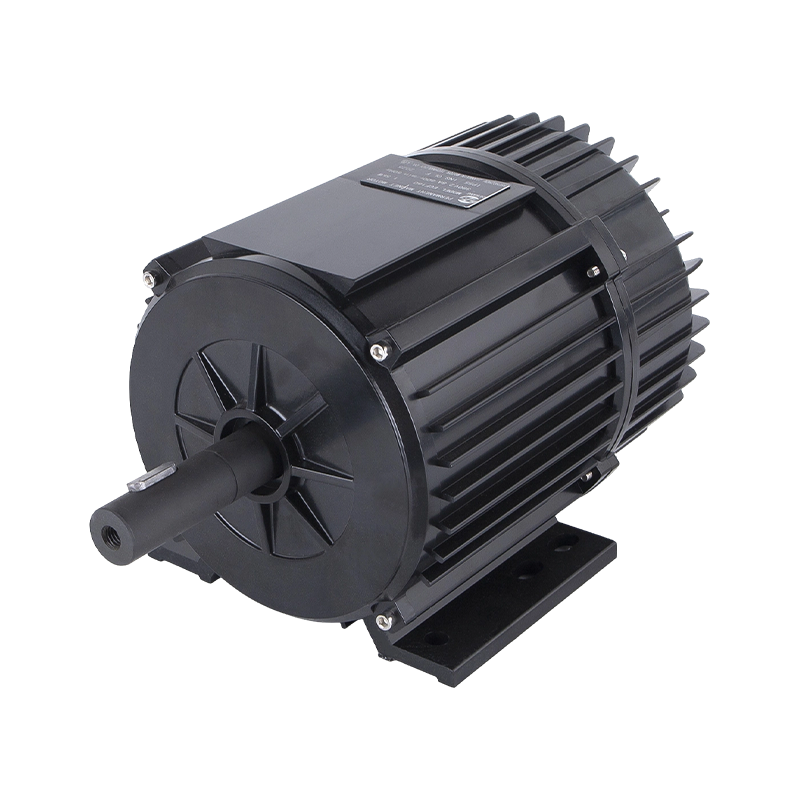
No. 8, Duxiu San Road, Ganlin Town, Shengzhou City, Shaoxing City, Zhejiang Province, China

News Category
Product Category
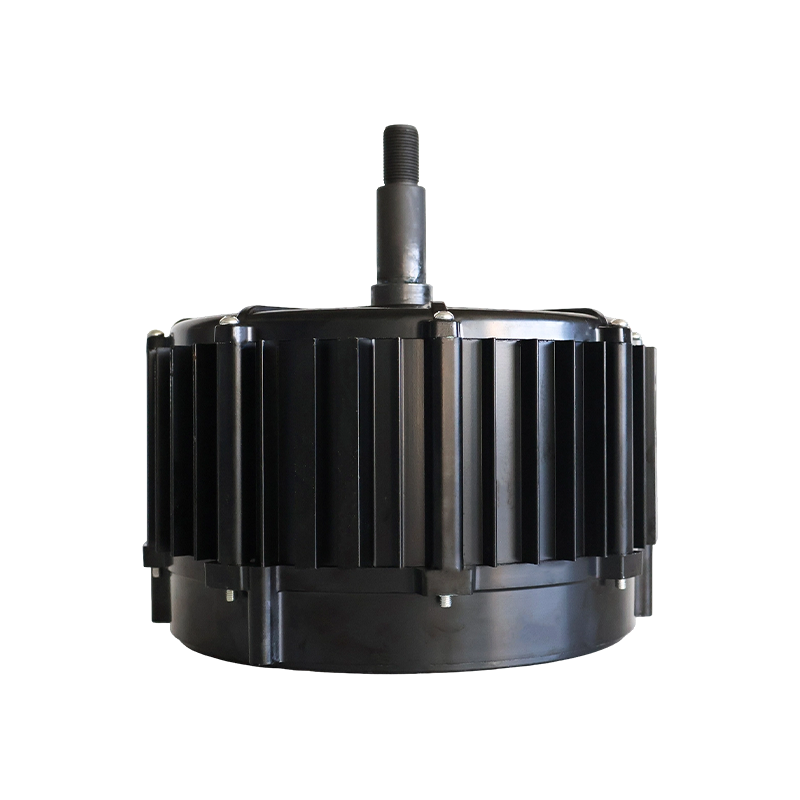
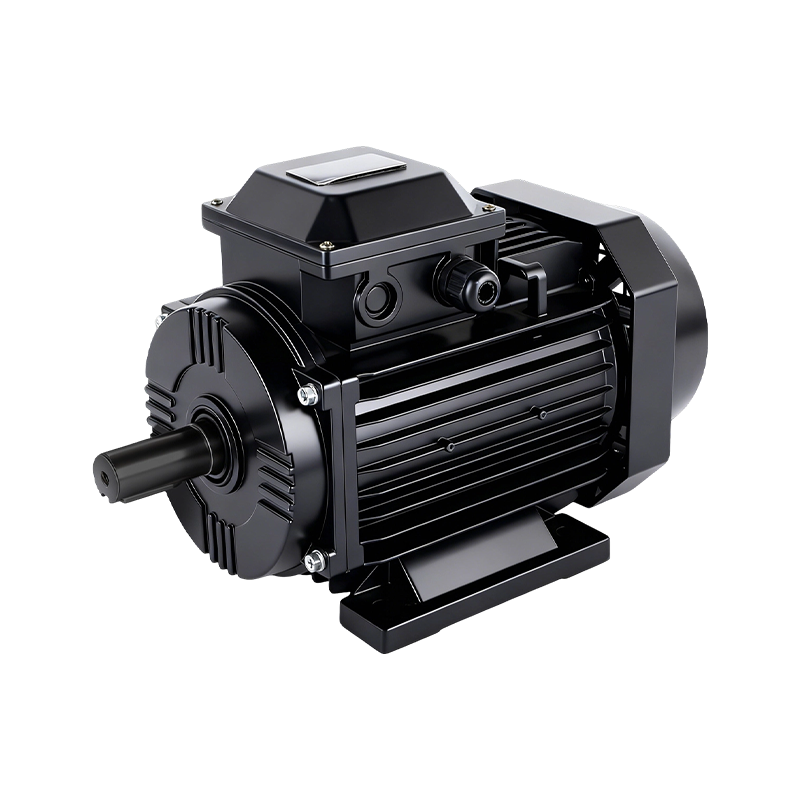
ECF160 380V 1500W EC Fan Motor: Efficient Power for Evaporative Cooling Systems
Content
- 1 What Is an EC Fan Motor?
- 2 Key Product Specifications
- 3 High Efficiency Across Operating Speeds
- 4 Brushless Construction for Long-Term Reliability
- 5 Quiet Operation and Reduced Vibration
- 6 Maintenance-Free Operating Advantages
- 7 Designed for Evaporative Air Cooler Applications
- 8 Advantages Over Conventional AC Motors
- 9 Manufacturing Strengths and Engineering Capability
- 10 Quality Control and Production Consistency
- 11 Application Areas
- 12 Installation and System Integration Considerations
- 13 Energy and Total-Cost Benefits
- 14 Why Manufacturer Selection Matters
- 15 Product Selection Guidance for Buyers
- 16 Maintenance Recommendations
- 17 Environmental and Sustainability Considerations
- 18 Frequently Asked Questions
- 18.1 What type of motor is the ECF160?
- 18.2 What is the rated voltage and power?
- 18.3 What makes an EC motor different from a conventional AC motor?
- 18.4 How efficient is the ECF160?
- 18.5 Can the ECF160 reduce electricity consumption?
- 18.6 Is the motor suitable for variable-speed operation?
- 18.7 What service life can be expected?
- 18.8 Does the motor require brush replacement?
- 18.9 Is the ECF160 completely maintenance-free?
- 18.10 What applications are suitable for this motor?
- 18.11 How does the motor help reduce noise?
- 18.12 Can the motor be used in wet environments?
- 18.13 Does the manufacturer provide customized motor solutions?
- 18.14 What information should be supplied when requesting a quotation?
- 18.15 Why should buyers consider the manufacturer’s production capability?
- 19 Conclusion
- 20 References
- 21 Product: ECF160 380V 1500W EC Fan Motor
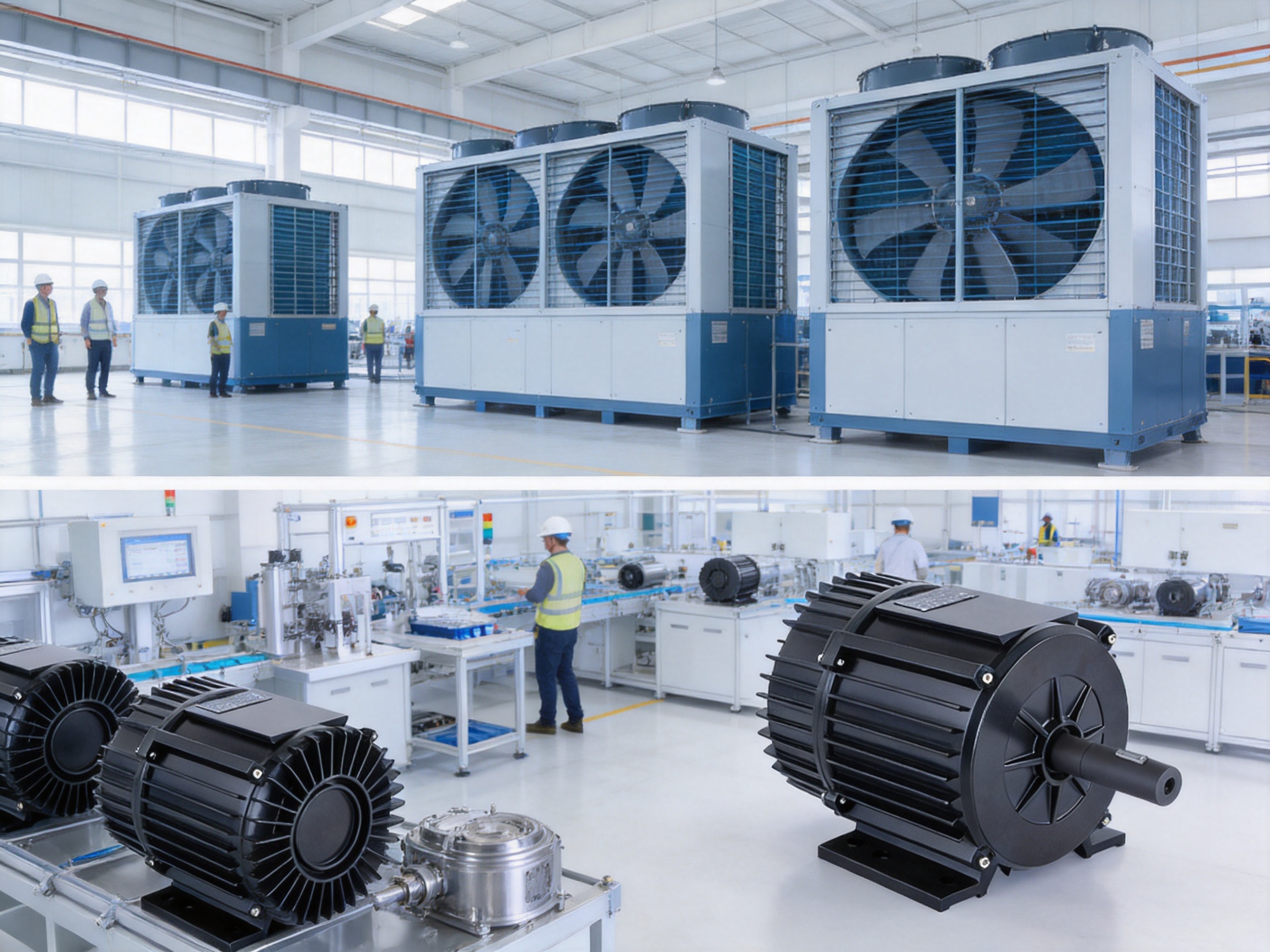
Modern evaporative air coolers require motor technology that can deliver dependable airflow, efficient energy use, quiet operation, and long service life. The ECF160 380V 1500W EC Fan Motor is designed to meet these demands through electronically commutated motor technology, a brushless construction, and a control approach optimized for variable-speed fan applications. It is developed for evaporative air cooler systems and is suitable for equipment manufacturers, industrial cooling integrators, commercial ventilation projects, and distributors seeking a reliable high-efficiency fan motor.
With a rated voltage of 380V and rated power of 1500W, the ECF160 is intended for demanding air movement applications where stable performance and reduced operating costs are important. Unlike conventional fixed-speed AC motors, an EC motor combines the operating advantages of AC electrical supply with electronically controlled brushless motor technology. This allows the motor to operate efficiently across a broad range of speeds while supporting precise airflow management.
The motor is manufactured by Shengzhou Jiangxin Motor Technology Co., Ltd., a professional AC/DC motor manufacturer established in 2017. The company focuses on research and development, production, quality control, and sales of AC/DC motors and micro motors. Its product range includes evaporative air cooler motors, industrial heater motors, oil pump motors, and customized motor solutions. Through modern production facilities, automated equipment, engineering expertise, and structured quality systems, the company provides motor products for customers in environmental equipment, industrial heating, hydraulic systems, and other sectors.
What Is an EC Fan Motor?
An electronically commutated fan motor is a brushless motor equipped with integrated electronic control technology. In a conventional motor, mechanical components such as brushes and a commutator perform the switching required to create rotation. In an EC motor, electronic circuitry controls the commutation process. This eliminates brush contact, reduces mechanical wear, and enables more accurate control of motor speed and operating efficiency.
The ECF160 is designed specifically for fan applications. Its operating concept is based on converting electrical energy into rotational motion with minimal unnecessary losses. The motor drives a fan or blower within an evaporative air cooler, helping the system move air through a wetted cooling medium and into the target space. Because evaporative coolers often operate for extended periods, motor efficiency has a direct effect on total electricity consumption and equipment operating costs.
EC technology is particularly valuable when a fan does not need to run at full capacity all the time. A conventional motor may continue consuming significant power even when the required airflow is reduced. An EC motor can adjust its operating speed more effectively, allowing the fan system to match output to actual cooling demand. This capability supports efficient partial-load operation and can help reduce unnecessary energy use during periods of moderate demand.
For industrial and commercial users, motor selection is not based only on rated power. Important considerations include operating efficiency, control flexibility, acoustic performance, expected service life, maintenance requirements, installation compatibility, and supplier capability. The ECF160 is positioned as a comprehensive solution that addresses these factors in one motor platform.
Key Product Specifications
| Item | Specification or Description |
|---|---|
| Product model | ECF160 |
| Product type | EC fan motor |
| Application | Evaporative air cooler and fan equipment |
| Rated voltage | 380V |
| Rated power | 1500W |
| Motor construction | Brushless electronically commutated design |
| Efficiency range | Up to 85%–95% across operating speeds |
| Energy-saving potential | Uses approximately 30%–70% less power than conventional AC motors, depending on operating conditions |
| Expected service life | Approximately 30,000–50,000 hours with appropriate operating conditions and maintenance practices |
| Primary performance benefits | High efficiency, low noise, low vibration, long life, and reduced maintenance |
The specifications show that the ECF160 is intended for equipment requiring substantial fan output rather than small household ventilation. Its 1500W rating offers a practical power level for larger evaporative cooling systems and other high-airflow equipment. The 380V electrical specification also makes it suitable for selected industrial and commercial installations where three-phase or higher-voltage power infrastructure is available.
High Efficiency Across Operating Speeds
One of the main advantages of the ECF160 is its high operating efficiency. The motor is designed to achieve efficiency of up to 85%–95% across operating speeds. The exact result in a finished system depends on factors such as fan blade design, load, control strategy, airflow resistance, ambient conditions, electrical supply, and installation quality. Nevertheless, the EC design provides a strong foundation for reducing losses in the motor and maintaining efficient operation when the fan is not running at full speed.
High efficiency is especially important in evaporative air cooler applications because these systems may operate continuously during hot seasons. Even a modest improvement in motor efficiency can produce meaningful savings when multiplied by long daily operating hours, multiple installed units, and many months of service. Lower energy consumption can also reduce the heat released by the motor itself, which may support improved equipment thermal management.
Compared with many conventional AC motor arrangements, an EC motor can reduce power consumption by approximately 30%–70%, depending on the operating point and system configuration. This range should be evaluated in relation to the complete fan assembly rather than treated as a fixed result for every installation. The greatest benefits are often seen when the fan operates below maximum capacity or when airflow demand changes frequently during the day.
Partial-load efficiency is a major point of differentiation. In many cooling applications, the equipment does not need maximum airflow at all times. Temperature, humidity, occupancy, outdoor conditions, and production schedules can change the required cooling capacity. The ECF160 is designed to work effectively under these changing requirements, helping the system avoid the waste associated with operating a full-capacity motor when only moderate airflow is needed.
Energy efficiency also contributes to the total cost of ownership. A motor with a higher purchase price may provide a more favorable long-term economic result if it substantially reduces electricity use and maintenance requirements. For commercial buildings, workshops, warehouses, agricultural facilities, and industrial sites, this total-cost perspective is often more important than the initial motor price alone.
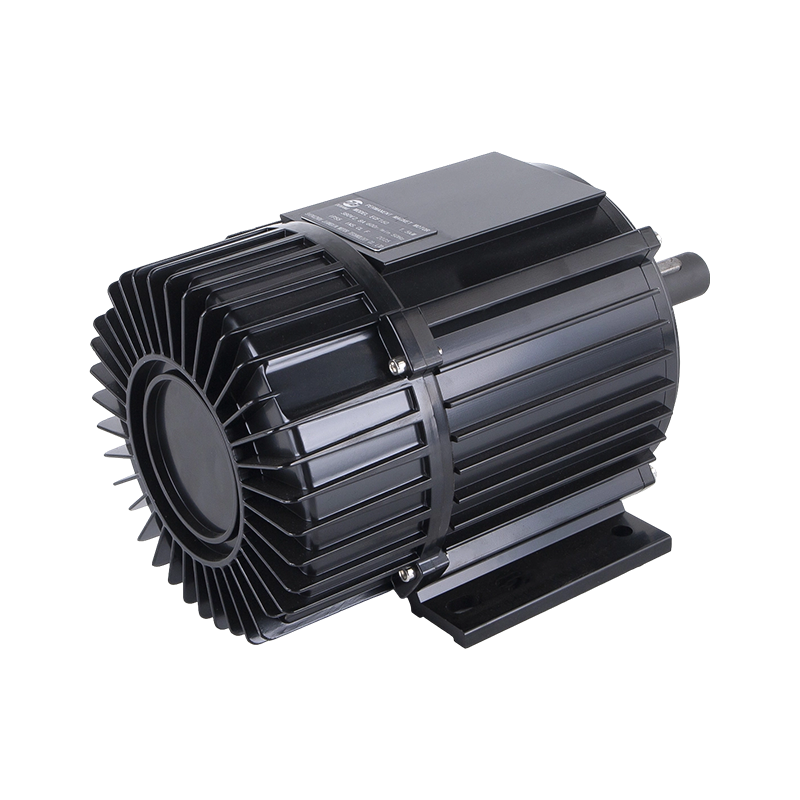
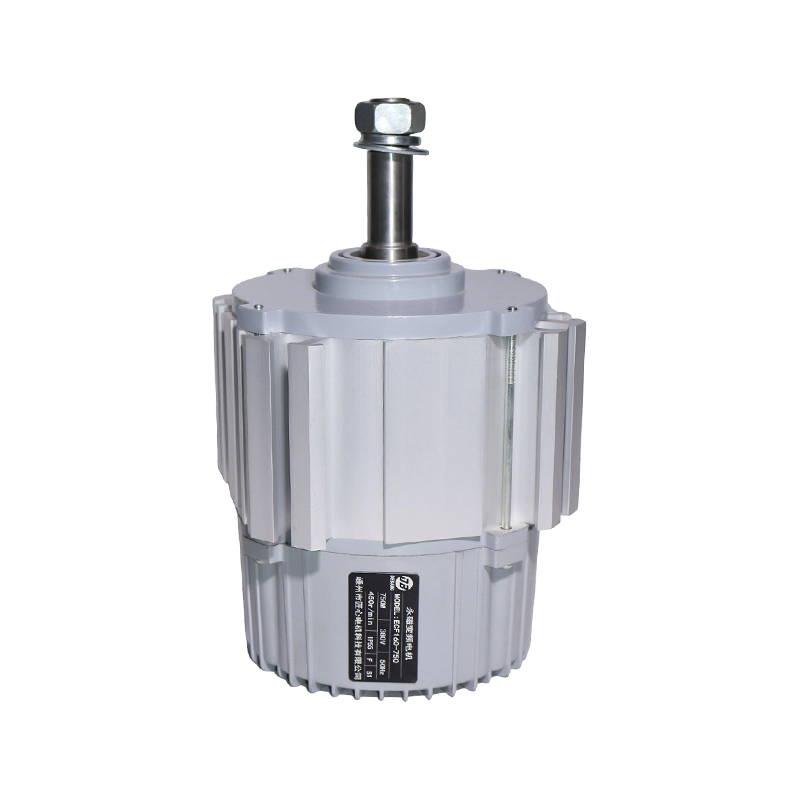
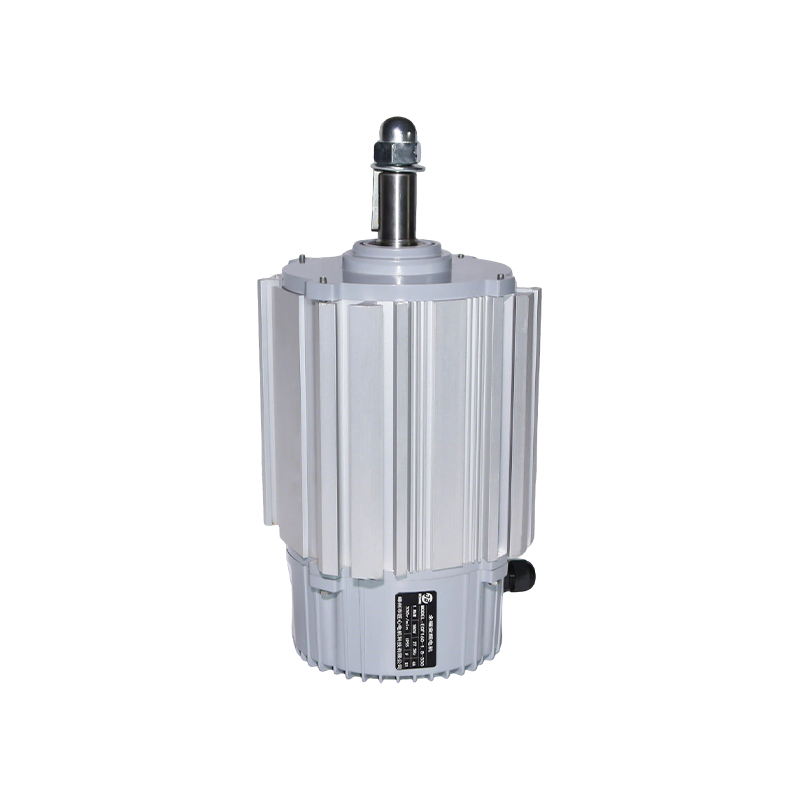
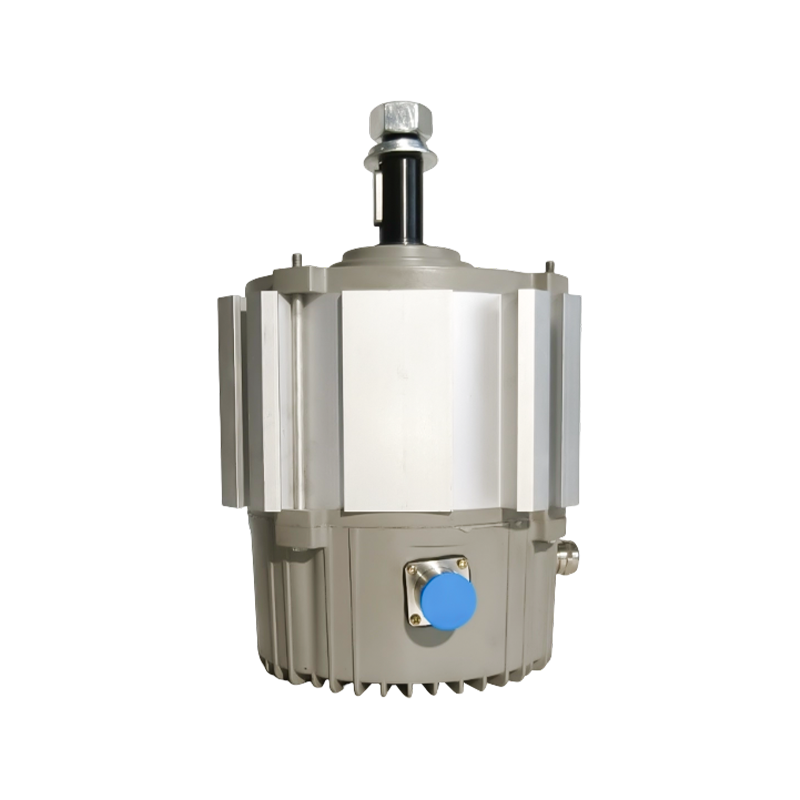
ECF160 380V 1500W EC Fan Motor
Brushless Construction for Long-Term Reliability
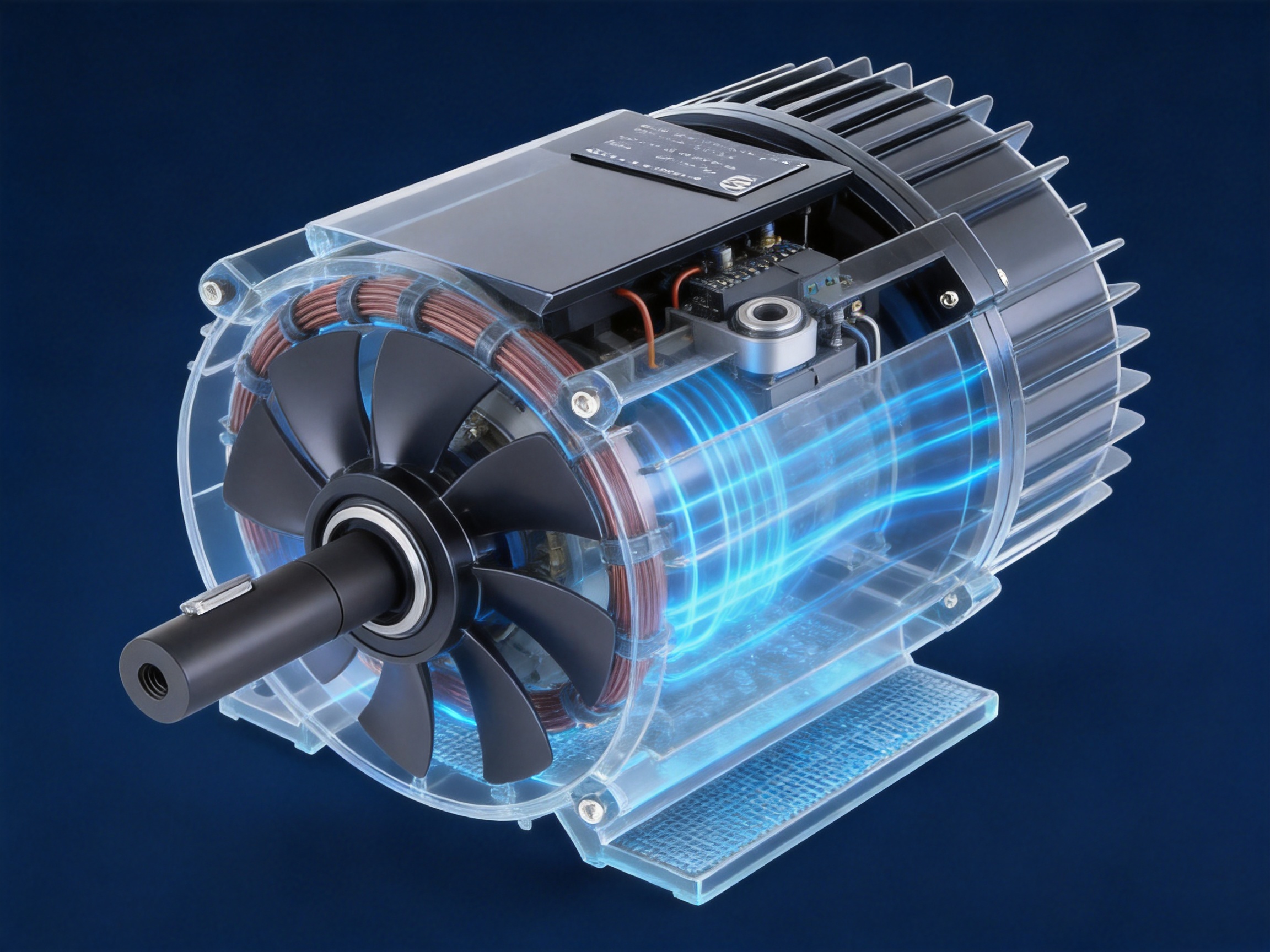
The ECF160 uses a brushless BLDC-based motor design. Conventional brushed motors rely on physical contact between brushes and a commutator. Over time, this contact produces wear, friction, electrical arcing, dust, and maintenance requirements. A brushless construction removes this wear mechanism and uses electronic commutation to control the rotating magnetic field.
Eliminating brushes provides several practical advantages. The motor has fewer components subject to mechanical degradation, and there is no routine brush replacement requirement. The absence of brush friction can improve efficiency and reduce mechanical noise. It also lowers the possibility of brush dust entering sensitive equipment, which can be valuable in enclosed fan assemblies and cleaner operating environments.
The brushless design supports an expected service life of approximately 30,000–50,000 hours under suitable operating conditions. Actual life depends on factors including bearing quality, load, operating temperature, voltage stability, environmental contamination, vibration, installation, and maintenance of the complete fan system. Even with these variables, the design offers a substantial service-life target for equipment that must operate for extended periods.
Long service life is important for evaporative coolers installed in locations where motor replacement is inconvenient. Industrial facilities, agricultural buildings, logistics centers, workshops, and commercial properties may have large numbers of coolers installed at height or in difficult-to-access areas. Reducing the frequency of motor replacement can lower labor costs, shorten service interruptions, and improve overall equipment availability.
For original equipment manufacturers, a durable motor can also improve the perceived reliability of the finished cooler. A motor that maintains stable performance over a long period helps reduce warranty exposure and supports a more consistent user experience. The motor is therefore not simply an individual component; it contributes directly to the reputation and operating performance of the complete cooling system.
Quiet Operation and Reduced Vibration
Noise is a significant concern in many fan applications. Evaporative air coolers may be installed near workers, customers, classrooms, offices, residential areas, or other noise-sensitive spaces. Excessive motor noise can reduce comfort and may require additional acoustic treatment. The ECF160 is designed to support quiet operation through brushless technology, reduced mechanical friction, and rotor and winding engineering intended to limit acoustic noise.
Low vibration is equally important. Excessive vibration can cause structural fatigue, loosen fasteners, increase bearing stress, produce noise, and reduce the service life of the fan assembly. A balanced rotating system and suitable installation can help the motor operate smoothly. The ECF160’s design focuses on reducing vibration so that the motor can support stable fan operation when properly matched with the impeller, housing, and mounting structure.
Noise and vibration performance must always be evaluated at the system level. Fan blade balance, airflow turbulence, mounting rigidity, duct design, bearing condition, and resonance within the equipment enclosure can all affect the final sound level. Even so, starting with a brushless motor engineered for low noise and low vibration gives equipment designers a stronger foundation for achieving acceptable acoustic performance.
Quiet operation also improves the flexibility of product placement. A cooler that operates with lower acoustic disturbance can be used in more environments without disrupting normal activities. This may be relevant to factories, retail spaces, sports facilities, dining areas, public buildings, and temporary cooling installations.
Maintenance-Free Operating Advantages
The ECF160 is designed as a low-maintenance motor. Because it does not use brushes, it avoids brush wear and the scheduled replacement associated with brushed motor systems. The use of high-performance bearings further supports extended operation and helps reduce the frequency of mechanical servicing.
Low maintenance does not mean that the complete cooling system can be ignored. Evaporative coolers still require cleaning, water management, air filter inspection where applicable, fan inspection, electrical checks, and protection against excessive dust or moisture. However, a brushless motor can reduce the number of motor-specific service tasks and allow maintenance teams to focus on the surrounding equipment.
Maintenance savings can be particularly valuable for facilities with multiple cooling units. If a site contains dozens or hundreds of motors, even small service requirements can become a major operational burden. A low-maintenance design can reduce scheduled labor, spare-part inventories, and emergency repair requirements. It may also make preventive maintenance planning easier because the motor does not depend on consumable brush components.
Reduced maintenance contributes to a lower risk of unexpected downtime. Although every motor can be affected by unsuitable conditions, overload, contamination, or incorrect installation, a brushless design removes one common source of wear. This is a meaningful advantage over traditional brushed alternatives and some older motor technologies.
Designed for Evaporative Air Cooler Applications
Evaporative cooling systems use the natural cooling effect created when water evaporates into moving air. A fan motor is central to this process because it must move a large volume of air through the cooling medium and deliver that air into the occupied or industrial area. The motor must therefore provide dependable rotation, suitable torque, stable operation, and efficient energy conversion.
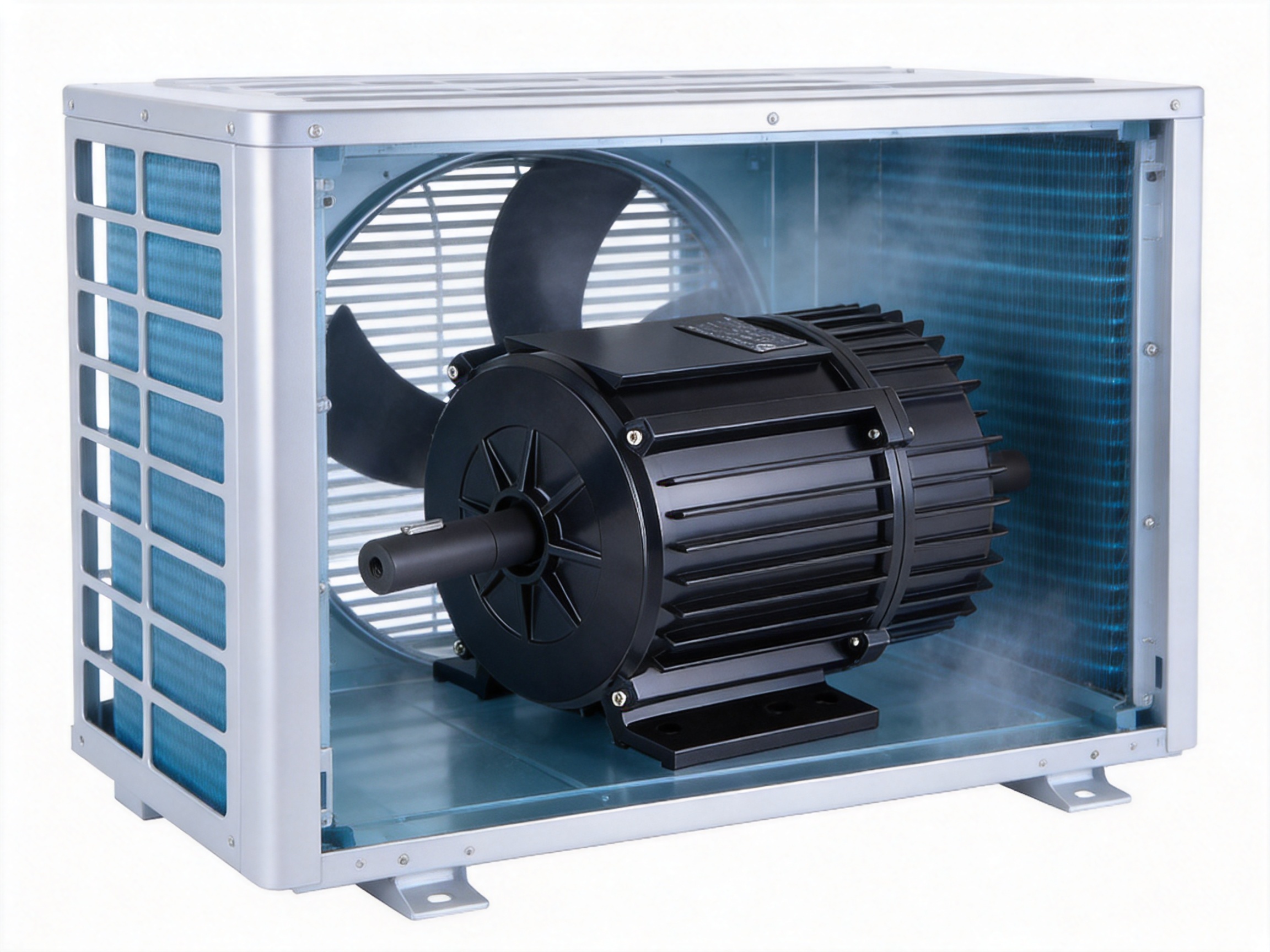
The ECF160 is designed for this type of duty. Its 1500W power rating provides a substantial output level for large evaporative coolers and high-airflow systems. The motor can be integrated into equipment designed for factories, warehouses, workshops, agricultural buildings, commercial spaces, and other facilities that require cost-effective air movement and cooling.
Air cooler manufacturers can use the motor as part of a complete system that includes a fan impeller, cooling pads, water circulation components, housing, electrical controls, and protective devices. System designers should confirm the required airflow, static pressure, rotational speed, mounting dimensions, wiring arrangement, environmental conditions, and control interface before final selection.
The ability to operate efficiently across different speeds is particularly helpful for evaporative coolers. During periods of mild weather or lower occupancy, the fan may operate at reduced output. During peak heat or high occupancy, it may be required to run at a higher level. An EC motor allows the equipment designer to develop a more flexible cooling strategy than a simple fixed-speed motor arrangement.
Advantages Over Conventional AC Motors
The ECF160 offers several advantages over conventional AC motor solutions. The most visible advantage is energy efficiency. Traditional AC motors can provide reliable operation, but their efficiency may decline at partial load, and their speed control may require additional devices or may be less efficient depending on the control method. An EC motor integrates electronic commutation and can be designed for more efficient variable-speed operation.
The second advantage is reduced maintenance. Conventional motor technologies may require mechanical service related to brushes, contact components, or other wear parts. The ECF160’s brushless construction avoids brush replacement and reduces mechanical friction. This can make the motor more attractive for equipment expected to run many hours each year.
The third advantage is acoustic performance. A brushless motor eliminates brush contact noise and can be engineered with rotor and winding features that reduce vibration. When properly integrated into a balanced fan system, this can support quieter equipment operation than a comparable conventional design.
The fourth advantage is control flexibility. Variable-speed operation allows the cooling system to respond to changing conditions. Rather than switching between only on and off states, the equipment can be configured to provide a more suitable airflow level. This may improve comfort, reduce energy waste, and lower mechanical stress caused by repeated abrupt starting and stopping.
The fifth advantage is long-term operating value. A motor that combines lower energy consumption, reduced maintenance, and extended service life can provide a better overall cost structure. The most appropriate comparison should include electricity, labor, replacement parts, downtime, and equipment performance over the expected service period.
| Comparison Factor | ECF160 EC Fan Motor | Conventional Motor Arrangement |
|---|---|---|
| Motor technology | Electronically commutated brushless design | Often based on conventional AC motor construction |
| Partial-load operation | Designed to maintain high efficiency across operating speeds | Efficiency and control performance may be less favorable at reduced speed |
| Brush maintenance | No brush wear or brush replacement | Applicable to brushed designs and related service requirements |
| Noise and vibration | Designed for quiet, low-vibration operation | Performance depends on motor construction and control method |
| Energy use | Potentially 30%–70% lower power use than conventional AC motors, depending on conditions | May consume more energy, especially in variable or partial-load operation |
| Service life target | Approximately 30,000–50,000 hours under suitable conditions | Varies according to design, load, maintenance, and operating environment |
Manufacturing Strengths and Engineering Capability
Product performance is closely connected to the manufacturer’s engineering and production capability. Shengzhou Jiangxin Motor Technology Co., Ltd. was established in 2017 and specializes in AC/DC motors and micro motors. The company combines research and development, production, sales, automated manufacturing equipment, and quality control in support of its product portfolio.
The company operates modern production facilities and uses advanced automated equipment. Automation can help improve process consistency, repeatability, and production efficiency. In motor manufacturing, consistent assembly and process control are important because small variations in winding, rotor positioning, bearing installation, electrical connections, or mechanical alignment can affect efficiency, noise, vibration, and service life.
A professional R&D team supports the company’s ability to develop and improve motor products. This capability is important for EC fan motors because the product must combine electromagnetic design, mechanical construction, electronic control, thermal considerations, and application requirements. A motor intended for an evaporative cooler must be evaluated not only as an electrical machine but also as part of a complete air-moving system.
The company has been recognized as a provincial-level technology enterprise. This recognition reflects its focus on technical development and innovation. For customers seeking customized motors or application-specific solutions, an engineering-oriented manufacturer can provide more value than a supplier that only offers standard catalog products.
Jiangxin Motor focuses on reliable, energy-efficient, and long-lasting products. These priorities correspond directly with the principal advantages of the ECF160. Energy efficiency supports lower operating costs, reliability supports stable system operation, and long life helps reduce replacement frequency.
The company’s product range includes evaporative air cooler motors, industrial heater motors, oil pump motors, and customized motor solutions. This broader experience in different motor applications can support cross-disciplinary engineering knowledge. Customers may benefit from a supplier familiar with various operating environments, power requirements, mechanical configurations, and industrial equipment conditions.
Quality Control and Production Consistency
Quality control is essential for motors because performance depends on the interaction of many individual parts and processes. A motor may have an appropriate nominal power rating but still fail to deliver satisfactory field performance if its components are inconsistent or if assembly quality is not controlled. The manufacturer’s stated focus on strict quality control systems is therefore an important part of the ECF160 value proposition.
Quality control for an EC motor may involve inspection of incoming materials, verification of winding and electrical components, mechanical assembly checks, rotor and bearing installation, visual inspection, electrical testing, and final performance evaluation. The precise test procedures depend on the manufacturer’s internal standards and the customer’s technical requirements. Buyers should request applicable test records or quality documentation when required for a particular project.
Production consistency is especially important for original equipment manufacturers ordering repeated batches. A stable manufacturing process helps ensure that replacement units and new production units provide comparable installation and performance characteristics. This can simplify product design, field service, inventory management, and warranty support.
For international customers, supplier reliability also includes communication, order coordination, packaging, documentation, and after-sales support. The company exports products to more than 60 countries and regions worldwide, demonstrating experience in serving customers across different markets. This international exposure can help support export-oriented equipment manufacturers and distributors.
Customers should still confirm all project-specific requirements before ordering. These may include electrical standards, certifications, environmental ratings, dimensions, speed-control requirements, connector types, mounting arrangements, packaging specifications, and regulatory documentation for the destination market.
Application Areas
Evaporative Air Coolers
The primary application for the ECF160 is the evaporative air cooler. The motor can support large fan assemblies that move air through cooling pads and distribute cooled air throughout a space. Its efficiency and variable-speed capability are valuable for equipment that must operate for long periods under changing thermal loads.
Industrial Workshops
Workshops often contain heat-generating machinery and require strong air circulation. An efficient 1500W EC motor can help drive an industrial cooler or ventilation system while limiting motor-related energy consumption. Quiet and low-vibration operation can also improve the working environment.
Warehouses and Logistics Facilities
Warehouses may have large internal volumes and limited mechanical cooling options. Evaporative cooling systems can be used to improve air movement and reduce heat accumulation. Long service life is valuable in these facilities because equipment may operate for extended shifts and may be installed in locations that are difficult to access.
Agricultural Buildings
Agricultural facilities may require high-volume air movement for livestock areas, storage spaces, greenhouses, or processing areas. The motor should be selected according to the environmental conditions, including dust, humidity, temperature, and exposure to water. Proper protection and routine cleaning are important for maintaining reliable operation in such environments.
Commercial and Public Buildings
Commercial spaces, sports facilities, service areas, and other public buildings may benefit from efficient air cooling and low acoustic disturbance. The ECF160 can be considered where the equipment designer needs a combination of airflow power, energy efficiency, and quiet operation.
Customized Equipment
Because the manufacturer provides customized motor solutions, the ECF160 platform or related motor technology may be evaluated for specialized equipment. Customization requirements should be discussed with the manufacturer in advance, including power, voltage, speed, mounting, protection, control, and environmental specifications.
Installation and System Integration Considerations
Correct installation is essential for achieving the expected benefits of any high-efficiency motor. Before installation, the equipment designer should verify that the motor’s 380V electrical specification is compatible with the available power supply and the control system. Electrical connections should be completed by qualified personnel in accordance with applicable safety requirements and local regulations.
The motor must be correctly matched with the fan impeller. The impeller diameter, blade angle, rotational speed, airflow demand, and static pressure all influence the motor load. A motor that is too lightly loaded may not operate at its intended performance point, while a motor that is overloaded may experience excessive current, temperature, vibration, or reduced service life.
Mechanical alignment should be checked carefully. The mounting structure must be rigid enough to support the motor and fan assembly without introducing resonance or excessive movement. Fasteners should be tightened according to the equipment design, and the rotating assembly should be inspected for balance and clearance before operation.
Airflow paths should be designed to avoid unnecessary resistance. Blocked filters, dirty cooling pads, restricted ducts, or poorly designed grilles can increase the fan load and reduce total system efficiency. Regular cleaning of the evaporative cooler and airflow passage helps the motor operate within its intended conditions.
Environmental protection is another important consideration. Evaporative coolers operate near water, so the motor and electrical components must be installed in a way that prevents direct water ingress and protects sensitive parts from excessive humidity. The final equipment design should provide suitable drainage, sealing, ventilation, and protective measures.
Where variable-speed control is used, the control method should be compatible with the motor’s electronic design. Equipment manufacturers should confirm the required control signal, operating range, communication method, and protection functions before final integration. If the system includes automatic temperature or humidity control, the motor should be evaluated together with the sensors and control logic.
Energy and Total-Cost Benefits
The economic value of the ECF160 extends beyond its purchase price. Energy use is often one of the largest operating expenses associated with continuous fan equipment. An efficient motor can reduce the electricity required to produce the same airflow, particularly when operating at partial load.
For a simple illustration, consider a cooler that operates many hours per day during a warm season. If an EC motor reduces average power consumption compared with a conventional motor, the savings accumulate over every operating hour. When several units are installed, the total impact becomes more significant. The exact savings should be calculated using the actual duty cycle, electricity price, motor load, control strategy, and comparison motor.
The motor can also reduce indirect costs. Lower power consumption may reduce the electrical capacity required for a large installation. Reduced heat losses may support improved thermal conditions inside the equipment. Lower maintenance requirements can reduce service labor and spare-part storage. Longer service life can lower the frequency of replacement and the risk of interruptions during peak cooling periods.
For equipment manufacturers, an efficient motor can strengthen the market position of the finished cooler. End users increasingly compare products based on lifecycle cost, energy consumption, and environmental impact. A fan motor that supports efficient operation gives manufacturers a stronger technical foundation for developing competitive cooling equipment.
| Cost Category | Potential Contribution of the ECF160 |
|---|---|
| Electricity consumption | High efficiency and partial-load performance may reduce operating power requirements |
| Maintenance labor | Brushless construction removes brush replacement and reduces motor-specific service work |
| Replacement parts | Long service-life design may reduce the frequency of motor replacement |
| Downtime | Reliable operation can support greater equipment availability when properly installed and maintained |
| System control | Variable-speed capability can help match airflow to changing cooling demand |
| Product competitiveness | Efficient, quiet, and durable motor technology can improve the value of the finished cooler |
Why Manufacturer Selection Matters
Choosing an EC fan motor is also a decision about the manufacturing partner behind the product. Consistent quality, technical support, production capacity, and customization capability can influence the success of an equipment project as much as the motor’s nominal specifications.
Shengzhou Jiangxin Motor Technology Co., Ltd. provides an integrated manufacturing approach that includes research and development, production, sales, and quality management. This structure can simplify communication for customers who need product selection assistance, application guidance, repeat orders, or customized motor development.
The company’s focus on AC/DC motors and micro motors gives it a specialized product identity rather than a general trading profile. Its experience covers multiple applications, including environmental protection equipment, industrial heating, hydraulic systems, and other industrial fields. This background is relevant to customers that require practical motor solutions rather than isolated standard components.
Modern facilities and automated equipment can support repeatable production. A professional R&D team can help evaluate new technical requirements. Strict quality control can help protect consistency. International sales experience can support export orders. Together, these capabilities provide a foundation for long-term cooperation with original equipment manufacturers, wholesalers, system integrators, and distributors.
The company has supplied products to more than 60 countries and regions worldwide. This international market experience indicates that the manufacturer has worked with customers operating under different commercial, technical, and logistical conditions. Buyers should discuss their specific documentation, packaging, delivery, and compliance requirements during the quotation and engineering stages.
Product Selection Guidance for Buyers
Before purchasing the ECF160, buyers should define the complete application requirements. The first step is to confirm the required airflow and static pressure. Motor power alone does not determine fan performance; the motor must be paired with a suitable impeller and housing to reach the desired operating point.
The second step is to verify the electrical conditions. The ECF160 is specified for 380V and 1500W. The buyer should confirm the supply voltage, frequency, phase arrangement, protection system, starting method, and control interface. Any difference between the intended installation and the motor specification should be reviewed with the manufacturer before ordering.
The third step is to evaluate environmental conditions. Important factors include ambient temperature, relative humidity, dust, water exposure, corrosive substances, installation altitude, and expected operating hours. Evaporative cooler applications require special attention to moisture protection and cleaning procedures.
The fourth step is to examine mechanical compatibility. Buyers should confirm dimensions, mounting method, shaft configuration, rotation direction, fan connection, cable routing, and available installation space. For replacement projects, measurements of the existing motor and fan assembly should be checked rather than relying only on a model name.
The fifth step is to determine the expected operating profile. If the fan will run continuously, the value of high efficiency and long service life becomes especially important. If the fan will operate at different speeds, control compatibility and partial-load performance should be prioritized.
Finally, customers should clarify order quantity, lead time, packaging, warranty terms, technical documents, inspection requirements, and after-sales support. Clear communication before production helps reduce the possibility of mismatch and supports a smoother installation process.
Maintenance Recommendations
Although the ECF160 is designed for low-maintenance operation, preventive care remains important. The fan housing, cooling pads, filters, and air passages should be inspected regularly. Dust and mineral deposits can restrict airflow, increase fan load, and reduce the efficiency of the complete system.
The rotating assembly should be checked for abnormal noise, vibration, rubbing, or looseness. Any change in operating sound may indicate an issue with the fan impeller, bearing, mounting structure, or airflow path. Early inspection can prevent a minor problem from developing into a major failure.
Electrical connections should be inspected by qualified personnel. Loose terminals, damaged insulation, moisture, or unstable power can affect motor performance and create safety risks. Protective devices should be tested according to the equipment manufacturer’s maintenance schedule.
Water management is especially important in evaporative cooling equipment. Excessive leakage, direct spraying, poor drainage, or high mineral concentration may negatively affect surrounding components. The cooler should be maintained so that the motor remains protected from unsuitable moisture exposure.
Maintenance records can help facility operators identify changes in energy use, vibration, temperature, and operating hours. These records support predictive maintenance and may help determine when components such as bearings, impellers, or mounting elements require attention.
Environmental and Sustainability Considerations
Energy-efficient motor technology supports more responsible equipment operation. By reducing electricity consumption, the ECF160 may help lower the indirect environmental impact associated with operating evaporative air coolers. The benefit is most meaningful when the motor operates for long periods and when variable-speed control is used to avoid unnecessary full-power operation.
Long service life also supports sustainability. A motor that remains in service for many years reduces the need for frequent replacement, transportation, packaging, and disposal. Brushless construction helps extend service life by removing brush wear as a failure mechanism. Proper maintenance and correct system design are still necessary to realize this benefit.
Evaporative cooling itself can provide an energy-conscious alternative for suitable climates and applications. It is not appropriate for every environment, and system performance depends on humidity, ventilation, water quality, and installation conditions. When properly matched to the application, an efficient EC motor can improve the overall energy profile of the cooling system.
Equipment designers should evaluate environmental performance across the product lifecycle. This includes manufacturing quality, energy use during operation, service requirements, replacement frequency, and end-of-life handling. The ECF160’s efficiency and durability characteristics can contribute positively to this broader evaluation.
Frequently Asked Questions
What type of motor is the ECF160?
The ECF160 is a 380V 1500W electronically commutated fan motor. It uses a brushless BLDC-based design and is intended primarily for evaporative air cooler applications and other fan equipment requiring efficient air movement.
What is the rated voltage and power?
The stated specifications are 380V and 1500W. Customers should confirm the electrical supply, frequency, phase arrangement, and control requirements before installation.
What makes an EC motor different from a conventional AC motor?
An EC motor uses electronic commutation instead of mechanical brushes and a commutator. This allows brushless operation, improved speed control, reduced mechanical wear, and strong efficiency across a range of operating speeds.
How efficient is the ECF160?
The motor is designed to achieve efficiency of up to 85%–95% across operating speeds. Actual system efficiency depends on load, fan design, airflow resistance, control settings, ambient conditions, and installation quality.
Can the ECF160 reduce electricity consumption?
It is designed to use approximately 30%–70% less power than conventional AC motors, depending on operating conditions. The greatest savings may occur in systems that operate for long periods or frequently run below maximum capacity.
Is the motor suitable for variable-speed operation?
The EC design is intended to support efficient operation across different speeds. The equipment manufacturer or system integrator should confirm the compatible control method and required operating range before final integration.
What service life can be expected?
The stated expected service life is approximately 30,000–50,000 hours under suitable operating conditions. Actual life depends on load, temperature, humidity, contamination, power quality, bearing conditions, installation, and maintenance.
Does the motor require brush replacement?
No. The brushless design eliminates brush wear and the associated brush replacement task. Routine inspection of the complete fan system is still recommended.
Is the ECF160 completely maintenance-free?
The motor is designed for low-maintenance operation, but the complete cooling system still requires maintenance. Filters, cooling pads, water systems, fan components, electrical connections, and mounting structures should be inspected and maintained as appropriate.
What applications are suitable for this motor?
The primary application is evaporative air cooling. It may also be considered for industrial ventilation, large fan assemblies, warehouses, workshops, agricultural buildings, commercial spaces, and customized air-moving equipment, subject to technical compatibility.
How does the motor help reduce noise?
Its brushless construction eliminates brush contact noise, while rotor and winding engineering are intended to reduce acoustic noise and vibration. Final sound performance also depends on the fan impeller, mounting, housing, airflow path, and system balance.
Can the motor be used in wet environments?
Evaporative cooling equipment operates near water, but the motor must be installed with suitable protection against direct water exposure and excessive moisture. Environmental conditions and protection requirements should be confirmed with the manufacturer before use.
Does the manufacturer provide customized motor solutions?
Yes. The manufacturer’s product portfolio includes customized motors. Customers should provide detailed electrical, mechanical, control, environmental, and application requirements for an engineering evaluation.
What information should be supplied when requesting a quotation?
Useful information includes required voltage, power, frequency, phase, speed, airflow, static pressure, mounting dimensions, shaft or fan connection, control method, operating environment, annual operating hours, order quantity, destination, and documentation requirements.
Why should buyers consider the manufacturer’s production capability?
Motor performance depends on consistent materials, winding, assembly, balancing, bearing installation, testing, and quality control. A manufacturer with modern facilities, automated equipment, R&D capability, and structured quality systems can provide stronger support for repeat production and customized applications.
Conclusion
The ECF160 380V 1500W EC Fan Motor is designed for equipment manufacturers and system integrators seeking efficient, quiet, durable, and low-maintenance fan performance. Its electronically commutated brushless architecture provides key advantages over many conventional motor arrangements, including high efficiency across operating speeds, flexible partial-load operation, reduced mechanical wear, and long service life.
With efficiency of up to 85%–95%, potential power savings of approximately 30%–70% compared with conventional AC motors, and an expected service life of 30,000–50,000 hours under suitable conditions, the motor is positioned for applications where operating cost and reliability matter. Its 380V 1500W specification makes it suitable for demanding evaporative air cooler systems and other high-airflow equipment.
The manufacturer’s strengths further support the product. Established in 2017, Shengzhou Jiangxin Motor Technology Co., Ltd. combines motor R&D, modern production facilities, automated equipment, professional engineering resources, and strict quality control. Its experience with AC/DC motors, micro motors, evaporative cooling equipment, industrial heating, oil pump applications, and customized solutions provides a foundation for serving a wide range of customers.
For the best result, the ECF160 should be selected and integrated according to the complete system requirements. Electrical compatibility, fan matching, airflow, environmental protection, mounting, control, and maintenance all influence final performance. When properly specified and installed, this EC fan motor can help manufacturers and end users achieve more efficient cooling, lower maintenance demands, quieter operation, and improved long-term equipment value.
References
1. Manufacturer-provided product information for the ECF160 380V 1500W EC Fan Motor.
2. Manufacturer-provided company profile and technical capability information for Shengzhou Jiangxin Motor Technology Co., Ltd.
3. General principles of electronically commutated motor operation and brushless DC motor technology.
4. General engineering practices for evaporative air cooler design, fan selection, airflow management, and motor integration.
5. General guidance on electric motor efficiency, partial-load operation, preventive maintenance, and total cost of ownership.
Product: ECF160 380V 1500W EC Fan Motor
 Ready To Customise
 Your Motor Products?

We are professional motor manufacturers, delivering powerful, stable, and efficient power cores for all industries through precision craftsmanship and innovation.
Contact Us
-
 Mobile:+86 13575536911
-
 Tel:+86 18357538240
-
 Whatsapp:+8618357538240
-
 Email:betty@dbjxmotor.com
-
 Company Address
Copyright © by Shengzhou Jiangxin Motor Technology Co., Ltd. All Rights Reserved.
Wholesale Industrial Fan Motors Manufacturers
