

 English
 русский
 Español
 عربى
عربى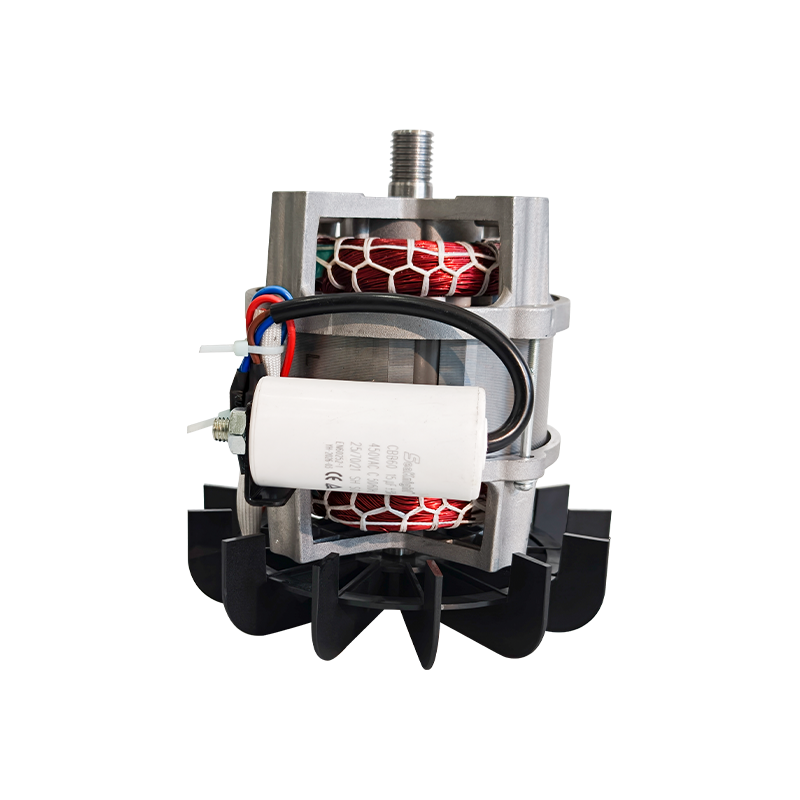
No. 8, Duxiu San Road, Ganlin Town, Shengzhou City, Shaoxing City, Zhejiang Province, China

News Category
Product Category
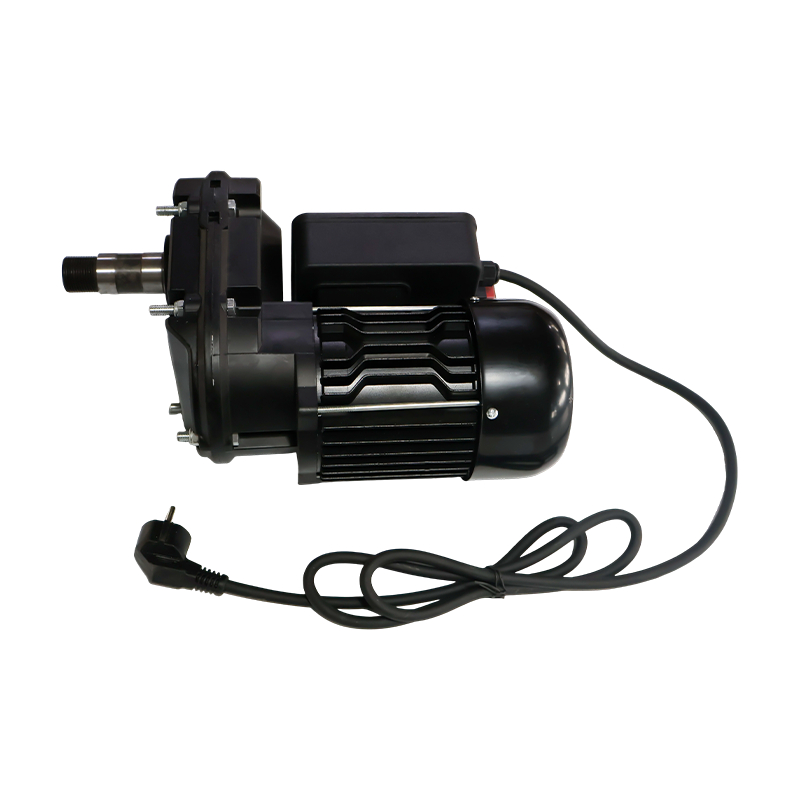
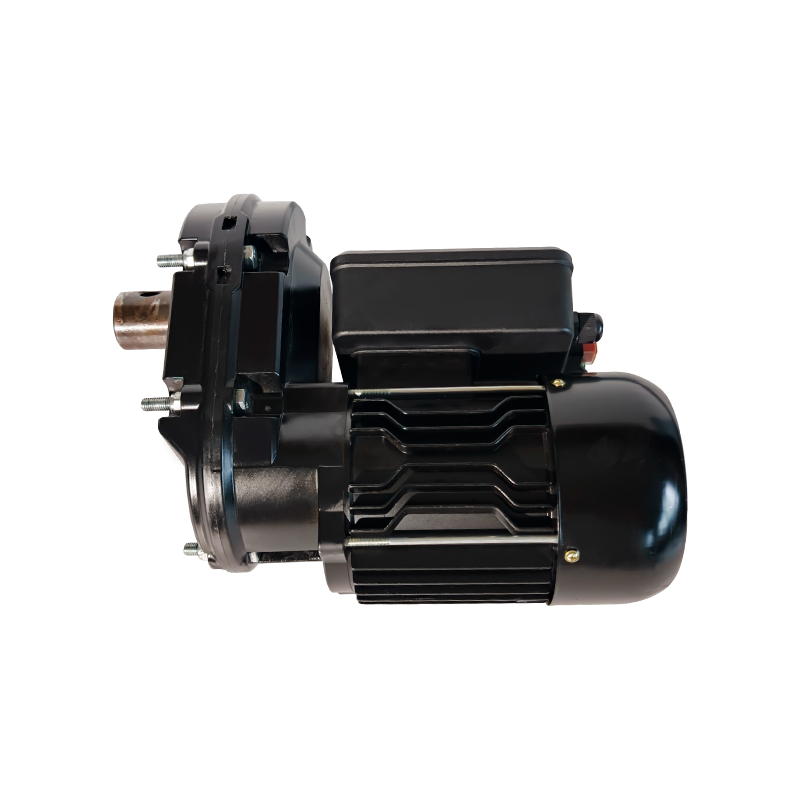
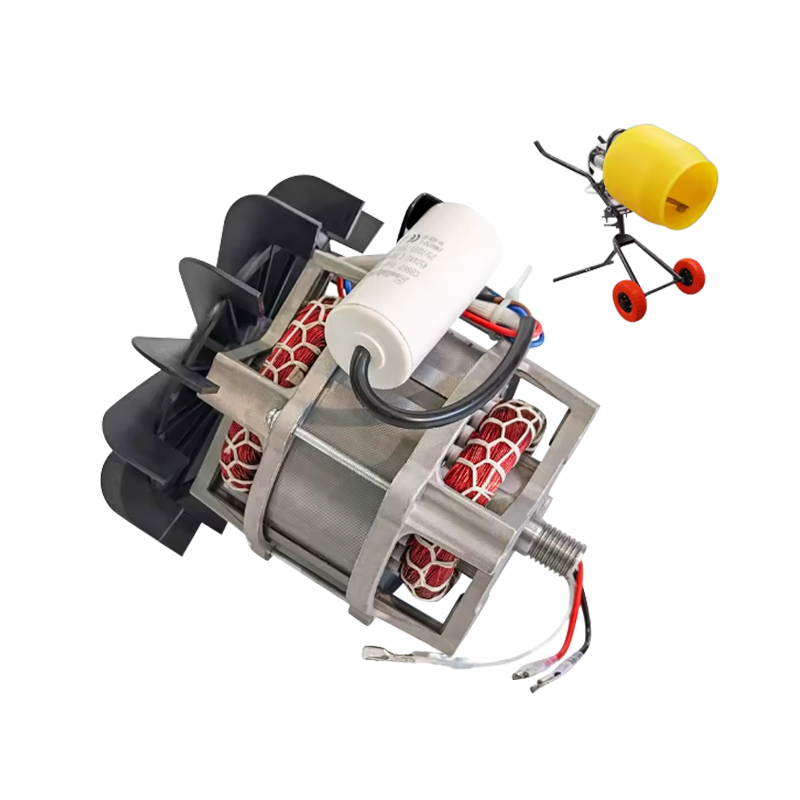
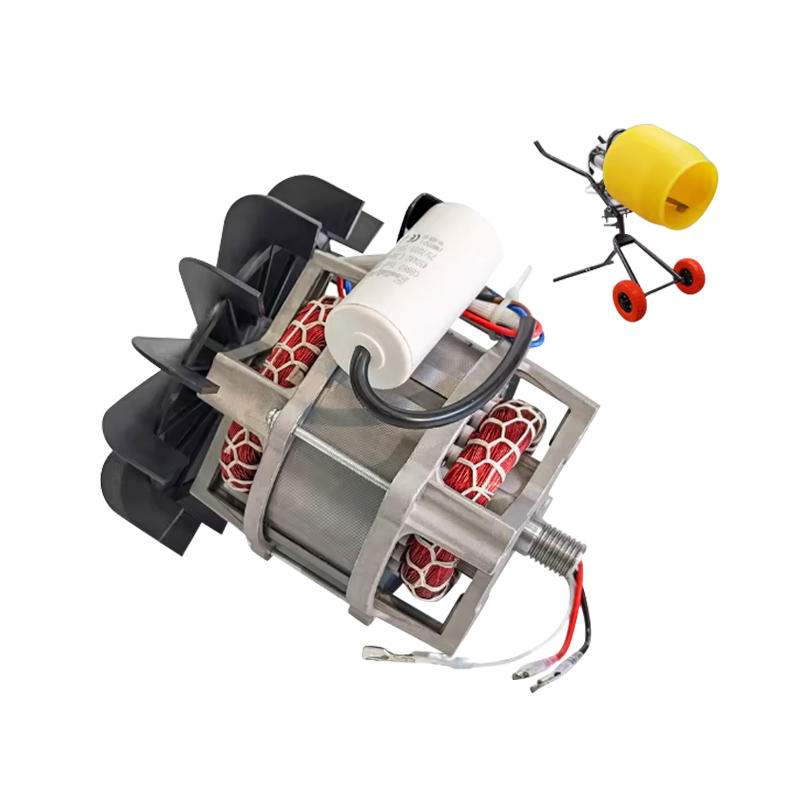
YY71-2 230V 650W Portable Concrete Mixer Motor: Reliable Power for Compact Mixing Equipment
Content
- 1 Product Overview
- 2 Why the Motor Is Important in a Portable Concrete Mixer
- 3 Core Performance Advantages
- 4 Advantages Compared with Generic Alternative Motors
- 5 Manufacturing Strengths of the Producer
- 6 Application Areas
- 7 Electrical and Mechanical Integration
- 8 Operating and Maintenance Recommendations
- 9 Value for Equipment Manufacturers and Distributors
- 10 How to Evaluate the Motor Before Purchase
- 11 Recommended Commissioning Procedure
- 12 Quality, Reliability and Total Cost of Ownership
- 13 Frequently Asked Questions
- 13.1 What is the rated power of the YY71-2 motor?
- 13.2 What voltage does the motor use?
- 13.3 Is the YY71-2 a single-phase motor?
- 13.4 What is the motor’s rated speed?
- 13.5 Can this motor drive a large industrial concrete mixer?
- 13.6 What is the advantage of the full copper winding?
- 13.7 Does the motor include a capacitor?
- 13.8 Is the motor easy to install?
- 13.9 How can overheating be prevented?
- 13.10 Can the manufacturer provide customized versions?
- 13.11 What should be confirmed before ordering for export?
- 13.12 What maintenance does the motor require?
- 14 Conclusion
- 15 References
- 16 Product: YY71-2 230V 650W Portable Concrete Mixer Motor
Portable concrete mixers require a dependable drive motor that can deliver steady mechanical power in a compact, practical and economical design. The YY71-2 230V 650W Portable Concrete Mixer Motor is developed for this purpose. It is a single-phase motor with a capacitor, a rated power of 650 watts and a rated speed of 2,800 revolutions per minute. Designed for small portable concrete mixers, cement mixers and related construction machinery, it combines a full copper winding, high-temperature resistance, low power consumption and straightforward installation.
Unlike a general-purpose motor selected without considering the working conditions of a mixer, this model is specifically intended for portable mixing applications. A concrete mixer motor must cope with repeated starting, changing load conditions, vibration, dust and the need for consistent drum or paddle rotation. The YY71-2 design addresses these requirements through a compact structure, stable operation and a configuration suitable for small construction equipment.
Manufactured by Shengzhou Jiangxin Motor Technology Co., Ltd., the motor reflects the company’s focus on AC/DC motors, micro motors and customized motor solutions. The manufacturer combines production experience, automated equipment, research and development capabilities and quality control systems to supply motors for customers in construction equipment and other industrial sectors.
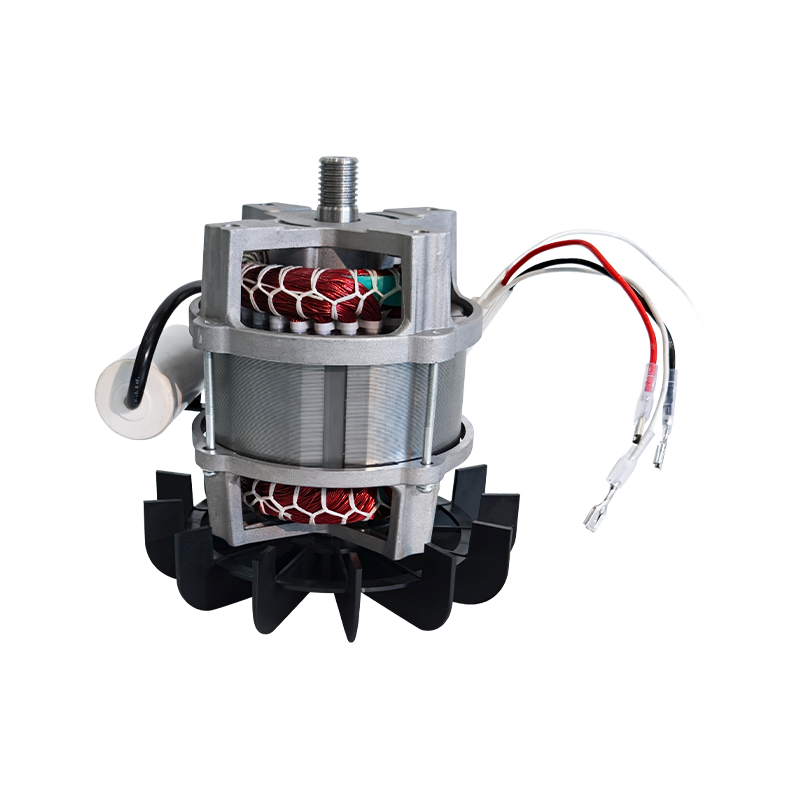
YY71-2 230V 650W Portable Concrete Mixer Motor
Product Overview
The YY71-2 is a 230-volt, 650-watt single-phase concrete mixer motor. Its capacitor-based design makes it suitable for electrical systems commonly used in portable construction equipment and small job-site machinery. With a rated speed of 2,800 RPM, the motor provides the rotational performance needed for compact concrete mixers and cement mixers when matched with the appropriate transmission, pulley or gearbox arrangement.
The motor is intended for applications in which equipment must remain relatively compact and easy to move. Portable mixers are frequently used in residential construction, renovation projects, landscaping, agricultural maintenance, masonry work and small commercial projects. In these environments, the motor must provide a practical balance between output, size, energy use, installation convenience and serviceability.
The available product information identifies the main electrical specification as 230V/650W. The model description also specifies a rated speed of 2,800 RPM, a single-phase capacitor configuration and full copper winding. Final details such as mounting dimensions, shaft size, rotation direction, insulation class, protection rating, capacitor value, duty cycle and wiring arrangement should be confirmed with the supplier before production ordering or equipment integration.
| Item | Specification or Description |
|---|---|
| Model | YY71-2 |
| Application | Portable concrete mixers, cement mixers and related construction machinery |
| Motor type | Single-phase motor with capacitor |
| Rated voltage | 230V |
| Rated power | 650W |
| Rated speed | 2,800 RPM |
| Winding material | Full copper winding |
| Main operating characteristics | Compact structure, stable performance, high-temperature resistance and low power consumption |
| Primary market use | Small portable concrete mixers and cement mixers |
Why the Motor Is Important in a Portable Concrete Mixer
The motor is the central power source of a portable concrete mixer. It converts electrical energy into mechanical rotation, which is then transferred to the mixing drum or internal mixing mechanism. If the motor is undersized, the mixer may struggle during startup or when the drum contains a heavy load. If it is oversized without suitable system matching, the equipment may become unnecessarily expensive, heavier or less energy-efficient.
A practical mixer motor must support several operating stages. First, it must start the mechanism from a stationary position. Second, it must continue rotating while the mixer handles a variable combination of cement, sand, aggregate and water. Third, it must tolerate repeated operating cycles, including loading, mixing and discharge. Finally, it must operate reliably in an environment where dust, vibration and elevated temperatures may be present.
The 650W rating positions the YY71-2 for compact and portable equipment rather than large stationary industrial mixers. This application focus is important. Small mixers are often powered from standard single-phase electrical supplies and are expected to be easy to transport and operate. A motor designed for this class of equipment can provide an efficient solution when its power, speed and mounting arrangement are correctly matched to the mixer design.
Motor selection should always consider the complete drive system. The actual drum speed is normally lower than the motor’s rated speed because the mixer may use pulleys, gears, a belt drive or another reduction mechanism. Therefore, the 2,800 RPM motor speed should not be interpreted as the final drum speed. Instead, it provides the input speed for the mixer’s transmission system.
Core Performance Advantages
Full Copper Winding
One of the most important features of the YY71-2 is its full copper winding. Copper offers excellent electrical conductivity, allowing current to pass through the winding with relatively low electrical resistance. In a motor, this can help reduce winding losses and support efficient conversion of electrical energy into mechanical output.
Full copper winding also contributes to thermal performance. When electrical losses are controlled, less heat is generated inside the winding under comparable operating conditions. Lower internal heat generation can help the motor maintain stable performance, especially during repeated mixing cycles. Copper conductors also provide good mechanical and thermal properties when properly insulated and secured during manufacturing.
Compared with motors that use lower-cost winding materials or mixed conductor arrangements, a full copper configuration can provide a more consistent foundation for long-term operation. Buyers of portable mixer equipment often need reliable service rather than the lowest initial motor price. A copper-wound motor may therefore offer better value over its service life, particularly when the mixer is used frequently or in demanding work environments.
Stable 2,800 RPM Operation
The rated speed of 2,800 RPM gives the motor a high-speed input suitable for a reduction drive. This configuration allows manufacturers to design a compact motor while using mechanical transmission components to produce the lower rotational speed required by the mixing drum. A high-speed motor can also support a practical power-to-size ratio for portable machines.
Stable speed is essential to consistent mixing. If the motor speed changes excessively under normal load, the material may not circulate evenly inside the drum. An appropriately selected motor helps the mixer maintain a predictable operating rhythm, allowing users to add ingredients and estimate mixing time with greater confidence.
The speed specification should be assessed together with the mixer’s transmission ratio, drum size, load capacity and starting requirements. When these elements are correctly matched, the YY71-2 can support a balanced system in which the motor supplies suitable input power without making the portable mixer unnecessarily large.
Compact Structure
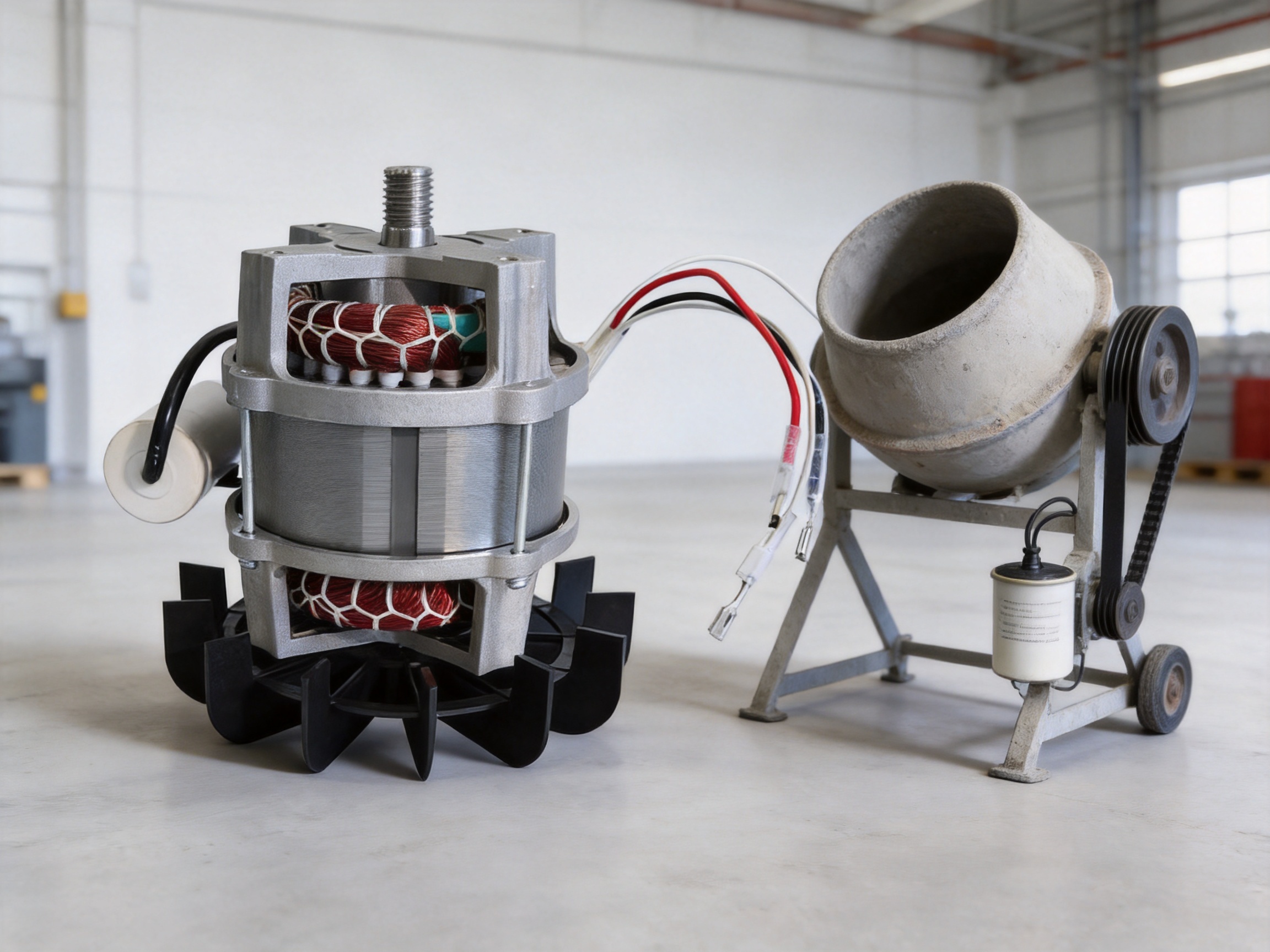
Portable construction equipment must be designed around mobility. A motor that occupies excessive space can increase the overall size of the mixer and make transport more difficult. The YY71-2 is described as having a compact structure, making it suitable for equipment where motor placement, frame dimensions and weight are important design considerations.
A compact motor can simplify the layout of the mixer. It may allow the manufacturer to position the motor inside a protected frame, maintain suitable belt alignment and leave room for guards and ventilation. For equipment used at different job sites, compactness can also contribute to easier handling, storage and installation.
Compact design does not mean that thermal performance should be ignored. The motor must still have adequate ventilation, clearance and protection within the equipment. During integration, the machine builder should ensure that covers, frames and surrounding components do not obstruct airflow or cause heat to accumulate around the motor housing.
High-Temperature Resistance
Concrete mixer motors may operate in warm conditions, particularly when the equipment is used outdoors during summer or in areas with limited ventilation. Repeated starts and extended mixing cycles can also increase motor temperature. The YY71-2 is described as having high-temperature resistance, an important characteristic for maintaining operational stability in these situations.
High-temperature resistance depends on several factors, including the quality of the winding insulation, the selection of electrical materials, the motor’s thermal design, the quality of assembly and the operating duty. It is not a substitute for correct loading or sufficient ventilation, but it provides an additional margin of reliability when the motor is used within its intended conditions.
For equipment manufacturers, thermal stability can reduce the likelihood of nuisance shutdowns, winding deterioration and premature performance decline. For end users, it can support more predictable operation during repeated batches. The precise insulation class and allowable temperature rise should be confirmed in the technical documentation for the exact production version.
Low Power Consumption
Energy efficiency is increasingly important in construction equipment. Portable mixers may be used for many hours over the course of a working day, so unnecessary electrical consumption can increase operating costs. The YY71-2 is described as having low power consumption, supported by its full copper winding and application-specific design.
Low consumption is beneficial not only for electricity costs but also for the electrical infrastructure supporting the mixer. A motor that uses power efficiently can be easier to operate from standard single-phase supplies, provided that the supply circuit, protection devices and extension cables are correctly sized.
Actual energy use depends on the load, operating duration, transmission efficiency, supply voltage, maintenance condition and duty cycle. Users should avoid overloading the motor or operating the mixer beyond its intended capacity. Efficient operation begins with correct equipment matching and continues with proper maintenance, cleaning and electrical inspection.
Simple Installation and Maintenance
Portable mixer manufacturers and service technicians benefit from a motor that can be installed and maintained without unnecessary complexity. The YY71-2 is described as easy to install and maintain. This characteristic is especially valuable for equipment distributed across different regions, where service personnel may need to replace a motor or inspect the drive system at a job site.
Installation normally requires attention to the mounting arrangement, shaft alignment, belt tension, electrical connections, capacitor configuration, rotation direction and protective guards. The motor should be firmly secured to prevent movement and vibration. The drive components should be aligned accurately so that belts, pulleys or gears do not impose excessive side loads on the shaft or bearings.
Maintenance should include cleaning accumulated dust, checking fasteners, inspecting cables, examining the capacitor and verifying that the motor has adequate ventilation. Any unusual noise, overheating, burning smell, repeated tripping or loss of speed should be investigated before continued operation.
Advantages Compared with Generic Alternative Motors
A generic motor may appear suitable based only on voltage and power. However, concrete mixer applications involve mechanical shock, variable load and repeated operation. A motor selected without considering these conditions may have inadequate starting behavior, poor heat dissipation, unsuitable mounting dimensions or insufficient service support.
The YY71-2 has several application-focused advantages over an unspecified general-purpose alternative. First, it is positioned specifically for portable concrete mixers and related equipment. This indicates that its design and marketing are aligned with the requirements of compact mixing machinery rather than a completely unrelated application.
Second, the full copper winding provides a strong electrical and thermal foundation. Third, the 650W rating and 2,800 RPM speed provide a defined starting point for transmission and mixer design. Fourth, the compact structure supports portable equipment layouts. Finally, the stated emphasis on stable performance, high-temperature resistance and low power consumption addresses several of the practical concerns faced by mixer operators.
Competitive comparison should not be based on purchase price alone. A lower-priced motor may use different winding materials, have less consistent manufacturing, require more frequent replacement or provide weaker technical support. The more appropriate comparison includes electrical efficiency, expected operating life, replacement convenience, quality consistency, compatibility with the mixer frame and supplier responsiveness.
| Evaluation Factor | YY71-2 Application Benefit | Why It Matters in a Portable Mixer |
|---|---|---|
| Electrical configuration | 230V single-phase motor with capacitor | Suitable for many standard single-phase equipment applications |
| Power level | 650W | Designed for compact mixer systems when correctly matched to load and transmission |
| Winding | Full copper winding | Supports conductivity, thermal performance and operating consistency |
| Speed | 2,800 RPM | Provides a practical high-speed input for a reduction drive |
| Structure | Compact design | Helps preserve portability and simplify equipment layout |
| Thermal characteristic | High-temperature resistance | Supports reliability during repeated cycles and warm operating conditions |
| Serviceability | Easy installation and maintenance | Can reduce service time and simplify replacement planning |
Manufacturing Strengths of the Producer
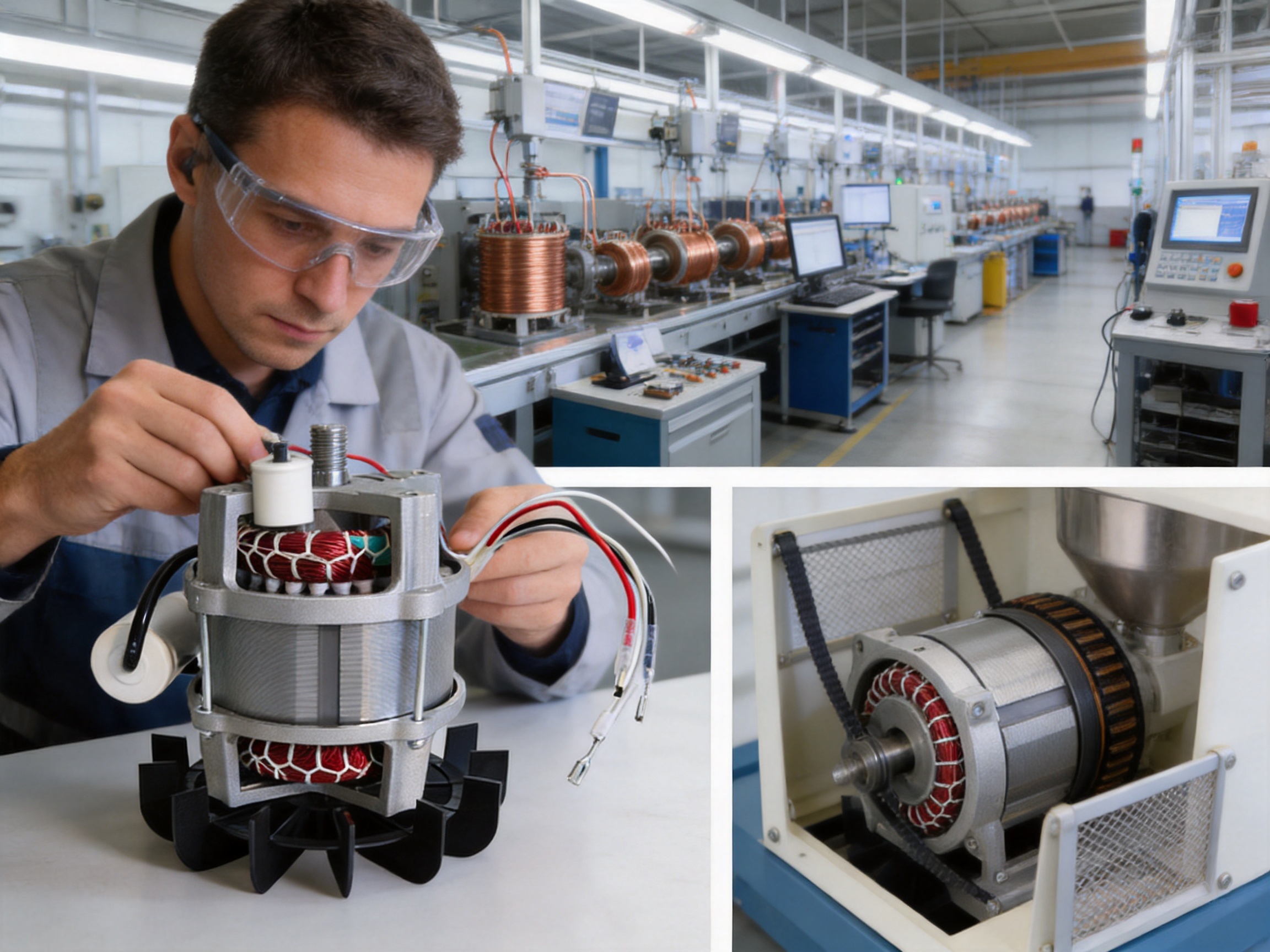
Shengzhou Jiangxin Motor Technology Co., Ltd. was established in 2017 and specializes in the research and development, production and sales of AC/DC motors and micro motors. The company is located in Shengzhou, Zhejiang Province, within the industrially developed Yangtze River Delta region. This location provides access to manufacturing resources, component suppliers, engineering talent and logistics infrastructure.
The company operates modern production facilities and uses advanced automated equipment. Automation can improve repeatability in processes such as winding, assembly, inspection and production-line handling. For motor customers, consistent manufacturing is important because even small variations in winding placement, connection quality, rotor balance or assembly tolerance can affect noise, temperature rise and service life.
Automation is most effective when supported by appropriate process control. A reliable motor manufacturer must define production standards, control incoming materials, monitor key process parameters and inspect finished products. The combination of equipment and management systems helps reduce variation between batches and supports stable product quality for original equipment manufacturers and distributors.
Research and Development Capability
Motor performance depends on coordinated electrical, mechanical and thermal design. Jiangxin Motor maintains a professional research and development team and has been recognized as a provincial-level technology enterprise. This background supports the development of motors for different applications, including evaporative air cooler motors, industrial heater motors, oil pump motors and customized motor products.
Experience across several motor categories can be valuable when developing a concrete mixer motor. Lessons from other applications may contribute to better winding design, thermal management, bearing selection, housing design and production testing. At the same time, the company can adapt its engineering approach to the specific needs of portable mixer manufacturers.
Customized motor capability is also important for equipment companies whose products have different frames, transmission systems or electrical arrangements. Depending on project requirements, customers may need changes to mounting dimensions, shaft design, cable length, connector style, rotation direction, protective features or packaging. Such requirements should be reviewed with the manufacturer during technical evaluation rather than assumed from the standard model description.
Quality Control and Process Discipline
Quality control is particularly important for motors used in construction machinery. A mixer motor may be exposed to vibration, intermittent overload, dust and repeated starts. The motor must therefore be manufactured with attention to conductor connections, insulation integrity, rotor and stator assembly, bearing installation and final electrical performance.
Jiangxin Motor states that it uses strict quality control systems. A complete control approach may include incoming inspection of copper wire and other materials, process checks during winding and assembly, electrical testing, no-load operation checks and final visual inspection. The exact tests and acceptance criteria should be requested when evaluating the product for a particular mixer platform.
Production quality also includes traceability and corrective action. If a customer identifies a recurring issue, a capable manufacturer should be able to investigate production records, analyze the failure mode and implement improvements. This level of support is more valuable than a one-time inspection because it helps protect consistency over future orders.
Export and International Supply Experience
The company’s products are exported to more than 60 countries and regions. International supply experience requires attention to packaging, documentation, electrical requirements, communication, lead times and customer service. These capabilities can support overseas buyers seeking a dependable supplier for private-label equipment, replacement motors or complete motor procurement programs.
International customers may also require different documentation packages, including product specifications, inspection records, packing lists, commercial invoices and compliance information. Requirements vary by destination and application, so buyers should discuss all documentation needs before placing an order.
Application Areas
Portable Concrete Mixers
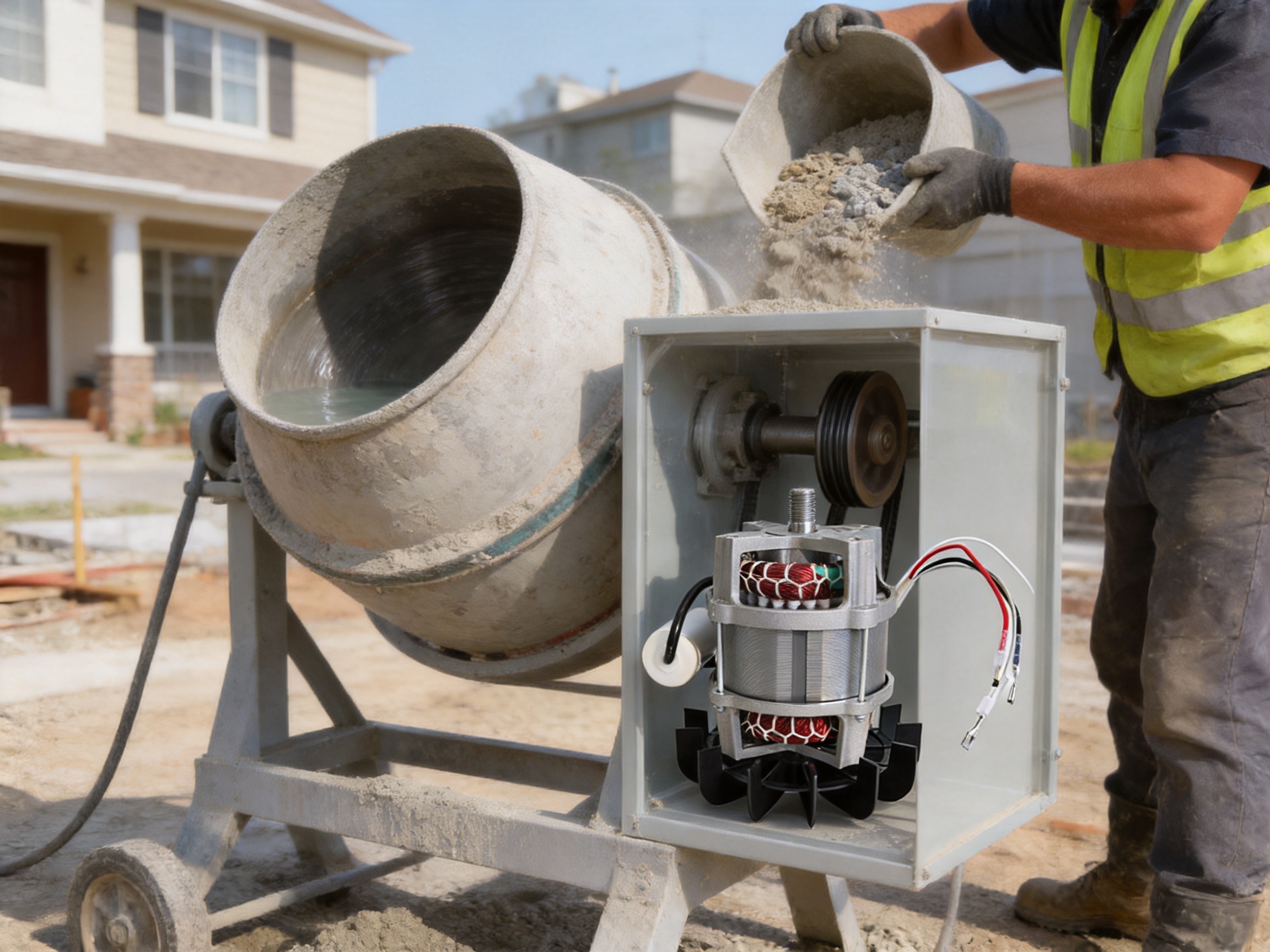
The primary application for the YY71-2 is the small portable concrete mixer. These mixers are used when concrete must be produced close to the construction location rather than delivered from a central batching plant. Typical users may include contractors, builders, maintenance teams, landscapers and do-it-yourself construction operators.
Portable mixers benefit from a motor that is compact, economical and capable of stable operation. The YY71-2 can be integrated into a mixer with an appropriate drum size and reduction system. The complete machine should be evaluated to ensure that the motor is not required to exceed its rated capacity during normal loading or starting.
Cement Mixers
The motor is also suitable for cement mixers and related equipment. Cement mixtures may vary in density and moisture content, creating different load conditions. A correctly sized motor helps maintain consistent rotation as the mixture becomes heavier or more cohesive during operation.
Operators should follow the equipment manufacturer’s loading instructions. Adding too much material at once can increase starting torque and place unnecessary stress on the motor, capacitor, belt and gearbox. Correct loading practices allow the motor to work within a more stable operating range.
Related Construction Machinery
Because of its compact form and 230V single-phase configuration, the motor may be considered for other small construction machines that require comparable power and speed. Potential applications should be assessed individually. Equipment designers must verify mechanical dimensions, torque requirements, duty cycle, environmental conditions and electrical compatibility before using the motor in an application beyond the standard concrete mixer.
Electrical and Mechanical Integration
The motor should be installed by qualified personnel who understand single-phase motor wiring and machine safety. The capacitor must be correctly matched and connected according to the manufacturer’s wiring diagram. Incorrect wiring can prevent startup, cause overheating or damage the motor and associated components.
The supply voltage should be stable and compatible with the 230V rating. The circuit should include suitable protection against overcurrent and short circuits. Cable size, plug type, switchgear and extension-cord length should be selected according to the motor current and local electrical standards. Long or undersized extension cables can cause voltage drop, leading to difficult starting and increased heating.
Mechanical installation is equally important. The mounting surface should be rigid, level and free from excessive vibration. Shaft alignment must be checked after the motor is secured. If the motor drives the mixer through a belt, belt tension should be sufficient for power transfer but not so high that it overloads bearings. Guards should be installed around rotating components to protect operators.
The motor’s rotation direction must be confirmed during commissioning. A mixer may require a specific direction to move material correctly and prevent abnormal loading. Testing should begin without a full material load, followed by a controlled trial under normal operating conditions.
Operating and Maintenance Recommendations
Before each use, inspect the motor housing, cable, plug, switch and mounting fasteners. Remove excessive dust and concrete residue from the motor area. Confirm that ventilation openings are not blocked. Check the belt or transmission system for wear, misalignment and contamination.
During operation, monitor sound, vibration, temperature and speed. A small amount of normal operating warmth is expected, but rapid temperature increase, smoke, an unusual odor or repeated electrical tripping indicates a problem. The mixer should be switched off and isolated from the power supply before inspection.
Do not wash the motor directly with pressurized water unless the complete machine is specifically designed for that cleaning method. Moisture entering the electrical components can damage insulation and create a safety hazard. Cleaning should be performed in accordance with the motor and mixer manufacturer’s instructions.
Periodic maintenance should include checking terminal connections, examining the capacitor, inspecting bearings where accessible and verifying the condition of the drive system. Fasteners may loosen because of vibration, so they should be checked at appropriate intervals. The maintenance schedule should reflect actual working conditions, including operating hours, dust levels, ambient temperature and transportation frequency.
Proper storage is also important. If the mixer will not be used for an extended period, it should be stored in a dry, clean and protected location. The motor should be shielded from rain, condensation, corrosive chemicals and excessive dust. Before returning the machine to service, inspect the electrical system and rotate the drive manually if permitted by the equipment design.
Value for Equipment Manufacturers and Distributors
For original equipment manufacturers, the YY71-2 offers a defined power and speed platform for developing compact mixer products. The 230V single-phase configuration can simplify the electrical concept for equipment intended for ordinary job-site power supplies. The compact structure may also help designers maintain a portable frame and practical weight distribution.
For distributors, the model can serve as a replacement motor or a standard component for a range of small mixer products. A clear model designation and defined core specifications make it easier to organize purchasing, inventory and customer communication. Distributors should maintain accurate records of mounting dimensions, shaft configuration, capacitor specifications and compatible mixer models.
For service companies, the stated ease of installation and maintenance can help shorten repair time. A replacement motor is most useful when it can be installed without extensive modification. Before ordering, service personnel should compare the existing motor’s nameplate, frame dimensions, shaft details and wiring arrangement with the replacement specification.
For international buyers, Jiangxin Motor’s manufacturing and export experience can support long-term supply discussions. Customers may request samples for evaluation, production drawings for integration, inspection information and packaging specifications. These steps help reduce the risk of incompatibility and establish clear technical expectations.
How to Evaluate the Motor Before Purchase
Buyers should begin by identifying the exact mixer requirements. Important information includes drum capacity, expected material load, required drum speed, transmission ratio, starting condition, operating duration and supply voltage. A motor should not be selected based on wattage alone.
The next step is mechanical verification. Compare the motor’s mounting holes, overall dimensions, shaft diameter, shaft length, keyway, pulley position and housing clearance with the mixer frame. Even a motor with matching voltage and power may not be a direct replacement if the mechanical interface is different.
Electrical verification should include the rated voltage, frequency, capacitor arrangement, current, wiring method, direction of rotation and protection requirements. Buyers should also confirm whether the intended market uses a 50 Hz or 60 Hz supply and whether the motor is approved or documented for the destination market’s requirements.
Environmental evaluation is equally important. Consider ambient temperature, moisture, dust, altitude, ventilation, vibration and the possibility of concrete splashes. The required enclosure and protection level should be confirmed with the supplier. If the mixer will operate in unusually harsh conditions, the manufacturer should be informed before final product selection.
Finally, evaluate the supplier’s production and service capabilities. Ask about sample availability, minimum order quantity, lead time, quality inspection, warranty policy, spare parts, packaging and technical support. A reliable procurement decision considers the complete supply relationship rather than only the unit price.
Recommended Commissioning Procedure
After installation, inspect all electrical and mechanical connections before energizing the motor. Confirm that the motor is firmly mounted, the transmission guard is in place and the mixer is positioned on a stable surface. Make sure no tools, loose materials or body parts are near rotating components.
Run the motor briefly without material if the mixer design permits this test. Listen for abnormal noise and observe whether the shaft, belt or gearbox moves smoothly. Check that the rotation direction is correct. If the motor does not start promptly, disconnect the power and investigate the wiring, capacitor, supply voltage and mechanical resistance.
After a successful no-load test, introduce a normal quantity of material gradually. Avoid immediately applying the maximum possible load. Monitor the motor’s sound, temperature and speed during the first complete mixing cycle. Recheck mounting fasteners and belt tension after the initial period of operation because components may settle during early use.
Commissioning records can be useful for fleet operators and equipment manufacturers. Record the model, voltage, power, capacitor information, installation date, test results and any adjustments made. These records can simplify future maintenance and help identify changes in performance.
Quality, Reliability and Total Cost of Ownership
Reliability is not measured only by whether a motor operates when first installed. It also includes consistency across production batches, resistance to normal operating stress, availability of replacement units and the manufacturer’s ability to respond to technical questions. The YY71-2 is positioned as a stable and durable solution for portable mixing equipment, supported by copper winding, thermal resistance and application-specific design.
Total cost of ownership includes the purchase price, electricity use, maintenance, downtime, replacement labor and inventory costs. A motor with a lower initial price may become more expensive if it consumes more energy or fails prematurely. Conversely, a motor with appropriate materials and manufacturing quality can support more predictable operation over time.
Jiangxin Motor’s focus on energy-efficient and long-lasting motors is relevant to this calculation. The company’s product range covers several industrial applications, giving it experience in developing motors that must operate reliably in practical working environments. Customers should still select the correct model and observe the recommended operating conditions, because no motor can compensate for persistent overload or incorrect installation.
Frequently Asked Questions
What is the rated power of the YY71-2 motor?
The rated power is 650 watts. This power level is intended for small portable concrete mixers, cement mixers and related construction equipment when the motor is properly matched with the transmission system and working load.
What voltage does the motor use?
The specified rated voltage is 230V. The exact supply frequency, current and electrical connection details should be confirmed with the supplier for the intended destination and equipment design.
Is the YY71-2 a single-phase motor?
Yes. The product is described as a single-phase motor with a capacitor. The capacitor and wiring must be installed according to the manufacturer’s technical instructions.
What is the motor’s rated speed?
The rated speed is 2,800 RPM. The final speed of the concrete mixer drum will normally be lower because the equipment uses a belt, pulley, gearbox or another reduction mechanism.
Can this motor drive a large industrial concrete mixer?
The YY71-2 is designed for small portable concrete mixers and related compact equipment. It should not be used for a large industrial mixer without a complete engineering assessment of torque, load, duty cycle, transmission and thermal requirements.
What is the advantage of the full copper winding?
A full copper winding provides good electrical conductivity and can help control resistive losses and heat generation. It supports stable operation and may contribute to service life when the motor is correctly loaded, ventilated and maintained.
Does the motor include a capacitor?
The product is described as a single-phase motor with a capacitor. Buyers should confirm whether the capacitor is supplied with the motor, its rated value and the exact connection method before placing an order.
Is the motor easy to install?
The motor is designed for straightforward installation and maintenance, but compatibility must be checked. Mounting dimensions, shaft details, pulley alignment, wiring, capacitor arrangement and rotation direction should all be verified before installation.
How can overheating be prevented?
Use the motor within its rated load, provide adequate ventilation, keep the housing clean, avoid undersized extension cables and maintain correct belt tension. Repeated overloading, blocked airflow or excessive mechanical friction can cause overheating even when the motor itself is properly manufactured.
Can the manufacturer provide customized versions?
Shengzhou Jiangxin Motor Technology Co., Ltd. develops customized motors in addition to standard AC/DC and micro motor products. Customers should provide drawings, electrical requirements, mounting information, shaft specifications, duty cycle and environmental conditions for a customization review.
What should be confirmed before ordering for export?
Buyers should confirm voltage, frequency, current, capacitor details, dimensions, shaft configuration, rotation direction, packaging, documentation, inspection requirements, delivery schedule and destination-market compliance needs.
What maintenance does the motor require?
Routine maintenance includes cleaning dust and residue, checking ventilation, inspecting cables and terminals, verifying mounting fasteners, examining the transmission and monitoring operating temperature, noise and vibration. Maintenance must be performed with the power disconnected.
Conclusion
The YY71-2 230V 650W Portable Concrete Mixer Motor is a practical drive solution for small portable concrete mixers, cement mixers and related construction machinery. Its single-phase capacitor configuration, 2,800 RPM rated speed, full copper winding, compact structure, high-temperature resistance and low power consumption address the core requirements of compact mixing equipment.
Its main advantage over an unspecified generic motor is its application focus. The motor is presented for portable mixer systems where stable operation, manageable size, efficient energy use and convenient maintenance are important. When correctly matched with the mixer’s transmission, drum capacity and electrical system, it can provide a dependable foundation for repeated construction work.
The product is also supported by the manufacturing capabilities of Shengzhou Jiangxin Motor Technology Co., Ltd. The company’s modern facilities, automated production equipment, professional research and development team, quality control systems and international market experience provide a solid basis for supplying standard and customized motor solutions.
Before purchase, customers should confirm all mechanical, electrical and environmental details with the manufacturer. Correct selection, professional installation, suitable protection and regular maintenance are essential to achieving the expected performance of any concrete mixer motor. With those conditions in place, the YY71-2 can serve as an efficient and reliable component for compact construction equipment.
References
1. Product specification information for the YY71-2 230V 650W Portable Concrete Mixer Motor.
2. Manufacturer-provided company profile and product application information for AC/DC motors and micro motors.
3. General principles of single-phase induction motor operation, capacitor-assisted starting and motor maintenance.
4. General engineering practices for concrete mixer drive selection, belt alignment, load matching and thermal management.
5. General electrical safety practices for low-voltage single-phase motor installation and maintenance.
Product: YY71-2 230V 650W Portable Concrete Mixer Motor
 Ready To Customise
 Your Motor Products?

We are professional motor manufacturers, delivering powerful, stable, and efficient power cores for all industries through precision craftsmanship and innovation.
Contact Us
-
 Mobile:+86 13575536911
-
 Tel:+86 18357538240
-
 Whatsapp:+8618357538240
-
 Email:betty@dbjxmotor.com
-
 Company Address
Copyright © by Shengzhou Jiangxin Motor Technology Co., Ltd. All Rights Reserved.
Wholesale Industrial Fan Motors Manufacturers
