

 English
 русский
 Español
 عربى
عربى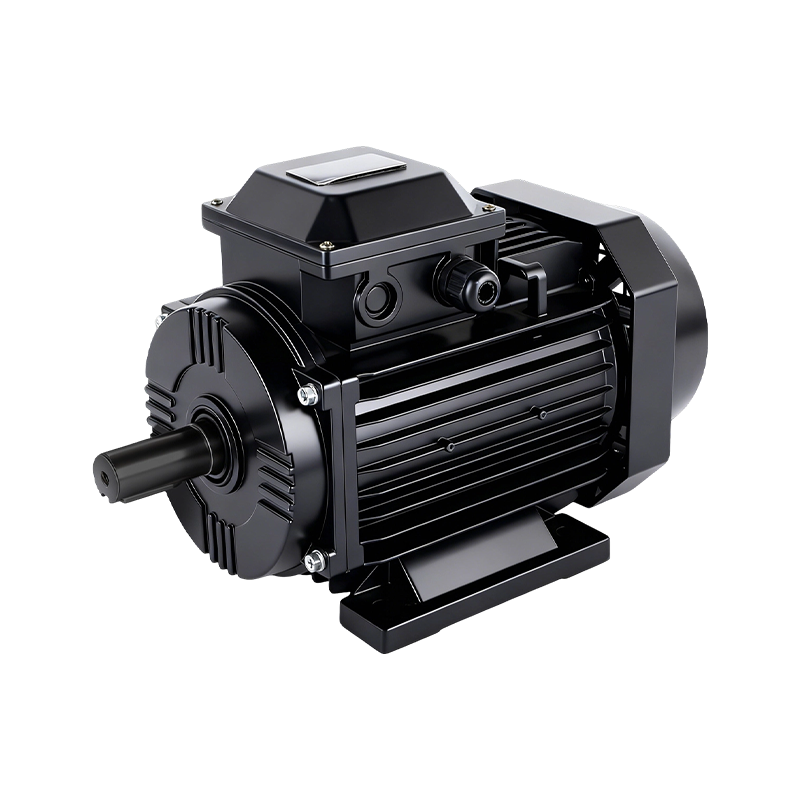
No. 8, Duxiu San Road, Ganlin Town, Shengzhou City, Shaoxing City, Zhejiang Province, China

News Category
Product Category
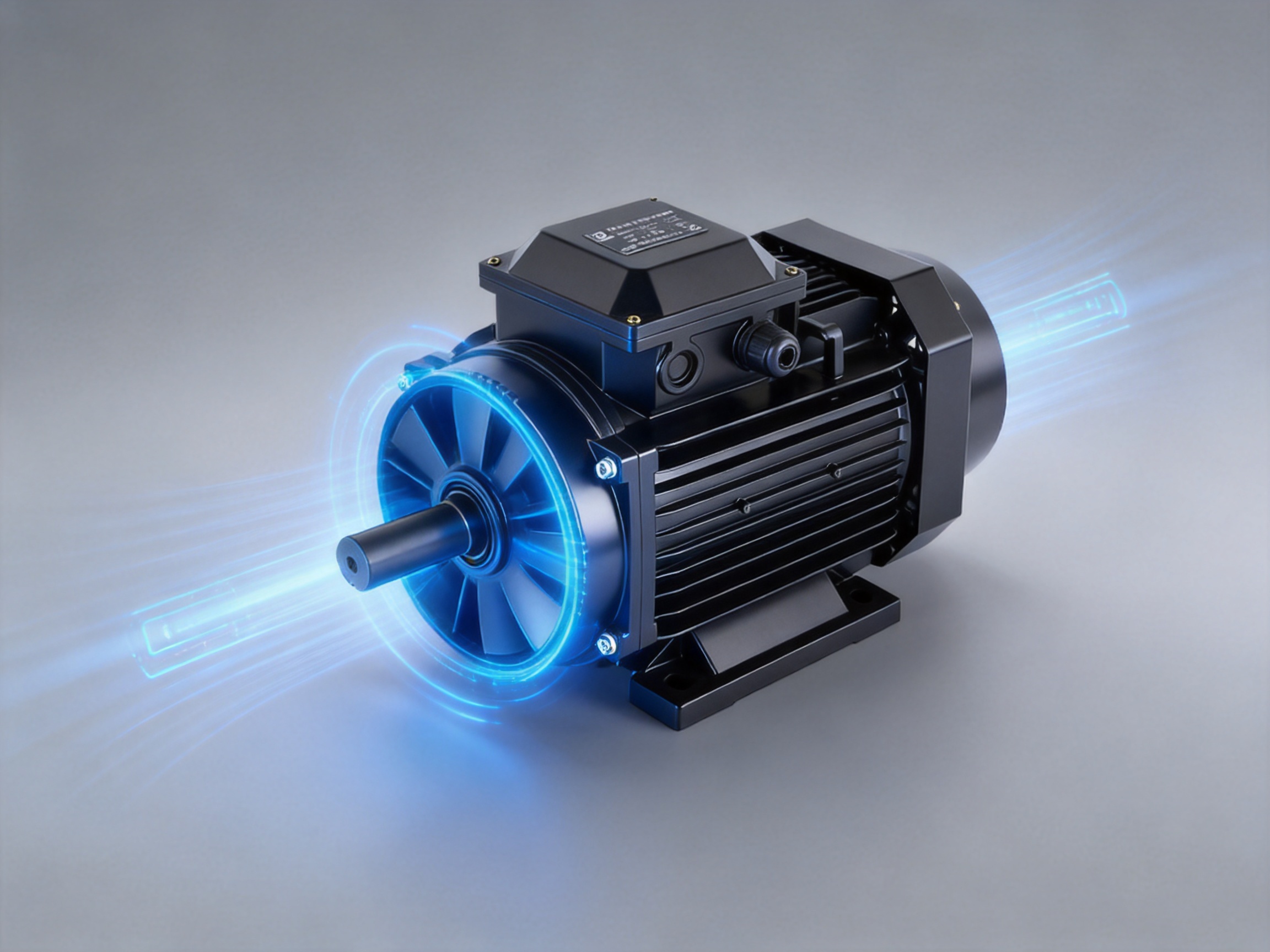
ECF-155-10 380V 2200W EC Fan Motor: Efficient Power for Demanding Ventilation Systems
Content
- 1 1. Product Overview
- 2 2. Understanding EC Fan Motor Technology
- 3 3. Core Advantages of the ECF-155-10
- 4 4. Applications and System Compatibility
- 5 5. Advantages Compared with Conventional Motor Solutions
- 6 6. Manufacturing Strengths Behind the Product
- 7 7. Manufacturing Process Considerations
- 8 8. Installation and Selection Guidance
- 9 9. Purchasing and OEM Considerations
- 10 10. Reliability, Safety, and Lifecycle Value
- 11 11. Why Choose This Product for Industrial Fan Systems?
- 12 12. Frequently Asked Questions
- 12.1 12.1 What type of motor is the ECF-155-10?
- 12.2 12.2 What applications are suitable for this motor?
- 12.3 12.3 What protection functions are built into the motor?
- 12.4 12.4 Can the motor operate with unstable power?
- 12.5 12.5 Is the motor suitable for continuous operation?
- 12.6 12.6 Can it be used in a cold storage facility?
- 12.7 12.7 Does the motor eliminate the need for external protection?
- 12.8 12.8 What should be checked before ordering?
- 12.9 12.9 What manufacturing capabilities support the product?
- 12.10 12.10 Can the manufacturer support customized motor requirements?
- 13 Conclusion
- 14 References
- 15 Product: ECF-155-10 380V 2200W EC Fan Motor
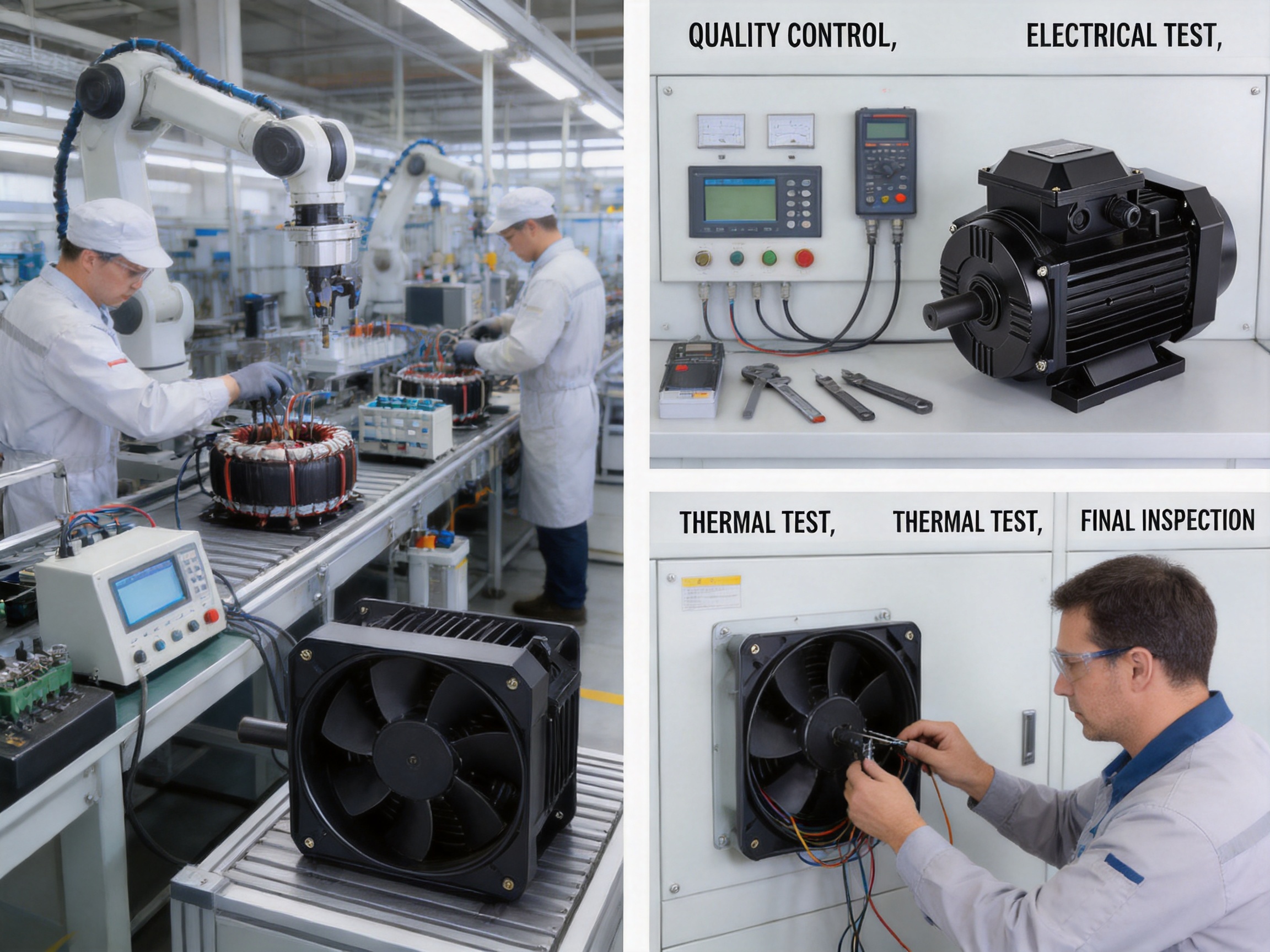
Modern ventilation and air movement systems require more than a motor that simply turns a fan blade. Industrial air handling units, cooling towers, cold storage facilities, precision-cooling installations, and public buildings all depend on stable airflow, dependable starting, electrical protection, and long operating life. The ECF-155-10 380V 2200W EC Fan Motor is designed for these demanding conditions, combining electronically commutated motor technology with a high-power 380V/2200W configuration.
As an EC fan motor, the ECF-155-10 is intended to deliver controlled, efficient, and reliable fan operation. Its built-in protection functions address several common causes of motor failure, including overcurrent, overvoltage, overtemperature, and locked-rotor conditions. Its wide voltage tolerance further supports stable operation when the incoming power supply is not perfectly consistent.
This combination makes the motor suitable for professional equipment manufacturers, HVAC system integrators, ventilation contractors, commercial building operators, and industrial users seeking a robust alternative to conventional fixed-speed motor solutions. The product is manufactured by Shengzhou Jiangxin Motor Technology Co., Ltd., a specialized AC/DC motor and micro motor producer with experience in research and development, automated manufacturing, quality control, and international supply.
The purpose of this article is to examine the ECF-155-10 in detail, explain its main advantages, describe the applications for which it is suited, and show how the manufacturer’s production capabilities support consistent product performance.
1. Product Overview
The ECF-155-10 is a 380V, 2200W EC fan motor developed for high-demand air movement and ventilation equipment. The rated electrical configuration gives the motor a strong power base for systems that require substantial airflow, continuous operation, and reliable performance under industrial or commercial conditions.
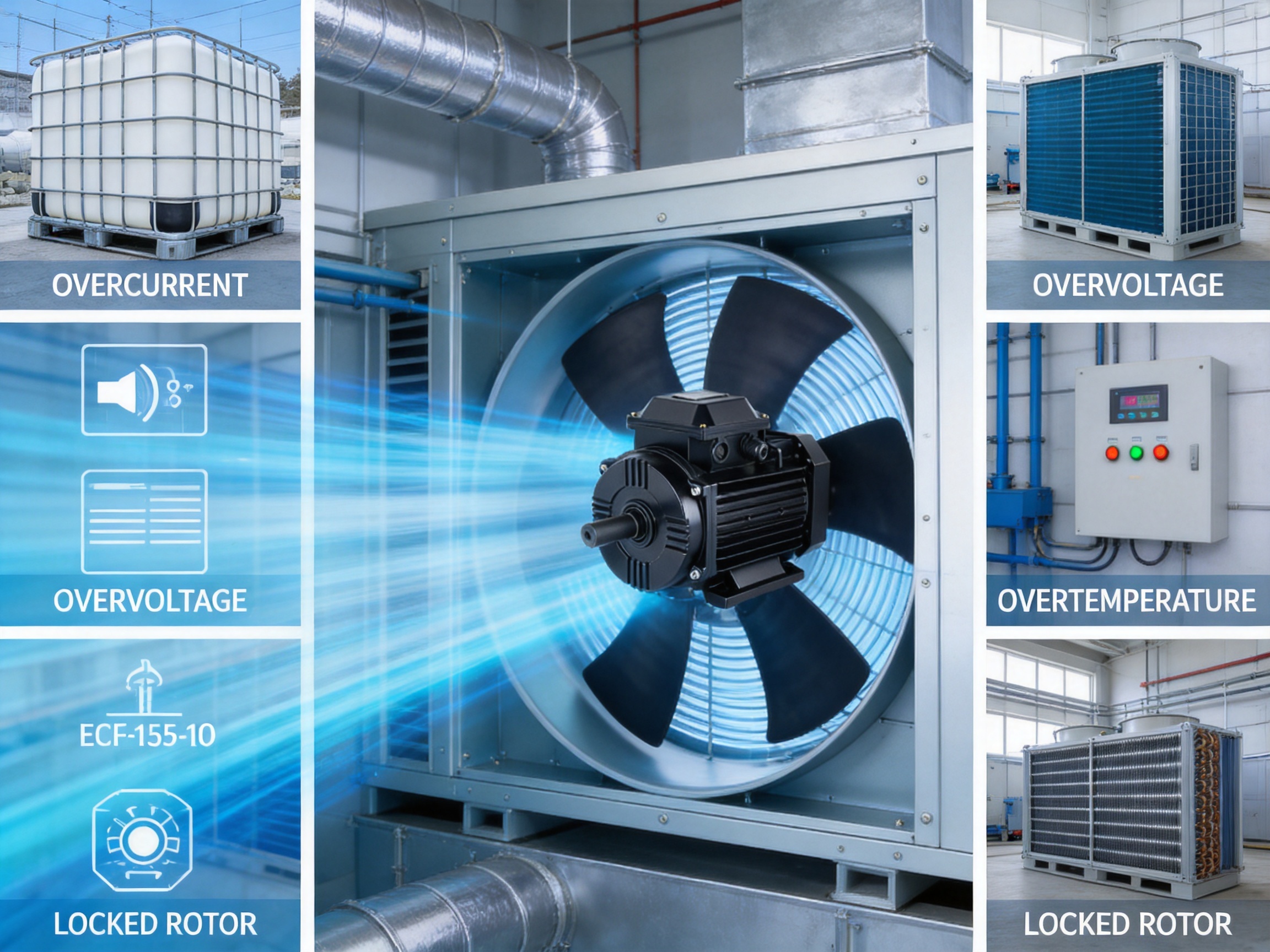
Unlike a basic motor that may depend on external switching or limited protection, an EC motor incorporates electronic control within the motor system. This allows the motor to manage operation more intelligently and respond to abnormal conditions more effectively. The ECF-155-10 is equipped with safeguards against overcurrent, overvoltage, overtemperature, and locked rotor. These features help protect both the motor and the equipment in which it is installed.
The motor is suitable for a wide range of air movement systems. Listed applications include air handling units, cooling towers, cold storage equipment, precision-cooling systems, industrial ventilation installations, and public or commercial building systems. These environments often involve long working hours, fluctuating loads, variable ambient conditions, and strict expectations for operational continuity.
The product’s main specifications are summarized below.
| Item | Specification or Description |
|---|---|
| Model | ECF-155-10 |
| Motor type | EC fan motor |
| Rated voltage | 380V |
| Rated power | 2200W |
| Protection functions | Overcurrent, overvoltage, overtemperature, and locked-rotor protection |
| Voltage characteristic | Wide voltage tolerance for stable operation under fluctuating power |
| Primary applications | Air handling units, cooling towers, cold storage, precision cooling, industrial ventilation, and public or commercial buildings |
| Manufacturer | Shengzhou Jiangxin Motor Technology Co., Ltd. |
For equipment designers, the most important point is that the ECF-155-10 is not positioned as a general-purpose low-power motor. Its 2200W rating and 380V electrical configuration make it appropriate for larger ventilation and air movement systems where motor reliability and protection are important design considerations.
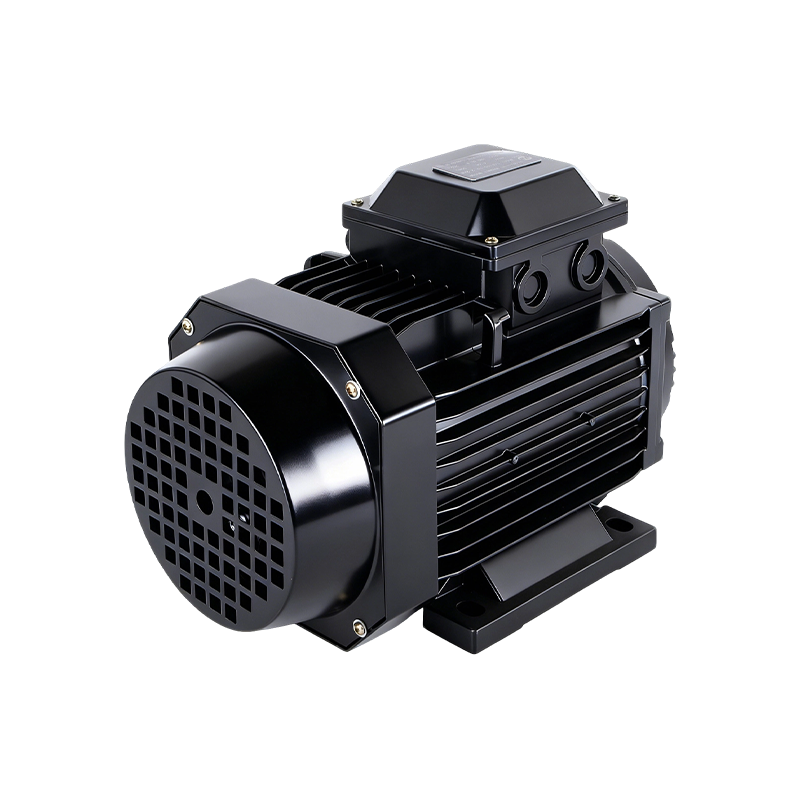
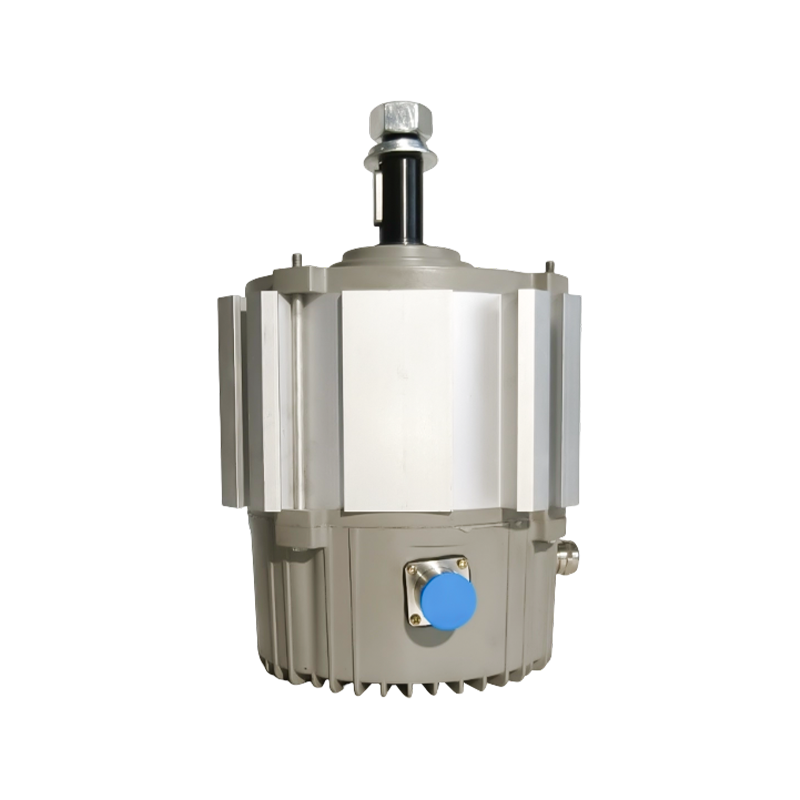
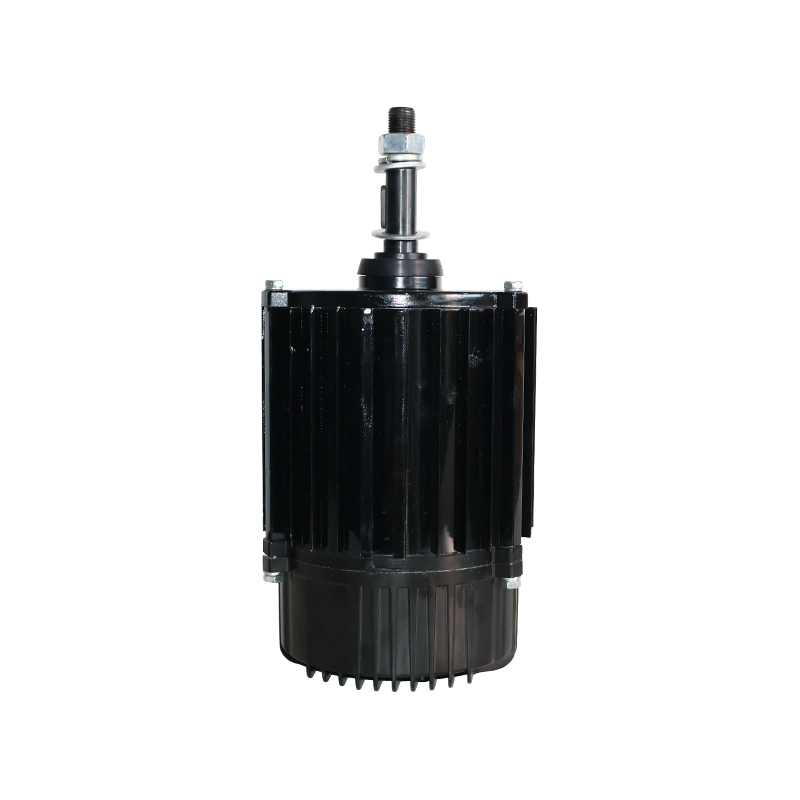
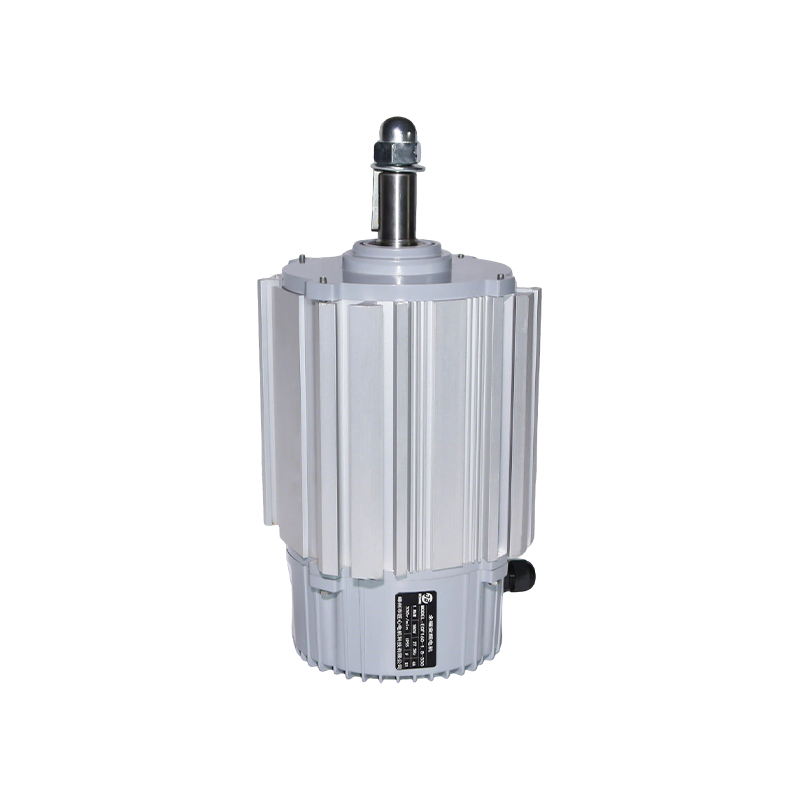
ECF-155-10 380V 2200W EC Fan Motor
2. Understanding EC Fan Motor Technology
EC stands for electronically commutated. In an EC motor, electronic control replaces the mechanical commutation method traditionally associated with certain motor designs. The electronic control system manages the energizing of the motor windings, supporting smooth operation and more accurate control of motor performance.
This design is especially valuable in fan systems because airflow demand is rarely constant. A ventilation system may require different operating levels during startup, normal production, low occupancy, night operation, seasonal changes, or emergency conditions. A motor that can operate efficiently across a useful range is often more practical than a motor that runs continuously at one fixed speed.
EC motor technology also provides a foundation for integrating protection and control functions into the motor assembly. This can simplify system design because the motor does not rely entirely on external protection devices to respond to every abnormal operating condition. External control and system-level protection may still be required depending on the installation, but built-in safeguards add an important layer of defense.
The ECF-155-10 applies this technology to a comparatively powerful 380V/2200W fan motor. That makes it suitable for commercial and industrial systems that need both substantial output and intelligent motor operation. The motor can be considered a practical bridge between conventional industrial motors and more electronically managed fan systems.
2.1 Electronic Commutation and Fan Performance
Fan performance depends on the relationship between motor torque, rotational speed, fan load, air resistance, and operating conditions. Electronic commutation allows the motor control system to coordinate electrical input with rotor position and operating demand. This supports consistent torque production and can help the fan maintain dependable operation during normal load changes.
For system builders, predictable motor behavior is important. A motor that struggles during starting, reacts poorly to load changes, or experiences excessive electrical stress can reduce the reliability of the entire air movement system. By contrast, an EC motor with integrated protective functions is better aligned with modern equipment designs that prioritize energy management, monitoring, and fault prevention.
2.2 Why EC Technology Is Valuable in Commercial and Industrial Equipment
Commercial and industrial ventilation systems often operate for many hours each day. Even small improvements in control and operating efficiency can become significant over the life of the equipment. EC motor technology can support more refined operation than a simple fixed-speed arrangement, particularly when the system is designed to adjust airflow according to demand.
For example, an air handling unit may not need maximum airflow when occupancy is low. A cooling tower may require different fan operation as heat rejection demand changes. A cold storage facility may need stable air circulation while limiting unnecessary motor operation. A precision-cooling system may need consistent response to changing thermal loads. In each case, motor control and protection can contribute to system-level efficiency and reliability.
The ECF-155-10 is therefore valuable not only because of its power rating, but also because it is designed for equipment environments in which motor behavior must be controlled and protected.
3. Core Advantages of the ECF-155-10
3.1 High-Power 380V/2200W Configuration
The 380V/2200W configuration gives the ECF-155-10 the capacity required by larger fans and demanding air movement systems. It is intended for applications where a small residential or light-duty motor would not provide sufficient output.
Three-phase industrial power systems commonly use 380V-class supplies, making this configuration suitable for many commercial and industrial installations. The 2200W rating provides a clear reference point for equipment designers when matching the motor to a fan, impeller, air handling assembly, or ventilation system.
When selecting a motor, power should not be considered in isolation. The fan load, required airflow, static pressure, speed range, operating environment, and duty cycle must also be evaluated. Nevertheless, the 2200W rating indicates that this product is designed for substantial airflow equipment rather than small household applications.
3.2 Built-In Overcurrent Protection
Overcurrent can occur when a motor is overloaded, when the fan encounters abnormal resistance, when the power supply is unsuitable, or when a mechanical problem increases operating torque. Excessive current produces additional heat in the windings and electrical components, increasing the risk of damage if the condition continues.
The ECF-155-10 includes built-in overcurrent protection. This function helps the motor respond to excessive electrical demand before the condition develops into a more serious failure. Protection does not remove the need for correct fan selection, proper installation, and regular maintenance, but it provides an important safeguard against unexpected load conditions.
For equipment manufacturers, integrated overcurrent protection can also make the motor easier to incorporate into a broader safety strategy. The motor can work together with system-level circuit breakers, overload devices, control panels, and monitoring equipment to create a more complete protection arrangement.
3.3 Built-In Overvoltage Protection
Voltage disturbances can affect electronic components and motor windings. An overvoltage event may result from unstable grid conditions, switching operations, incorrect wiring, or problems elsewhere in an electrical distribution system. Since EC motors contain electronic control components, managing voltage stress is especially important.
The ECF-155-10 provides overvoltage protection to help guard against unsuitable voltage conditions. This feature improves the motor’s ability to withstand certain abnormal electrical events and supports more dependable operation in facilities where the power supply may not always be ideal.
Correct voltage matching remains essential. The motor should be installed according to the applicable electrical requirements, and users should confirm that the available supply, connection method, grounding arrangement, and protective devices are appropriate for a 380V motor system.
3.4 Built-In Overtemperature Protection
Temperature is one of the most important factors affecting motor life. Excessive heat may result from overloading, insufficient ventilation, high ambient temperature, blocked airflow, frequent abnormal starting, or electrical problems. If heat continues to build, insulation systems and electronic components may be damaged.
The ECF-155-10 includes overtemperature protection to help reduce the risk associated with excessive thermal conditions. This protection supports safer operation by allowing the motor to respond when internal temperature rises beyond an acceptable level.
Thermal protection is particularly relevant in equipment such as cooling towers, cold storage systems, and industrial ventilation units. These applications may operate for long periods and may be installed in environments with dust, humidity, temperature variation, or restricted access. Built-in thermal safeguards provide an additional layer of security when operating conditions become more demanding than expected.
3.5 Locked-Rotor Protection
A locked-rotor condition occurs when the rotor cannot turn normally. Causes may include a blocked fan, foreign material, mechanical seizure, bearing problems, incorrect assembly, or excessive starting resistance. A locked rotor can create a severe current and heat condition if the motor continues trying to operate.
The ECF-155-10 includes locked-rotor protection. This feature helps prevent an immobilized fan or mechanical fault from causing prolonged electrical stress. It is especially useful in ventilation equipment, where dust accumulation, debris, ice, or mechanical interference may occasionally affect the fan assembly.
Locked-rotor protection should be viewed as a preventive safeguard, not as a substitute for inspection. If the protection function activates, the root cause should be investigated before the motor is returned to service.
3.6 Wide Voltage Tolerance
Industrial and commercial electrical networks may experience voltage fluctuations. These variations can be caused by heavy machinery, long cable runs, unstable utility supplies, switching events, or temporary changes in facility demand. A motor that operates reliably only at an ideal voltage may experience interruptions or reduced performance when conditions change.
The ECF-155-10 is designed with wide voltage tolerance to support consistent operation under fluctuating power conditions. This characteristic can be valuable for facilities located in areas where supply stability varies or where multiple high-power devices operate on the same electrical network.
Wide voltage tolerance does not mean that the motor can be connected to any power source. The specified voltage class must still be respected, and installation should be carried out by qualified personnel. Its value lies in helping the motor remain stable within an appropriate operating range rather than reacting unnecessarily to normal supply variation.
3.7 Suitability for Continuous-Duty Environments
Many of the target applications for this motor require extended operating periods. Ventilation systems in public buildings may run throughout the day. Cold storage equipment may require continuous air movement. Industrial ventilation systems may operate during full production shifts, while cooling systems may work under seasonal or process-related loads.
A motor for these conditions must be selected with attention to thermal behavior, protection, mechanical compatibility, and maintenance access. The ECF-155-10’s protection functions and industrial power configuration make it a suitable candidate for such applications when properly matched to the equipment and operated within its design requirements.
4. Applications and System Compatibility
4.1 Air Handling Units
Air handling units distribute, filter, cool, heat, and condition air in commercial, industrial, and institutional facilities. Their fans must maintain reliable airflow through filters, coils, ducts, dampers, and other components that create system resistance.
The ECF-155-10 can be used in air handling applications where a 380V/2200W motor is appropriate for the fan assembly. Its protection functions help address abnormal electrical and mechanical conditions, while its EC design supports controlled fan operation.
When integrating the motor into an air handling unit, designers should evaluate fan diameter, impeller design, required airflow, static pressure, installation orientation, operating temperature, and control requirements. The motor should be matched with the correct fan assembly rather than selected only by nominal power.
4.2 Cooling Towers
Cooling towers rely on airflow to remove heat from process water or HVAC water loops. Fan performance directly affects heat rejection capacity, and the motor may be exposed to moisture, outdoor temperature changes, vibration, and long operating cycles.
The ECF-155-10 is suitable for cooling tower systems that require its power and voltage configuration. Its overtemperature, overcurrent, overvoltage, and locked-rotor safeguards can support reliable operation when the equipment is correctly installed and protected from unsuitable environmental exposure.
Cooling tower operators should pay close attention to fan balance, water ingress prevention, corrosion control, cable protection, and regular cleaning. A reliable motor cannot compensate for an unbalanced fan, blocked airflow path, or poorly maintained mechanical assembly.
4.3 Cold Storage
Cold storage facilities need controlled air circulation to maintain consistent temperature distribution. Fan systems may work continuously in low-temperature environments, and the motor may experience repeated starting, changing thermal loads, and moisture-related challenges.
The ECF-155-10 can be considered for cold storage ventilation and refrigeration-related air movement systems where the motor’s electrical specifications and environmental compatibility are confirmed. Its locked-rotor protection is useful in systems where ice formation, foreign material, or mechanical interference could affect the fan.
Before installation in cold environments, the equipment designer should verify the allowable operating temperature, enclosure requirements, condensation control, cable materials, and startup behavior. These factors are essential for dependable long-term performance.
4.4 Precision-Cooling Systems
Precision-cooling systems are used in environments where temperature stability and airflow consistency are important. Examples include technical rooms, equipment rooms, specialized manufacturing spaces, and other facilities with sensitive thermal requirements.
In these systems, motor reliability is closely connected to equipment availability. A fan failure may reduce cooling performance and create an unacceptable temperature increase. The ECF-155-10’s integrated protection features help reduce several common electrical and mechanical risks, making it a practical option for suitable precision-cooling equipment.
System designers should also consider redundancy. Where cooling continuity is critical, multiple fans, backup equipment, alarm monitoring, and automatic fault response may be required in addition to selecting a protected EC motor.
4.5 Industrial Ventilation
Industrial ventilation systems remove heat, fumes, dust, vapor, and contaminated air from production areas. Their operating conditions can be demanding, and the required airflow may vary depending on production schedules and process conditions.
The ECF-155-10 offers a high-power configuration for industrial fan systems that require substantial air movement. Its wide voltage tolerance and built-in protection functions can help support reliable operation in facilities where electrical and mechanical conditions change over time.
Industrial users should confirm whether the motor and fan assembly are suitable for the specific atmosphere. Applications involving combustible dust, corrosive gases, explosive atmospheres, or unusually high temperatures may require specially certified equipment. The motor should not be used in such conditions without appropriate technical confirmation.
4.6 Public and Commercial Buildings
Public and commercial buildings depend on ventilation for occupant comfort, indoor air quality, smoke control, and equipment-room cooling. Shopping centers, offices, hospitals, schools, warehouses, and transportation facilities may all use large ventilation systems.
For these buildings, the motor should combine dependable operation with manageable maintenance requirements. A protected EC motor can contribute to system stability and help equipment operators respond to changing airflow demand. The ECF-155-10 is suitable for building systems that require its 380V/2200W specification and are designed around compatible control and installation arrangements.
5. Advantages Compared with Conventional Motor Solutions
Every motor selection should be based on the complete application, but EC fan motors offer several practical advantages compared with simpler conventional motor arrangements.
5.1 More Integrated Protection
Conventional motor systems may require a combination of external devices to respond to overload, voltage problems, excessive temperature, and locked-rotor conditions. External protection remains useful, but integrating key safeguards into the motor system can improve response and simplify equipment architecture.
The ECF-155-10 includes protection against four significant abnormal conditions: overcurrent, overvoltage, overtemperature, and locked rotor. This integrated approach is valuable to equipment manufacturers seeking to improve reliability without relying solely on external protective devices.
5.2 Better Adaptation to Variable Demand
A fixed-speed motor may operate continuously at a level higher than the actual airflow requirement. In many applications, this can increase energy consumption and create unnecessary mechanical stress. EC technology is better suited to systems that need controlled operation and changing airflow levels.
The exact energy result depends on the fan design, control strategy, operating schedule, system resistance, and installation quality. However, the EC platform gives designers a stronger foundation for demand-based ventilation than a simple on-or-off motor arrangement.
5.3 Greater Electrical Resilience
Wide voltage tolerance helps the ECF-155-10 maintain stable performance when the supply experiences normal fluctuations within the appropriate operating range. This can reduce nuisance interruptions and improve reliability in facilities with varying electrical loads.
Compared with an unprotected motor that may react sharply to voltage disturbance, a motor designed with voltage protection and tolerance can provide a more stable operating experience. This is particularly relevant in industrial facilities with welding equipment, compressors, pumps, and other high-power loads.
5.4 Better Alignment with Modern Equipment Design
Modern HVAC and ventilation equipment increasingly emphasizes intelligent control, energy management, fault prevention, and remote monitoring. An EC motor with integrated electronics is naturally aligned with these trends.
The ECF-155-10 can be incorporated into systems where designers want a motor that contributes to a more coordinated equipment package. Its value is not limited to mechanical rotation; it also includes electronic control and built-in protective behavior.
6. Manufacturing Strengths Behind the Product
Product performance depends on more than the design specification. It also depends on how consistently the motor is produced, inspected, tested, packed, and supported. Shengzhou Jiangxin Motor Technology Co., Ltd. was established in 2017 and focuses on the research, development, production, and sales of AC/DC motors and micro motors.
The company operates from Shengzhou, Zhejiang Province, an area supported by the manufacturing infrastructure of the Yangtze River Delta. This location provides access to industrial suppliers, engineering resources, logistics networks, and a broad manufacturing ecosystem.
6.1 Dedicated AC/DC Motor Expertise
The manufacturer’s product scope includes AC motors, DC motors, micro motors, evaporative air cooler motors, industrial heater motors, oil pump motors, and customized motor solutions. This range indicates experience across multiple motor structures, applications, and operating requirements.
For the ECF-155-10, this background is important because EC fan motor production combines motor manufacturing with electronic control integration. A company experienced in both AC/DC motor development and application-specific production is better positioned to address the electrical, mechanical, and functional requirements of the complete product.
6.2 Modern Production Facilities
The company reports modern production facilities and advanced automated equipment. Automation can support repeatability in manufacturing operations, improve process consistency, and reduce variation between production batches when properly managed.
In motor production, consistency is important in areas such as winding, component assembly, rotor and stator alignment, fastening, wiring, electronic control integration, and final inspection. Automated equipment can help standardize these operations, while skilled personnel remain necessary for process management, troubleshooting, verification, and quality decisions.
6.3 Professional Research and Development
The company maintains a professional research and development team and has been recognized as a provincial-level technology enterprise. Research and development capability is valuable for products such as the ECF-155-10 because fan motor applications vary significantly in airflow demand, operating environment, control method, and equipment structure.
Technical development may involve improving motor architecture, protective functions, materials, thermal management, electronic control, noise behavior, mechanical compatibility, and customized application requirements. A capable R&D team can help transform customer requirements into a practical motor solution.
6.4 Quality Control Systems
Strict quality control is identified as one of the company’s strengths. For industrial motors, quality control should extend across incoming materials, production processes, electronic components, mechanical assembly, electrical performance, and final product inspection.
A quality-focused manufacturing system can help identify problems before products reach the customer. It can also provide a framework for investigating field feedback, improving production processes, and maintaining product consistency as order volumes change.
For buyers, quality control is especially important when motors are installed in systems where service access is difficult or downtime is expensive. The protective features of the ECF-155-10 are most valuable when supported by dependable manufacturing and careful final verification.
6.5 Export Experience
The company reports that its products are exported to more than 60 countries and regions worldwide. International supply experience requires attention to product communication, packaging, documentation, logistics coordination, customer service, and varying application expectations.
This experience can benefit overseas buyers evaluating the ECF-155-10 for distribution, original equipment manufacturing, replacement projects, or system integration. International customers often require clear specifications, stable production, responsive communication, and the ability to coordinate technical details across different markets.
7. Manufacturing Process Considerations
Although individual production details may vary according to configuration and order requirements, the manufacture of an EC fan motor generally involves several important stages. Each stage influences the reliability and operating behavior of the completed motor.
7.1 Material and Component Preparation
Motor production begins with the preparation of electrical, magnetic, mechanical, and electronic components. Materials must be selected according to the motor’s power, voltage, thermal requirements, mechanical structure, and control system.
Important component categories may include stator and rotor parts, winding materials, insulation components, bearings, housings, connectors, electronic control elements, fasteners, and protective structures. Proper identification and control of these components help prevent assembly errors and support stable production.
7.2 Stator and Winding Operations
The stator winding is central to motor performance. The winding arrangement influences electrical characteristics, torque production, heat generation, and operating stability. Winding processes must be controlled carefully to achieve consistent placement, insulation, connection, and mechanical security.
Automated or semi-automated production equipment can help improve winding repeatability. However, process supervision and inspection remain important because issues such as damaged insulation, incorrect connections, loose conductors, or inconsistent winding placement may affect motor performance.
7.3 Rotor and Mechanical Assembly
The rotor must be assembled and aligned accurately with the stator. Mechanical tolerances, bearing installation, shaft alignment, and rotating balance can all affect vibration, noise, efficiency, and service life.
For a fan motor, mechanical assembly is particularly important because the motor is connected to a rotating fan or impeller. Any imbalance or misalignment in the motor-fan combination may increase vibration and bearing load. Proper assembly and final inspection therefore contribute directly to system reliability.
7.4 Electronic Control Integration
EC motors rely on electronic control components to manage commutation and operating behavior. These components must be integrated securely and protected appropriately within the motor assembly.
Control integration requires attention to electrical connections, component positioning, thermal conditions, insulation, vibration resistance, and protection against environmental influences. It also requires functional verification to confirm that the motor responds correctly under normal and abnormal conditions.
7.5 Protection Function Verification
The ECF-155-10’s protection functions are important product characteristics and should be supported by suitable production and testing procedures. Verification may involve checking electrical response, thermal behavior, starting conditions, and simulated abnormal situations according to the manufacturer’s internal standards and applicable customer requirements.
Testing protection features helps ensure that the motor is not only capable of normal rotation, but also able to respond appropriately when operating conditions become unsafe. This distinction is important for industrial equipment, where fault response can be as important as rated output.
7.6 Final Inspection and Packaging
Before shipment, finished motors should be checked for appearance, labeling, connections, mechanical condition, electrical characteristics, and packaging integrity. Proper packaging protects the motor during storage and transportation and helps prevent damage caused by impact, vibration, moisture, or incorrect handling.
For international shipments, packaging and documentation must also support efficient customs processing, warehouse handling, and customer receiving procedures. The manufacturer’s export experience provides a foundation for managing these requirements.
8. Installation and Selection Guidance
Correct installation is essential to achieving the expected performance of the ECF-155-10. A high-quality motor can still experience premature problems if it is incorrectly matched to the fan, connected to an unsuitable power supply, exposed to excessive environmental stress, or operated with poor mechanical alignment.
8.1 Confirm Electrical Compatibility
Users should verify that the available electrical supply is appropriate for a 380V motor and that the system connection follows the applicable electrical design. Wiring, grounding, isolation, circuit protection, and control interfaces should be reviewed by qualified electrical personnel.
The motor’s wide voltage tolerance supports stable operation within an appropriate range, but it should not be treated as permission to use an incompatible voltage or an incorrectly configured electrical system.
8.2 Match the Motor to the Fan Load
The fan, impeller, ductwork, filters, dampers, and operating pressure all affect motor load. A motor should be selected after calculating the required airflow and static pressure. If the fan load is too high, the motor may activate overcurrent or overtemperature protection. If the motor is excessively oversized, the system may become unnecessarily costly or inefficient.
Equipment manufacturers should evaluate the complete fan curve and operating envelope when integrating the ECF-155-10. The 2200W rating is an important reference, but application suitability depends on the entire system design.
8.3 Provide Adequate Cooling and Ventilation
Even with overtemperature protection, the motor should be installed where heat can be released appropriately. Nearby heat sources, blocked ventilation openings, dirty surfaces, and high ambient temperatures may increase thermal stress.
Installation instructions should specify clearance, orientation, environmental limitations, and cleaning requirements. In outdoor or humid applications, the motor and electrical connections should receive suitable protection based on the equipment design.
8.4 Reduce Mechanical Stress
The fan assembly should be balanced and aligned. Excessive vibration may damage bearings, loosen fasteners, fatigue wiring, and reduce the service life of the motor and surrounding equipment.
Operators should inspect mounting points, shaft connections, fan blades, guards, and fasteners at appropriate intervals. If unusual vibration, noise, or temperature is observed, the equipment should be inspected before continued operation.
8.5 Plan for Maintenance Access
Although EC motors are designed for reliable operation, maintenance planning remains important. Filters should be cleaned or replaced, air passages should remain unobstructed, and fan assemblies should be inspected for dust, ice, corrosion, or foreign objects.
Maintenance access should be considered during equipment design. A motor installed in a difficult-to-reach location may increase service time and operating costs, even if the motor itself is reliable.
9. Purchasing and OEM Considerations
The ECF-155-10 can be considered by several types of buyers. Original equipment manufacturers may integrate it into air handling units, cooling equipment, ventilation modules, or other systems. Distributors may require a stable industrial fan motor for their product portfolios. Contractors may select it for replacement or project-based applications, while facility operators may use it for maintenance and equipment renewal.
Before placing an order, buyers should confirm the complete technical requirements. These may include voltage, power, control method, mounting dimensions, shaft or coupling arrangement, rotation direction, environmental conditions, operating schedule, packaging requirements, and quantity.
Buyers should also provide details about the intended application. A motor used in a clean commercial air handling unit may have different environmental requirements from one used in a dusty industrial plant or a humid cooling tower. Application information allows the manufacturer to evaluate compatibility more accurately.
For OEM projects, early communication is particularly valuable. The manufacturer’s R&D and production capabilities may support customized solutions when standard product specifications do not fully match the equipment design. Customization should be evaluated through technical drawings, samples, testing, and formal confirmation before mass production.
10. Reliability, Safety, and Lifecycle Value
The value of a fan motor should be evaluated over its operating life rather than only by its initial purchase price. Installation labor, energy use, maintenance, unplanned downtime, replacement difficulty, and equipment damage can all influence the total cost of ownership.
The ECF-155-10 contributes to lifecycle value through its high-power industrial configuration, EC technology, wide voltage tolerance, and built-in protection functions. These features can help reduce the consequences of abnormal operation and support more stable equipment performance.
However, lifecycle value also depends on correct system design. A motor operating in a constantly overloaded condition will not deliver its expected service life, even if it includes several protective functions. Similarly, blocked filters, poor ventilation, excessive vibration, and unsuitable environmental exposure can reduce reliability.
The best results come from combining a properly selected motor with a well-designed fan system, qualified installation, preventive maintenance, and appropriate monitoring. The ECF-155-10 is therefore most effective as part of a complete engineering solution.
11. Why Choose This Product for Industrial Fan Systems?
The ECF-155-10 provides a balanced combination of power, electronic control, and protection. Its 380V/2200W specification supports substantial air movement requirements, while its EC architecture is aligned with modern ventilation and HVAC equipment.
Its protection features address four major operating risks. Overcurrent protection helps manage excessive electrical demand. Overvoltage protection helps reduce electrical stress. Overtemperature protection helps respond to excessive thermal conditions. Locked-rotor protection helps prevent prolonged operation when the fan cannot rotate normally.
The wide voltage tolerance is another practical advantage for facilities where power conditions may fluctuate. Together, these features support dependable operation in air handling units, cooling towers, cold storage, precision-cooling installations, industrial ventilation, and public or commercial buildings.
The manufacturer adds further value through its experience in AC/DC motors and micro motors, modern production facilities, automated equipment, professional R&D resources, quality control systems, and international export experience. These strengths are important for customers who require more than a basic catalog component and instead need a stable supply partner for industrial motor applications.
12. Frequently Asked Questions
12.1 What type of motor is the ECF-155-10?
The ECF-155-10 is an electronically commutated EC fan motor designed for ventilation and air movement equipment. It is rated at 380V and 2200W.
12.2 What applications are suitable for this motor?
The motor is suitable for air handling units, cooling towers, cold storage systems, precision-cooling equipment, industrial ventilation, and public or commercial building systems, provided that the electrical, mechanical, and environmental requirements are compatible.
12.3 What protection functions are built into the motor?
The motor includes protection against overcurrent, overvoltage, overtemperature, and locked-rotor conditions. These functions help protect the motor during abnormal operation, although proper installation and external system protection remain necessary.
12.4 Can the motor operate with unstable power?
The ECF-155-10 is designed with wide voltage tolerance to support stable operation under fluctuating power conditions. It must still be connected to a suitable 380V-class supply and installed according to applicable electrical requirements.
12.5 Is the motor suitable for continuous operation?
It is intended for demanding industrial and commercial fan applications that may involve extended operating periods. The actual duty cycle and service life depend on fan loading, ambient conditions, installation quality, maintenance, and operation within the approved specifications.
12.6 Can it be used in a cold storage facility?
It may be suitable for cold storage air movement systems when its environmental limits, electrical configuration, condensation protection, and mechanical compatibility are confirmed. The complete equipment design should be reviewed before installation.
12.7 Does the motor eliminate the need for external protection?
No. Built-in protection provides an important additional safeguard, but the complete system should still include appropriate circuit protection, grounding, isolation, control equipment, and safety devices based on the installation requirements.
12.8 What should be checked before ordering?
Buyers should confirm voltage, power, mounting dimensions, fan load, operating speed requirements, control method, environmental conditions, installation orientation, wiring, and any special OEM requirements. Providing application information helps ensure correct technical matching.
12.9 What manufacturing capabilities support the product?
The manufacturer has modern production facilities, automated equipment, a professional R&D team, quality control systems, and experience producing AC/DC motors, micro motors, and application-specific motor products. Its products are exported to more than 60 countries and regions.
12.10 Can the manufacturer support customized motor requirements?
The company produces customized motors in addition to standard products. Custom requirements should be discussed in detail and confirmed through technical documentation, engineering evaluation, sample approval, and production validation.
Conclusion
The ECF-155-10 380V 2200W EC Fan Motor is designed for demanding ventilation and air movement systems that require strong power, reliable control, and protection against common operating faults. Its EC technology supports modern fan system design, while its wide voltage tolerance helps maintain stable operation under fluctuating supply conditions.
Built-in safeguards against overcurrent, overvoltage, overtemperature, and locked rotor provide valuable protection for the motor and the equipment in which it is installed. These features make the product suitable for air handling units, cooling towers, cold storage, precision cooling, industrial ventilation, and public or commercial building systems.
The product is supported by the manufacturing capabilities of Shengzhou Jiangxin Motor Technology Co., Ltd., including AC/DC motor expertise, modern production facilities, automated equipment, professional R&D resources, quality control systems, and international export experience. For equipment manufacturers, distributors, contractors, and industrial users, this combination of product functionality and manufacturing strength makes the ECF-155-10 a practical option for reliable fan system development.
As with every industrial motor, successful results depend on correct application matching, qualified installation, suitable electrical protection, mechanical alignment, adequate cooling, and regular maintenance. When these requirements are properly addressed, the ECF-155-10 can serve as a dependable power and control component for advanced commercial and industrial ventilation equipment.
References
1. Shengzhou Jiangxin Motor Technology Co., Ltd. Product information for the ECF-155-10 380V 2200W EC Fan Motor.
2. Shengzhou Jiangxin Motor Technology Co., Ltd. Corporate information and manufacturing capability profile.
3. International Electrotechnical Commission. General principles and terminology relating to rotating electrical machines.
4. International Electrotechnical Commission. Electrical safety and performance considerations for rotating machinery.
5. American Society of Heating, Refrigerating and Air-Conditioning Engineers. HVAC systems and equipment engineering principles.
6. Fan Engineering references covering fan laws, airflow, static pressure, motor loading, and ventilation system design.
Product: ECF-155-10 380V 2200W EC Fan Motor
 Ready To Customise
 Your Motor Products?

We are professional motor manufacturers, delivering powerful, stable, and efficient power cores for all industries through precision craftsmanship and innovation.
Contact Us
-
 Mobile:+86 13575536911
-
 Tel:+86 18357538240
-
 Whatsapp:+8618357538240
-
 Email:betty@dbjxmotor.com
-
 Company Address
Copyright © by Shengzhou Jiangxin Motor Technology Co., Ltd. All Rights Reserved.
Wholesale Industrial Fan Motors Manufacturers
