

 English
 русский
 Español
 عربى

No. 8, Duxiu San Road, Ganlin Town, Shengzhou City, Shaoxing City, Zhejiang Province, China

News Category
Product Category
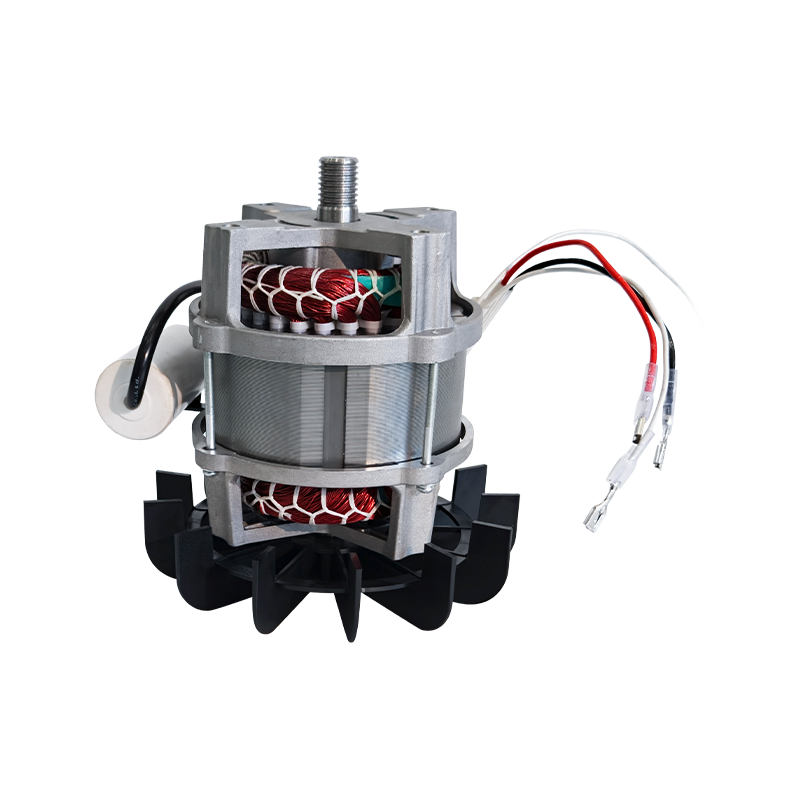
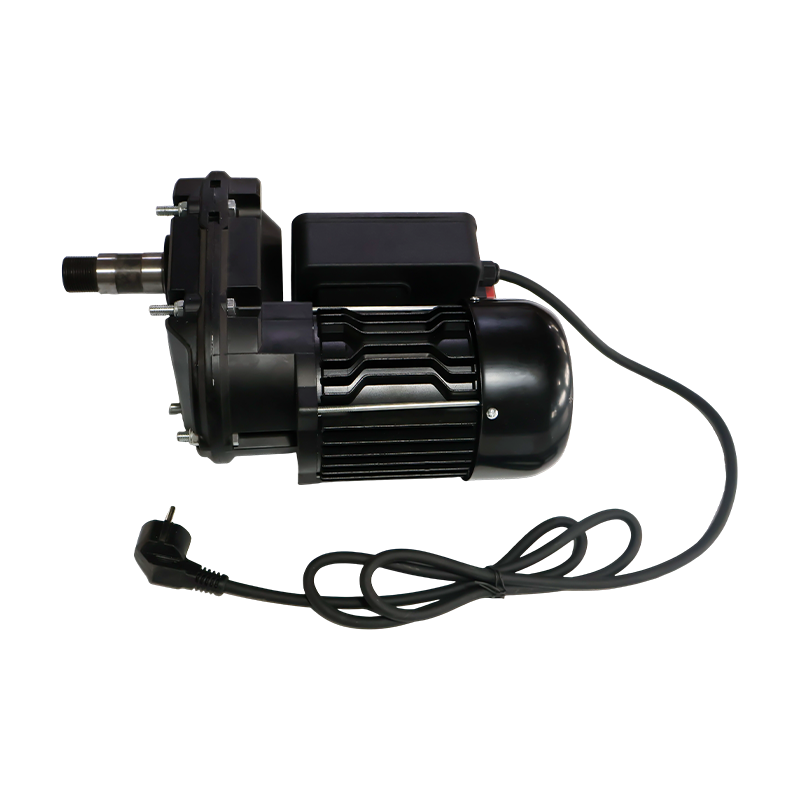
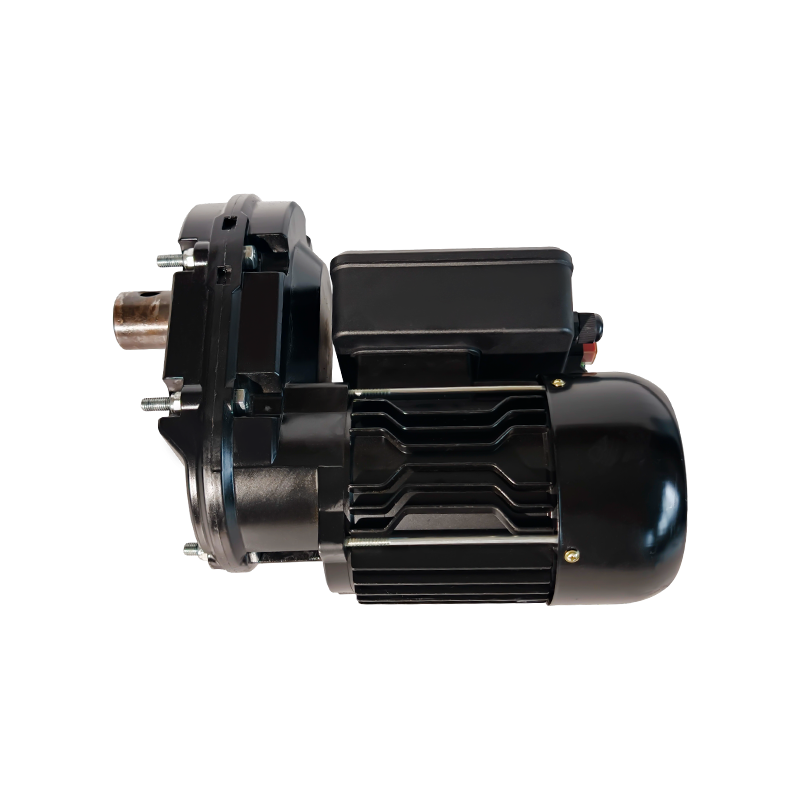
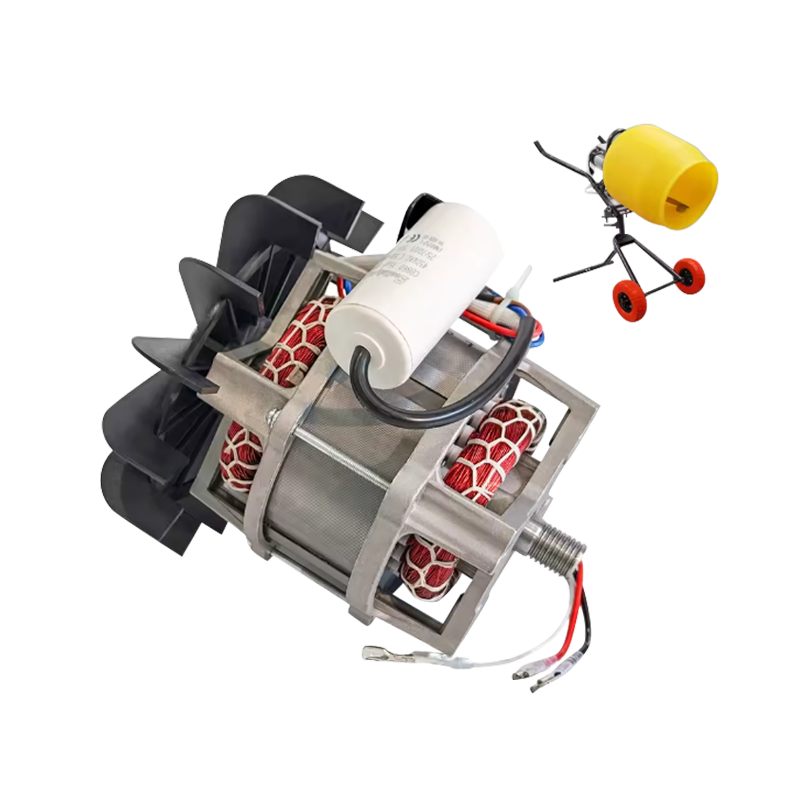
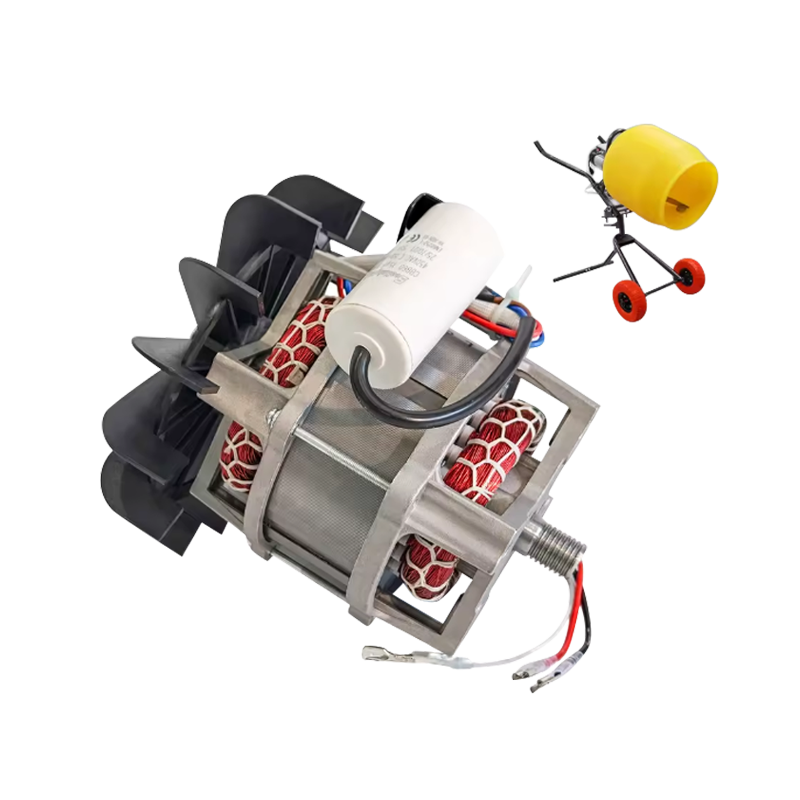
YY71-2 110V 800W Portable Concrete Mixer Motor: Reliable Power for North American Mixing Applications
Content
- 1 Product Overview
- 2 Designed for 110V North American Power
- 3 800W Output for Practical Mixing Performance
- 4 Pure Copper Windings and Electrical Efficiency
- 5 Two-Pole High-Speed Operation
- 6 Smooth Starting Under Load
- 7 Stable Operation and Low Noise
- 8 Portable Mixer Applications
- 9 Advantages Compared with Basic Low-Power Alternatives
- 10 Advantages Compared with Oversized Industrial Motors
- 11 Manufacturing Strengths and Quality Control
- 12 Research, Development, and Customization Capability
- 13 Installation Considerations
- 14 Operating Practices for Longer Service Life
- 15 Maintenance and Troubleshooting
- 16 Safety Considerations
- 17 Why Choose This Motor for Portable Mixer Equipment?
- 18 Frequently Asked Questions
- 18.1 What type of equipment is the YY71-2 designed for?
- 18.2 Can the motor operate from a standard North American power supply?
- 18.3 Does the motor require a transformer?
- 18.4 What is the motor’s rated power?
- 18.5 What speed does the motor provide?
- 18.6 Why are pure copper windings important?
- 18.7 Can this motor replace another concrete mixer motor?
- 18.8 Can the motor be customized?
- 18.9 How can users reduce motor overheating?
- 18.10 Is the motor suitable for continuous operation?
- 18.11 What maintenance does the motor require?
- 18.12 Who manufactures the YY71-2 motor?
- 19 Conclusion
- 20 References
- 21 Product: YY71-2 110V 800W Portable Concrete Mixer Motor
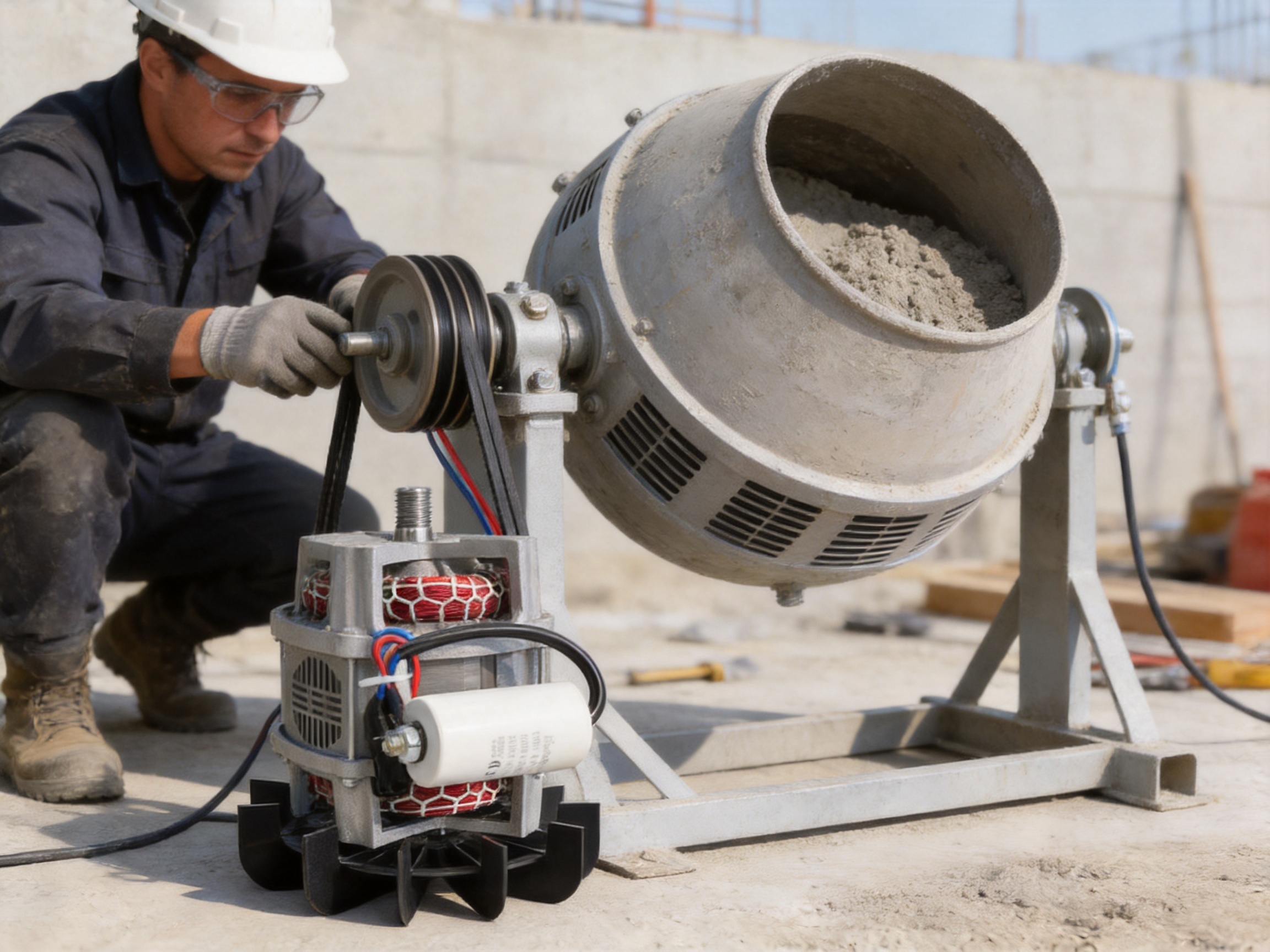
Portable concrete mixers require a motor that can deliver dependable starting torque, stable speed, and continuous performance under demanding job-site conditions. The motor must also be compatible with the available electrical supply, easy to install, simple to maintain, and durable enough for repeated mixing cycles. The YY71-2 110V 800W Portable Concrete Mixer Motor is designed to meet these requirements in household, renovation, construction, landscaping, and light commercial applications.
With a rated voltage of 110V, a power output of 800W, a frequency range of 50/60Hz, and a two-pole high-speed design operating at approximately 2800 RPM, this motor provides a practical power solution for portable concrete mixers in the 120–180 liter range. Its plug-and-play electrical compatibility with North American household and job-site power reduces the need for additional voltage-conversion equipment.
The motor uses high-quality pure copper windings to support efficient electrical conduction, lower heat generation, reduced energy loss, and stable long-term operation. Its high-speed configuration helps promote faster mixing, while its high output supports stronger torque and improved operation when the mixer is working under load. These characteristics make the YY71-2 suitable for users who need a compact but capable motor for portable concrete mixing equipment.
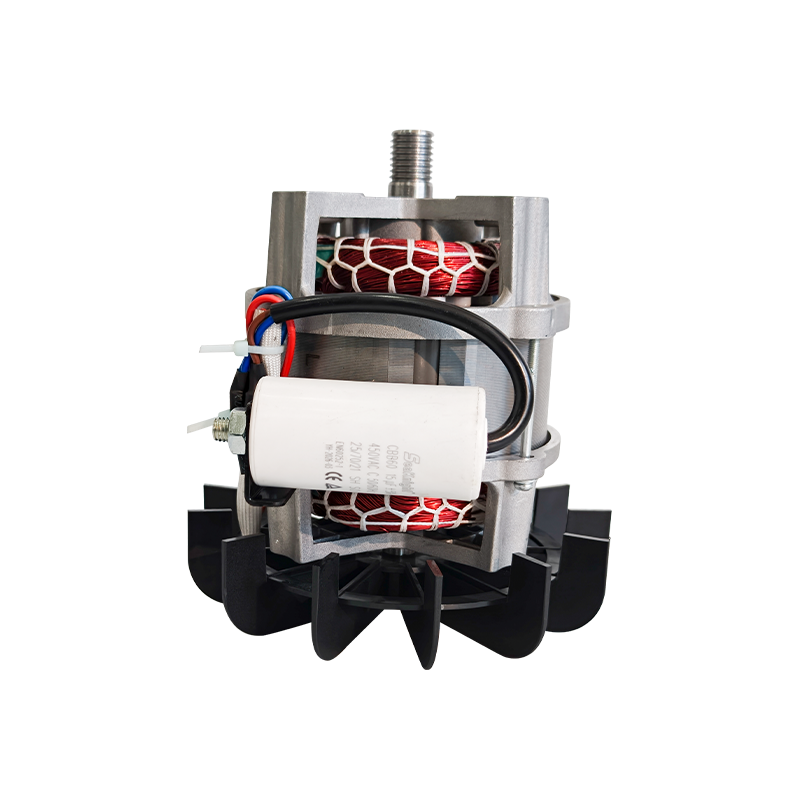
YY71-2 110V 800W Portable Concrete Mixer Motor
Product Overview
The YY71-2 is an AC concrete mixer motor developed for portable equipment that needs a combination of compact construction and strong working performance. It is rated at 110V and 800W, making it suitable for electrical environments where standard North American household or job-site power is available. The motor is designed to operate at both 50Hz and 60Hz, providing practical flexibility for different operating locations and electrical systems.
Its two-pole design supports a nominal speed of approximately 2800 RPM. High-speed motor operation can help the mixer drum or transmission system maintain efficient movement, depending on the mixer’s pulley, gearbox, belt, or mechanical reduction arrangement. The motor itself is engineered to provide stable rotation, while the mixer’s complete drive system converts motor speed into the appropriate drum speed and mixing action.
The 800W rating provides a useful balance between power consumption and working capability. Compared with smaller motors that may struggle during loaded starts or thick material mixing, this motor offers greater power reserve for portable equipment. Compared with substantially larger industrial motors, it can help keep the overall mixer compact, easier to transport, and more suitable for ordinary residential or light construction power supplies.
| Product | Concrete Mixer Motor |
| Model | YY71-2 |
| Rated Voltage | 110V |
| Rated Power | 800W |
| Frequency | 50/60Hz |
| Motor Configuration | Two-pole high-speed design |
| Approximate Speed | 2800 RPM |
| Recommended Equipment | Portable concrete mixers |
| Suggested Mixer Capacity | Approximately 120–180 liters, subject to complete machine design |
| Winding Material | Pure copper |
| Typical Applications | Household, renovation, construction, landscaping, and job-site mixing |
Designed for 110V North American Power
One of the most practical features of the YY71-2 is its 110V electrical specification. Portable mixers are frequently used in residential construction, home improvement, landscaping, repair work, and smaller job sites where standard household outlets or readily available site power are preferred. A motor designed for this voltage can simplify equipment selection and reduce the complexity associated with electrical conversion.
Because the motor is intended for 110V operation, users do not generally need to add a step-down transformer simply to make the motor compatible with the local supply. Eliminating an unnecessary transformer can reduce equipment cost, installation time, weight, and potential points of failure. It also helps make the mixer easier to move between work areas.
Electrical compatibility must always be confirmed against the complete mixer assembly, including the switch, overload protection, plug, cable, capacitor, controller, and any other electrical components. The motor’s 110V rating is an important advantage, but safe installation still requires that all connected parts match the voltage, frequency, current, and operating requirements of the finished machine.
The 50/60Hz frequency rating adds further flexibility. In many locations, electrical systems operate at either 50Hz or 60Hz. A motor that supports both frequencies can be more convenient for equipment manufacturers, distributors, replacement-part suppliers, and international users. It can also simplify product planning when the same mixer platform is supplied to different markets.
800W Output for Practical Mixing Performance
Concrete, mortar, grout, plaster, and similar materials become more difficult to mix as their density, moisture content, and batch size increase. A motor that is too small may experience slow acceleration, excessive heating, belt slippage, repeated overload, or premature wear. The 800W output of the YY71-2 provides a stronger working base for portable mixers than low-power motor options commonly used for very light-duty equipment.
Higher rated power can help the mixer maintain more consistent operation when material enters the drum and the load rises. It can also provide improved starting capability when the drum contains material before the motor is switched on. This is especially important on job sites, where users may need dependable operation without repeatedly emptying the drum to restart the machine.
The motor is intended for portable mixers in the approximate 120–180 liter class, although the actual suitability depends on the mixer’s drum geometry, gearbox ratio, belt arrangement, blade design, batch weight, material formulation, and duty cycle. A properly matched mechanical transmission allows the motor to deliver its available power effectively while keeping the drum at an appropriate mixing speed.
Power alone does not determine mixer performance. A well-designed motor must work together with an efficient transmission, properly tensioned belt, correctly aligned pulleys, suitable bearings, and a structurally sound frame. The YY71-2 is valuable because its power level and high-speed configuration provide a practical foundation for a complete portable mixer system.
Pure Copper Windings and Electrical Efficiency
The use of pure copper windings is a significant construction advantage. Copper has excellent electrical conductivity, allowing current to flow through the winding with relatively low resistance. Lower resistance can reduce electrical losses that would otherwise appear as heat. This supports efficient motor operation and helps the motor convert electrical input into useful mechanical output.
In a concrete mixer application, heat management is important because the motor may be used repeatedly throughout the day. Mixing cycles can place sustained demand on the drive system, particularly when dense material or larger batches are processed. A winding system that controls heat generation can support more stable operation and help reduce thermal stress on insulation and internal components.
Pure copper windings may also contribute to consistent electrical performance over time. When manufacturing quality is properly controlled, the winding structure can provide stable resistance characteristics and reliable magnetic-field generation. This is especially useful in applications where the motor must start smoothly and continue rotating without excessive fluctuation.
Compared with motors that use lower-conductivity winding materials, a copper-wound motor can offer better electrical efficiency and heat behavior when manufactured to appropriate standards. The actual result still depends on winding fill, wire gauge, insulation quality, lamination design, bearings, ventilation, and load conditions. Copper is therefore one part of the complete design, but it is an important part.
Two-Pole High-Speed Operation
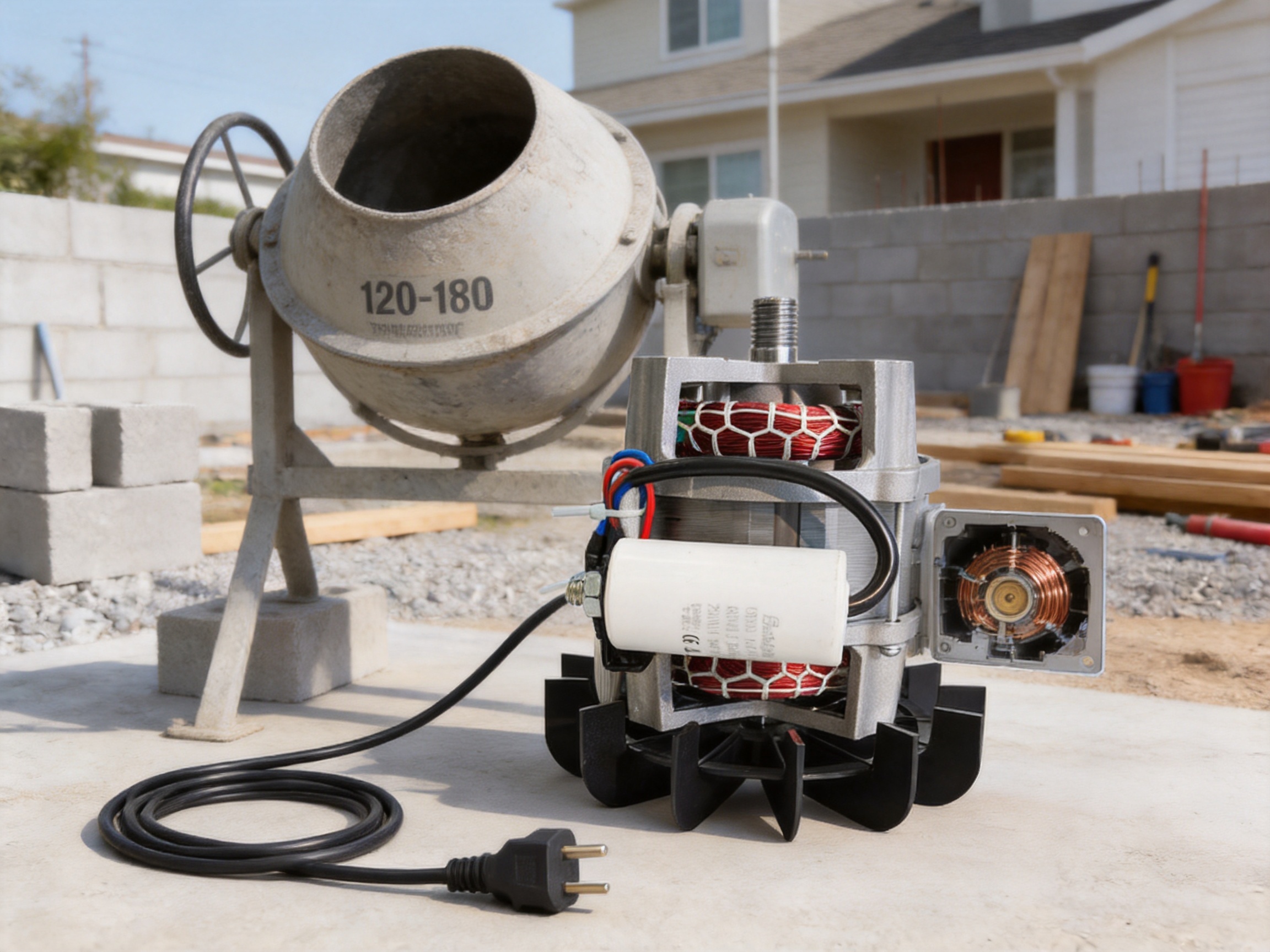
The YY71-2 uses a two-pole high-speed configuration with an approximate operating speed of 2800 RPM. This arrangement is suitable for compact equipment where the motor must deliver useful power without requiring a physically large frame. High rotational speed allows the motor to produce the required mechanical output in a relatively compact package.
Portable concrete mixers often use a belt drive, gear reduction system, or a combination of both. The motor runs at high speed while the transmission reduces the speed and increases the torque delivered to the mixing drum. This arrangement allows the complete machine to achieve appropriate drum rotation while preserving the advantages of a compact, high-speed motor.
A two-pole design can also support responsive acceleration. When the motor is correctly connected to the mixer’s starting and protection circuit, it can reach operating speed efficiently and help the drum begin moving smoothly. This can reduce the time required to reach stable operation and may improve productivity during repeated batches.
High speed should not be interpreted as direct drum speed. The final mixing speed is determined by the complete mechanical system. For safe and effective operation, the motor must be paired with correctly sized pulleys, belts, gears, couplings, and guards. Any replacement installation should duplicate or improve the original drive ratio and protective arrangements.
Smooth Starting Under Load
Starting a concrete mixer can be more demanding than running it after the drum is already moving. Material inside the drum creates resistance, and thick or partially set mixtures can increase the starting load. The YY71-2 is designed to provide strong starting performance and smooth starting under load when installed in a properly matched mixer system.
Smooth starting helps reduce sudden mechanical shock. A harsh start can place stress on the belt, pulley, gearbox, drum bearings, frame, and electrical switch. A controlled acceleration process distributes the load more gradually and can support better overall equipment durability. It also helps the operator maintain control when the mixer is positioned on a job site.
Strong starting capability is especially useful for portable mixers because these machines are often operated by small teams or individual workers. Users may not have access to large industrial electrical systems, specialized maintenance staff, or extensive backup equipment. A motor that starts reliably from an appropriate 110V supply can help reduce interruptions and improve daily productivity.
Actual starting behavior depends on the electrical circuit and the complete machine configuration. Long extension cords, undersized conductors, low supply voltage, worn capacitors, tight bearings, overloaded drums, or incorrect belt tension can all reduce starting performance. Proper installation and operating practices are therefore essential to achieving the motor’s intended results.
Stable Operation and Low Noise
Stable performance is important in a mixer because irregular rotation can affect mixing consistency and increase stress on the transmission. The YY71-2 is designed for steady operation at its rated conditions, supporting continuous mixing cycles when the machine is correctly loaded and ventilated.
Low noise is another useful feature for household, renovation, and job-site equipment. Portable mixers are often used near homes, workshops, commercial buildings, and occupied work areas. Excessive motor noise can create discomfort, communication difficulties, and complaints. A motor with smooth rotation and properly controlled mechanical vibration can contribute to a more comfortable working environment.
Noise levels in the finished mixer depend on more than the motor. Belt condition, gear tooth contact, bearing quality, frame rigidity, drum balance, mounting bolts, and protective covers all influence sound. The YY71-2 provides a suitable motor foundation, while the mixer manufacturer must ensure that the complete assembly is correctly aligned and securely mounted.
Stable and quiet operation can also make maintenance problems easier to identify. A sudden change in sound may indicate belt wear, bearing damage, loose fasteners, misalignment, or overload. When the normal operating sound is controlled, unusual mechanical noise can be detected earlier.
Portable Mixer Applications
The YY71-2 is intended for portable concrete mixers used in a wide range of practical applications. In residential construction, it can support the preparation of concrete for foundations, footings, pathways, steps, small slabs, fence posts, and repair work. In landscaping, it can be used for paving projects, retaining walls, garden structures, and outdoor improvements.
For renovation contractors, the motor can support portable mixing equipment used in locations where ready-mix delivery is impractical or where smaller batches are required. It may also be suitable for mortar and cement-based materials used in masonry, patching, rendering, and general building maintenance, provided that the complete machine is designed for those materials.
On light construction sites, a portable mixer powered by this motor can provide a flexible alternative to manual mixing. The motor reduces physical effort, promotes more consistent drum movement, and supports repeatable production across multiple batches. Its 110V specification is particularly practical where ordinary site power is available but heavy industrial electrical infrastructure is not.
The motor may also serve as a replacement component for compatible portable mixers. Replacement applications require careful verification of mounting dimensions, shaft size, shaft length, rotation direction, electrical connections, capacitor requirements, belt profile, pulley dimensions, and motor frame configuration. Matching the electrical rating alone is not sufficient for a safe and reliable replacement.
Advantages Compared with Basic Low-Power Alternatives
Portable mixer motors vary widely in quality and power. Basic low-power options may be suitable for very small batches or intermittent use, but they can have limited power reserve when mixing dense materials. The 800W YY71-2 provides a stronger operating margin for equipment in its intended capacity range.
One advantage is improved resistance to load-related slowdown. When the drum becomes heavier or the material becomes thicker, a stronger motor can help maintain more consistent rotation. This may support better mixing uniformity and reduce the need for frequent manual intervention.
A second advantage is stronger starting performance. Smaller motors may struggle when starting with a loaded drum, especially if the electrical supply is distant from the mixer or the extension cable is too long. The YY71-2 is designed for stronger torque and smoother loaded starting, helping the mixer begin operation more reliably when all electrical and mechanical conditions are correct.
A third advantage is the use of pure copper windings. Compared with lower-cost construction that prioritizes initial purchase price over long-term electrical performance, a properly manufactured copper-wound motor can offer lower winding losses, better heat behavior, and improved service reliability.
The two-pole high-speed design also provides a useful compact-power combination. The motor can deliver a relatively high output for portable machinery without requiring the physical size and electrical infrastructure associated with much larger industrial motors. This helps manufacturers preserve equipment mobility while offering more capable performance.
Advantages Compared with Oversized Industrial Motors
Although larger industrial motors can provide substantial power, they may not be the best choice for a portable mixer intended for household or light construction use. Oversized motors can increase equipment weight, frame requirements, electrical demand, purchase cost, and transportation difficulty.
The YY71-2 is positioned for a more practical operating range. Its 800W output is sufficient for the stated portable mixer application while remaining compatible with a 110V supply. This makes it easier to integrate into compact equipment that must be carried, wheeled, loaded into vehicles, or moved between work locations.
A motor selected close to the actual needs of the equipment can also improve system efficiency. Excessive motor capacity may not provide meaningful benefits if the transmission, drum, or frame cannot use the additional output. Proper matching allows the manufacturer to control cost and weight while retaining suitable performance.
The best motor is therefore not necessarily the largest motor. It is the motor that provides the required starting torque, running power, speed, duty capability, and electrical compatibility for the complete machine. The YY71-2 offers a balanced specification for portable mixing equipment rather than an unnecessarily oversized industrial solution.
Manufacturing Strengths and Quality Control
The manufacturer, Shengzhou Jiangxin Motor Technology Co., Ltd., was established in 2017 and focuses on the research, development, production, and sales of AC motors, DC motors, and micro motors. Its product range includes evaporative air cooler motors, industrial heater motors, oil pump motors, customized motors, and other motor products for specialized equipment.
The company operates in Shengzhou, Zhejiang Province, within the industrial environment of the Yangtze River Delta. This region provides access to component suppliers, manufacturing services, engineering resources, logistics networks, and technical talent. Such an industrial ecosystem can support efficient procurement, flexible production, and responsive product development.
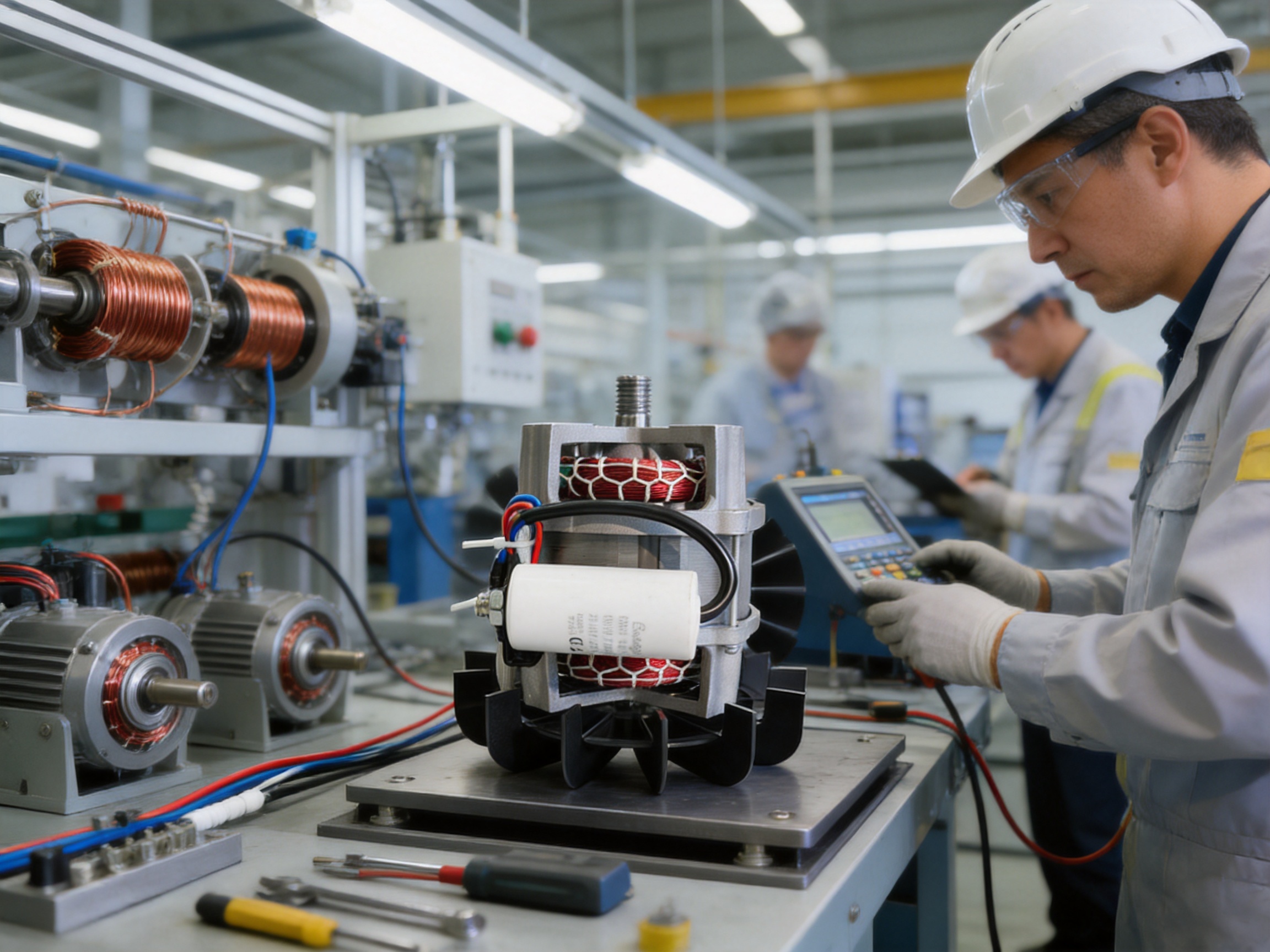
Modern production facilities and automated equipment are important in motor manufacturing because consistency directly affects performance. Automated or semi-automated winding, assembly, testing, and inspection processes can help control production variation. They may also improve repeatability in areas such as winding placement, connection quality, rotor assembly, and component alignment.
The company maintains a professional research and development team and has been recognized as a provincial-level technology enterprise. This technical foundation supports the development of standard motors as well as customized products. For equipment manufacturers, customization capability can be valuable when a motor must fit a particular mounting structure, drive arrangement, voltage system, connector, shaft, or duty cycle.
Quality control should cover the full production process, from incoming materials to final motor testing. Copper wire, laminations, insulation materials, bearings, housings, shafts, fasteners, capacitors, and electrical leads must all meet defined requirements. Process inspections can help identify issues before the motor reaches final assembly.
Final testing may include electrical continuity, insulation performance, no-load current, rotational speed, vibration, noise, starting behavior, and load-related performance. The exact inspection program depends on the product design and applicable customer requirements. A controlled testing process helps verify that finished motors meet their intended specifications before shipment.
Research, Development, and Customization Capability
Different equipment manufacturers often require different motor configurations. A portable mixer may have limited installation space, a unique belt arrangement, a specific shaft profile, or a special electrical connection. A motor supplier with research and development capability can work with customers to adjust the design rather than offering only a fixed standard product.
Potential customization areas may include rated voltage, frequency, power, speed, shaft dimensions, mounting holes, terminal structure, cable length, connector type, protective components, and external housing details. Any modification must be evaluated as a complete engineering change because electrical and mechanical characteristics influence one another.
For example, changing the voltage may affect current, winding design, insulation requirements, starting performance, and thermal behavior. Changing the speed may require a different pole configuration or winding arrangement. Changing the shaft may affect rotor balance and the mechanical connection to the mixer transmission. Professional engineering review is therefore essential for reliable customization.
The manufacturer’s experience with air cooler motors, fan motors, heater motors, oil pump motors, and other application-specific products provides a broad base of motor design knowledge. Although a concrete mixer motor has its own operating requirements, experience across multiple product categories can support better understanding of thermal management, compact construction, production engineering, and application matching.
Installation Considerations
Correct installation is essential to obtain the intended performance from the YY71-2. Before installation, the user or equipment manufacturer should verify the motor’s voltage, frequency, power, speed, shaft dimensions, mounting structure, rotation direction, and connection requirements. These details should match the mixer’s original design or approved replacement specification.
The motor should be mounted on a rigid and level support. Loose or flexible mounting can increase vibration and place extra stress on the shaft, bearings, belt, and frame. All mounting bolts should be tightened according to the equipment manufacturer’s requirements, and the motor should be positioned so that the pulley or coupling is correctly aligned with the driven component.
Belt alignment is particularly important in portable mixers. The motor pulley and driven pulley should be parallel and positioned in the same plane. Excessive belt tension can overload the motor bearings, while insufficient tension can cause slipping, heat, and reduced power transmission. The belt should be inspected for cracking, glazing, fraying, and abnormal wear.
Electrical connections should be completed by a qualified person familiar with motor circuits. The power supply, plug, cable, switch, capacitor, overload protection, grounding arrangement, and enclosure should be suitable for a 110V, 800W motor and the intended operating environment. Outdoor or job-site use may require additional protection against moisture, dust, impact, and accidental contact.
The motor should be installed with adequate ventilation. Airflow openings must not be blocked by dust, concrete residue, packaging, walls, or other equipment. Although the motor is designed for low heat and efficient operation, restricted airflow can cause temperature to rise and may reduce service life.
Operating Practices for Longer Service Life
Users should avoid exceeding the mixer’s recommended batch size. Overfilling the drum increases resistance and can cause the motor to operate under excessive load. Heavy materials should be introduced in a controlled manner according to the mixer manufacturer’s instructions rather than being dumped into an already overloaded drum.
The mixer should be placed on a stable, level surface before operation. An unstable position can increase vibration and create uneven loading. It may also place additional stress on the frame and drive components. The drum, blades, and transmission should be kept free from hardened material that could obstruct movement.
Electrical supply quality is also important. Long or undersized extension cords can create voltage drop, reducing starting performance and increasing current draw. Users should select cables appropriate for the distance and load, keep connections dry, and inspect plugs and connectors for damage before operation.
After use, wet concrete and mortar should be removed from the drum and nearby components before they harden. Material buildup can affect drum balance, increase resistance, and cause vibration. The motor itself should be protected from direct water spray unless the complete motor and equipment are specifically rated for that condition.
Regular inspections should include motor mounting bolts, belt tension, pulley alignment, electrical cables, protective covers, ventilation openings, and unusual sound or vibration. Early identification of wear can help prevent a small maintenance issue from becoming a major equipment failure.
Maintenance and Troubleshooting
Routine maintenance begins with safe isolation of the power supply. The mixer should be unplugged or disconnected before removing guards, inspecting the belt, cleaning the motor area, or working near rotating components. Stored electrical energy in capacitors or other components should be handled according to appropriate safety procedures.
If the motor does not start, the operator should first check the power source, plug, switch, cable, overload protection, and electrical connections. The drum should be checked for blockage or excessive material. A failed capacitor, damaged winding, seized bearing, or mechanical obstruction may also prevent starting and should be evaluated by a qualified technician.
If the motor starts but operates slowly, possible causes include low supply voltage, an undersized extension cable, excessive drum load, belt slipping, incorrect pulley dimensions, bearing resistance, or an electrical fault. Continued operation under these conditions can increase heat and should be avoided until the cause is identified.
Unusual noise may result from loose mounting hardware, belt damage, pulley misalignment, worn bearings, or foreign material contacting the rotating assembly. Vibration should not be ignored, particularly if it develops suddenly. The motor and mixer should be stopped, isolated from power, and inspected before further use.
Excessive heat may be caused by overload, poor ventilation, frequent starts, low voltage, incorrect wiring, bearing problems, or restricted airflow. A warm motor can be normal during operation, but abnormal temperature rise, burning odor, repeated trips, or visible insulation damage requires immediate attention.
Safety Considerations
Concrete mixers combine electrical power, rotating machinery, heavy materials, and potentially wet working conditions. Operators should wear suitable protective equipment, keep hands and clothing away from moving parts, and ensure that guards remain installed during operation.
The motor and mixer should be connected to an appropriate electrical supply with suitable grounding and protective devices. The machine should not be operated with damaged cables, exposed conductors, missing covers, or wet electrical connections. Outdoor operation should follow local electrical safety requirements.
Children and untrained personnel should be kept away from the operating mixer. The drum should never be cleaned, adjusted, or manually assisted while the motor is running. Before maintenance, the power supply must be disconnected and all moving parts allowed to stop completely.
Safety requirements may vary by country, application, and installation environment. Equipment manufacturers and end users should follow applicable electrical, mechanical, occupational, and product safety standards. The motor should be integrated into a complete machine that includes appropriate guarding, control, overload protection, and operating instructions.
Why Choose This Motor for Portable Mixer Equipment?
The YY71-2 provides a focused combination of features for portable concrete mixing. Its 110V specification supports compatibility with common North American power sources. Its 800W output offers useful power for mixers in the approximate 120–180 liter range. Its two-pole, 2800 RPM configuration supports compact high-speed operation through an appropriate belt or gear reduction system.
The pure copper winding design supports efficient electrical performance, reduced heat generation, and stable operation. Strong starting capability helps the mixer handle demanding startup conditions when correctly matched with the complete machine. Low-noise operation contributes to a more comfortable job-site environment, while the relatively compact motor format supports portability.
These features make the motor a practical alternative to undersized motors that lack load capacity and to oversized industrial motors that add unnecessary weight and cost. It is suitable for original equipment production, replacement applications, and customized portable mixer platforms, provided that the electrical and mechanical specifications are properly verified.
The manufacturer’s investment in production facilities, automated equipment, research and development, and quality control further supports the product’s value. Customers can benefit from a supplier capable of providing standard motors as well as application-specific solutions for different equipment designs and international markets.
Frequently Asked Questions
What type of equipment is the YY71-2 designed for?
The YY71-2 is designed primarily for portable concrete mixers. It is suitable for equipment used in residential construction, renovation, landscaping, repair work, and light construction applications. The recommended mixer capacity is approximately 120–180 liters, subject to the complete machine design and operating conditions.
Can the motor operate from a standard North American power supply?
The motor is rated at 110V and is designed for North American household and job-site power applications. The complete electrical system must still include compatible wiring, switches, protection devices, and connections. Users should verify the local supply and installation requirements before operation.
Does the motor require a transformer?
For a compatible 110V supply, an additional transformer is generally not required. This plug-and-play compatibility can simplify installation and reduce equipment weight. A transformer may be necessary if the available power supply does not match the motor’s rated voltage.
What is the motor’s rated power?
The rated power is 800W. This output is intended to provide stronger torque and more reliable operation for portable mixers within the recommended capacity range. Actual performance depends on load, transmission design, supply quality, and maintenance.
What speed does the motor provide?
The motor uses a two-pole high-speed configuration and operates at approximately 2800 RPM. The mixer drum normally rotates at a lower speed because the machine uses pulleys, belts, gears, or other transmission components to reduce speed and increase usable drum torque.
Why are pure copper windings important?
Pure copper has high electrical conductivity and can help reduce winding losses and heat generation. In a properly designed motor, copper windings support efficient operation, stable performance, and potentially longer service life. Winding quality is one part of the complete motor design and should be supported by proper insulation, assembly, and testing.
Can this motor replace another concrete mixer motor?
It may be suitable as a replacement if the voltage, power, frequency, speed, shaft, mounting dimensions, rotation direction, electrical connections, and transmission arrangement all match. A qualified technician should verify compatibility before installation. Matching voltage alone is not enough to confirm a safe replacement.
Can the motor be customized?
The manufacturer has research and development and production capabilities for customized motor applications. Possible customization areas may include voltage, power, speed, shaft dimensions, mounting details, cables, connectors, and other specifications. Each request should be reviewed according to the customer’s complete equipment requirements.
How can users reduce motor overheating?
Users should avoid overloading the drum, maintain adequate ventilation, use correctly sized power cables, keep the belt properly tensioned, inspect bearings and pulleys, and follow the recommended duty cycle. If the motor becomes unusually hot or produces a burning smell, it should be stopped and inspected by a qualified technician.
Is the motor suitable for continuous operation?
The product is designed for stable continuous operation under appropriate conditions. Continuous operation must remain within the mixer’s rated load, duty requirements, ventilation capability, and electrical limitations. The complete equipment manufacturer should define the appropriate operating cycle for the finished machine.
What maintenance does the motor require?
Maintenance includes keeping ventilation openings clear, checking mounting bolts, inspecting belts and pulleys, protecting electrical connections, watching for unusual sound or vibration, and preventing concrete buildup around the mixer. Maintenance should always be performed with the power disconnected and by personnel familiar with motor safety.
Who manufactures the YY71-2 motor?
The motor is manufactured by Shengzhou Jiangxin Motor Technology Co., Ltd., a Zhejiang-based motor manufacturer established in 2017. The company develops and produces AC motors, DC motors, micro motors, and application-specific motor products for customers in multiple markets.
Conclusion
The YY71-2 110V 800W Portable Concrete Mixer Motor is designed to provide dependable performance for compact and medium-sized portable mixing equipment. Its North American-compatible voltage, 50/60Hz frequency range, 800W output, two-pole high-speed design, and approximate 2800 RPM operation create a practical foundation for portable mixers used in construction, renovation, landscaping, and repair applications.
Pure copper windings support efficient operation and reduced heat generation, while strong starting capability helps the motor manage loaded mixer startup when the complete system is correctly designed. Stable rotation, low-noise performance, and a compact format further improve its suitability for job-site equipment.
Compared with low-power alternatives, the motor offers greater working capacity and stronger load performance. Compared with oversized industrial motors, it provides a more balanced solution for equipment that must remain portable and compatible with ordinary 110V power. Its value is further supported by the manufacturer’s production facilities, automated equipment, engineering team, quality-control systems, and experience in customized motor development.
For equipment manufacturers, distributors, and replacement-part buyers, the YY71-2 represents a versatile motor platform. Correct matching, professional installation, suitable protection, and regular maintenance are essential to achieving its full service potential. When these requirements are observed, the motor can provide stable and efficient power for repeated portable concrete mixing operations.
References
1. Product specification information for the YY71-2 110V 800W Portable Concrete Mixer Motor.
2. General principles of AC motor construction, copper windings, electrical efficiency, and thermal management.
3. General engineering practices for portable concrete mixer drive systems, belt alignment, pulley selection, and load matching.
4. General occupational safety principles for electrical equipment, rotating machinery, construction tools, and job-site maintenance.
5. Manufacturer information regarding AC motors, DC motors, micro motors, application-specific motor development, and production capabilities.
Product: YY71-2 110V 800W Portable Concrete Mixer Motor
 Ready To Customise
Your Motor Products?

We are professional motor manufacturers, delivering powerful, stable, and efficient power cores for all industries through precision craftsmanship and innovation.
Contact Us
-
 Mobile:+86 13575536911
-
 Tel:+86 18357538240
-
 Whatsapp:+8618357538240
-
 Email:betty@dbjxmotor.com
-
 Company Address
Copyright © by Shengzhou Jiangxin Motor Technology Co., Ltd. All Rights Reserved.
Wholesale Industrial Fan Motors Manufacturers
