

 English
 русский
 Español
 عربى

No. 8, Duxiu San Road, Ganlin Town, Shengzhou City, Shaoxing City, Zhejiang Province, China

News Category
Product Category
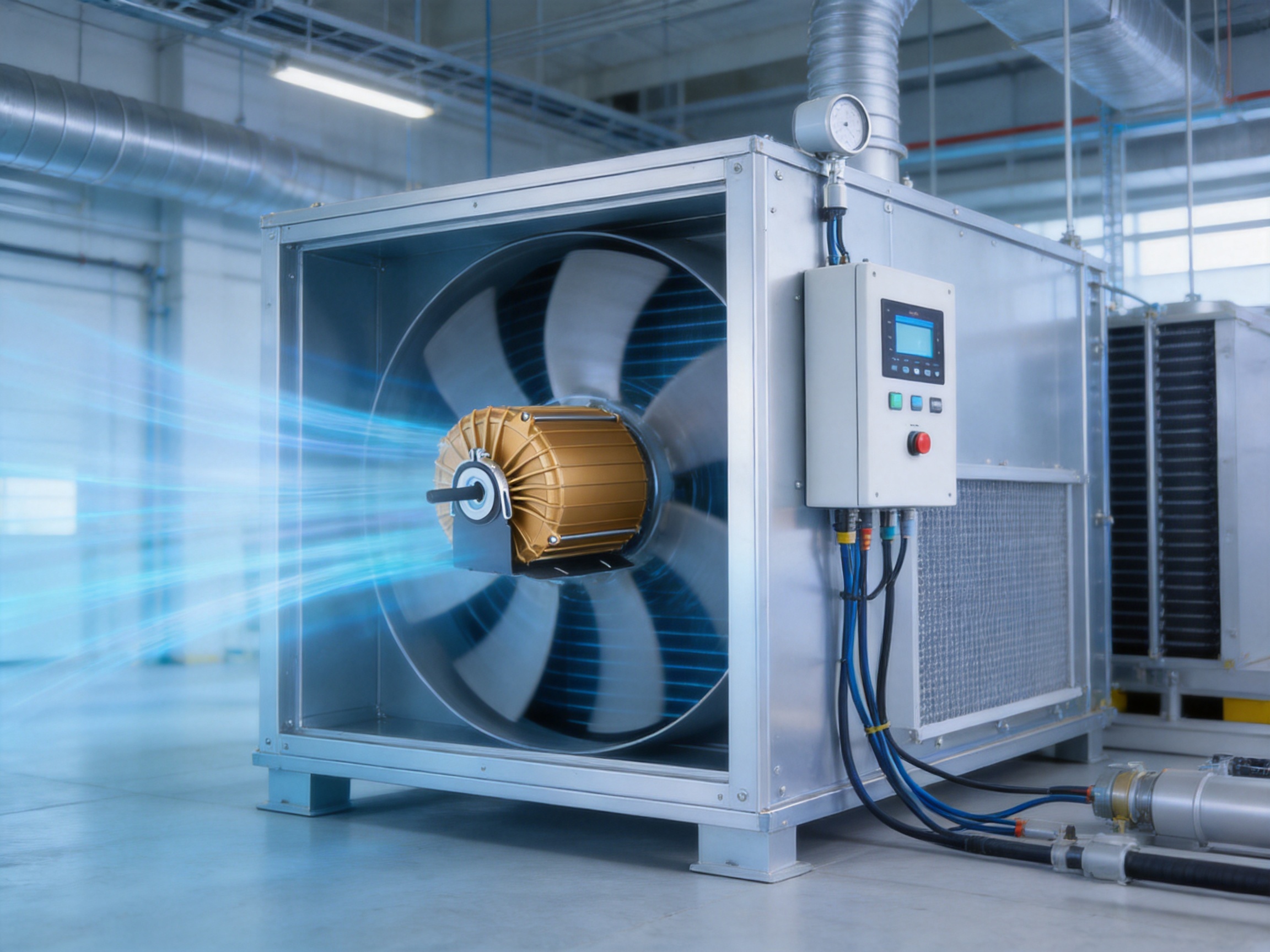
DC570 220V 570W EC Fan Motor: Efficient, Intelligent, and Reliable Air Movement for Modern HVAC Systems
Content
- 1 Overview of the DC570 EC Fan Motor
- 2 Energy Efficiency Compared with Traditional Fan Motors
- 3 Integrated Electronic Control for Simplified System Design
- 4 External-Rotor Structure for Fan Assembly Integration
- 5 Low Noise and Low Vibration Operation
- 6 Protection Features for Reliable Operation
- 7 Insulation Class F for Industrial Applications
- 8 Applications for the DC570
- 9 Manufacturing Capabilities and Quality-Oriented Production
- 10 Advantages over Conventional and Competing Solutions
- 11 OEM Customization and Integration Support
- 12 Installation and Application Considerations
- 13 Selection Guidance for Equipment Designers
- 14 Long-Term Value and Total Cost of Ownership
- 15 Quality, Export Experience, and Customer Service
- 16 Q&A: DC570 EC Fan Motor
- 16.1 What type of motor is the DC570?
- 16.2 What voltage does the motor use?
- 16.3 Does the motor require an external inverter?
- 16.4 How can the speed be controlled?
- 16.5 How much energy can the motor save?
- 16.6 What is the rated power?
- 16.7 What protection features are included?
- 16.8 What does IP55 mean for this motor?
- 16.9 What insulation class does the DC570 use?
- 16.10 Is the motor suitable for HVAC systems?
- 16.11 Can the motor be customized?
- 16.12 Does the brushless design eliminate all maintenance?
- 16.13 What should be checked before ordering?
- 16.14 Can the DC570 be used in hazardous environments?
- 16.15 What is the main advantage over a fixed-speed AC fan motor?
- 17 Conclusion
- 18 References
- 19 Product: DC570 220V 570W EC Fan Motor
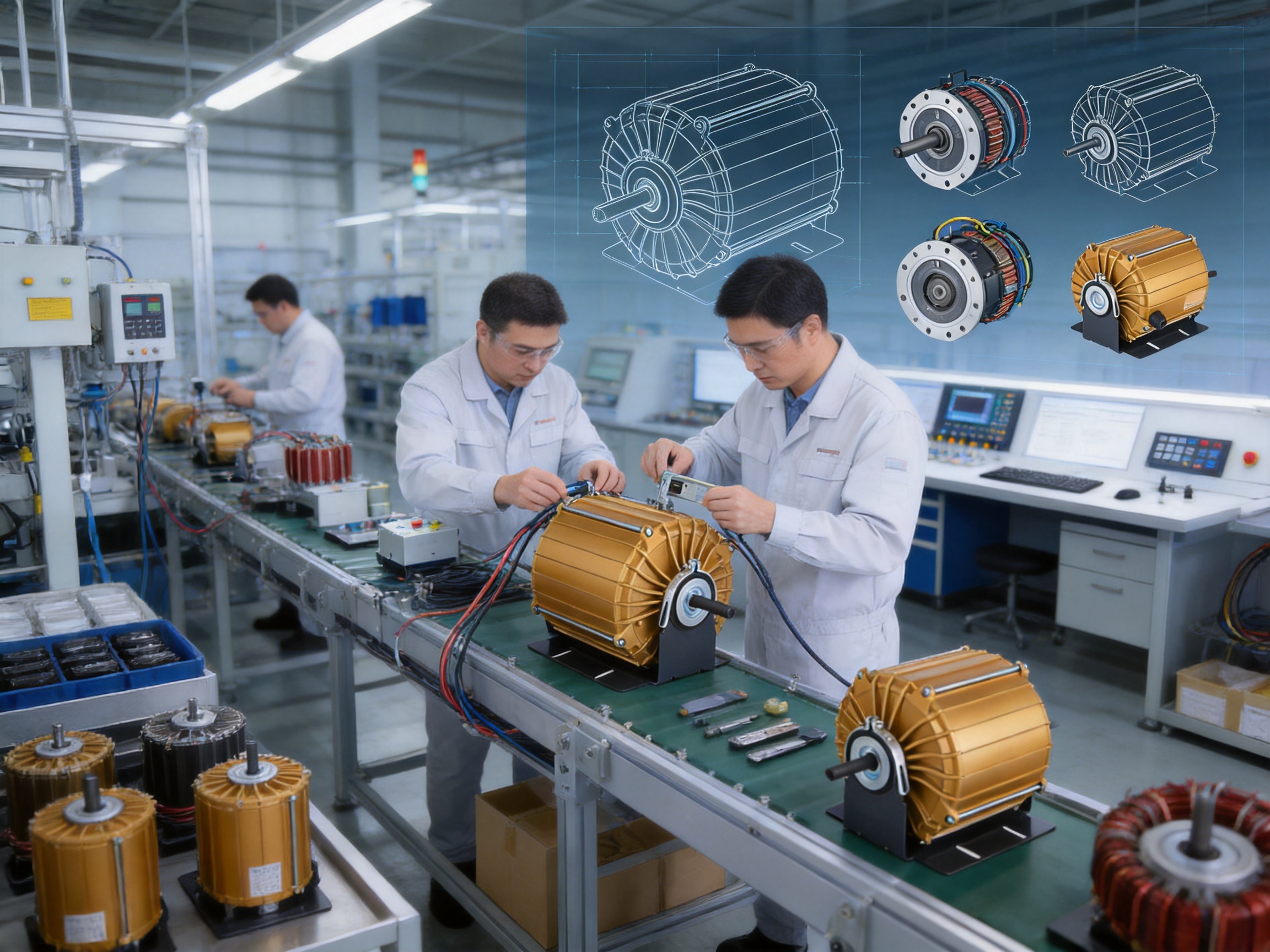
Efficient air movement is becoming increasingly important in commercial buildings, industrial facilities, ventilation equipment, environmental-control systems, and other applications where fans operate for long hours. Motor selection directly influences energy consumption, operating noise, maintenance requirements, airflow control, equipment life, and the overall cost of ownership. The DC570 220V 570W EC Fan Motor is designed to address these demands with an electronically commutated, brushless motor platform that combines high efficiency, integrated control, flexible speed regulation, and robust protection.
Designed for fan applications requiring dependable continuous operation, the DC570 operates from a 220V, 50/60Hz mains supply and delivers a rated power of 570W. Its built-in electronic controller removes the need for a separate external inverter in standard installations, while its 0–10V or PWM speed-control capability allows the motor to respond to changing ventilation requirements. This combination makes the motor suitable for HVAC systems, industrial ventilation units, air-handling equipment, environmental-protection machinery, and fan assemblies that require precise and energy-conscious operation.
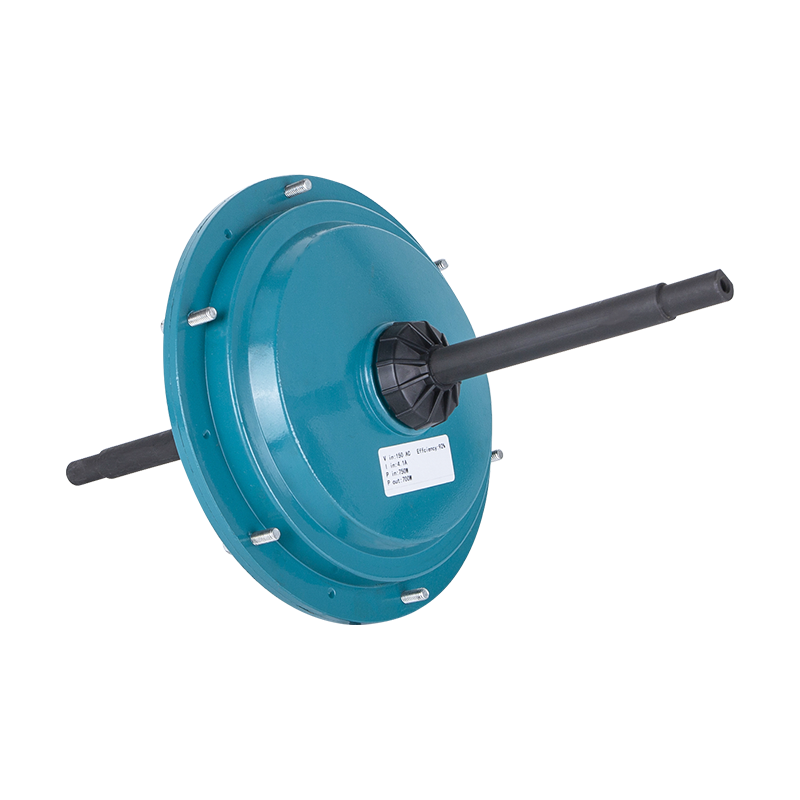
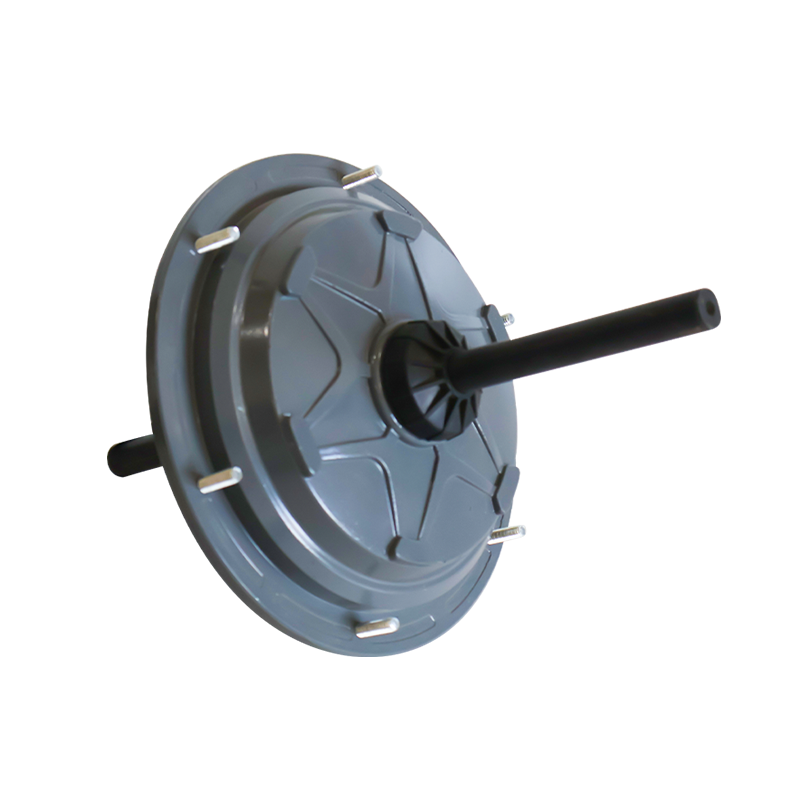
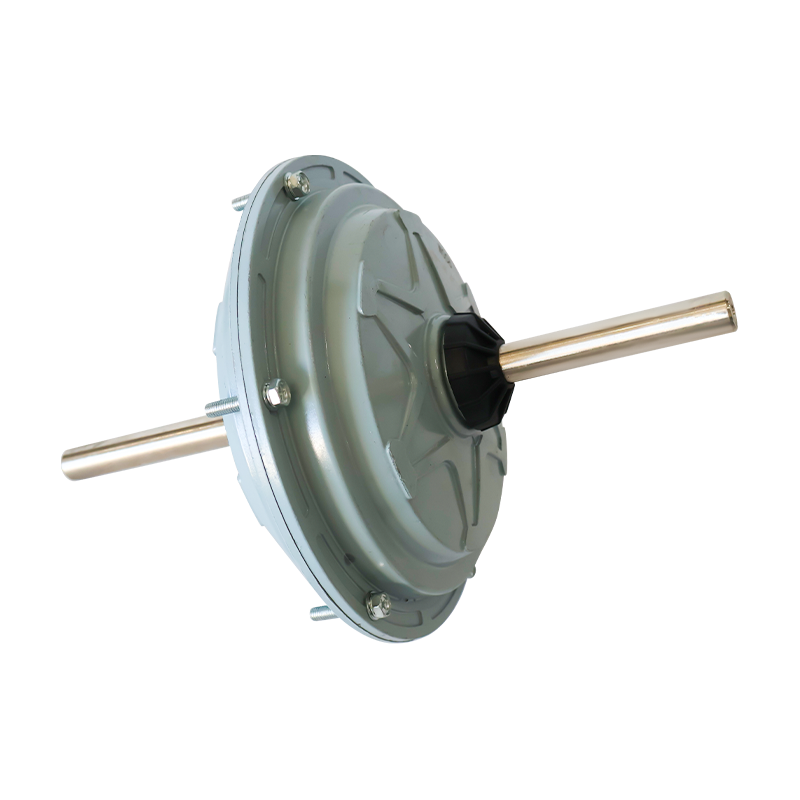
The product also benefits from an external-rotor structure. This configuration is widely used in fan equipment because the rotating outer housing can be connected efficiently with an impeller, helping create a compact and practical fan-motor assembly. Along with brushless operation, soft starting, thermal protection, locked-rotor protection, and an IP55 protection rating, the DC570 is intended to provide a stable operating foundation for demanding fan systems.
Overview of the DC570 EC Fan Motor
The DC570 is a 220V, 570W EC fan motor developed for applications that require efficient electrical conversion and adjustable fan performance. “EC” refers to electronically commutated motor technology. Unlike a traditional brushed motor, an EC motor uses electronic switching to control the magnetic field and rotate the rotor. This eliminates carbon brushes and mechanical commutators, reducing wear points and supporting a longer service life.
The motor is designed to connect directly to a 220V mains supply. Because the controller is integrated into the motor assembly, a conventional external frequency inverter is not required for normal operation. This can simplify system architecture, reduce the number of components in the electrical cabinet, and make installation more convenient for original equipment manufacturers and system integrators.
Speed adjustment is available through either a 0–10V signal or a PWM signal. These control methods are widely used in HVAC and building automation systems. A controller can therefore adjust fan speed according to temperature, pressure, air quality, humidity, occupancy, or other operating conditions. Instead of running continuously at full speed, the fan can operate at the level needed by the system at a particular moment.
The key product specifications are summarized below.
| Item | Specification |
|---|---|
| Product type | EC fan motor |
| Model | DC570 |
| Rated voltage | 220V |
| Rated power | 570W |
| Frequency | 50/60Hz |
| Protection rating | IP55 |
| Insulation class | Class F |
| Speed-control methods | 0–10V or PWM signal |
| Motor construction | Brushless external-rotor design |
| Controller | Built-in electronic controller |
The DC570 is not simply a replacement for a conventional AC motor. It is a complete motor-control solution intended to improve how fan equipment responds to real operating requirements. Its integrated electronics, variable-speed functionality, and protection features allow equipment designers to create more responsive and energy-conscious systems.
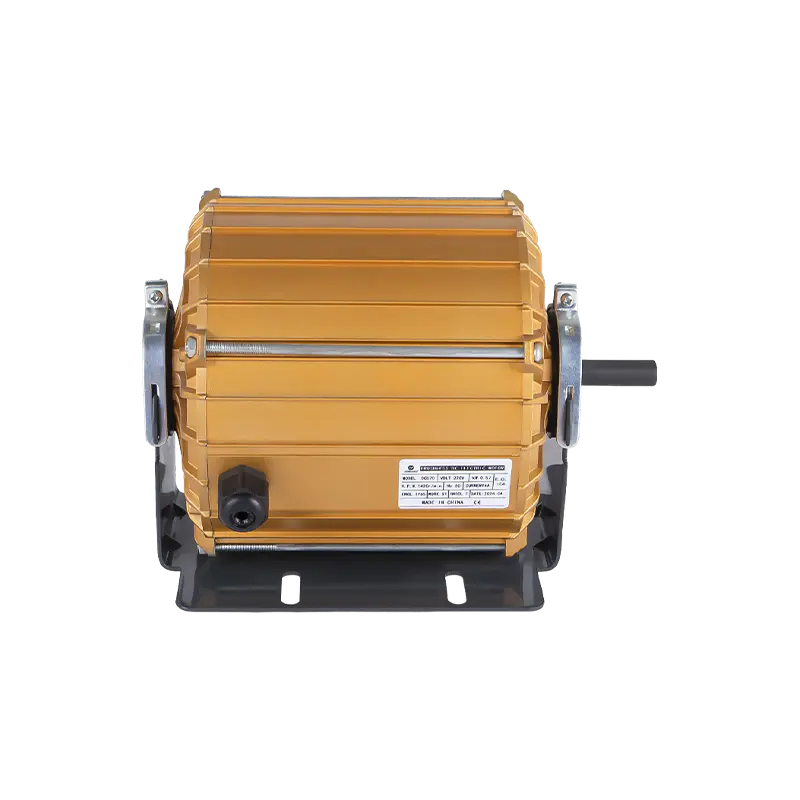
DC570 220V 570W EC Fan Motor
Energy Efficiency Compared with Traditional Fan Motors
One of the most important advantages of an EC fan motor is the potential to reduce energy consumption compared with traditional shaded-pole or asynchronous motors. The DC570 is designed to save approximately 30–50% power compared with conventional AC motor technologies, particularly when the motor is operating under partial-load conditions. The actual result depends on the fan design, duty cycle, airflow requirement, control strategy, installation conditions, and operating environment.
Traditional fan motors are often selected for their simplicity and low initial cost. However, many of them are operated at a fixed speed even when the system does not require maximum airflow. In such circumstances, electrical energy is consumed to produce more airflow than necessary. Additional dampers or mechanical throttling may then be used to reduce airflow, but this approach can waste energy because the motor continues to operate at a relatively high load.
The DC570 approaches this problem through electronic speed regulation. When the required airflow decreases, the control signal can reduce motor speed. The fan then produces a lower airflow level with a corresponding reduction in energy demand. This is particularly valuable in systems that experience changing loads throughout the day, such as commercial ventilation equipment, air-handling units, heat-exchange systems, and building exhaust systems.
Energy savings are also supported by the motor’s electronic commutation. The commutation process is controlled electronically rather than by physical brushes. This allows the motor to operate with reduced mechanical friction and without the brush losses associated with brushed designs. The motor can maintain effective electromagnetic conversion over a wide operating range, helping improve efficiency in both normal and variable-speed conditions.
Partial-load efficiency is a significant differentiator in practical applications. Many fans do not operate at full rated capacity all the time. A motor that performs well only at its maximum output may lose its advantage during the majority of its operating hours. The DC570 is suited to applications in which fan speed changes frequently or remains below maximum speed for extended periods.
Reduced power consumption also contributes to lower heat generation within the motor and the surrounding equipment. Less heat may simplify thermal management and help protect adjacent components. In enclosed or compact fan assemblies, this can be an important design benefit. Lower operating temperature can also support long-term reliability when the system is correctly selected and installed.
Why Variable Speed Matters in Fan Systems
Fan performance is closely related to rotational speed. When speed changes, airflow, pressure, and power demand also change. A variable-speed motor allows the fan system to respond to these relationships rather than operating at a single fixed point. This improves controllability and can help designers balance airflow requirements with energy consumption.
For example, a ventilation system may need high airflow during periods of high occupancy but much less airflow when a building is lightly occupied. An industrial exhaust system may require different operating levels during production and standby periods. An HVAC unit may need to compensate for changing filter resistance, temperature, or pressure conditions. The DC570 can receive a control signal and adjust its speed accordingly.
Variable-speed operation can also reduce mechanical stress. A fan that starts and stops abruptly at full speed may place higher loads on bearings, impellers, mounting structures, and electrical components. The DC570 includes a soft-start function that enables a more controlled acceleration process. This feature can help reduce starting shock and support smoother equipment operation.
Integrated Electronic Control for Simplified System Design
A major strength of the DC570 is its built-in electronic controller. In a traditional motor system, the designer may need to specify a motor, an external inverter, a control cabinet, additional wiring, and separate protective devices. Each component adds space requirements, installation work, compatibility considerations, and potential failure points.
By integrating the controller with the motor, the DC570 provides a more compact solution. The installer can connect the motor to the 220V mains supply and use the available 0–10V or PWM interface for speed regulation. This can reduce the complexity of the system and make it easier to integrate into existing control architectures.
The integrated controller is especially useful for HVAC and building automation applications. Many modern automation systems already use analog or pulse-width control signals to coordinate fans, pumps, valves, dampers, sensors, and other equipment. The DC570 can work within this type of control environment without requiring a separate speed-conversion device for ordinary applications.
Integration can also improve equipment packaging. A separate inverter normally requires mounting space, ventilation, electrical protection, cable routing, and additional enclosure design. Eliminating or reducing these requirements can help manufacturers create smaller air-handling products. It may also provide more flexibility when designing compact fan units for equipment rooms, rooftop systems, ventilation cabinets, and industrial enclosures.
System simplicity does not mean that the motor sacrifices control capability. On the contrary, 0–10V and PWM inputs offer practical choices for system designers. A 0–10V signal can be supplied by an analog controller, sensor module, or building-management system. A PWM signal can be generated by digital control hardware, a programmable controller, or another compatible automation device. The choice depends on the control architecture of the application.
0–10V Control
0–10V control is widely recognized in HVAC and building automation. A controller can generate a variable voltage corresponding to the desired motor speed. This provides an intuitive method of regulating airflow and can be connected to temperature controllers, pressure sensors, air-quality systems, or building-management platforms.
In a typical application, the system controller measures an operating condition and adjusts the output signal. If the measured temperature or pressure rises above the target level, the controller may increase the command voltage to raise fan speed. When the condition returns to the desired range, the controller can reduce the speed command. This creates a responsive, automatic ventilation process.
PWM Control
Pulse-width modulation provides another method of speed command. Instead of transmitting a continuously variable analog voltage, the controller changes the duty cycle of a pulse signal. PWM control is useful when the system is based on digital electronics or when precise programmable control is required.
The availability of both 0–10V and PWM control improves application flexibility. Equipment manufacturers can select the control method that best matches their existing electronics. This may reduce redesign work when the motor is integrated into different product families or supplied to different markets.
External-Rotor Structure for Fan Assembly Integration
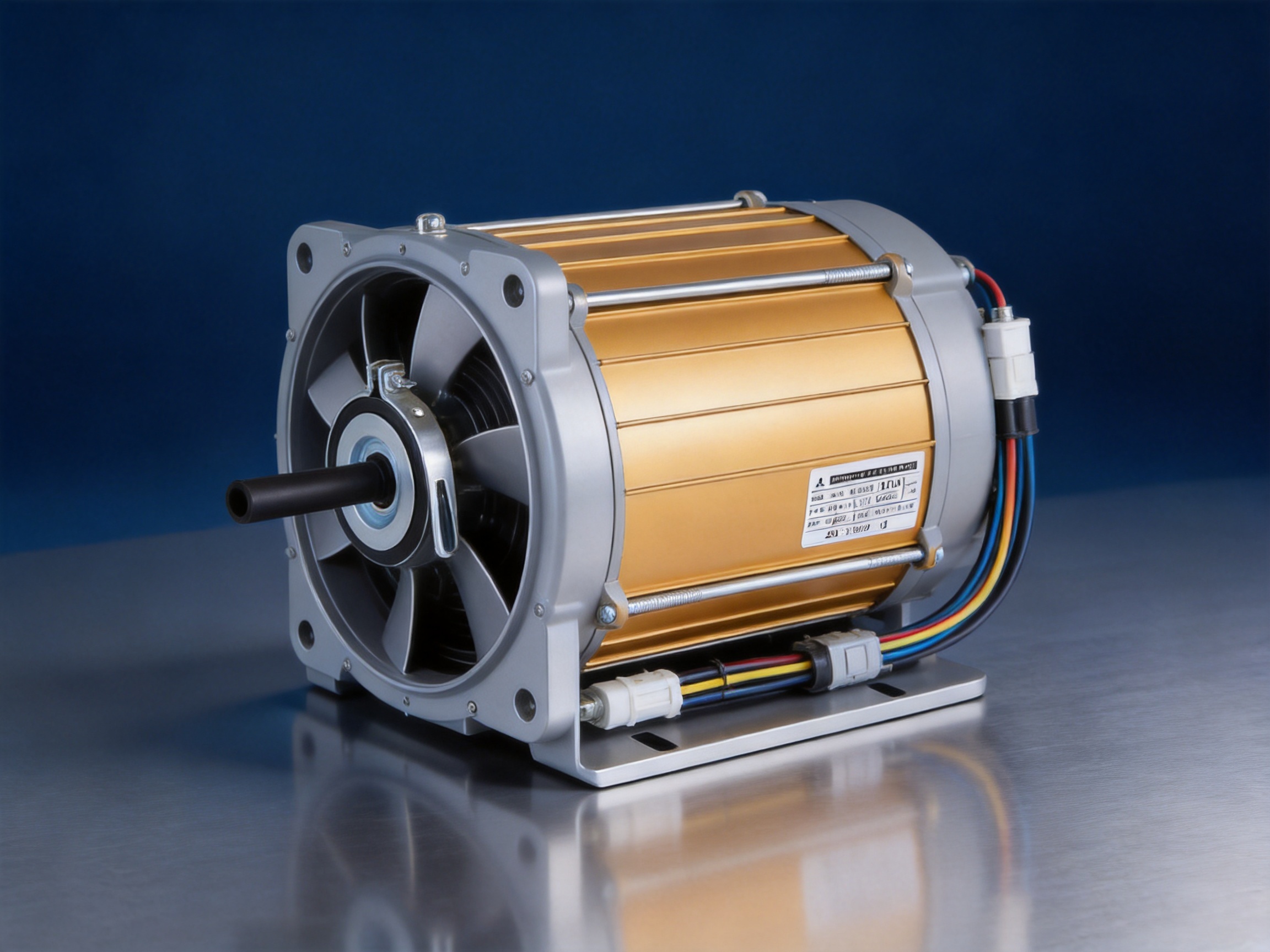
The DC570 uses a compact external-rotor structure. In an external-rotor motor, the rotor surrounds or forms the outer rotating section of the motor, while the stator is positioned inside. This arrangement is widely used for fan applications because it can simplify direct impeller installation and support a compact overall assembly.
For fan manufacturers, the motor structure can provide practical advantages during product development. The fan impeller can be arranged around the rotating outer section, reducing the need for a separate transmission system in suitable designs. Fewer transmission components may mean less alignment work, fewer mechanical wear points, and a more compact product configuration.
External-rotor construction can also help equipment designers use available internal space efficiently. In ventilation products where depth and volume are limited, a direct motor-and-impeller arrangement may be easier to package than a conventional motor with additional coupling or belt components.
Eliminating unnecessary transmission components may contribute to lower noise and improved reliability. Belts can stretch, pulleys can become misaligned, and couplings can require maintenance. A direct fan assembly avoids many of these concerns, although the final result depends on impeller balance, mounting accuracy, bearing quality, and the overall equipment design.
The DC570 is therefore suited to applications where a motor must be both powerful enough for the required airflow and compact enough to integrate into a finished fan product. Its 570W rating provides a useful power level for a variety of medium-duty and industrial fan systems, subject to correct fan selection and performance matching.
Low Noise and Low Vibration Operation
Noise is an important consideration in ventilation and air-moving equipment. Excessive motor noise can affect occupants in commercial buildings, workers in industrial areas, and users of equipment installed near offices, retail spaces, hospitals, laboratories, or residential environments. The DC570 is designed for low-noise and low-vibration operation through its brushless construction, electronic control, and smooth starting characteristics.
Brushless operation removes the physical contact between carbon brushes and a mechanical commutator. This reduces brush friction and eliminates brush-related arcing noise. It also avoids the gradual brush wear that can cause performance changes and maintenance requirements over time.
Electronic commutation allows the motor to maintain controlled torque production. When the motor, controller, impeller, and mounting structure are correctly matched, controlled electromagnetic operation can help reduce torque pulsation and mechanical disturbance. Soft starting further supports smooth acceleration instead of applying an abrupt full-speed load to the fan assembly.
Nevertheless, total system noise is determined by more than the motor alone. Fan blade shape, air turbulence, bearing condition, mounting rigidity, airflow path, duct geometry, and system pressure all influence acoustic performance. The DC570 provides a low-noise motor foundation, but the fan manufacturer must also optimize the complete assembly.
Reduced vibration can benefit both user comfort and equipment life. Excessive vibration may loosen fasteners, damage wiring, accelerate bearing wear, and transfer noise into ductwork or structural panels. A correctly balanced impeller and properly aligned mounting arrangement are essential for achieving the best results from the motor.
Protection Features for Reliable Operation
Fan motors may encounter demanding operating conditions, including blocked airflow, clogged filters, high ambient temperature, frequent starts, voltage variation, and accidental rotor obstruction. The DC570 includes several protective functions intended to help preserve the motor and controller under abnormal conditions.
Over-Temperature Protection
Over-temperature protection helps respond to excessive thermal conditions. Heat can result from high ambient temperature, insufficient ventilation, overload, restricted airflow, incorrect fan selection, or prolonged operation outside the intended performance range. By monitoring and responding to thermal stress, the protective system can help reduce the risk of damage.
Thermal protection is especially important in compact fan assemblies where heat dissipation may be limited. The IP55 enclosure rating provides protection against dust ingress and water jets from limited directions, but the motor must still be installed in a way that permits appropriate heat transfer and avoids exposure beyond its specified conditions.
Locked-Rotor and Blockage Protection
A blocked or locked rotor can cause a motor to draw abnormal current and generate excessive heat. In a fan system, blockage may be caused by a foreign object, a damaged impeller, a mechanical obstruction, a frozen component, or a severe installation problem. The DC570 includes blockage and locked-rotor protection to help manage this type of event.
This protection is valuable because it can prevent a temporary mechanical problem from becoming a serious electrical or thermal failure. Once the obstruction is removed and the motor is inspected, the system can be returned to service according to the equipment manufacturer’s operating procedure.
Soft Start
The soft-start function gradually brings the motor to operation rather than applying an abrupt starting demand. This can reduce current shock and mechanical stress. It may also help limit the sudden pressure changes that can occur when a large fan starts in a duct or ventilation system.
Soft starting is particularly useful in equipment that starts frequently or operates in environments where smooth transitions are important. It also supports a more comfortable acoustic profile by reducing sudden start-up noise.
IP55 Protection Rating
The DC570 is specified with an IP55 protection rating. The first digit indicates protection against dust that could interfere with operation, while the second digit indicates protection against water jets from any direction under defined test conditions. IP55 is a practical level of protection for many industrial and commercial fan applications.
Protection ratings should not be interpreted as permission to install the motor in any environment without further evaluation. The equipment designer must consider condensation, corrosive gases, chemical exposure, salt spray, high humidity, direct rainfall, cleaning procedures, and other site-specific conditions. Correct cable entry, sealing, mounting orientation, and enclosure design remain important.
Insulation Class F for Industrial Applications
The DC570 uses Class F insulation. Insulation class identifies the thermal capability of the winding insulation system under specified conditions. Class F is commonly selected for industrial motors because it offers a useful thermal margin for demanding operating environments.
Insulation performance depends on the complete thermal design of the motor and equipment. Proper ventilation, suitable loading, correct voltage, clean airflow, and appropriate installation all contribute to maintaining the intended thermal conditions. The Class F specification provides designers with an established insulation category for evaluating motor suitability.
When selecting the motor, users should compare the actual operating environment with the product’s technical requirements. Ambient temperature, altitude, duty cycle, starting frequency, load profile, and control method can influence motor performance. The 570W rating should not be treated as a universal guarantee for every fan size or pressure condition. The motor and impeller must be matched through performance testing or engineering calculation.
Applications for the DC570
The DC570 can be considered for a broad range of air-moving equipment. Its combination of 220V direct mains operation, integrated control, variable speed, compact construction, and protective functions makes it suitable for systems where energy efficiency and controllability are priorities.
HVAC Air-Handling Units
Air-handling units often require fans that can adjust airflow according to temperature, pressure, occupancy, and ventilation demand. The DC570 can be integrated with a building control system through 0–10V or PWM control. This helps the unit respond to changing requirements instead of operating continuously at a fixed output.
Improved control can also assist with balancing airflow between zones. If one area requires more ventilation while another requires less, the system designer can use appropriate sensors and controllers to regulate the relevant fan assemblies.
Commercial Building Ventilation
Office buildings, retail spaces, public facilities, and service areas often operate according to changing schedules. Ventilation demand may be high during business hours and lower at night or during unoccupied periods. Variable-speed fan motors can help reduce energy use during periods of lower demand.
The DC570’s low-noise design is also relevant to commercial environments where fan sound may affect occupant comfort. A properly designed system can maintain required air exchange while avoiding unnecessary high-speed operation.
Industrial Exhaust Systems
Industrial processes may generate heat, dust, fumes, or airborne contaminants. Exhaust fans must often operate reliably for extended periods, and some processes require different extraction levels at different stages. The DC570 can provide adjustable speed and protective functions for suitable industrial fan systems.
Industrial applications require careful consideration of the surrounding atmosphere. If the environment contains combustible gases, explosive dust, corrosive substances, or severe chemical exposure, the motor must be evaluated against the relevant safety and environmental requirements before installation.
Environmental-Protection Equipment
Ventilation and air-treatment equipment used for environmental protection may include filtration units, air scrubbers, odor-control equipment, and industrial air-cleaning systems. These systems can experience changing resistance as filters load or operating conditions change. Speed control allows the fan to compensate within the permitted operating range.
Because filter resistance can increase over time, the equipment controller may need to adjust the fan command to maintain a target airflow or pressure. The DC570’s electronic control interface can support this type of system strategy when paired with suitable sensors and control software.
Heat-Exchange and Cooling Equipment
Heat exchangers, cooling cabinets, condenser assemblies, and other thermal-management products may require fans to operate at different speeds according to temperature. The DC570 can be used in suitable designs where its power output, mechanical dimensions, airflow requirements, and environmental protection match the application.
Customized Fan Assemblies
The motor is also suitable for OEM projects that require adaptations. Available customization options include shaft size, mounting flange, cable length, and speed-curve adjustment. These options can help equipment manufacturers integrate the motor into proprietary fan assemblies or replace an existing motor while minimizing changes to the product structure.
Manufacturing Capabilities and Quality-Oriented Production
The manufacturer of the DC570 is Shengzhou Jiangxin Motor Technology Co., Ltd., a professional AC/DC motor and micro-motor producer established in 2017. The company focuses on research and development, production, and sales of motors used in air-cooling, industrial heating, hydraulic systems, environmental equipment, and other applications.
The company operates in Shengzhou, Zhejiang Province, within the industrial network of the Yangtze River Delta. This region provides access to manufacturing resources, component suppliers, engineering talent, logistics infrastructure, and a broad industrial customer base. Such an environment can support responsive production, supplier coordination, and product development for domestic and international customers.
The manufacturing organization includes modern production facilities and automated equipment. Automation can improve repeatability in processes such as component assembly, winding-related operations, testing, inspection, and packaging. Consistent production is particularly important for motors because small variations in winding, bearing installation, rotor balance, insulation, or electrical connection can affect efficiency, noise, vibration, and service life.
A professional research and development team supports the development of standard and customized motor products. For fan-motor applications, engineering work may involve electromagnetic design, thermal analysis, structural design, controller coordination, speed-curve development, noise reduction, and impeller matching. These capabilities are important when customers need more than a standard off-the-shelf motor.
Process Control from Component to Finished Motor
Reliable motor manufacturing depends on control at each stage rather than relying only on final inspection. Incoming materials and components should be evaluated for conformity before they enter production. Stators, rotors, magnets, bearings, insulation materials, electronic components, housings, cables, and mounting parts all influence final performance.
During assembly, accurate positioning and controlled fastening help maintain mechanical alignment. Correct bearing installation is essential for smooth rotation and long-term durability. Rotor balance is also important because imbalance can create vibration, noise, and unnecessary stress on the bearing system and mounting structure.
Electrical processes require careful attention to winding quality, insulation integrity, connection security, and controller integration. Testing may include resistance checks, insulation checks, no-load operation, speed response, current measurement, protection-function verification, and other evaluations appropriate to the product design.
Final inspection provides an additional opportunity to identify abnormalities before shipment. Visual inspection, dimensional verification, electrical testing, operational testing, and packaging checks help create a more complete quality-control process. The exact inspection plan may vary according to customer requirements, product configuration, and applicable standards.
Research and Development Strength
The company has been recognized as a provincial-level technology enterprise, reflecting its emphasis on technical development and innovation. Its product range includes evaporative air cooler motors, industrial heater motors, oil pump motors, and customized motors, in addition to EC fan motors and other AC/DC motor products.
A diversified product range can strengthen engineering experience across different motor types and applications. Lessons learned from thermal design, controller integration, mechanical construction, and production in one product family may support improvements in another. This cross-application knowledge is valuable for customers whose equipment requires a customized motor solution.
Product development can also include adaptation to customer-specific requirements. A fan manufacturer may need a particular cable length for simplified wiring, a modified flange for direct mounting, a different shaft size for impeller compatibility, or an adjusted speed curve for a specific airflow-pressure profile. The ability to address such details can reduce integration time and improve the commercial practicality of the final equipment.
Advantages over Conventional and Competing Solutions
The DC570 competes with several types of motor solutions, including shaded-pole motors, asynchronous motors, conventional DC motors that require separate control electronics, and AC motors connected to external inverters. Its advantages are most apparent when the application values energy efficiency, variable-speed operation, compact integration, and reduced maintenance.
| Comparison factor | DC570 EC fan motor | Traditional fixed-speed AC motor |
|---|---|---|
| Speed regulation | 0–10V or PWM control | Often fixed speed unless additional equipment is installed |
| Controller arrangement | Built-in electronic controller | May require external control equipment for variable speed |
| Brush maintenance | Brushless design with no carbon-brush replacement | Depends on motor type; brushed designs require brush maintenance |
| Partial-load efficiency | Designed for improved efficiency under variable and partial loads | May consume more energy when airflow is reduced mechanically |
| Starting behavior | Soft start | May have a more abrupt start depending on the design |
| Protection functions | Over-temperature and locked-rotor protection included | Protection level depends on the motor and external system |
| Fan integration | Compact external-rotor configuration | May require different mechanical arrangements |
| System integration | Suitable for modern HVAC and automation systems | May require additional control hardware |
Compared with a shaded-pole motor, the DC570 offers greater efficiency potential and more sophisticated control. Shaded-pole motors are simple and economical, but they are generally not the preferred option when an application requires high efficiency, broad speed regulation, or advanced automation.
Compared with a basic asynchronous motor, the DC570 can provide a more compact control arrangement because the electronic controller is integrated. An asynchronous motor paired with an external inverter can also achieve variable speed, but the complete system may occupy more space and require more wiring, configuration, and compatibility testing.
Compared with a brushed DC motor, the DC570 avoids carbon-brush wear. This is valuable in applications where maintenance access is difficult or where long operating hours make brush replacement inconvenient. The brushless design also avoids the electrical and acoustic effects associated with brush contact.
Compared with a fixed-speed fan motor controlled by dampers, the DC570 regulates the motor speed itself. This can be a more direct and energy-conscious approach because the motor output is adjusted to match the airflow requirement rather than producing excess airflow that is subsequently restricted.
OEM Customization and Integration Support
Standard product specifications are useful for many applications, but equipment manufacturers often require mechanical or electrical adaptations. The DC570 supports OEM and customized requirements, including shaft size, mounting flange, cable length, and speed-curve adjustment.
Shaft customization may be necessary when the motor is matched with a particular impeller, hub, coupling, or mounting arrangement. The shaft diameter, length, keyway, threaded section, and end configuration must be considered together with the impeller design and mechanical load.
A customized mounting flange can help the motor fit an existing product frame or fan housing. This may reduce redesign work and allow a manufacturer to update an existing product with EC motor technology while maintaining much of the original mechanical architecture.
Cable length is another practical consideration. A cable that is too short may require an extension or additional junction box, while an excessively long cable can complicate installation. Matching the cable arrangement to the customer’s cabinet and wiring layout can simplify assembly and improve the finished product’s appearance.
Speed-curve adjustment is particularly important for fan applications. Every impeller has a specific relationship between speed, airflow, pressure, and power. A customized speed curve can help the motor respond appropriately to the equipment’s control signal and operating requirements. The final curve should be established through engineering evaluation and fan-system testing.
OEM cooperation may also include packaging, labeling, documentation, sample approval, testing requirements, production scheduling, and technical communication. Clear specification exchange at the beginning of a project helps avoid mismatches between the motor, impeller, controller, and finished equipment.
Installation and Application Considerations
Correct installation is essential for achieving the intended performance of the DC570. The motor should be mounted securely on a suitable structure capable of resisting operating vibration. The impeller must be correctly centered and balanced, and all fasteners should be tightened according to the equipment design.
The power supply should match the specified 220V, 50/60Hz requirements. The electrical installation should include appropriate isolation, grounding, wiring protection, and compliance with local electrical regulations. Control wiring for the 0–10V or PWM signal should be routed and connected according to the system design to avoid interference or incorrect operation.
Airflow around the motor should be sufficient for heat dissipation. The installation should avoid unnecessary heat sources and should not obstruct cooling passages. If the motor is installed in a tightly enclosed space, the equipment designer should evaluate the resulting thermal conditions under the highest expected load and ambient temperature.
The fan impeller must be suitable for the motor’s power and speed range. An impeller that is too heavily loaded can cause excessive current, overheating, or unstable operation. An impeller that is too lightly loaded may fail to provide the required airflow or pressure. Fan performance curves and motor operating limits should be considered together.
Users should also consider maintenance access. Although the brushless design eliminates carbon-brush replacement, the fan assembly may still require inspection for dust accumulation, bearing condition, impeller balance, cable damage, mounting looseness, and filter blockage. Preventive maintenance helps preserve efficiency and reduce unplanned downtime.
Selection Guidance for Equipment Designers
Before selecting the DC570, equipment designers should define the required airflow, static pressure, operating speed, duty cycle, ambient temperature, control method, installation environment, and available mounting space. The 570W rating is one part of the selection process, not the only criterion.
The fan curve should be evaluated at the intended operating points. If the system has filters, ducts, heat exchangers, dampers, grilles, or other resistance elements, the total system pressure must be included. The motor and impeller should be selected so that the expected operating point remains within an appropriate region of the motor’s performance capability.
The control system should also be reviewed. If the equipment already provides a 0–10V output, the analog control option may be the most direct choice. If the system is built around a microcontroller or programmable automation platform, PWM control may be more convenient. Signal compatibility, wiring length, grounding, and control response should be confirmed during design validation.
Noise and vibration targets should be specified for the complete fan assembly. Testing should include the motor, impeller, housing, mounts, and duct connections because these elements interact during operation. A low-noise motor can still produce unacceptable system noise if the impeller is unbalanced or the airflow path is poorly designed.
Environmental conditions should be compared with the IP55 and insulation specifications. If the equipment is exposed to unusual moisture, corrosive chemicals, extreme temperatures, explosive atmospheres, or outdoor conditions, additional engineering review may be necessary. The product should only be used within the conditions approved for the final design.
Long-Term Value and Total Cost of Ownership
The initial purchase price is only one part of the economic evaluation for a fan motor. Energy consumption, maintenance, downtime, control equipment, installation labor, replacement frequency, and system performance all affect the total cost of ownership.
The DC570 can create value through energy reduction during partial-load operation. In systems that run for many hours each year, even moderate efficiency improvements can have a meaningful cumulative effect. The potential benefit is greatest when the fan operates at variable speeds and when the control system is configured to reduce output during low-demand periods.
The integrated controller may also reduce system-level costs by limiting the need for separate speed-control hardware. Fewer components can simplify the control cabinet, reduce wiring, and support a more compact product. The actual financial benefit depends on the equipment architecture and the requirements of the installation.
Brushless operation can reduce maintenance associated with carbon brushes. The motor still requires appropriate inspection and may contain electronic components that must be protected from unsuitable environmental conditions, but the absence of brush replacement is useful for long-running or difficult-to-access equipment.
Protective functions can help reduce the consequences of abnormal operating events. Over-temperature protection, locked-rotor protection, and soft start may support more stable operation and help prevent avoidable damage. Protection does not replace correct system design, but it adds an important layer of operational security.
Quality, Export Experience, and Customer Service
The company’s products are exported to more than 60 countries and regions. International experience can help a motor manufacturer understand different application requirements, documentation expectations, packaging practices, electrical conditions, and customer quality standards.
Global supply also requires attention to production consistency and communication. Customers need clear technical specifications, reliable lead-time coordination, suitable packaging, and responsive handling of engineering questions. These capabilities are especially important for OEM customers whose motor is integrated into a larger product and sold under demanding operating conditions.
Customer-oriented service is supported by the company’s focus on stable products and professional solutions. For the DC570, this may include discussions about motor selection, fan matching, control interfaces, customization, samples, performance requirements, and production arrangements.
A strong supplier relationship can help customers move from initial concept to mass production more efficiently. Early technical communication allows potential problems to be identified before tooling, assembly, or field installation. This is one reason why selecting a motor supplier with both manufacturing resources and application knowledge can be valuable.
Q&A: DC570 EC Fan Motor
What type of motor is the DC570?
The DC570 is a brushless electronically commutated fan motor with an external-rotor structure. It is designed for fan and air-moving equipment requiring efficient operation and adjustable speed.
What voltage does the motor use?
The motor is rated for 220V operation at 50/60Hz. Users should verify that the available mains supply and installation conditions match the product specification before commissioning the equipment.
Does the motor require an external inverter?
The motor includes a built-in electronic controller and is designed to run directly from a 220V mains supply, so a separate external inverter is not required for standard operation.
How can the speed be controlled?
Speed can be controlled through a 0–10V signal or a PWM signal. The appropriate method should be selected according to the connected HVAC, automation, or equipment-control system.
How much energy can the motor save?
The product is designed to save approximately 30–50% power compared with traditional AC shaded-pole or asynchronous motors, especially during partial-load operation. Actual savings depend on the fan, load profile, control strategy, operating hours, and installation conditions.
What is the rated power?
The rated power is 570W. The motor should be matched with an impeller and fan system whose required airflow, pressure, speed, and load remain within the motor’s operating capability.
What protection features are included?
The motor includes over-temperature protection, locked-rotor and blockage protection, and a soft-start function. These features help manage abnormal conditions and reduce starting stress, but they do not replace proper system design and installation.
What does IP55 mean for this motor?
IP55 indicates protection against harmful dust deposits and water jets from defined directions. The motor must still be installed in an environment appropriate for its full specification, including temperature, humidity, chemical exposure, condensation, and mechanical conditions.
What insulation class does the DC570 use?
The motor uses Class F insulation. Thermal performance still depends on correct loading, ambient conditions, cooling, electrical supply, and installation.
Is the motor suitable for HVAC systems?
Yes. The 0–10V and PWM control options, integrated controller, variable-speed operation, and compact external-rotor structure make it suitable for many HVAC and building-automation applications, subject to performance matching.
Can the motor be customized?
OEM and customized options include shaft size, mounting flange, cable length, and speed-curve adjustment. Customers should provide mechanical, electrical, and performance requirements during the engineering stage.
Does the brushless design eliminate all maintenance?
No. It eliminates carbon-brush replacement, but the complete fan assembly still requires inspection. Users should check the impeller, bearings, mounts, wiring, filters, airflow path, and protective functions according to the equipment maintenance plan.
What should be checked before ordering?
Customers should confirm voltage, frequency, power, airflow, static pressure, fan speed, control signal, mounting dimensions, shaft requirements, ambient conditions, protection needs, cable arrangement, and expected duty cycle.
Can the DC570 be used in hazardous environments?
The available specifications do not identify the motor as an explosion-proof or hazardous-area-certified product. Applications involving flammable gases, explosive dust, or other hazardous atmospheres require specific certification and engineering approval before use.
What is the main advantage over a fixed-speed AC fan motor?
The main advantages are variable-speed control, improved partial-load efficiency, integrated electronic control, soft starting, brushless operation, and more convenient integration with HVAC and automation systems.
Conclusion
The DC570 220V 570W EC Fan Motor is designed for modern fan systems that require more than basic rotation. Its electronically commutated brushless design supports efficient operation, while the integrated controller enables direct 220V mains connection without a separate inverter for standard applications. The 0–10V and PWM control options make the motor compatible with a wide range of HVAC and building-automation strategies.
Its potential 30–50% energy saving compared with traditional shaded-pole or asynchronous motors, particularly at partial load, makes it a strong option for equipment that operates for long hours or experiences changing airflow demand. The external-rotor structure supports compact impeller integration, and the low-noise, low-vibration design can help improve the operating quality of complete fan assemblies.
Protection functions, including over-temperature protection, locked-rotor protection, and soft start, add practical value in industrial and commercial environments. The IP55 protection rating and Class F insulation provide established specifications for application evaluation, while OEM customization options help equipment manufacturers adapt the motor to specific mechanical and control requirements.
Behind the product is a manufacturer with experience in AC/DC motors, micro motors, research and development, automated production, quality control, and international supply. Its production capabilities and application-focused approach support customers seeking dependable motor solutions for HVAC equipment, industrial ventilation, environmental-control machinery, air-cooling products, and customized fan systems.
For the best result, the DC570 should be evaluated as part of a complete motor, impeller, housing, control, and airflow system. When correctly matched and installed, it can provide an efficient, controllable, and durable foundation for next-generation fan equipment.
References
1. Product specification information for the DC570 220V 570W EC Fan Motor, including voltage, power, frequency, protection rating, insulation class, control methods, and structural features.
2. General principles of electronically commutated motor operation and brushless motor control in HVAC fan applications.
3. General guidance on fan laws, variable-speed operation, airflow regulation, pressure performance, and energy consumption in air-moving systems.
4. International protection marking principles for enclosures, including dust and water protection classifications.
5. General motor insulation-class principles and thermal considerations for industrial electric motors.
6. HVAC and building-automation application practices for 0–10V and PWM fan-speed control.
7. Company information supplied for Shengzhou Jiangxin Motor Technology Co., Ltd., including manufacturing capabilities, research and development activities, product range, export experience, and company history.
Product: DC570 220V 570W EC Fan Motor
 Ready To Customise
Your Motor Products?

We are professional motor manufacturers, delivering powerful, stable, and efficient power cores for all industries through precision craftsmanship and innovation.
Contact Us
-
 Mobile:+86 13575536911
-
 Tel:+86 18357538240
-
 Whatsapp:+8618357538240
-
 Email:betty@dbjxmotor.com
-
 Company Address
Copyright © by Shengzhou Jiangxin Motor Technology Co., Ltd. All Rights Reserved.
Wholesale Industrial Fan Motors Manufacturers
