

 English
 русский
 Español
 عربى

No. 8, Duxiu San Road, Ganlin Town, Shengzhou City, Shaoxing City, Zhejiang Province, China

News Category
Product Category
YS90L-4 380V 1500W Three-Phase Evaporative Air Cooler Motor: Reliable Power for Demanding Cooling Applications
Content
- 1 Product Overview
- 2 Stable Three-Phase Power for Evaporative Cooling
- 3 Construction for Humid Cooling Environments
- 4 Energy Efficiency and Continuous Operation
- 5 Low Noise and Smooth Mechanical Operation
- 6 Advantages Compared with Common Alternative Solutions
- 7 Manufacturing Strengths and Production Capabilities
- 8 Application Areas
- 9 Installation Recommendations
- 10 Maintenance and Service Practices
- 11 Selection Guidance for Equipment Designers
- 12 Technical Questions to Confirm Before Purchase
- 13 Quality, Export, and Customer Support
- 14 Q&A
- 14.1 What is the rated power of the motor?
- 14.2 What voltage does the motor use?
- 14.3 What speed does the four-pole motor provide?
- 14.4 Is the motor suitable for continuous operation?
- 14.5 Can the motor operate in a humid air-cooler environment?
- 14.6 What insulation class does the motor use?
- 14.7 Why is pure copper winding important?
- 14.8 Is the motor suitable for a single-phase power supply?
- 14.9 Can it drive any evaporative air cooler?
- 14.10 What should be checked before ordering?
- 14.11 Does the aluminum housing help with cooling?
- 14.12 What causes excessive motor vibration?
- 14.13 Can a variable-frequency drive be used?
- 14.14 What makes this motor suitable for industrial applications?
- 15 Conclusion
- 16 References
- 17 Product: YS90L-4 380V 1500W 3-Phase Evaporative Air Cooler Motor
Evaporative air-cooling systems depend on a motor that can deliver steady airflow, dependable starting performance, long operating life, and reliable operation in warm and humid environments. The YS90L-4 380V 1500W three-phase evaporative air cooler motor is designed for these requirements. With a rated output of 1500W, a 380V three-phase power supply, a four-pole configuration, and a rated speed of approximately 1440 rpm, this motor provides stable mechanical power for industrial and commercial cooling equipment.
Unlike small residential fan motors that are often designed for intermittent operation and relatively light loads, this motor is intended for larger evaporative air coolers, industrial ventilation equipment, agricultural facilities, workshops, warehouses, and other locations where continuous airflow is essential. Its robust construction, pure copper winding, F-class insulation, enclosed housing, low-vibration operation, and S1 continuous-duty capability make it suitable for demanding working schedules.
The motor is manufactured by Shengzhou Jiangxin Motor Technology Co., Ltd., a specialist producer of AC/DC motors and micro motors based in Zhejiang, China. The company combines product development, automated manufacturing equipment, quality control, and export experience to supply motors for environmental protection equipment, industrial heating, hydraulic systems, cooling equipment, and customized applications.
This article explains the motor’s construction, operating characteristics, application value, manufacturing strengths, selection considerations, installation requirements, maintenance methods, and advantages compared with common alternative motor solutions.
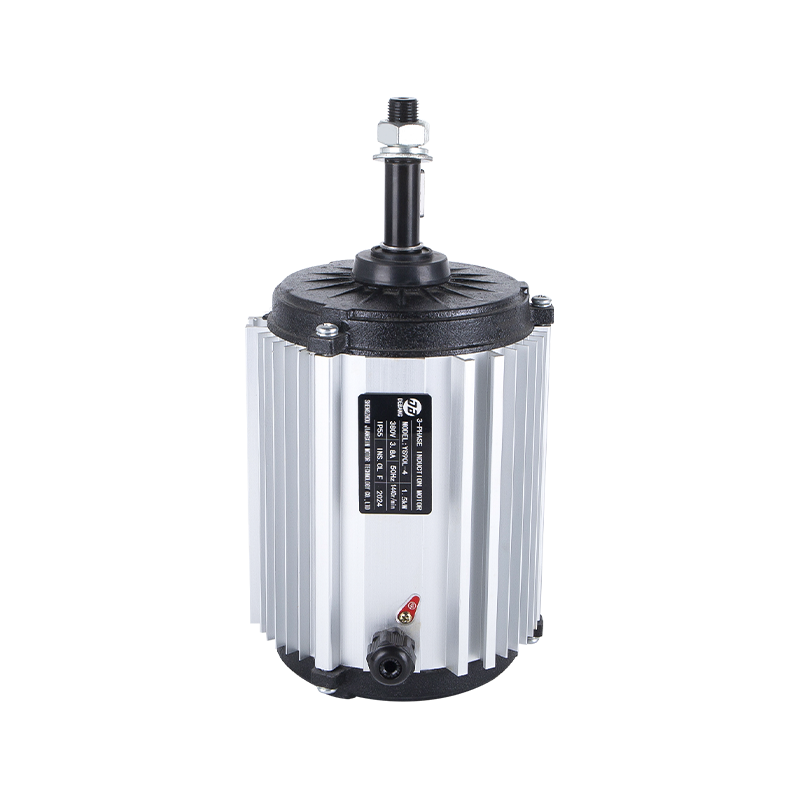
YS90L-4 380V 1500W 3-Phase Evaporative Air Cooler Motor
Product Overview
The YS90L-4 belongs to the YS series of three-phase asynchronous motors commonly used in industrial equipment. The “90L” frame designation generally identifies a standardized motor frame size, while the “4” indicates a four-pole design. At a rated frequency of 50 Hz, the motor operates at approximately 1440 rpm under normal rated conditions. The small difference between synchronous speed and actual operating speed is known as slip, which is a normal characteristic of induction motors.
With a rated power of 1500W, or 1.5 kW, the motor offers a practical balance between energy input and airflow-driving capability. The output is appropriate for evaporative cooling systems that use a belt, pulley, shaft, fan wheel, or other transmission arrangement to move a large volume of air through cooling pads or a wet-media assembly.
| Item | Specification | Application Significance |
|---|---|---|
| Product type | Three-phase air cooler motor | Designed for industrial and commercial evaporative cooling equipment |
| Model designation | YS90L-4; product information also identifies YSF90L-4 | Exact model suffix should be confirmed before ordering |
| Rated voltage | 380V | Suitable for compatible three-phase industrial power systems |
| Rated power | 1500W | Provides stable drive power for medium and large cooling units |
| Frequency | 50/60Hz | Can support common industrial power frequencies when correctly configured |
| Number of poles | Four poles | Provides approximately 1440 rpm at 50Hz |
| Protection information | IP55 listed; product description also references IP44/IP54 protection | Final protection grade should be confirmed against the order specification |
| Insulation class | Class F | Provides increased thermal resistance for continuous industrial use |
| Duty rating | S1 continuous duty | Suitable for extended operation under rated conditions |
| Housing material | Aluminum shell | Supports heat dissipation and helps reduce overall weight |
The supplied product information lists IP55 as the protection grade while the descriptive text refers to IP44/IP54 protection. Because enclosure protection is an important selection factor in humid or dusty environments, buyers should request the final technical data sheet and confirm the exact protection grade for the production batch and intended application. This confirmation is especially important when the motor will be installed outdoors or near direct water spray.
Stable Three-Phase Power for Evaporative Cooling
Evaporative coolers require a motor that can maintain consistent speed while driving fans, blowers, or transmission systems. A three-phase motor is well suited to this role because three-phase electrical power creates a naturally rotating magnetic field. This allows the motor to run smoothly and produce a more uniform torque output than many single-phase alternatives.
The 380V supply is widely used in industrial electrical systems. When connected to a suitable three-phase power network, the motor can operate without the additional starting capacitor commonly required by single-phase motors. The result is a cleaner industrial drive arrangement, particularly in facilities that already have three-phase distribution available.
Three-phase operation also helps reduce current for a given power level compared with many single-phase designs. Lower operating current can simplify cable selection, reduce voltage drop over suitable cable lengths, and improve the practicality of powering larger cooling equipment. The exact current, wiring arrangement, and protective-device rating must be determined from the final nameplate and local electrical standards.
The four-pole design is another important feature. A four-pole motor normally runs more slowly than a two-pole motor, which can be beneficial when a cooling fan requires a moderate rotational speed and stable torque rather than extremely high speed. Approximately 1440 rpm at 50 Hz can help reduce excessive fan noise, mechanical stress, and air turbulence while still delivering substantial airflow when paired with a correctly designed fan assembly.
Why a Four-Pole Motor Can Be Beneficial
High-speed motors can be useful in compact equipment, but higher rotational speed may increase noise, vibration, bearing load, and transmission requirements. A four-pole motor provides a more moderate operating speed, making it suitable for many large axial fans, centrifugal blowers, and belt-driven air cooler systems.
The lower speed can also make it easier for equipment designers to match the motor with a fan diameter and pulley ratio. Instead of relying on a very high-speed motor and complex reduction arrangements, the system can be designed around stable direct or belt-driven operation. This may contribute to longer service life when the fan and motor are correctly matched.
Motor speed under actual load depends on voltage, frequency, load torque, temperature, and motor design. Therefore, the stated approximately 1440 rpm should be treated as a rated reference value rather than a guarantee of identical speed in every installation.
Construction for Humid Cooling Environments
Evaporative air coolers operate in conditions that can be more challenging than those found in ordinary indoor machinery. Water pumps, wet cooling pads, high airflow, condensation, dust, and fluctuating temperatures may all be present around the motor. The motor therefore requires protection against moisture, contamination, heat, and mechanical stress.
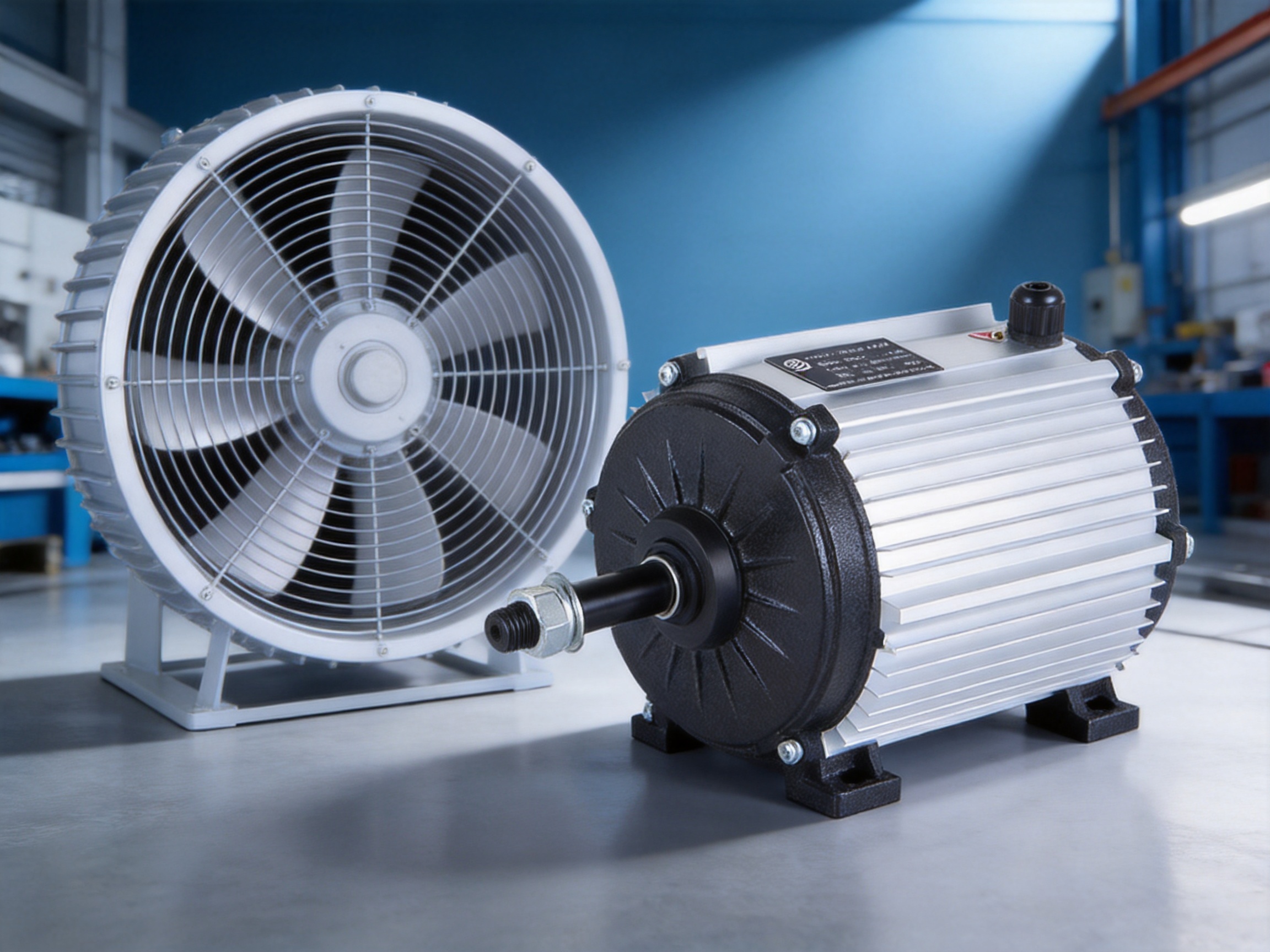
The product description identifies a fully enclosed structure and an aluminum housing. An enclosed motor helps limit the entry of airborne dust and moisture into the internal electrical components. This is particularly valuable in air-cooling equipment, where the surrounding atmosphere may contain suspended water droplets or humid air.
The stated IP55 protection grade indicates protection against dust ingress that could interfere with operation and against water jets from certain directions. However, an IP rating does not mean that a motor can be submerged or exposed indefinitely to direct high-pressure water. Installation should still prevent unnecessary spray, standing water, and drainage problems.
The aluminum shell contributes to a favorable strength-to-weight ratio. Compared with heavier housings, an aluminum enclosure can make handling and installation easier while also helping transfer heat from the motor interior to the surrounding air. Effective cooling remains dependent on the housing design, ambient temperature, mounting orientation, ventilation clearance, load, and cleanliness.
Moisture resistance is supported by more than the enclosure alone. The winding insulation system, bearing arrangement, cable entry, terminal-box sealing, surface finish, and assembly quality all influence the actual performance of a motor in a humid environment. For this reason, manufacturing consistency is just as important as the headline protection grade.
F-Class Insulation for Thermal Reliability
The motor uses Class F insulation. Class F insulation systems are designed for a higher thermal endurance level than Class B systems commonly found in basic motor products. This provides additional thermal margin when the motor experiences sustained loading, elevated ambient temperature, frequent operating cycles, or restricted ventilation.
Thermal margin does not mean that the motor should be operated beyond its rated conditions. Excessive overload, incorrect voltage, blocked airflow, unbalanced phases, frequent starts, or poor bearing condition can still cause overheating. Class F insulation is best understood as an important layer of protection within a complete thermal-management system.
Pure copper winding conductors provide good electrical conductivity and help support efficient energy conversion. Copper windings can reduce resistive losses when properly designed and manufactured. The quality of winding insertion, insulation placement, connection welding, varnish treatment, and final testing also affects performance.
In comparison with low-cost motors that may use less conductive winding materials or inconsistent winding processes, a properly manufactured pure copper motor can offer more predictable electrical characteristics, lower winding resistance, and improved long-term reliability. Buyers should still verify the winding material and request test documentation when the application is critical.
Energy Efficiency and Continuous Operation
The motor is specified for S1 continuous duty. S1 means that the motor is intended to operate continuously at a constant load until thermal equilibrium is reached, provided that the application remains within the rated electrical and mechanical conditions. This is important for evaporative cooling systems, which may run for many hours during hot weather or throughout an entire working shift.
Continuous-duty suitability helps distinguish this product from motors intended mainly for short-duration or intermittent applications. A motor designed only for occasional use may experience excessive temperature rise, shortened insulation life, or bearing stress when installed in a cooling system that operates continuously.
Efficient operation depends on the complete motor and equipment system. The motor must be correctly sized for the fan load, belt tension must be properly adjusted, air passages must remain clear, and the electrical supply must be balanced. An oversized motor can create unnecessary purchase and operating costs, while an undersized motor may run near overload for extended periods.
The 1500W rating is therefore a design reference, not a direct guarantee of total system energy consumption. The actual input power may vary with load, speed, transmission losses, fan resistance, air volume, water conditions, and control strategy. When a variable-frequency drive is used, compatibility, minimum speed, cooling performance, and motor insulation requirements should be confirmed in advance.
Balancing Performance and Operating Cost
For a commercial or industrial air cooler, energy cost is often a major part of the total ownership cost. A motor that maintains stable operation while avoiding unnecessary electrical losses can contribute to predictable operating expenses. Pure copper windings, appropriate magnetic design, low mechanical friction, and good alignment all support this objective.
The motor’s four-pole speed can also assist system efficiency. Fan power requirements increase substantially as fan speed rises. Operating a fan at an appropriate moderate speed may provide the required airflow without forcing the system to run faster than necessary. The most efficient solution is always application-specific and depends on fan diameter, blade design, air resistance, cooling-pad pressure drop, and target airflow.
For installations that do not require full airflow at all times, a suitable speed-control method may provide further savings. Any control system must be selected and configured according to the motor’s electrical characteristics and the drive manufacturer’s recommendations. Electrical harmonics, starting conditions, cooling at low speed, and acceleration time should all be considered.
Low Noise and Smooth Mechanical Operation
Noise is a major consideration in workshops, agricultural buildings, commercial spaces, and other occupied areas. The product description emphasizes high-precision dynamic balancing, quality bearings, low vibration, and smooth operation. These features are essential because motor noise is influenced not only by electromagnetic design but also by rotor balance, bearing quality, mounting rigidity, shaft alignment, and fan balance.
A dynamically balanced rotor reduces centrifugal forces during rotation. When combined with a balanced fan and correctly aligned transmission system, this can reduce vibration transmitted to the motor frame and surrounding structure. Lower vibration may also reduce stress on bearings, mounting bolts, belts, pulleys, and fan assemblies.
Quality bearings support smooth rotation and help maintain stable operation over extended periods. Bearing life depends on load, speed, lubrication, temperature, contamination, belt tension, and alignment. Even a high-quality bearing can fail prematurely if a belt is over-tightened or if the motor is exposed to water ingress.
It is important to distinguish motor noise from total equipment noise. The fan blades, air turbulence, cooling-pad airflow, pulleys, belts, ducts, and mounting surface can all contribute to sound levels. A quiet motor can improve the overall acoustic result, but the entire air cooler must be engineered and installed for low-noise operation.
Advantages Compared with Common Alternative Solutions
The YS90L-4 offers several practical advantages when compared with basic single-phase motors, lightly built fan motors, and motors that are not designed for humid continuous-duty environments. These advantages should be evaluated according to the specific requirements of the cooling system rather than treated as universal claims.
Compared with Small Single-Phase Motors
Small single-phase motors are convenient for compact residential appliances because they can connect to common household electrical supplies. However, larger industrial air coolers often benefit from three-phase power. Three-phase motors generally provide smoother torque, better suitability for higher-power equipment, and a more natural fit with industrial electrical infrastructure.
The 380V three-phase configuration can reduce the need for start capacitors and may allow a simpler high-power drive arrangement. It is particularly appropriate for factories, warehouses, farms, and commercial facilities that already use three-phase distribution.
A three-phase motor is not automatically the correct choice for every location. If only single-phase power is available, a different motor or a correctly engineered electrical conversion system may be required. Electrical work should be performed by qualified personnel.
Compared with High-Speed Two-Pole Motors
Two-pole motors can operate at higher speeds, which may be useful in compact fan equipment. However, the higher speed can increase mechanical noise, bearing stress, fan-tip speed, and vibration if the system is not carefully designed. The four-pole YS90L-4 provides a moderate rated speed that may be better suited to larger fans and stable industrial airflow.
The correct comparison depends on the fan’s required rotational speed and torque. A two-pole motor may be more efficient for one design, while a four-pole motor may offer better noise and mechanical characteristics for another. The advantage of this product is its practical fit for many moderate-speed evaporative cooling configurations.
Compared with Open or Poorly Protected Motors
Open-frame motors can be less appropriate for wet or dusty environments because their internal components may be more exposed to contamination. The enclosed structure and stated protection characteristics of this product provide a stronger foundation for use near evaporative cooling equipment.
Nevertheless, an enclosed motor still requires sensible installation. It should be positioned away from direct water spray, mounted above areas where water can collect, and protected from corrosive chemicals or excessive dust. The motor’s terminal box and cable entry must also be sealed correctly.
Compared with Intermittent-Duty Motors
A motor rated for S1 continuous duty is better aligned with cooling applications that run for long periods. Using a short-duty motor for continuous fan operation can result in repeated thermal overload and premature failure. The continuous-duty specification helps equipment designers select a motor that matches the expected operating pattern.
Compared with Low-Cost Inconsistent Products
Initial purchase price is only one part of motor value. Inconsistent winding quality, poor dynamic balancing, inadequate bearing control, or weak final testing can cause higher maintenance costs and unexpected downtime. A manufacturer with dedicated research and development, modern production facilities, automated equipment, and quality-control procedures can provide more consistent product performance.
The key advantage is not simply a specification on a catalog page. It is the combination of electrical design, material selection, manufacturing control, inspection, and technical support. These factors can make a significant difference when a motor is installed in equipment that must operate reliably during hot weather and high production periods.
Manufacturing Strengths and Production Capabilities
Shengzhou Jiangxin Motor Technology Co., Ltd. was established in 2017 and specializes in the research, development, production, and sales of AC/DC motors and micro motors. The company operates in Shengzhou, Zhejiang Province, a region supported by the broader manufacturing and industrial supply network of the Yangtze River Delta.
The company’s stated product range includes evaporative air cooler motors, industrial heater motors, oil pump motors, customized motors, and other motor products. This range indicates experience in developing motors for equipment where reliability, compact construction, environmental resistance, and application-specific performance are important.
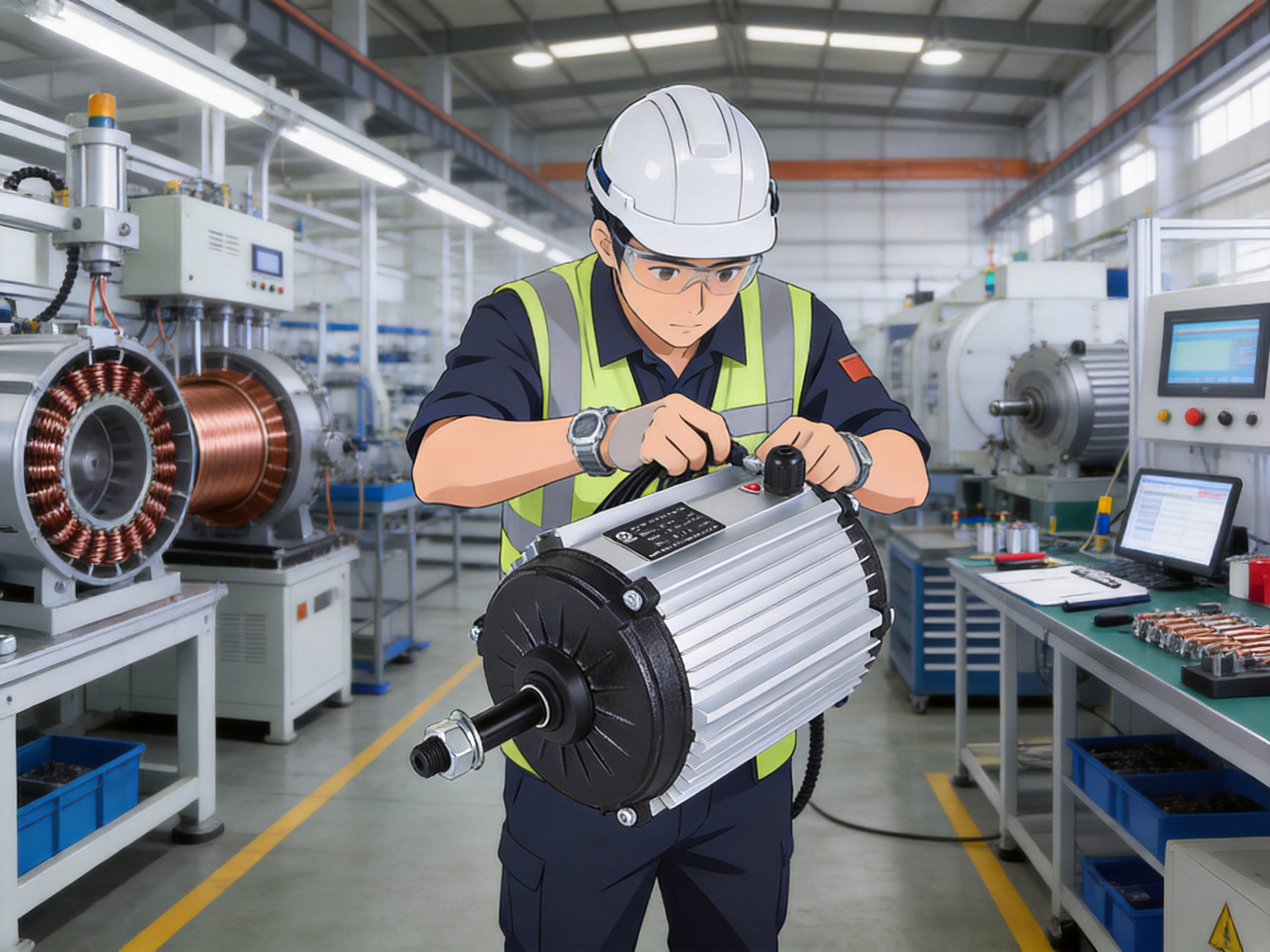
Modern production facilities and automated equipment can improve repeatability in processes such as stator assembly, winding, rotor insertion, bearing installation, balancing, and final testing. Automation does not replace engineering judgment, but it can reduce variation when equipment is correctly maintained and supported by controlled production procedures.
A professional research and development team is valuable for applications that require more than a standard catalog motor. Fan load, mounting structure, shaft dimensions, voltage, frequency, protection level, cable arrangement, noise requirements, and control method may vary between air-cooler designs. An experienced manufacturer can evaluate these requirements and recommend a suitable configuration.
The company reports recognition as a provincial-level technology enterprise. Its stated quality-control systems and innovation capabilities support the development of energy-efficient and durable motor products. For buyers, the practical value of these capabilities should be assessed through technical documentation, sample evaluation, production inspection, test reports, and after-sales communication.
Key Manufacturing Processes
Motor quality begins with material control. Electrical steel, copper wire, insulation materials, aluminum housing components, bearings, seals, shafts, and fasteners must meet the requirements of the intended design. Consistent incoming inspection helps prevent material variation from affecting motor performance.
Stator winding is a critical process. The number of turns, wire diameter, winding arrangement, phase spacing, connection quality, and insulation system all influence resistance, magnetic performance, temperature rise, and efficiency. Proper winding insertion helps reduce damage to the enamel coating and ensures that conductors remain securely positioned.
Insulation treatment helps protect the winding against electrical stress, vibration, heat, and moisture. Depending on the production design, varnish impregnation or related treatment can improve mechanical stability and reduce movement of the conductors during operation. Correct curing is essential for achieving the intended insulation properties.
Rotor assembly and dynamic balancing are equally important. An unbalanced rotor can produce vibration that increases rapidly with speed. Precision balancing helps reduce mechanical stress and supports smoother operation. The shaft, rotor core, bearings, end covers, and housing must also be assembled with appropriate concentricity and alignment.
Final inspection may include winding resistance testing, insulation resistance testing, high-voltage withstand testing, no-load current measurement, rotational direction verification, vibration inspection, temperature-rise evaluation, and load testing. The exact test program depends on the product model and customer requirements.
Quality control should continue beyond the factory floor. Packaging must protect the motor from impact, moisture, and contamination during storage and transport. Documentation should identify the model, voltage, power, frequency, protection grade, insulation class, wiring information, and installation requirements.
Application Areas
Industrial Evaporative Air Coolers
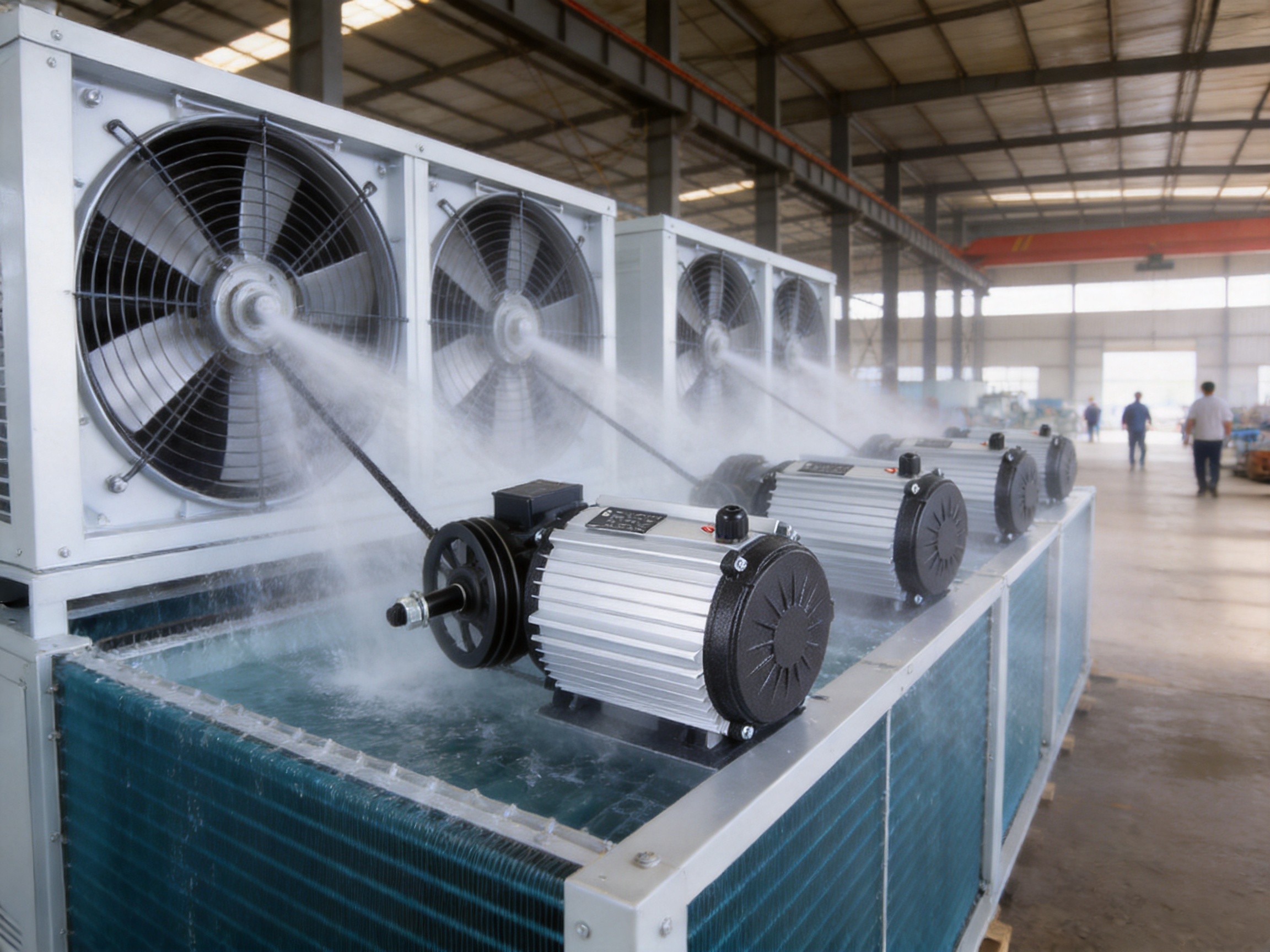
Industrial evaporative air coolers are used in workshops, production halls, warehouses, logistics centers, and other large spaces where conventional air conditioning may be expensive or impractical. The YS90L-4 can provide the mechanical power required to drive a large fan or blower, helping distribute cooled air over a broad area.
In these applications, the motor may operate for long shifts during warm seasons. S1 continuous duty, Class F insulation, enclosed construction, and stable three-phase operation are valuable characteristics for maintaining dependable service.
Agricultural Buildings and Farms
Farms, livestock buildings, greenhouses, and agricultural storage areas may require high airflow to improve ventilation and reduce heat accumulation. These locations can contain dust, humidity, and variable environmental conditions. Proper enclosure protection, regular cleaning, and suitable installation are essential.
The motor should be selected according to the fan load, required airflow, duty cycle, ambient temperature, and available power supply. In livestock or corrosive environments, additional protection against chemicals and aggressive gases may be necessary.
Commercial Cooling Spaces
Markets, food-processing areas, garages, exhibition spaces, and large retail or service facilities may use evaporative cooling to improve comfort and air circulation. Low vibration and controlled noise are particularly important when employees or customers occupy the space.
The motor can support a cooling system that operates continuously during business hours. System designers should consider sound levels from the complete fan assembly, not only the motor.
Environmental Protection Equipment
The company’s product range includes motors for environmental protection equipment. Motors in this sector may operate pumps, fans, air-handling devices, or other mechanisms used in ventilation, filtration, cooling, and treatment systems. The YS90L-4’s industrial construction makes it a candidate for equipment requiring a stable 1.5 kW drive source, subject to technical confirmation.
Installation Recommendations
Before installation, verify the motor nameplate and compare it with the equipment design. Confirm voltage, frequency, power, current, rotation direction, mounting dimensions, shaft dimensions, protection grade, insulation class, and wiring method. The product information uses both YS90L-4 and YSF90L-4 designations, so the exact model should be confirmed on the purchase order and nameplate.
The mounting base must be rigid, level, and capable of resisting vibration. Soft or uneven mounting can create misalignment and transmit additional vibration to the equipment. Mounting bolts should be tightened evenly according to appropriate mechanical practice.
For belt-driven systems, the pulleys must be aligned in the same plane. Belt tension should be sufficient to transmit torque without slipping, but excessive tension can overload the bearings and shaft. After initial operation, inspect the belt tension and alignment again because belts can settle during the first operating period.
Electrical installation should be completed by qualified personnel. Use a correctly rated disconnecting device, overload protection, short-circuit protection, grounding connection, and phase-failure or phase-sequence protection when appropriate. The motor should not be operated with an unbalanced or unstable supply.
Ensure that the motor has sufficient ventilation clearance. Do not cover the housing with insulation, place materials against the cooling surface, or install the motor where hot exhaust air is continuously recirculated. Excessive ambient temperature can reduce the available thermal margin.
Before connecting the fan, rotate the shaft by hand where safe to confirm that it turns freely and does not rub. After electrical connection, perform a brief test run to verify rotation direction, abnormal noise, vibration, current behavior, and mechanical clearance. Reverse two supply phases only when permitted and performed by qualified personnel to change the rotation direction of a standard three-phase induction motor.
Maintenance and Service Practices
Routine maintenance helps preserve motor efficiency and reliability. Keep the housing clean so that heat can dissipate effectively. Dust accumulation can act as thermal insulation and raise operating temperature, while wet deposits may contribute to corrosion or tracking around electrical connections.
Inspect the terminal box, cable glands, grounding connection, and housing seals periodically. Look for looseness, cracks, water marks, corrosion, or signs of overheating. Any damaged seal should be repaired or replaced before continued operation in a humid environment.
Monitor operating sound and vibration. A gradual increase may indicate bearing wear, fan imbalance, belt misalignment, loose mounting bolts, or debris contacting the fan. Early diagnosis can prevent secondary damage to the motor and cooling equipment.
Check the electrical current under normal load and compare it with the rated value on the final nameplate. Increasing current may indicate excessive fan resistance, blocked cooling pads, a mechanical problem, voltage imbalance, or an overloaded transmission system.
Bearing maintenance depends on the bearing type and manufacturer’s instructions. Some bearings are permanently lubricated and should not be regreased, while others require a defined lubrication schedule. Using the wrong lubricant or applying too much grease can be harmful.
During seasonal shutdown, store the motor in a dry, clean environment. Protect cable ends and terminal areas from moisture. Before restarting after long storage, inspect insulation resistance and mechanical condition as appropriate.
Selection Guidance for Equipment Designers
The correct motor should be selected from the complete cooling-system requirements rather than from power alone. Begin by identifying the required airflow, static pressure, fan type, fan diameter, rotational speed, transmission method, operating schedule, ambient temperature, and available electrical supply.
Confirm whether the fan is direct-driven or belt-driven. Direct-drive systems may require a motor with a shaft and mounting arrangement that matches the fan hub. Belt-driven systems require careful calculation of pulley diameters, belt speed, torque, shaft loading, and bearing forces.
Consider the environment in which the motor will operate. A clean indoor warehouse, a humid greenhouse, a dusty workshop, and a livestock building may require different enclosure, sealing, coating, and maintenance approaches. The stated protection grade should be matched with the actual level of water and dust exposure.
Ambient temperature can influence motor output and insulation life. If the motor will operate in a particularly hot location, inside an enclosure, or near a heat-producing machine, request thermal information from the manufacturer. A Class F insulation system provides useful thermal capability, but it does not remove the need for proper cooling.
For systems expected to run at variable speed, discuss the control method before ordering. A variable-frequency drive can alter motor speed and torque, but low-speed operation may reduce self-cooling. The drive may also require appropriate acceleration and deceleration settings, motor protection, and electromagnetic compatibility measures.
When purchasing in volume, request a sample or pre-production unit for testing. Evaluate starting behavior, operating current, temperature rise, vibration, sound, shaft runout, mounting compatibility, and performance under the actual fan load. This process can prevent expensive changes after mass production.
Technical Questions to Confirm Before Purchase
Buyers should confirm whether the motor is supplied for 50 Hz, 60 Hz, or both frequencies. Although the supplied information lists 50/60Hz, rated speed, current, output characteristics, and temperature rise may vary with frequency.
Confirm the exact protection grade. The supplied information lists IP55 in the technical table and references IP44/IP54 in the descriptive material. The final production specification should clearly identify the applicable rating.
Confirm the nameplate model designation. The product title uses YS90L-4, while the information table identifies YSF90L-4. This may reflect a product-series naming variation, but the exact designation should be settled before production, shipping, and installation.
Confirm mounting dimensions, shaft diameter, shaft extension length, terminal-box position, rotation direction, cable entry, and allowable radial or axial shaft loads. These details are essential when replacing an existing motor or integrating the motor into a new cooler design.
Request efficiency, rated current, starting current, starting torque, maximum torque, temperature-rise, noise, vibration, and weight data when these parameters are important to the equipment design. Also confirm whether a test report, inspection certificate, or customized nameplate is available.
Quality, Export, and Customer Support
A motor manufacturer’s ability to support international customers is important because industrial equipment may be installed far from the production site. Shengzhou Jiangxin Motor Technology Co., Ltd. reports that its products are exported to more than 60 countries and regions. International experience can help with packaging, documentation, communication, electrical standards, and shipment coordination.
Customer support begins with accurate technical communication. The manufacturer should understand the application, power supply, operating environment, duty cycle, fan load, and installation arrangement before recommending a product. This reduces the risk of selecting a motor solely by nominal wattage.
For original equipment manufacturers, customization may include mounting dimensions, shaft configuration, lead-wire length, terminal-box arrangement, protection requirements, paint or surface treatment, nameplate information, packaging, and production quantity. Any customization should be documented in an approved technical specification.
For replacement buyers, support may involve checking whether the motor can match an existing fan, pulley, base, electrical system, and control panel. A replacement with the same power rating is not necessarily mechanically or electrically interchangeable. Frame size, shaft dimensions, speed, current, and protection grade must all be compared.
Reliable delivery also depends on production planning and inspection. Consistent batch identification, pre-shipment checking, and protective packaging help reduce the risk of receiving products that differ from the approved sample.
Q&A
What is the rated power of the motor?
The rated power is 1500W, equivalent to 1.5 kW. The motor is intended to provide mechanical drive power for suitable evaporative air cooler fans, blowers, or transmission systems.
What voltage does the motor use?
The listed rated voltage is 380V, with a three-phase power supply. The electrical system must be compatible with the motor nameplate and local electrical requirements.
What speed does the four-pole motor provide?
The listed speed is approximately 1440 rpm at the rated operating condition. Actual speed can vary according to frequency, load, voltage, slip, and motor design.
Is the motor suitable for continuous operation?
Yes. The motor is described as having an S1 continuous-duty rating, meaning it is designed for continuous operation at a suitable rated load and within the specified environmental conditions.
Can the motor operate in a humid air-cooler environment?
It is designed with an enclosed structure, aluminum housing, moisture-resistant construction, and industrial insulation. However, it should not be exposed to immersion or uncontrolled direct water spray. The final IP protection grade should be confirmed because the supplied information references more than one IP rating.
What insulation class does the motor use?
The listed insulation class is Class F. This provides a higher thermal endurance level than many basic insulation systems, but correct loading, ventilation, wiring, and maintenance remain essential.
Why is pure copper winding important?
Pure copper has good electrical conductivity and can help reduce resistive losses when the winding is properly designed and manufactured. Winding quality, insulation treatment, connection quality, and final testing are also important to overall performance.
Is the motor suitable for a single-phase power supply?
The product is specified as a 380V three-phase motor. It should not be connected directly to a single-phase supply. A different motor or a properly engineered electrical solution would be required.
Can it drive any evaporative air cooler?
No. Motor selection must match the fan load, airflow, static pressure, speed, mounting arrangement, transmission system, and operating schedule. The 1500W rating is appropriate only when the complete equipment design requires that power level.
What should be checked before ordering?
Confirm the exact model designation, voltage, frequency, rated current, protection grade, insulation class, mounting dimensions, shaft dimensions, rotation direction, terminal arrangement, duty rating, and environmental conditions. The YS90L-4 and YSF90L-4 designations should be clarified in the final order documents.
Does the aluminum housing help with cooling?
An aluminum housing can help transfer heat and reduce weight compared with some heavier housing materials. Actual thermal performance also depends on ventilation, ambient temperature, motor load, housing design, and cleanliness.
What causes excessive motor vibration?
Possible causes include fan imbalance, rotor imbalance, loose mounting bolts, shaft misalignment, excessive belt tension, worn bearings, bent shafts, or debris. Vibration should be investigated promptly rather than ignored.
Can a variable-frequency drive be used?
A variable-frequency drive may be suitable, but compatibility should be confirmed with the motor manufacturer and drive supplier. The application must account for low-speed cooling, acceleration settings, insulation stress, current limits, and the required torque range.
What makes this motor suitable for industrial applications?
Its industrial characteristics include a 380V three-phase configuration, 1500W output, four-pole operation, S1 continuous duty, Class F insulation, enclosed construction, aluminum housing, pure copper winding, and a design intended for stable operation in demanding cooling environments.
Conclusion
The YS90L-4 380V 1500W three-phase evaporative air cooler motor is designed for cooling systems that require dependable power, stable speed, continuous operation, and protection against challenging environmental conditions. Its four-pole configuration provides moderate operating speed, while the three-phase supply supports smooth torque and practical integration into industrial power systems.
Class F insulation, pure copper windings, enclosed construction, aluminum housing, quality bearings, dynamic balancing, and S1 duty capability contribute to a reliable motor platform for evaporative air coolers, industrial ventilation equipment, farms, workshops, warehouses, and commercial cooling spaces.
Its principal advantages over basic alternatives include better suitability for industrial three-phase systems, stronger alignment with continuous-duty operation, improved environmental protection compared with exposed motor designs, and a practical speed range for many large-fan applications. These advantages are most valuable when the motor is correctly matched to the fan and installed with proper electrical and mechanical protection.
The manufacturer’s production facilities, automated equipment, research and development capability, quality-control systems, product range, and international export experience provide a foundation for both standard and customized motor supply. Buyers should confirm the final technical details, especially the exact model suffix and enclosure protection grade, before purchase.
With correct selection, installation, and maintenance, this motor can help cooling-equipment manufacturers and end users achieve stable airflow, reduced mechanical stress, dependable long-hour operation, and a lower risk of avoidable downtime.
References
International Electrotechnical Commission. Rotating Electrical Machines: Rating and Performance Principles.
International Electrotechnical Commission. Degrees of Protection Provided by Enclosures for Electrical Equipment.
International Electrotechnical Commission. Classification of Degrees of Protection Provided by Enclosures.
National Electrical Manufacturers Association. Motors and Generators: Application and Installation Guidance.
Industrial Motor Design Practice. Three-Phase Induction Motor Construction, Insulation, Cooling, and Maintenance.
Evaporative Cooling Equipment Engineering Principles. Fan Selection, Airflow, Humidity, and Motor Matching.
Manufacturer-supplied product specifications for the YS90L-4 and YSF90L-4 380V 1500W three-phase evaporative air cooler motor.
Product: YS90L-4 380V 1500W 3-Phase Evaporative Air Cooler Motor
Related Products
-
YS90L-4 380V 1500W 3-Phase Evaporative Air Cooler Motor
-
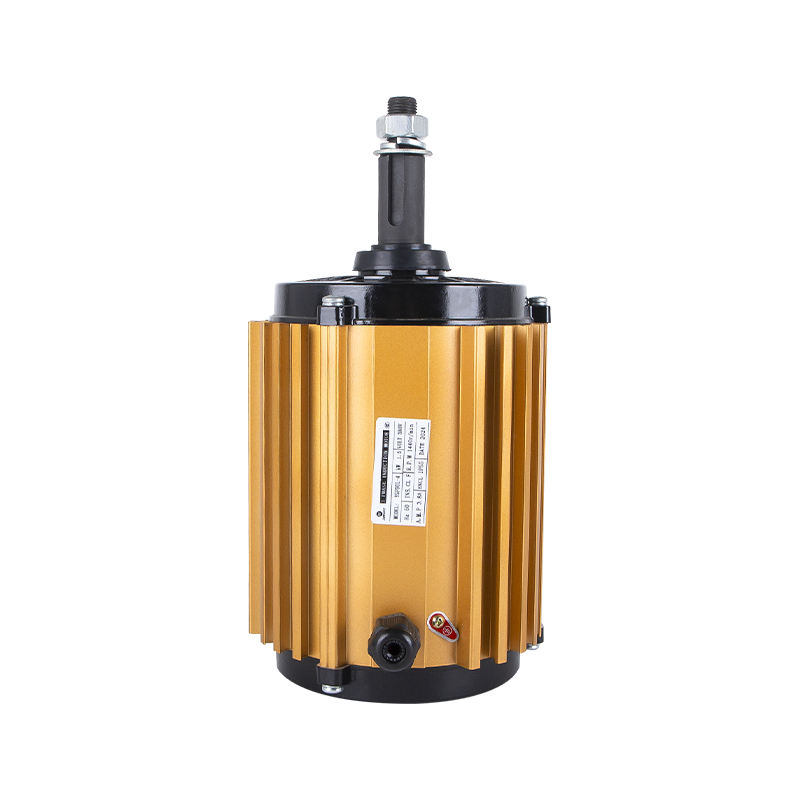 YS90L-4 380V 1500W 3-Phase Evaporative Air Cooler Motor
-
 YS100L-4 380V 2200W 3-Phase Evaporative Air Cooler Motor
-
 YS100L1-8 380V 50Hz 400W Cattle House Fan Motor
-
 DC149 220V/700W External BLDC Air Cooler Motor
-
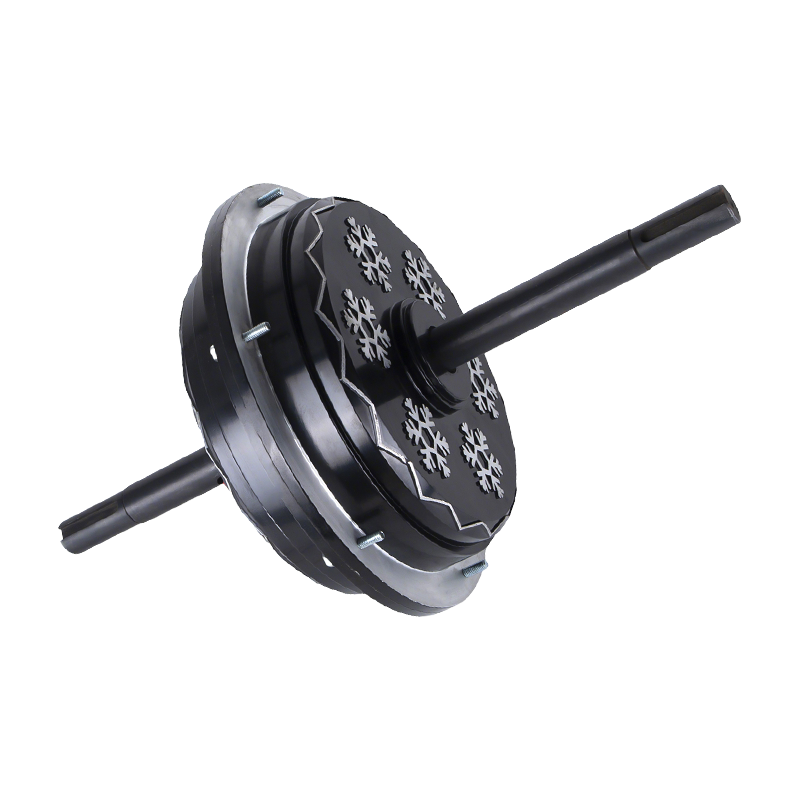 DC198 220V 1500W External BLDC Air Cooler Motor
 Ready To Customise
Your Motor Products?

We are professional motor manufacturers, delivering powerful, stable, and efficient power cores for all industries through precision craftsmanship and innovation.
Contact Us
-
 Mobile:+86 13575536911
-
 Tel:+86 18357538240
-
 Whatsapp:+8618357538240
-
 Email:betty@dbjxmotor.com
-
 Company Address
Copyright © by Shengzhou Jiangxin Motor Technology Co., Ltd. All Rights Reserved.
Wholesale Industrial Fan Motors Manufacturers
