

 English
 русский
 Español
 عربى
عربى
No. 8, Duxiu San Road, Ganlin Town, Shengzhou City, Shaoxing City, Zhejiang Province, China

News Category
Product Category
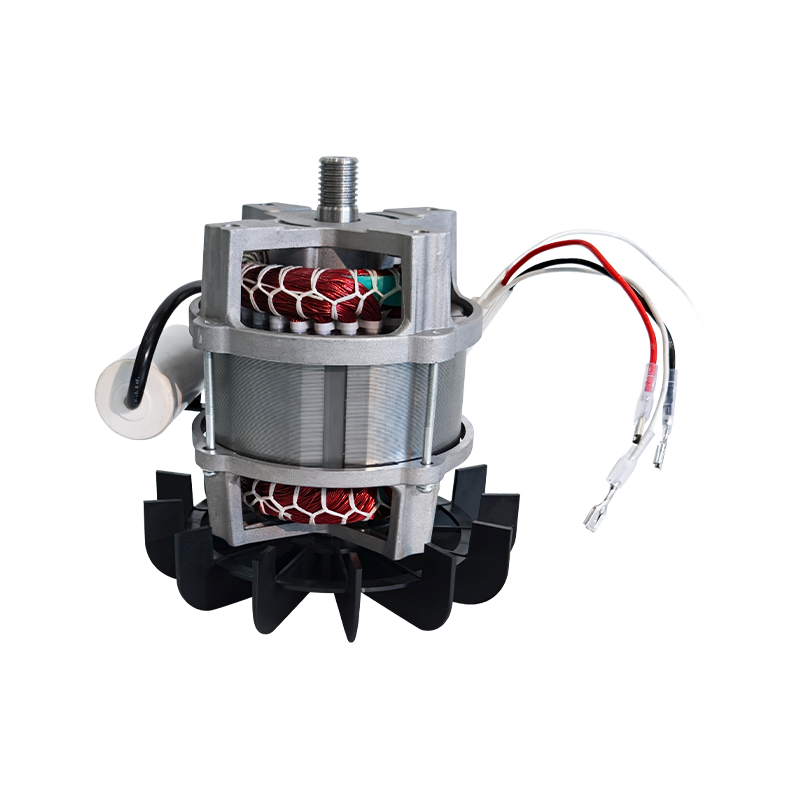
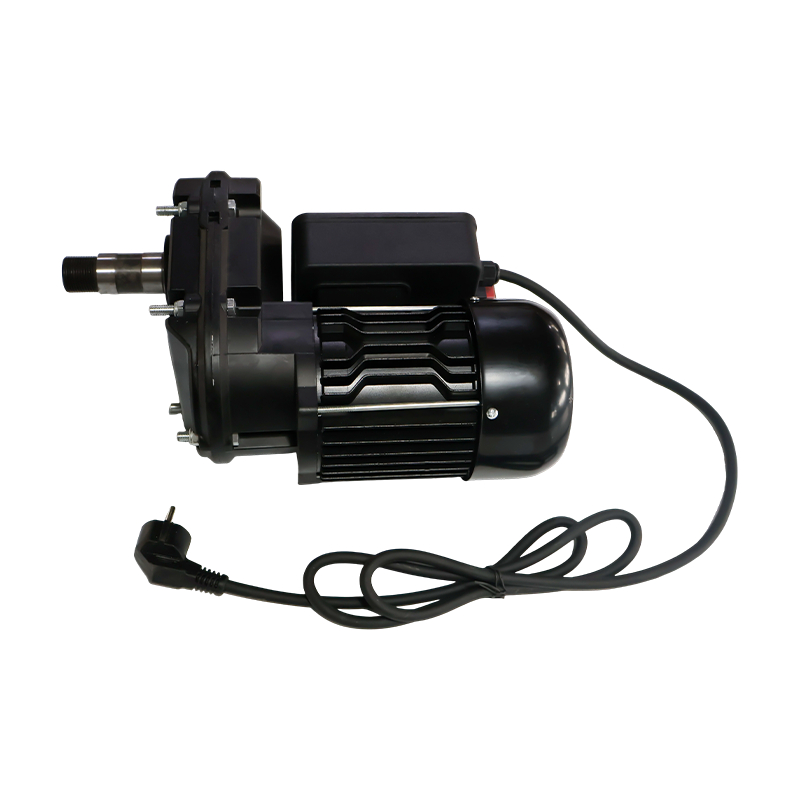
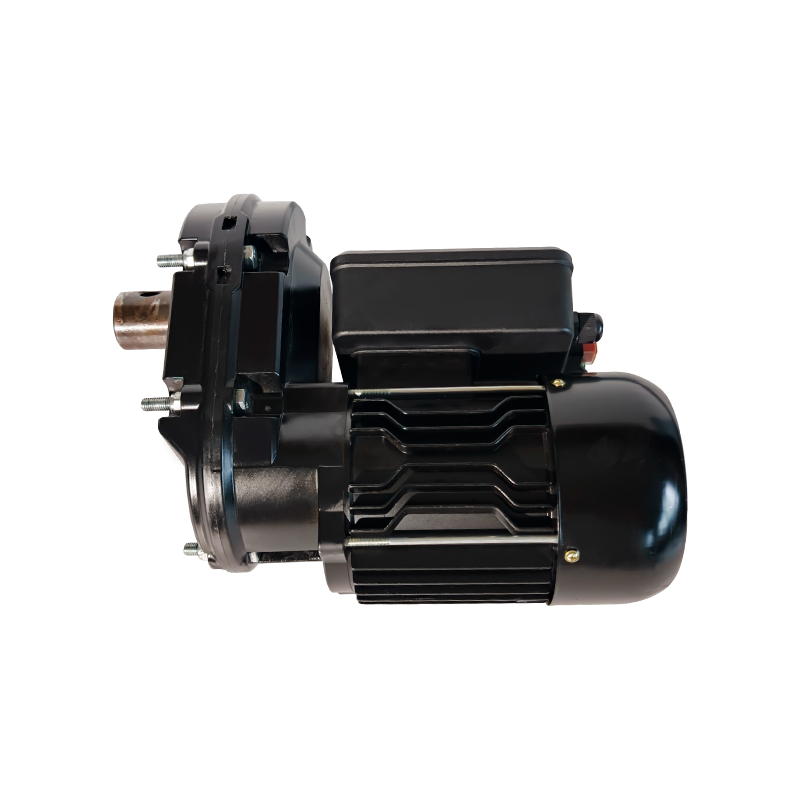
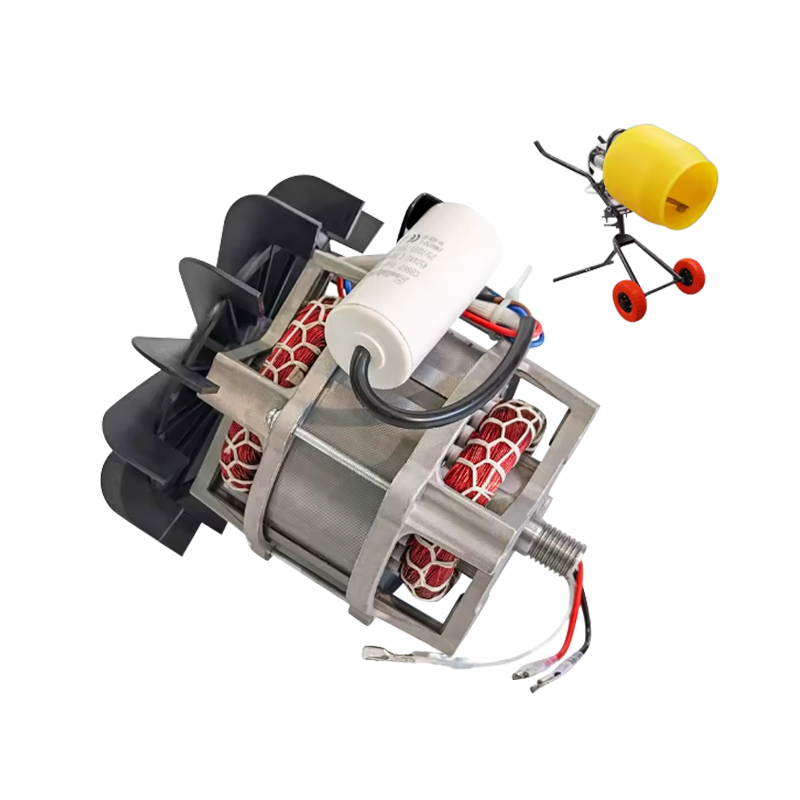
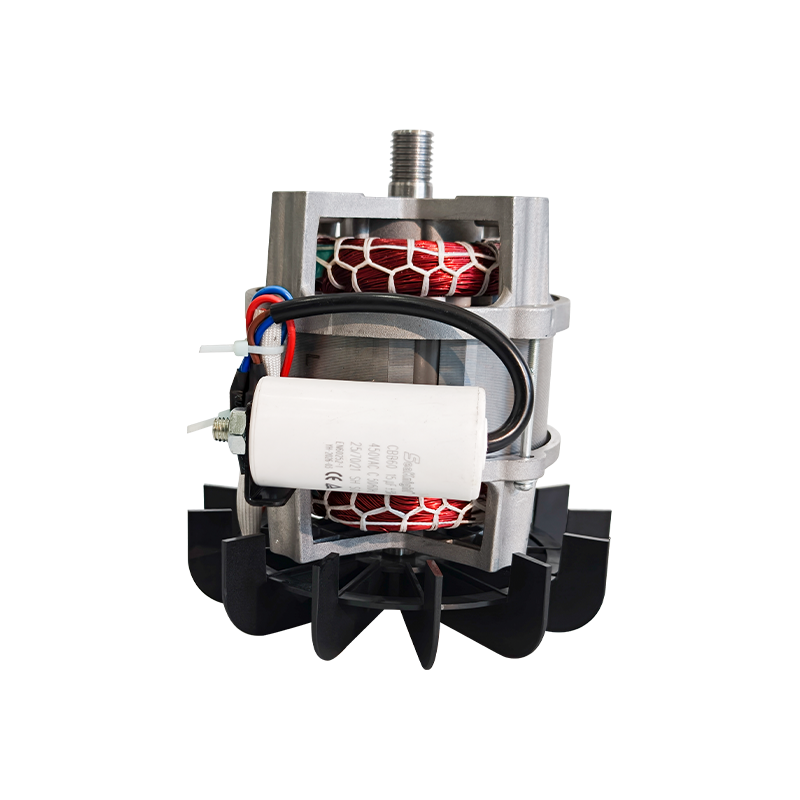
YY71-2 110V 800W Portable Concrete Mixer Motor: Reliable Power for Demanding Mixing Applications
Content
- 1 Product Overview
- 2 Power Designed for Portable Concrete Mixing
- 3 Stable Starting Under Load
- 4 Pure Copper Windings and Electrical Efficiency
- 5 High-Speed Two-Pole Configuration
- 6 Advantages Over Lower-Quality or Poorly Matched Alternatives
- 7 Application Range and Recommended Mixer Size
- 8 Manufacturing Strengths Behind the Product
- 9 Advanced Production and Quality Control Considerations
- 10 Why Manufacturing Consistency Matters to Mixer Operators
- 11 Installation Guidance
- 12 Operation and Maintenance Practices
- 13 Safety Considerations for 110V Equipment
- 14 Benefits for Equipment Manufacturers and Distributors
- 15 Customization and Application Support
- 16 Total Cost of Ownership
- 17 Performance Comparison Framework
- 18 Environmental and Workplace Considerations
- 19 Recommended Purchasing Checklist
- 20 Frequently Asked Questions
- 20.1 What is the rated power of the YY71-2 motor?
- 20.2 What voltage does the motor use?
- 20.3 Is the motor suitable for North American use?
- 20.4 What is the motor speed?
- 20.5 What size mixer can use this motor?
- 20.6 Why are pure copper windings important?
- 20.7 Can the motor start when the mixer is loaded?
- 20.8 Is the YY71-2 a direct replacement for every 800W mixer motor?
- 20.9 Does the motor require a transformer?
- 20.10 How can operators reduce overheating?
- 20.11 What maintenance does the motor require?
- 20.12 Can the manufacturer provide customized motor solutions?
- 20.13 What industries does the manufacturer serve?
- 20.14 Where are the products supplied?
- 21 Conclusion
- 22 References
- 23 Product: YY71-2 110V 800W Portable Concrete Mixer Motor
Portable concrete mixers are widely used on residential construction sites, renovation projects, landscaping jobs, agricultural properties, and small commercial developments. Although the mixer drum, frame, gearbox, and control system all influence performance, the motor remains the central power source. A motor that starts poorly, overheats during repeated batches, or delivers inconsistent torque can reduce productivity and increase maintenance costs. For this reason, selecting a properly matched replacement or original-equipment motor is essential for achieving dependable mixing results.
The YY71-2 110V 800W Portable Concrete Mixer Motor is designed for portable concrete mixer applications that require practical installation, strong operating torque, stable speed, and reliable continuous performance. With an 800W power rating, 110V operating voltage, pure copper windings, and a two-pole high-speed design rated at approximately 2800 RPM, this motor provides a balanced solution for portable mixers in the 120–180 liter class. It is intended for North American household and job-site power environments and is designed to support straightforward plug-and-play installation without the need for a transformer when the site power supply is correctly matched.
Produced by Shengzhou Jiangxin Motor Technology Co., Ltd., the motor reflects the company’s experience in AC/DC motor development, micro motor production, automated manufacturing, and application-specific motor solutions. The manufacturer combines modern production facilities, automated equipment, professional research and development capabilities, and strict quality control procedures to provide motors for a range of industrial and commercial applications.
This article examines the YY71-2 motor in detail, including its main specifications, operating advantages, construction characteristics, application suitability, installation considerations, maintenance requirements, and the manufacturing strengths behind the product.
YY71-2 110V 800W Portable Concrete Mixer Motor
Product Overview
The YY71-2 is an 800W concrete mixer motor designed for portable mixing equipment. Its 110V electrical specification makes it suitable for applications using compatible North American household or job-site power. The motor is intended to deliver sufficient power for portable mixers with capacities of approximately 120 to 180 liters, depending on the mixer design, material load, transmission arrangement, drum condition, and operating environment.
Concrete mixing places changing demands on a motor. At startup, the motor may need to overcome the inertia of an empty drum, the resistance of the gearbox, and the initial mechanical load. Once materials are added, the motor must continue producing adequate torque while the mixture changes in density and consistency. A suitable mixer motor must therefore provide more than a nominal power rating. It must also start smoothly, maintain stable operation, control heat generation, and withstand repeated working cycles.
The YY71-2 addresses these requirements through a combination of 800W output power, a two-pole high-speed configuration, pure copper winding construction, and a design intended for easy installation and maintenance. Its approximately 2800 RPM operating speed is suitable for use with the mechanical reduction system normally incorporated into a portable concrete mixer. The motor itself operates at high speed, while the mixer’s gearbox or belt-and-pulley system transfers and reduces speed to generate the drum rotation required for mixing.
| Item | Specification or Feature | Application Significance |
|---|---|---|
| Product model | YY71-2 | Identifies the motor configuration and product series |
| Rated voltage | 110V | Designed for compatible North American power environments |
| Rated power | 800W | Provides practical power for portable mixer applications |
| Motor type | Concrete mixer motor | Designed for the operating conditions of portable mixing equipment |
| Speed configuration | Two-pole, approximately 2800 RPM | Supports high-speed motor operation with mechanical reduction |
| Winding material | Pure copper | Supports efficient electrical conduction and heat management |
| Recommended mixer range | Approximately 120–180 liters | Suitable for many portable household and job-site mixers |
| Installation approach | Plug-and-play design | Can simplify replacement and equipment integration when specifications match |
| Maintenance profile | Easy installation and maintenance | Helps reduce service complexity and downtime |
Power Designed for Portable Concrete Mixing
An 800W motor offers a useful balance between electrical demand and mechanical performance for portable concrete mixers. Small mixers require enough power to start and rotate the drum under changing loads, but excessive motor capacity can increase equipment cost, weight, energy consumption, and mechanical stress. The YY71-2 is positioned for a practical range of portable equipment rather than oversized stationary industrial mixers.
For a 120–180 liter portable mixer, the motor must deal with a variety of materials, including cement, sand, aggregate, water, mortar, and other construction mixtures. These materials do not create a constant load. The mixture may become heavier as water and aggregate are added, and resistance can change as the drum rotates. The 800W rating gives the motor a substantial operating reserve for typical portable mixing duties when the mixer is loaded within its intended capacity and operated according to the equipment manufacturer’s instructions.
Power should always be considered together with the mixer’s transmission system. A motor’s rated power does not directly equal the drum’s rotational force because the gearbox, belt drive, pulley ratio, drum diameter, and mechanical efficiency all affect the final output. The YY71-2’s high-speed operation is therefore intended to work as part of a complete mixer drive system. Correct matching between the motor shaft, drive components, mounting structure, and reduction mechanism is essential.
Compared with an undersized motor, an 800W motor can provide stronger working performance and greater resistance to slowdowns during normal mixing. An undersized motor may struggle when the drum is loaded, causing excessive current draw, slow starting, heat buildup, and premature failure. By contrast, a properly selected motor can maintain more stable operation and support faster completion of repeated batches.
Stable Starting Under Load
Starting performance is one of the most important characteristics of a concrete mixer motor. A mixer may be started when the drum is empty, partially loaded, or already containing a mixture. Starting under load places a greater demand on the motor than running without material. The YY71-2 is described as providing a smooth start under load, helping the motor begin operation in a controlled manner rather than responding with abrupt movement or unstable acceleration.
Smooth starting offers several practical benefits. It can reduce sudden mechanical shock to the gearbox, shaft, drum supports, couplings, and frame. It can also reduce the likelihood of belt slippage in belt-driven equipment. By accelerating in a stable manner, the motor helps the mixer reach its working speed without unnecessary vibration or harsh impact.
Stable starting is also valuable for operators. A mixer that starts smoothly is easier to control in confined work areas, on uneven job sites, or near other equipment. It can reduce the risk of sudden movement and make the overall machine feel more predictable during operation.
Starting characteristics depend on the complete electrical and mechanical system. The power supply must be able to deliver the required current, extension cords must be properly sized, connections must be secure, and the drive system must not be jammed or overloaded. The YY71-2 provides a strong foundation for controlled starting, but the mixer must still be correctly assembled and maintained.
Pure Copper Windings and Electrical Efficiency
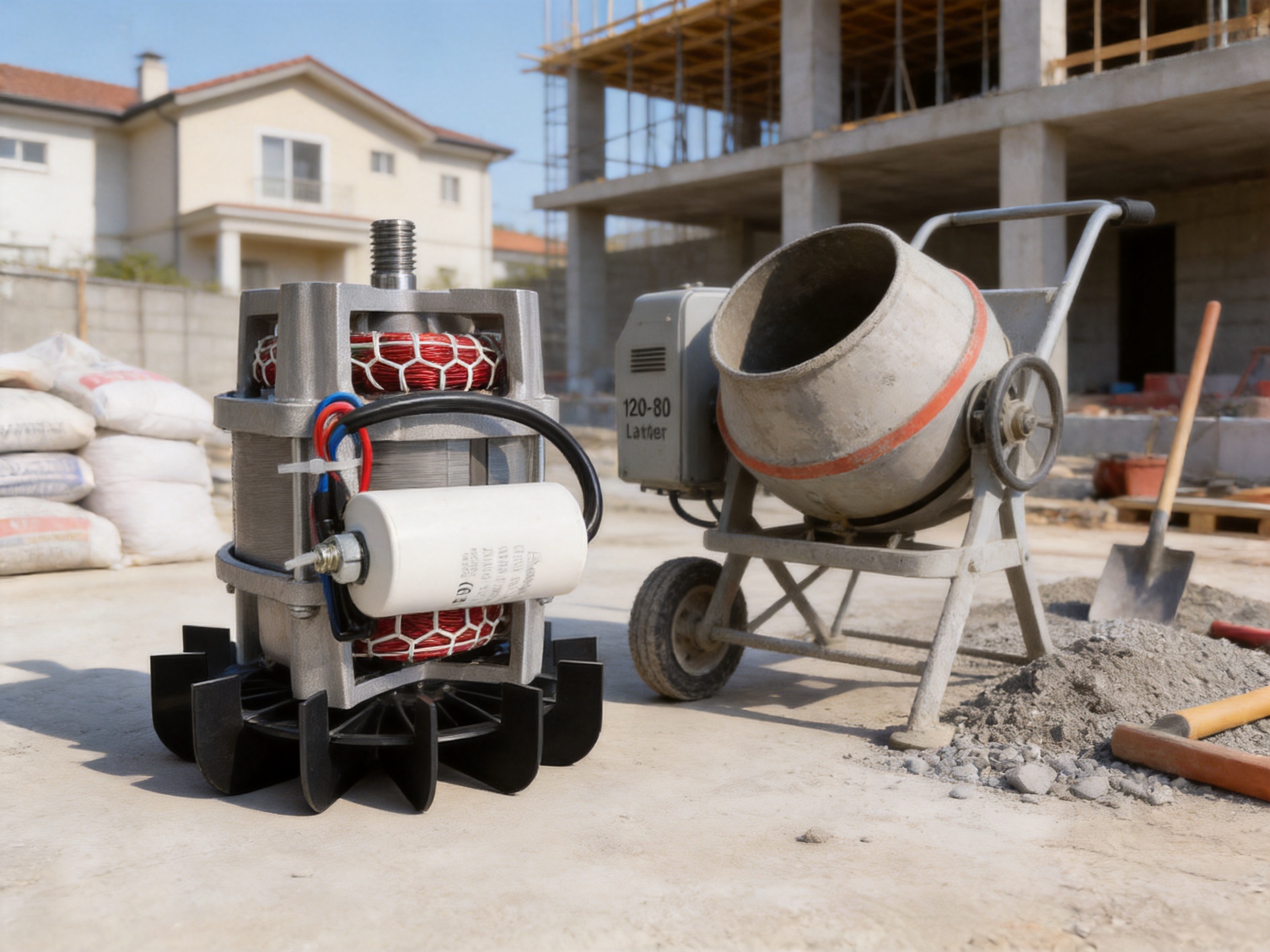
The YY71-2 uses 100% pure copper winding material. The winding is one of the most important internal components of an electric motor because it creates the magnetic field needed to convert electrical energy into mechanical rotation. Copper is widely used for motor windings because of its high electrical conductivity and ability to carry current efficiently when properly designed and manufactured.
Pure copper windings can help reduce electrical losses compared with lower-conductivity winding materials. Lower loss generally means that less input energy is converted into unwanted heat within the winding. This supports improved efficiency, more stable operation, and better heat management during repeated work cycles.
For concrete mixer applications, thermal behavior is especially important. Job-site equipment may be used for multiple batches over an extended period. If the winding temperature rises excessively, insulation can deteriorate, electrical resistance can increase, and the motor’s service life may be reduced. A well-produced copper winding, combined with appropriate insulation, winding placement, ventilation, and assembly quality, helps the motor handle normal operating demands more reliably.
The use of pure copper is also beneficial for maintaining consistent motor performance. Stable electrical conductivity supports predictable current flow and helps the motor deliver its intended operating characteristics. This is important when the motor is used with a fixed transmission ratio, because changes in speed or power delivery can affect mixing quality and production time.
Winding material alone does not determine total motor quality. The quality of the copper, the winding process, the number of turns, wire diameter, insulation system, connection method, varnish treatment, and final testing all contribute to performance. The manufacturer’s production controls are therefore important in ensuring that the copper winding is correctly formed, securely connected, and protected against the operating stresses of the application.
High-Speed Two-Pole Configuration
The YY71-2 uses a two-pole high-speed configuration with a rated speed of approximately 2800 RPM. In an alternating-current motor, the number of poles influences the relationship between electrical frequency and motor speed. A two-pole design is commonly associated with high-speed operation at standard power frequencies, although actual operating speed may vary slightly depending on motor design and load.
High motor speed allows the portable mixer to use a compact mechanical transmission system to achieve the drum speed required for mixing. The reduction mechanism converts the motor’s high rotational speed into stronger torque at the drum. This arrangement can provide a practical balance between motor size, power output, equipment weight, and mixing performance.
The high-speed design can also support smooth and consistent operation when the mixer’s gearbox, belt drive, bearings, and drum assembly are correctly aligned. Because the motor rotates at a relatively high speed, installation quality is important. Misalignment, loose fasteners, damaged pulleys, incorrect belt tension, or worn bearings can cause vibration and noise even when the motor itself is operating correctly.
Operators should confirm that the mixer’s original motor specification is compatible with the YY71-2 before installation. Important factors include voltage, power, speed, shaft dimensions, mounting hole pattern, rotation direction, electrical connections, and transmission design. A motor with similar power but different mechanical dimensions may not be a direct replacement.
Advantages Over Lower-Quality or Poorly Matched Alternatives
The YY71-2 offers several advantages when compared with low-quality motors, undersized motors, or products that are not specifically matched to portable concrete mixing equipment.
More Suitable Power Capacity
An undersized motor may operate acceptably with an empty drum but struggle when the mixer is filled with concrete or mortar. This can cause slow acceleration, stalling, overheating, and reduced productivity. The YY71-2’s 800W power rating is intended to provide a stronger working margin for portable mixers in the 120–180 liter range, provided the mixer is not overloaded and the transmission system is correctly matched.
Improved Heat Control
Pure copper windings and an efficient motor design can help reduce unnecessary electrical loss and heat generation. Lower operating heat can support longer working life, particularly during repeated batches. A motor that runs cooler under normal conditions may also be less likely to suffer from insulation deterioration or thermal protection interruptions.
Reliable Operation During Repeated Batches
Portable mixers are often used continuously during a work period. Frequent starts and stops, changing material loads, dust, vibration, and varying ambient temperatures can all affect motor reliability. The YY71-2 is designed for stable continuous operation, making it more suitable for regular job-site use than a general-purpose motor that has not been selected for mixer duty.
Smoother Mechanical Performance
Smooth starting under load can reduce shock throughout the mixer’s drive train. This may help protect gears, belts, couplings, bearings, and drum supports. Reducing mechanical shock is valuable because repair costs often involve more than the motor itself. A motor that starts predictably can contribute to improved durability of the complete machine.
Simplified Replacement
The plug-and-play design is intended to simplify installation when the replacement motor is compatible with the original equipment. Straightforward installation can reduce labor time and help contractors return equipment to service more quickly. However, plug-and-play should not be interpreted as permission to ignore electrical safety checks or mechanical compatibility requirements.
Practical Maintenance
Easy installation and maintenance can lower the total cost of ownership. Service personnel can inspect the motor, mounting hardware, electrical connections, cooling passages, and transmission system without unnecessary complexity. Routine inspection is particularly important in dusty construction environments, where accumulated material can restrict ventilation or affect moving components.
Application Range and Recommended Mixer Size
The YY71-2 is intended for portable concrete mixers with a capacity of approximately 120–180 liters. This range covers many mixers used for home construction, small building projects, paving work, garden walls, foundation repairs, workshop production, and general job-site maintenance.
Capacity alone does not determine whether a motor is suitable. The type of material, batch size, moisture content, aggregate size, drum angle, drum geometry, gear reduction, and operating cycle all affect the required power. A mixer should not be filled beyond its recommended working capacity merely because the drum can physically contain more material. Overloading increases the torque demand and can cause unnecessary strain on the motor and transmission.
For best performance, operators should load ingredients gradually and follow the recommended sequence for the mixer. Adding too much dry material at once can create a high starting load. A controlled loading process allows the motor to maintain more stable speed and reduces the possibility of sudden overload.
The motor can also be considered for replacement projects where an existing portable mixer has experienced motor wear, winding damage, reduced starting ability, or excessive heating. Before ordering, users should compare the original motor’s voltage, power, speed, mounting dimensions, shaft configuration, wiring arrangement, and rotational requirements with the YY71-2 specification.
Manufacturing Strengths Behind the Product
The performance of a motor depends not only on its stated specifications but also on the quality and consistency of its manufacturing process. Shengzhou Jiangxin Motor Technology Co., Ltd. was established in 2017 as a professional manufacturer focused on the research, development, production, and sales of AC/DC motors and micro motors. The company’s product range includes evaporative air cooler motors, industrial heater motors, oil pump motors, customized motors, and other application-specific motor products.
The manufacturer operates in Shengzhou, Zhejiang Province, an area supported by the broader industrial network of the Yangtze River Delta. This location provides access to component supply chains, engineering resources, logistics infrastructure, and manufacturing services. Such industrial support can help a motor manufacturer maintain production continuity and respond efficiently to customer requirements.
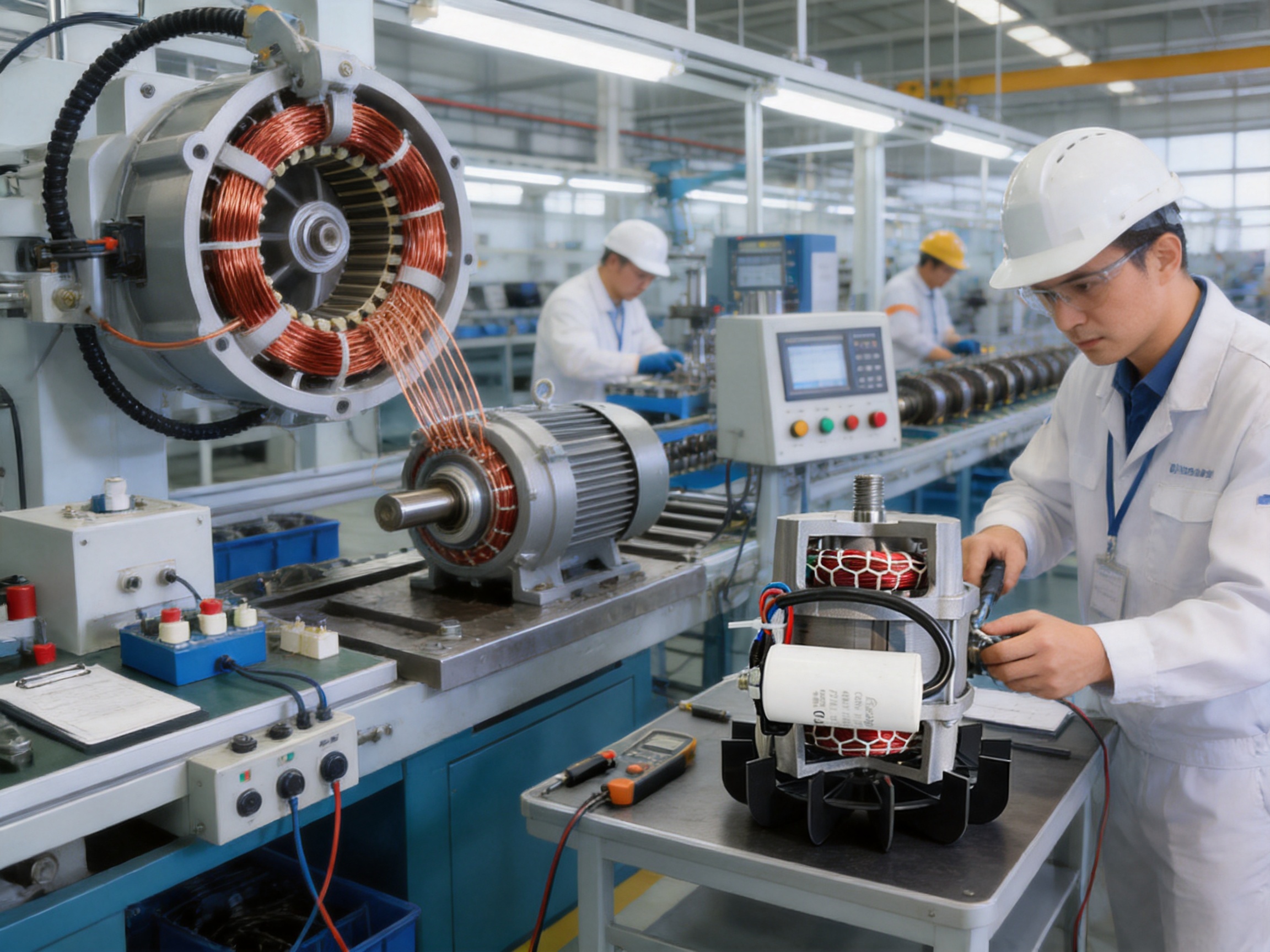
The company owns modern production facilities and advanced automated equipment. Automation can improve repeatability in processes such as component assembly, winding, balancing, testing, and inspection. Consistent process control is especially important for motors because small variations in winding placement, rotor balance, bearing installation, or terminal connection can affect vibration, noise, efficiency, and service life.
A professional research and development team also supports product improvement and customization. Concrete mixer motors operate under a specific combination of electrical, mechanical, and environmental conditions. Application-focused engineering allows the manufacturer to consider factors such as required power, speed, mounting arrangement, cooling, operating cycle, noise, and customer equipment structure.
The company has been recognized as a provincial-level technology enterprise, reflecting its emphasis on technical capability and innovation. Its quality control systems are intended to support the production of reliable, energy-efficient, and long-lasting motors. These capabilities are valuable for both standard products and customized motor programs.
Advanced Production and Quality Control Considerations
A dependable motor production process begins with controlled material selection. Copper wire, magnetic steel, insulation materials, bearings, housings, shafts, fasteners, and electrical terminals must be suitable for the intended motor design. Consistent material quality helps reduce variation between production batches.
Winding is a critical operation. The winding must contain the correct number of turns, use the specified wire size, and be positioned properly within the stator. The wire must not be damaged during insertion or connection. Insulation between conductors and the stator core must be maintained to prevent short circuits and premature electrical failure.
After winding, insulation treatment and connection procedures help protect the coil assembly. Proper treatment can improve mechanical stability, reduce movement caused by vibration, and support thermal resistance. The winding ends must be connected securely to the motor’s electrical terminals or internal circuit components.
Rotor and shaft assembly also require precision. A high-speed two-pole motor must maintain acceptable rotational balance. An imbalanced rotor can generate vibration, increase bearing loads, raise noise levels, and place additional stress on the mixer frame. Accurate machining and assembly help the motor operate smoothly at approximately 2800 RPM.
Bearing installation is another important step. Bearings must be correctly seated and aligned to support the rotor without excessive friction. Poor bearing installation can result in noise, heat, shaft movement, and early failure. Automated or controlled assembly equipment can help improve consistency in this area.
Final testing may include electrical checks, insulation checks, no-load running tests, speed verification, noise evaluation, vibration inspection, and appearance inspection. Load-related testing can provide additional information about motor current, temperature rise, and operating stability. Although exact test procedures depend on the manufacturer’s internal standards and customer requirements, a structured quality system helps identify defects before shipment.
For a concrete mixer motor, quality control should also consider the product’s intended environment. Construction sites may expose the motor to dust, vibration, frequent starts, fluctuating loads, and extended operating periods. Quality inspection should therefore be integrated into the entire production process rather than limited to a final visual check.
Why Manufacturing Consistency Matters to Mixer Operators
Two motors can have the same nominal voltage and power rating but provide different real-world results if manufacturing quality is inconsistent. A motor with poorly controlled windings may draw excessive current or heat rapidly. A rotor with inadequate balance may cause vibration. An inaccurately machined shaft may create alignment problems in the mixer drive. Loose terminals may generate resistance and heat at the connection point.
Manufacturing consistency helps ensure that the motor behaves as expected from one unit to the next. This is important for equipment manufacturers purchasing motors for assembly lines, distributors stocking replacement products, and contractors maintaining multiple mixers. Consistent dimensions and performance simplify installation, inventory management, and service planning.
Jiangxin Motor’s combination of automated equipment, professional engineering, and quality management supports this consistency. The company’s experience across several motor categories also provides a broader technical foundation. Knowledge gained from air cooler motors, industrial heater motors, oil pump motors, and customized motors can contribute to improved understanding of winding systems, thermal management, mechanical design, and application-specific requirements.
Installation Guidance
Before installation, disconnect the mixer from its power source and confirm that all stored electrical energy has been safely discharged. Installation should be performed by a qualified person who understands motor wiring, mechanical alignment, grounding, and job-site safety requirements.
First, compare the replacement motor with the original motor and the mixer manufacturer’s requirements. Verify the 110V rating, 800W power, approximate 2800 RPM speed, mounting dimensions, shaft size, shaft length, keyway or coupling arrangement, terminal configuration, and rotation direction. Do not install a motor solely because it appears physically similar.
Inspect the mixer before fitting the motor. Check the gearbox, pulleys, belts, bearings, drum supports, and frame for damage or excessive wear. A seized bearing or damaged gearbox can overload a new motor immediately. Replacing the motor without correcting the underlying mechanical problem may lead to repeated failure.
Mount the motor securely using the correct fasteners. The mounting surface should be clean, stable, and properly aligned. If the motor is belt-driven, adjust belt tension according to the mixer manufacturer’s instructions. A belt that is too loose may slip, while a belt that is too tight can overload bearings and reduce motor efficiency.
Electrical connections should be tight, correctly insulated, and protected from moisture and abrasion. The motor must be connected to a suitable power supply with appropriate overcurrent protection and grounding. Extension cords should be selected for the required current and length. Long or undersized cords can cause voltage drop, poor starting, and additional heat.
After installation, perform a brief no-load test if the mixer design permits it. Observe the motor for unusual noise, excessive vibration, incorrect rotation, burning odor, or abnormal heating. If the direction of rotation is incorrect, disconnect the power and consult the equipment wiring instructions before making any change.
Operation and Maintenance Practices
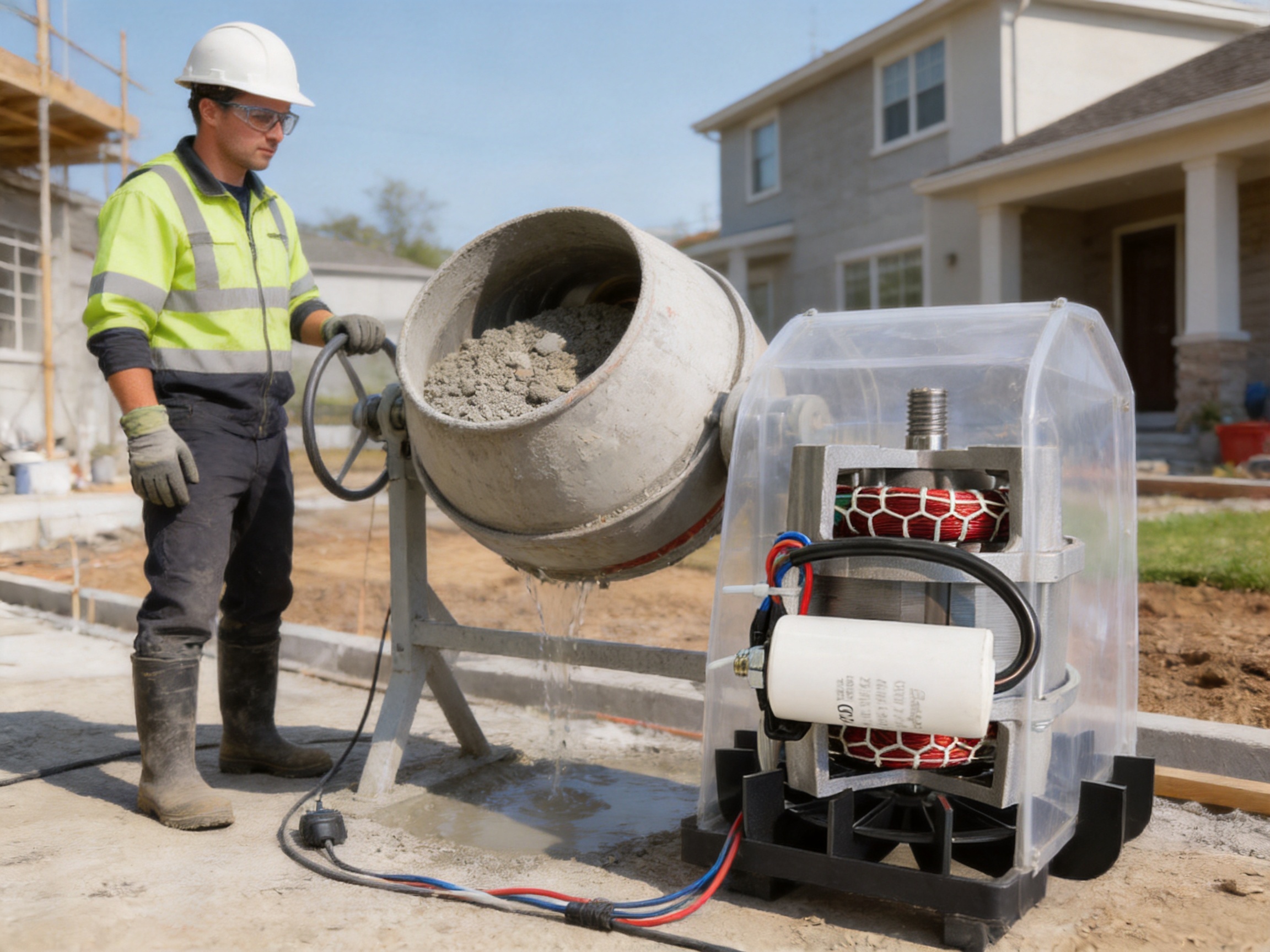
Good operating practices can significantly extend the service life of the YY71-2 motor. Operators should keep loads within the mixer’s recommended working capacity and avoid starting with a drum packed with heavy, dry material whenever possible. Materials should be added in a controlled manner to prevent sudden overload.
The motor’s ventilation openings should remain clear. Dust, cement residue, leaves, plastic, and other debris can restrict airflow and cause temperature to rise. Cleaning should be performed with the power disconnected. Avoid directing water or high-pressure spray at the motor unless the complete equipment enclosure and motor protection system are specifically designed for that method.
Regularly inspect mounting bolts, terminal connections, cables, belts, pulleys, and protective covers. Vibration can loosen hardware over time. A damaged cable or loose terminal can create an electrical hazard and may also cause intermittent operation. Worn belts and pulleys can increase load and reduce the efficiency of power transmission.
Listen for changes in operating sound. A new grinding, rattling, humming, or squealing noise may indicate bearing wear, belt problems, misalignment, foreign material, or electrical trouble. Early diagnosis can prevent damage to the motor and other mixer components.
Temperature should also be monitored through normal observation. The motor may become warm during operation, but unusual or rapidly increasing heat requires investigation. Possible causes include overloading, insufficient ventilation, low supply voltage, excessive belt tension, gearbox problems, bearing friction, or repeated starts without adequate cooling intervals.
When the mixer is not being used, store it in a dry and protected location. Moisture and construction dust can affect electrical connections and mechanical components. Proper storage reduces corrosion and helps keep the motor ready for the next operating cycle.
Safety Considerations for 110V Equipment
The 110V specification must be confirmed against the available power supply before installation. Although the motor is designed for North American household and job-site power environments, electrical systems can vary by location and equipment configuration. Users should verify the actual supply voltage, frequency, plug arrangement, grounding, and protective devices.
Do not use an unapproved transformer, adapter, extension arrangement, or modified plug to force compatibility. If the site power does not match the motor specification, consult a qualified electrician or equipment technician. Incorrect voltage can cause poor performance, overheating, insulation damage, or immediate motor failure.
Concrete mixing areas may contain water, wet aggregate, cement slurry, and conductive dust. Electrical connections should be protected from moisture, and the mixer should be used with suitable grounding and residual-current protection where required by local regulations. Operators should wear appropriate personal protective equipment and keep loose clothing away from rotating components.
Never remove guards while the mixer is energized. The belt, pulley, gearbox, and drum assembly can create serious pinch and entanglement hazards. Before maintenance, disconnect the power and prevent accidental reconnection. A clear lockout procedure is recommended for professional job sites.
Benefits for Equipment Manufacturers and Distributors
The YY71-2 can be useful not only as a replacement motor but also as a component for portable mixer manufacturers and equipment distributors. Its defined 110V and 800W configuration gives purchasers a clear basis for product matching and inventory planning.
Equipment manufacturers can evaluate the motor for integration into mixer platforms within the intended capacity range. The high-speed two-pole configuration can be paired with a suitable reduction system, while the plug-and-play approach may simplify assembly and service design. The manufacturer’s ability to produce standard and customized motors can also support projects requiring different mounting arrangements, wiring specifications, or performance parameters.
Distributors benefit from a product that addresses a recognizable application. Portable concrete mixer users frequently need replacement motors after years of operation, especially when equipment is used in dusty and demanding environments. A clearly specified motor can help distributors identify suitable products and reduce incorrect orders.
Export capability is another important strength. Jiangxin Motor products are exported to more than 60 countries and regions. International experience can support communication regarding product specifications, packaging, documentation, quality expectations, and delivery requirements. For global customers, cooperation with a manufacturer familiar with overseas markets can make sourcing more efficient.
Customization and Application Support
Not every portable mixer uses identical motor dimensions or electrical arrangements. Some machines may require different mounting brackets, shaft lengths, terminal positions, cable configurations, or protective components. A manufacturer with research and development capabilities can evaluate these requirements more effectively than a supplier focused only on generic catalog products.
Customization should begin with complete technical information. Customers should provide the original motor’s nameplate data, drawings or photographs, mounting dimensions, shaft measurements, wiring details, mixer capacity, transmission type, expected working cycle, and environmental conditions. This information allows the manufacturer to assess whether the standard YY71-2 is suitable or whether a modified version is more appropriate.
Application support can also help identify problems outside the motor. If a mixer experiences repeated motor overheating, the cause may be excessive load, gearbox friction, poor ventilation, low voltage, or incorrect belt tension. A technically capable supplier can ask the right questions and help distinguish motor-related issues from equipment-related issues.
For original-equipment manufacturers, early cooperation during the design stage can improve the complete mixer system. Motor speed, torque requirements, mounting structure, cooling, control method, and service access should be considered together. This approach can produce a more reliable and maintainable final product.
Total Cost of Ownership
The purchase price of a motor is only one part of its total cost. Downtime, labor, shipping, repeated replacement, energy consumption, and damage to connected components can have a greater financial impact over time. A motor that provides stable operation and longer service life may deliver better value than a lower-priced product that fails prematurely.
The YY71-2 supports total-cost considerations through its 800W power capacity, pure copper windings, stable starting characteristics, and maintenance-friendly design. Efficient operation can help control energy losses, while robust construction can reduce the frequency of replacement. Easy installation may also shorten repair time and reduce labor requirements.
Proper matching remains the key condition. Even a well-manufactured motor can fail if it is operated beyond its intended load, connected to an incorrect voltage, installed with poor alignment, or used with a damaged gearbox. Total cost of ownership is therefore influenced by both product quality and equipment management.
For contractors, dependable motor performance can help prevent delays during concrete work. For rental companies, reliability can reduce service events between rentals. For distributors, consistent quality can help lower warranty claims. For mixer manufacturers, a stable motor supply can support production planning and customer satisfaction.
Performance Comparison Framework
When comparing the YY71-2 with competing concrete mixer motors, purchasers should evaluate more than price and nominal wattage. The following criteria provide a practical comparison framework.
| Evaluation Factor | Why It Matters | YY71-2 Position |
|---|---|---|
| Voltage compatibility | Incorrect voltage can cause failure and safety risks | 110V specification for compatible North American applications |
| Power capacity | Determines the ability to handle normal mixer loads | 800W for suitable portable mixer applications |
| Starting behavior | Affects mechanical shock and operation under load | Designed for smooth starting under load |
| Winding material | Influences conductivity, losses, and thermal performance | 100% pure copper winding |
| Operating speed | Must match the mixer’s transmission system | Two-pole high-speed design, approximately 2800 RPM |
| Maintenance | Impacts service time and long-term operating expense | Designed for easy installation and maintenance |
| Manufacturing capability | Supports consistency, customization, and supply stability | Modern facilities, automated equipment, and professional R&D |
| Market experience | Helps support international purchasing and applications | Products exported to more than 60 countries and regions |
A competing product may have a similar power rating but use different winding materials, have weaker starting characteristics, lack suitable mounting dimensions, or provide limited technical support. Conversely, a more powerful motor may not be a better choice if it does not match the mixer’s electrical system or transmission. The best product is the one that satisfies the complete application requirements.
Environmental and Workplace Considerations
Portable concrete mixers are often moved between locations and used in conditions that are less controlled than factory environments. The motor may encounter construction dust, vibration from uneven surfaces, temperature changes, and intermittent exposure to moisture. These conditions make proper equipment protection and maintenance essential.
The YY71-2’s stable operation and low-loss winding design can support practical job-site use, but the motor should still be installed within the protective structure provided by the mixer. The equipment enclosure should prevent direct contact with rotating components and reduce exposure to cement dust and water. Ventilation must be balanced with protection so that cooling air can circulate without allowing excessive contamination.
Noise is another workplace consideration. The motor is designed for low-noise operation, which can improve operator comfort and reduce disturbance in residential or indoor renovation environments. Actual sound levels will also depend on the gearbox, belt system, drum, frame resonance, installation alignment, and surrounding surfaces.
Energy efficiency is relevant where mixers are operated for extended periods or where electricity availability is limited. Reduced winding losses can help use input energy more effectively. Nevertheless, operators should avoid unnecessary idling and should shut down the mixer when it is not actively mixing.
Recommended Purchasing Checklist
Before purchasing the YY71-2, customers should collect the original motor nameplate information and confirm the mixer’s technical requirements. The following checklist can reduce the risk of ordering an unsuitable replacement.
Confirm that the mixer is designed for a compatible 110V power supply and that the local electrical system meets the motor’s requirements.
Verify that the original motor power is approximately 800W or that the mixer manufacturer approves the replacement specification.
Check the original motor speed and confirm compatibility with the mixer’s gearbox, belt drive, or other transmission system.
Measure the mounting hole spacing, motor body dimensions, shaft diameter, shaft length, keyway, and pulley or coupling arrangement.
Confirm the required direction of rotation and electrical connection method.
Determine whether the mixer will be used for occasional household work, repeated job-site batches, rental equipment, or continuous commercial operation.
Inspect the mixer’s gearbox, bearings, belts, pulleys, and drum before replacing the motor.
Ask the supplier about packaging, testing, documentation, minimum order quantities, customization, and after-sales support when purchasing in volume.
Frequently Asked Questions
What is the rated power of the YY71-2 motor?
The rated power is 800W. This power level is intended for suitable portable concrete mixer applications, particularly equipment in the approximate 120–180 liter range when operated within its recommended capacity.
What voltage does the motor use?
The motor is rated at 110V. Users should confirm that the available power supply, frequency, grounding, plug arrangement, and protective devices are compatible before installation.
Is the motor suitable for North American use?
It is designed for North American household and job-site power applications using a compatible 110V supply. Because electrical systems and equipment requirements vary, the actual site power should always be checked by a qualified person.
What is the motor speed?
The motor uses a two-pole high-speed configuration with an operating speed of approximately 2800 RPM. The mixer’s gearbox or belt transmission must be compatible with this motor speed in order to produce the correct drum rotation.
What size mixer can use this motor?
The recommended application is a portable mixer with an approximate capacity of 120–180 liters. Actual suitability depends on the mixer structure, transmission ratio, material type, batch size, and operating conditions.
Why are pure copper windings important?
Pure copper provides strong electrical conductivity and can help reduce winding losses and heat generation. This supports efficient operation and may contribute to longer service life when the motor is correctly installed and operated.
Can the motor start when the mixer is loaded?
The motor is designed to provide smooth starting under load. However, starting performance also depends on supply voltage, cable size, mechanical condition, load level, gearbox condition, and the mixer’s control system. Operators should avoid severe overloading.
Is the YY71-2 a direct replacement for every 800W mixer motor?
No. Matching power alone is not sufficient. Customers must compare voltage, speed, mounting dimensions, shaft configuration, rotation direction, electrical connections, and transmission requirements before installation.
Does the motor require a transformer?
It is designed for plug-and-play use in compatible North American household and job-site power environments and does not require a transformer when the supply is correctly matched to the 110V specification. An incorrect site voltage must not be corrected with an improvised connection.
How can operators reduce overheating?
Keep the mixer within its rated capacity, maintain clear ventilation openings, use correctly sized cables, inspect belts and bearings, avoid repeated overloaded starts, and allow the motor to operate under the duty cycle recommended for the equipment.
What maintenance does the motor require?
Maintenance includes checking electrical connections, mounting bolts, cables, ventilation passages, belts, pulleys, bearings, and protective covers. Operators should also monitor noise, vibration, odor, and temperature changes during use.
Can the manufacturer provide customized motor solutions?
The company produces standard and customized motors and has professional research and development capabilities. Customers requiring modified dimensions, wiring, shafts, mounting arrangements, or other specifications should provide complete technical information for evaluation.
What industries does the manufacturer serve?
The company produces motors for evaporative air coolers, industrial heating equipment, oil pumps, hydraulic systems, environmental protection equipment, concrete mixers, and other applications requiring AC/DC or customized motor solutions.
Where are the products supplied?
The company exports products to more than 60 countries and regions. International customers can discuss product specifications, packaging, documentation, order quantities, and delivery requirements directly with the manufacturer.
Conclusion
The YY71-2 110V 800W Portable Concrete Mixer Motor is designed to provide dependable power for portable concrete mixers used in household, renovation, landscaping, and job-site applications. Its 800W rating, two-pole high-speed configuration, approximately 2800 RPM operating speed, pure copper windings, and smooth starting performance address several of the most important requirements for practical mixer operation.
Compared with undersized, poorly matched, or lower-quality alternatives, the motor offers stronger application suitability, improved attention to heat management, stable operation under changing loads, and a maintenance-friendly design. Its plug-and-play approach can simplify replacement when the electrical and mechanical specifications are correctly matched.
The product is supported by the manufacturing capabilities of Shengzhou Jiangxin Motor Technology Co., Ltd. The company combines modern facilities, automated equipment, professional research and development, strict quality control, and experience in multiple AC/DC motor categories. Its products are exported internationally, and its ability to provide customized solutions can support both equipment manufacturers and replacement-parts distributors.
For the best results, customers should confirm voltage, power, speed, mounting dimensions, shaft configuration, rotation direction, and transmission compatibility before purchase. When properly selected, installed, and maintained, the YY71-2 can provide a reliable motor solution for portable concrete mixing equipment and contribute to efficient, stable, and long-lasting job-site performance.
References
1. Product specification information for the YY71-2 110V 800W Portable Concrete Mixer Motor.
2. Manufacturer information concerning AC/DC motor research, development, production, quality control, and international distribution.
3. General principles of electric motor winding design, thermal management, and mechanical power transmission.
4. General guidance for portable concrete mixer operation, load management, maintenance, and job-site safety.
5. General electrical safety practices for low-voltage motor installation, grounding, overcurrent protection, and equipment maintenance.
Product: YY71-2 110V 800W Portable Concrete Mixer Motor
 Ready To Customise
 Your Motor Products?

We are professional motor manufacturers, delivering powerful, stable, and efficient power cores for all industries through precision craftsmanship and innovation.
Contact Us
-
 Mobile:+86 13575536911
-
 Tel:+86 18357538240
-
 Whatsapp:+8618357538240
-
 Email:betty@dbjxmotor.com
-
 Company Address
Copyright © by Shengzhou Jiangxin Motor Technology Co., Ltd. All Rights Reserved.
Wholesale Industrial Fan Motors Manufacturers
