

 English
 русский
 Español
 عربى
عربىNo. 8, Duxiu San Road, Ganlin Town, Shengzhou City, Shaoxing City, Zhejiang Province, China

News Category
Product Category
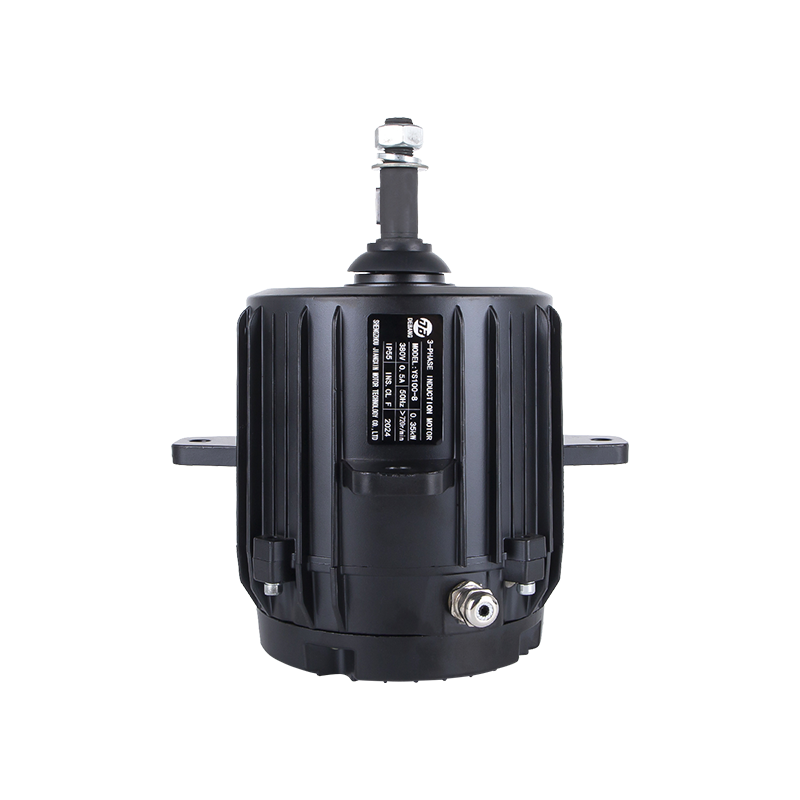
YS100-8 380V 50Hz 350W Cattle House Fan Motor: Reliable Ventilation Power for Livestock Buildings
Content
- 1 1. The Role of a Reliable Motor in Cattle House Ventilation
- 2 2. Product Overview
- 3 3. Designed for Agricultural Operating Conditions
- 4 4. Low-Speed Operation and Stable Airflow
- 5 5. Smooth Starting Under Fan Load
- 6 6. Bearing Quality and Service Life
- 7 7. Standard Mounting and Replacement Convenience
- 8 8. Three-Phase 380V Electrical Compatibility
- 9 9. Energy-Conscious Ventilation Performance
- 10 10. Advantages Compared with General-Purpose Alternatives
- 11 11. Manufacturing Strengths and Quality Control
- 12 12. Research and Development Capability
- 13 13. Production Process from Components to Finished Motor
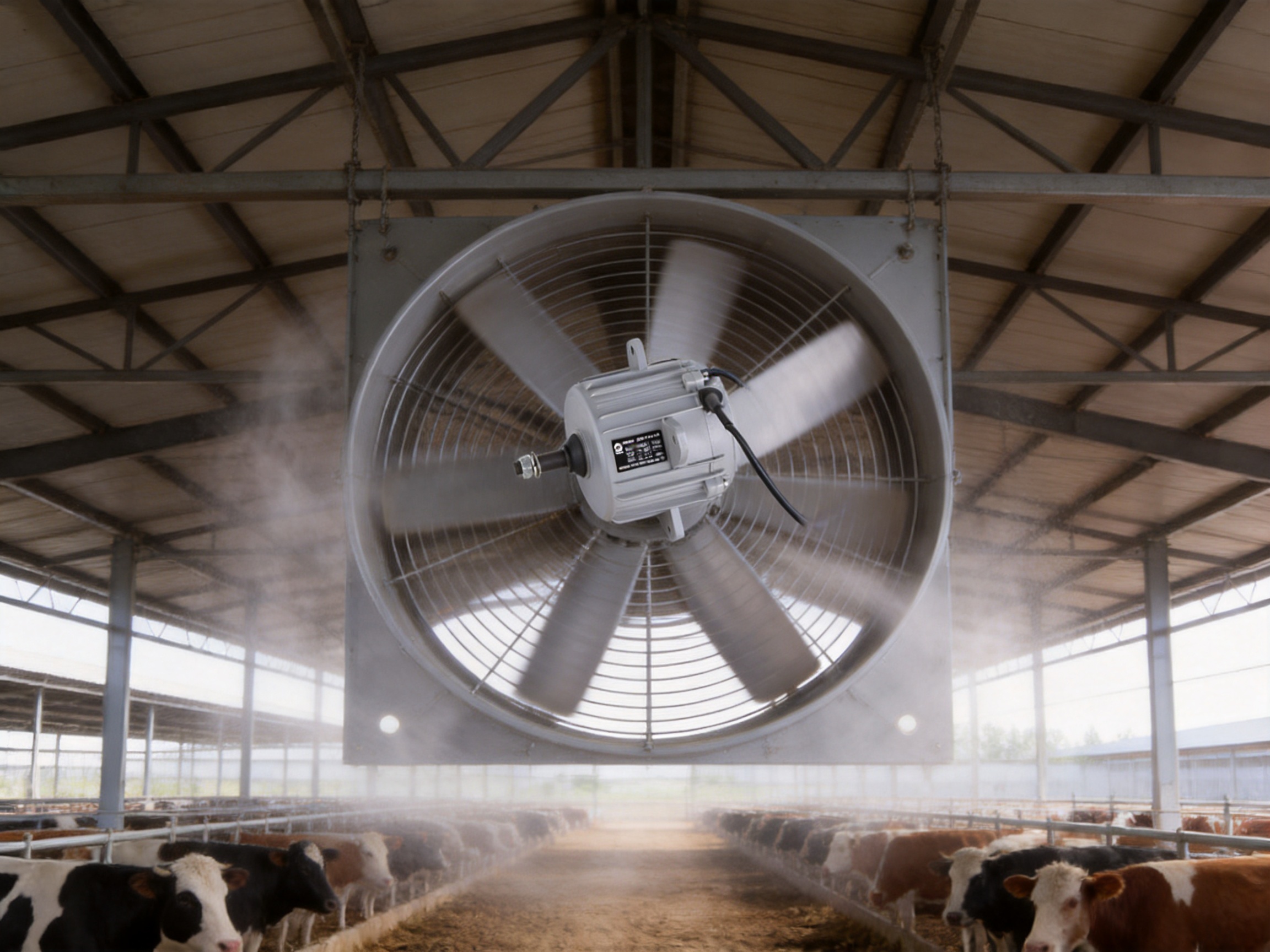
- 14 14. Installation Guidance for Cattle House Fans
- 15 15. Maintenance Practices for Long-Term Operation
- 16 16. Selecting the Correct Motor for a Ventilation Project
- 17 17. Support for Distributors and Equipment Manufacturers
- 18 18. Company Manufacturing and Service Strengths
- 19 19. Common Applications
- 20 20. Frequently Asked Questions
- 20.1 Q1: What type of motor is the YS100-8?
- 20.2 Q2: What are its main electrical specifications?
- 20.3 Q3: Why is this motor suitable for cattle house fans?
- 20.4 Q4: Does the motor support smooth starting?
- 20.5 Q5: Is the motor suitable for continuous operation?
- 20.6 Q6: Can the motor replace an existing fan motor?
- 20.7 Q7: What is the benefit of standard mounting dimensions?
- 20.8 Q8: How do high-precision bearings benefit the motor?
- 20.9 Q9: Can the motor be used in a wet cleaning area?
- 20.10 Q10: What maintenance does the motor require?
- 20.11 Q11: Can the company provide customized motors?
- 20.12 Q12: What information should be provided when requesting a quotation?
- 20.13 Q13: Is the motor suitable for every livestock fan?
- 20.14 Q14: Where is the manufacturer located?
- 20.15 Q15: Does the company serve international customers?
- 21 21. Conclusion
- 22 References
- 23 Product: YS100-8 380V 50Hz 350W Cattle House Fan Motor
Stable ventilation is one of the most important conditions for maintaining a healthy and productive livestock environment. In cattle houses, air movement helps remove heat, humidity, dust, odors, and airborne contaminants while supporting animal comfort throughout the year. However, ventilation fans can only perform consistently when their motors are designed for continuous operation, reliable starting, and the demanding conditions found in agricultural buildings.
The YS100-8 380V 50Hz 350W Cattle House Fan Motor is a three-phase asynchronous motor developed specifically for cattle house ventilation fans and related livestock ventilation equipment. It combines a low-speed operating profile with practical torque output, dependable starting performance, standard installation dimensions, and a structure intended for long-running service. Its 380V supply and 350W rated power make it suitable for ventilation systems that require stable mechanical drive power without excessive energy consumption.
Designed for the real operating environment of livestock farms, the motor is intended to work in areas where humidity, dust, vibration, and extended daily running are common. Rather than treating the motor as a general-purpose component, its application focus supports the requirements of large-scale cattle houses, livestock barns, and agricultural ventilation systems.
1. The Role of a Reliable Motor in Cattle House Ventilation
Modern cattle houses often depend on mechanical ventilation to maintain acceptable environmental conditions. Natural airflow can be useful, but it is affected by wind direction, outdoor temperature, building layout, seasonal changes, and the number of animals inside the structure. During hot weather or periods of high humidity, natural ventilation may not provide sufficient air exchange. Mechanical fans offer more controlled and predictable ventilation.
At the center of every mechanical ventilation fan is the motor. The motor determines whether the fan can start smoothly, rotate at the required speed, maintain stable airflow, and continue operating for long periods. A motor that is poorly matched to the fan may experience difficult starting, overheating, excessive vibration, or premature bearing wear. These problems can reduce ventilation performance and increase maintenance expenses.
The YS100-8 is designed around the practical needs of agricultural ventilation. Its low-speed configuration is suitable for applications in which controlled airflow, stable operation, and strong starting characteristics are more important than extremely high rotational speed. The 350W power rating provides a balanced solution for compatible cattle house fans, while the three-phase design supports efficient operation in facilities equipped with common industrial or agricultural three-phase power supplies.
In livestock buildings, ventilation equipment may operate for many hours each day and can be required to function during periods of high temperature when dependable airflow is especially important. For this reason, the motor must be more than a source of rotational power. It must be a stable, serviceable, and application-appropriate component within the complete ventilation system.
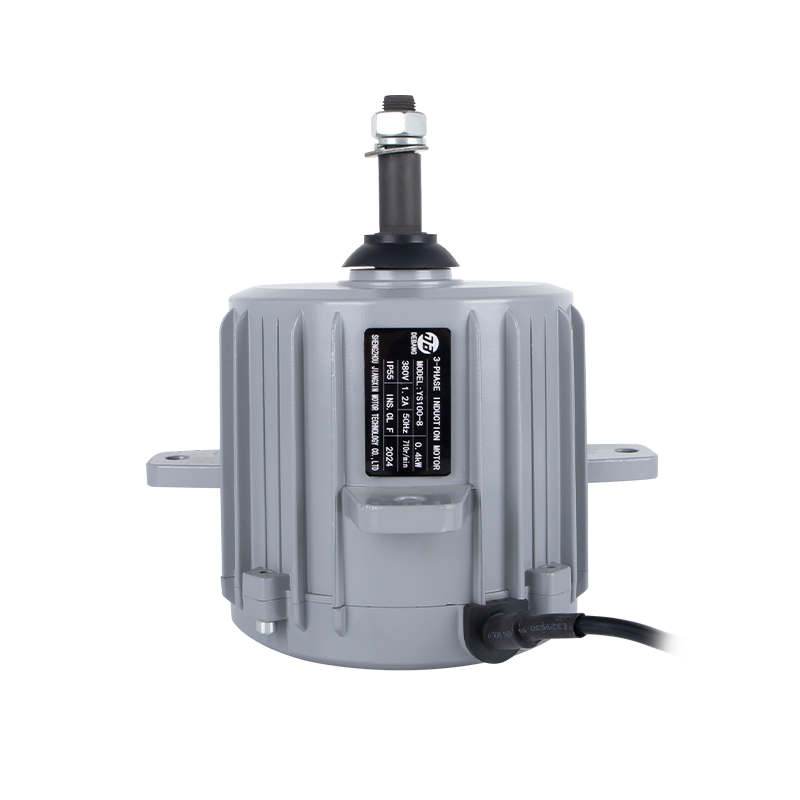
YS100-8 380V 50Hz 350W Cattle House Fan Motor
2. Product Overview
| Item | Specification or Feature |
|---|---|
| Product type | Cattle house fan motor |
| Model | YS100-8 |
| Motor type | Three-phase asynchronous motor |
| Rated voltage | 380V |
| Frequency | 50Hz |
| Rated power | 350W |
| Application | Cattle house fans, livestock barn ventilation systems, and compatible agricultural ventilation equipment |
| Operating profile | Low speed, stable torque, and long-running ventilation service |
| Installation advantage | Standard mounting dimensions for convenient replacement and installation |
| Primary environmental focus | High-humidity, dusty, and continuous-use agricultural environments |
The product is identified as a YS100-8 motor with a 380V, 50Hz, and 350W rating. These electrical characteristics should be checked against the available power supply and the requirements of the selected fan before installation. Proper system matching helps the motor operate within its intended load range and supports stable service life.
The asynchronous motor design is widely used in industrial and agricultural equipment because of its uncomplicated operating principle and practical reliability. A three-phase asynchronous motor does not require brushes for normal operation, which can reduce the need for certain types of routine maintenance compared with brushed motor designs. Its structure is suitable for equipment that must operate repeatedly and reliably in fixed installations.
3. Designed for Agricultural Operating Conditions
Cattle houses are not equivalent to clean indoor industrial workshops. The atmosphere may contain moisture, dust, animal hair, feed particles, and corrosive substances associated with manure and cleaning activities. Temperature can also vary significantly between seasons. Ventilation fans are frequently installed in locations where they are exposed to airflow carrying these contaminants, making the selection of the motor an important part of system planning.
The YS100-8 is specially positioned for cattle house ventilation applications because its design emphasis reflects these conditions. Its purpose is to provide a dependable drive source for ventilation fans that may run for extended periods in livestock buildings. By selecting a motor intended for this application, equipment purchasers can avoid relying solely on general-purpose motors that may not be optimized for agricultural ventilation duties.
Long-running operation places continuous demands on the motor’s bearings, winding system, rotor, housing, and heat dissipation path. Dust and humidity can also increase the potential for insulation stress, mechanical wear, and contamination. The motor therefore needs consistent manufacturing quality and appropriate installation protection. The YS100-8 is developed to support stable operation in these demanding environments, while the complete fan assembly should still be installed and maintained according to its operating instructions.
It is important to understand that application suitability depends on the entire installation. Electrical protection, ventilation fan balance, mounting rigidity, wiring quality, environmental exposure, and maintenance procedures all affect motor performance. A properly selected motor provides the foundation, but the best results are achieved when the fan, motor, controls, and building environment are treated as one system.
4. Low-Speed Operation and Stable Airflow
Ventilation requirements vary according to building size, animal population, weather, and management practices. A motor operating at a suitable low-speed profile can help provide controlled and stable fan rotation. This can be advantageous in applications where continuous air exchange is required without unnecessarily aggressive airflow or excessive mechanical stress.
Low-speed operation can also help reduce sudden changes in airflow. In cattle houses, consistent air movement is often more useful than irregular bursts of high-speed ventilation. Stable airflow supports a more predictable environment and can help reduce stagnant zones within the building when the fan system is correctly designed.
The low-speed characteristic of the YS100-8 should be considered together with the fan blade design, pulley or direct-drive arrangement where applicable, ventilation opening, and total air resistance. A motor and fan must be matched so that the motor can deliver the required torque without being overloaded. When correctly matched, the motor can provide the steady rotational output needed by the ventilation assembly.
Compared with motors selected only for maximum speed, an application-oriented low-speed motor can be a more practical choice for agricultural ventilation. The objective is not simply to rotate a fan quickly. The objective is to provide dependable air movement over long operating periods while supporting equipment stability and manageable maintenance requirements.
5. Smooth Starting Under Fan Load
Fan motors may face significant starting resistance. The fan blade assembly, shaft, bearings, belt system, and air resistance all contribute to the load that must be overcome when the motor starts. If the motor has insufficient starting capability, it may hesitate, draw excessive current, or fail to accelerate properly. Repeated difficult starts can place additional stress on the electrical system and mechanical components.
The YS100-8 is described as providing excellent starting performance for stable fan startup under load. This feature is particularly relevant in cattle house installations where the fan may be connected to a relatively large blade assembly or may need to start after a period of inactivity in a humid and dusty environment.
Smooth starting offers several practical advantages. It helps the fan reach operating speed in a controlled manner, reduces the possibility of sudden mechanical shock, and supports consistent ventilation availability. It can also contribute to a more stable relationship between the motor and the electrical supply, provided the installation uses suitable protection and wiring.
Starting performance must still be evaluated according to the actual fan load. Buyers should provide the motor supplier with information about the fan diameter, transmission method, operating speed, duty cycle, and local electrical conditions when confirming compatibility. This step is especially important for custom fan configurations or installations with unusual starting resistance.
6. Bearing Quality and Service Life
Bearings are critical components in a fan motor. They support the rotating shaft, control friction, and help maintain alignment between the rotor and stator. In a ventilation system that operates for long periods, bearing quality can strongly influence noise, vibration, energy consumption, and maintenance frequency.
The YS100-8 uses high-precision bearings intended to support reliable operation and extend service life. Accurate bearing manufacture helps the rotor maintain smooth rotation and reduces unnecessary mechanical resistance. It also supports more stable operation when the fan runs continuously or repeatedly throughout the day.
In agricultural buildings, bearing performance can be challenged by dust, moisture, incorrect belt tension, poor alignment, and fan imbalance. Even a well-manufactured bearing can experience premature wear if the motor is installed incorrectly or exposed to conditions beyond the intended design. For this reason, maintenance teams should inspect fan alignment, mounting bolts, belt condition, shaft movement, and abnormal sound as part of routine service.
A motor with dependable bearings can reduce the frequency of unplanned maintenance. This is valuable for farms because ventilation equipment may be installed in multiple buildings, making service visits time-consuming. Improved bearing reliability can support lower operating disruption and more predictable equipment management.
7. Standard Mounting and Replacement Convenience
Replacement speed is important when a ventilation motor fails. Extended downtime can affect the indoor climate of a cattle house, particularly during hot weather. A motor that uses standard mounting dimensions can make the replacement process more straightforward and reduce the need for extensive structural modification.
The YS100-8 is designed with standard mounting dimensions for convenient installation and replacement. This feature supports compatibility with common ventilation equipment configurations and can help maintenance personnel replace a worn or damaged motor more efficiently.
Standard mounting does not mean that every motor will fit every fan automatically. The mounting hole pattern, shaft dimensions, shaft extension, rotation direction, electrical connection, fan load, and motor speed must all be confirmed before purchase. Nevertheless, standard dimensions provide a practical starting point and simplify integration with commonly used agricultural ventilation systems.
For farms managing multiple buildings, standardization can offer additional benefits. Keeping compatible motor models in the maintenance inventory can reduce spare-parts complexity and help maintenance staff become familiar with one installation method. It may also support faster purchasing and more consistent service procedures across a group of cattle houses.
8. Three-Phase 380V Electrical Compatibility
The motor is rated for 380V and 50Hz three-phase operation. This electrical configuration is widely used in industrial and agricultural facilities in regions with suitable three-phase power infrastructure. Three-phase power can support smooth motor operation and is commonly selected for fixed equipment such as fans, pumps, compressors, and agricultural machinery.
Before installation, the available supply should be verified by a qualified technician. The rated voltage and frequency must match the motor requirements, and the wiring method must follow applicable electrical regulations. Appropriate overload protection, short-circuit protection, grounding, and isolation equipment should be provided as part of the installation.
Correct electrical matching helps the motor deliver its intended performance. An unsuitable supply can lead to excessive heating, poor starting, unstable operation, or damage to the winding system. The installation should also consider voltage fluctuation, cable length, control equipment, and the operating environment.
For export projects, the motor purchaser should confirm regional electrical standards and any required documentation before ordering. The company can discuss technical requirements with customers and support product selection for different ventilation equipment configurations. Where a project requires special voltage, frequency, shaft arrangement, or mounting details, customization should be confirmed in advance rather than assumed.
9. Energy-Conscious Ventilation Performance
Ventilation equipment can represent a significant part of the electrical consumption of a livestock facility. Fans may operate continuously during warm periods, and multiple fans may be installed in large buildings. Motor efficiency, fan design, operating speed, and control strategy all influence the total energy requirement.
The 350W rating of the YS100-8 provides a defined power level for compatible fan applications. A motor with a suitable power rating can help avoid the inefficiency associated with using a significantly oversized motor for a relatively moderate fan load. At the same time, the motor must have enough torque to start and maintain the fan under actual operating conditions.
Energy performance should always be evaluated at the system level. A well-designed motor cannot compensate for blocked air inlets, dirty fan shutters, unbalanced blades, loose belts, incorrect rotation, or excessive building resistance. Regular cleaning and correct fan selection are therefore essential for obtaining the expected ventilation output from the available power.
When used in a properly matched system, a stable 350W motor can support a practical balance between airflow requirements and electrical consumption. This balance may be especially useful for farms seeking dependable daily ventilation without installing unnecessarily high-powered drive units.
10. Advantages Compared with General-Purpose Alternatives
The principal advantage of the YS100-8 over an unsuitable general-purpose motor is application alignment. A general-purpose motor may rotate a fan, but it may not be selected with the same attention to the starting load, long-running duty, low-speed operation, agricultural environment, and replacement convenience required by cattle house ventilation.
Another advantage is the focus on stable operation. Livestock ventilation does not normally require frequent speed changes or short bursts of operation. It requires predictable air movement over a long period. The YS100-8 is designed around this type of duty, helping the motor serve as a dependable part of a fixed ventilation system.
The motor also offers practical installation benefits through standard mounting dimensions. Compared with a non-standard replacement that requires adapters or structural changes, a compatible standard-dimension motor can reduce installation effort and shorten equipment downtime.
Its three-phase asynchronous design is another practical advantage for facilities with an appropriate 380V supply. The design is familiar to many agricultural maintenance teams, and its operating principle is suitable for fixed equipment in which durability and straightforward service are important considerations.
| Comparison factor | YS100-8 application-oriented motor | Potential issue with an unsuitable alternative |
|---|---|---|
| Application focus | Developed for cattle house and livestock ventilation | May not be optimized for dusty, humid, long-running service |
| Starting demand | Designed to support smooth fan startup under load | May struggle with fan inertia or high starting resistance |
| Operating profile | Low-speed, stable ventilation operation | Higher speed may create unnecessary airflow or mechanical stress |
| Maintenance | High-precision bearings support service life | Lower-quality bearings may increase noise and maintenance frequency |
| Installation | Standard mounting dimensions | Non-standard dimensions may require modifications |
| Electrical system | 380V, 50Hz, three-phase specification | Voltage or frequency mismatch may cause poor operation |
| Project management | Suitable for repeated use across compatible farm ventilation systems | Different motor types can complicate spare-parts management |
These advantages should not be interpreted as a claim that one motor can replace every motor in every fan. Compatibility remains essential. The value of the YS100-8 lies in its focused specification and its suitability for the type of ventilation service for which it was developed.
11. Manufacturing Strengths and Quality Control
Product reliability begins with manufacturing discipline. A motor used in a demanding agricultural environment requires more than a suitable nameplate rating. Its winding quality, bearing installation, rotor balance, housing accuracy, insulation, assembly consistency, and final testing all influence field performance.
Shengzhou Jiangxin Motor Technology Co., Ltd. was established in 2017 and focuses on the research, development, production, and sales of AC/DC motors and micro motors. The company operates from Shengzhou, Zhejiang Province, an area supported by the industrial resources and supply-chain advantages of the Yangtze River Delta.
The company has modern production facilities, advanced automated equipment, and a professional research and development team. These resources support a manufacturing approach in which production consistency and product development are treated as connected priorities. Automated equipment can help improve repeatability in appropriate assembly processes, while technical personnel can refine motor structures for specific application requirements.
A professional quality control system is particularly important for motors produced in volume. Consistent winding, accurate component positioning, controlled assembly torque, and reliable electrical testing help reduce variation between units. For customers purchasing motors for multiple cattle houses or for equipment production, repeatable quality is as important as the performance of an individual sample.
The company has also been recognized as a provincial-level technology enterprise. This recognition reflects its emphasis on technical development and innovation capability. Its product range includes evaporative air cooler motors, industrial heater motors, oil pump motors, and customized motors, in addition to motors for agricultural ventilation applications.
12. Research and Development Capability
Motor applications differ widely. An air cooler motor may require a different speed and torque profile from an oil pump motor. An industrial heater motor may have different environmental and duty requirements from a cattle house fan motor. A manufacturer with experience across several application categories can use that broader technical background to support product adaptation and problem solving.
The company’s research and development team works within a product portfolio that covers AC motors, DC motors, micro motors, and customized motor solutions. This creates a foundation for discussing customer requirements beyond a single standard model. For example, an equipment manufacturer may need a different shaft extension, mounting arrangement, electrical specification, or motor output for a particular ventilation assembly.
Customization should be based on clear technical communication. Customers can provide information about the fan type, load, speed, installation position, power supply, duty cycle, ambient conditions, and control method. The manufacturer can then assess whether the standard YS100-8 is suitable or whether another configuration is more appropriate.
This engineering approach is valuable for original equipment manufacturers and distributors. It allows the motor to be selected as part of a complete product design rather than as an isolated component. Careful product matching can reduce field problems and help ensure that the motor delivers the required mechanical performance.
13. Production Process from Components to Finished Motor
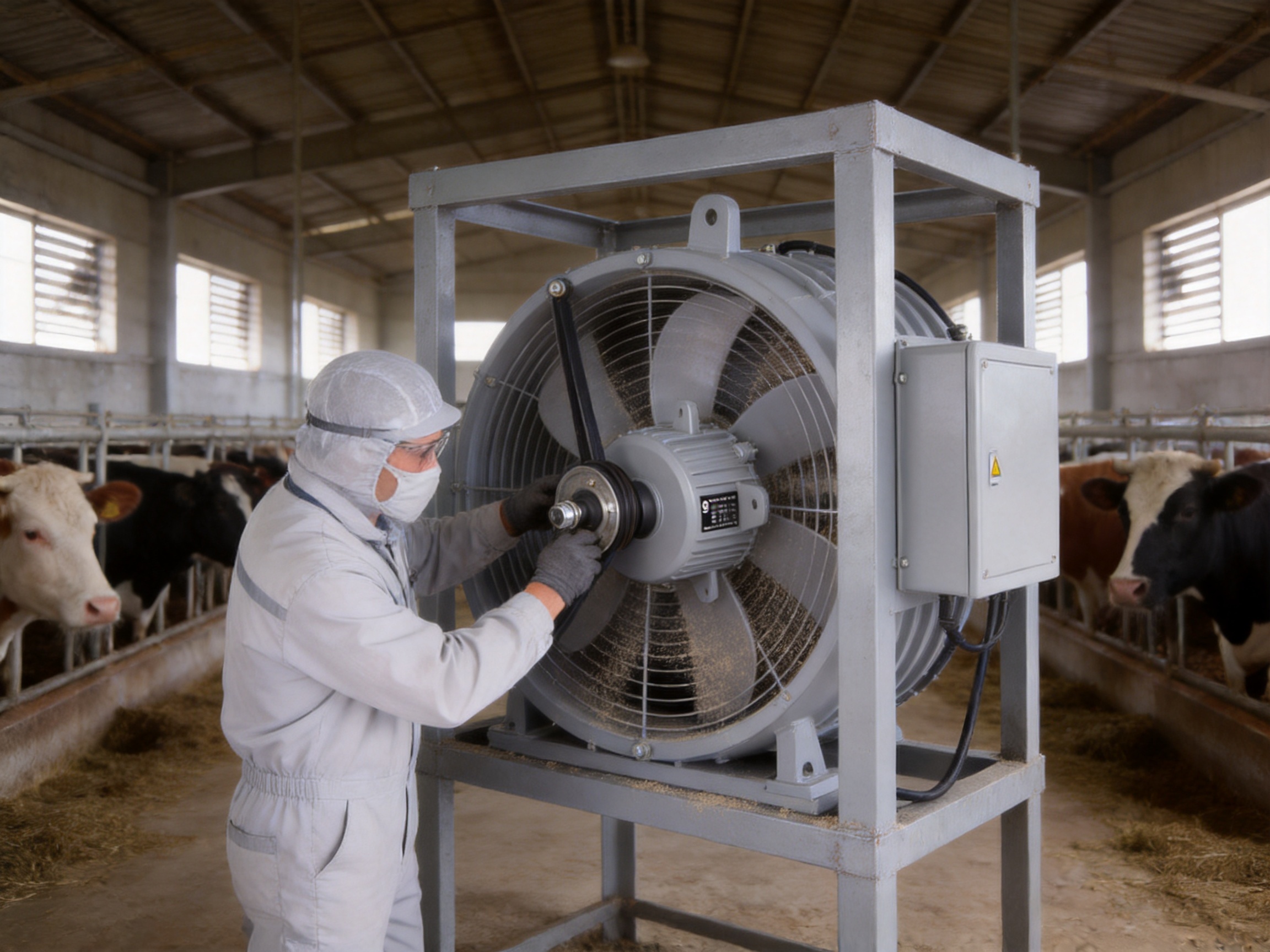
A dependable motor is the result of many controlled manufacturing steps. Although individual production details may vary by model and customer requirement, a professional motor factory typically manages the process through material preparation, component machining, winding, assembly, testing, and final inspection.
13.1 Material and Component Preparation
The production process begins with the selection and preparation of electrical steel, copper wire, insulating materials, bearings, housings, shafts, fasteners, and other components. Material consistency is important because variations in electrical or mechanical properties can affect the finished motor.
Components should be checked according to internal quality requirements before entering production. Dimensional inspection helps confirm that shafts, bearing seats, housings, and mounting structures meet the required tolerances. Electrical materials must also be suitable for the motor’s rated operating conditions.
13.2 Stator Winding and Insulation
The stator winding is responsible for creating the magnetic field that drives the rotor. Accurate winding placement, appropriate wire handling, and effective insulation are essential to motor reliability. Production equipment and operator skill work together to ensure that the winding arrangement corresponds to the intended electrical design.
Insulation processes help separate conductors from the stator core and from one another. Proper insulation supports electrical safety and helps the winding withstand normal operating stress. Quality control may include resistance checks, visual inspection, and electrical tests appropriate to the product specification.
13.3 Rotor and Shaft Assembly
The rotor must be assembled accurately so that it rotates smoothly inside the stator. Shaft dimensions, rotor positioning, bearing fit, and balance all affect vibration and noise. A well-controlled assembly process helps maintain the correct air gap and reduces the risk of mechanical interference.
Rotor balance is especially relevant for fan motors because the motor is connected to a rotating fan system. Excessive imbalance can increase vibration, loosen fasteners, and accelerate bearing wear. The motor itself should therefore be manufactured and assembled with attention to rotational stability.
13.4 Bearing Installation
Bearings must be installed with suitable tools and procedures to avoid damage. Incorrect force, contamination, misalignment, or poor seating can reduce bearing life even when the bearing itself is high quality. Controlled bearing installation supports the smooth rotation expected from the YS100-8.
13.5 Housing and Final Assembly
The housing protects internal components and provides the mechanical structure for installation. Mounting dimensions, shaft alignment, terminal access, and component fit are checked during final assembly. Accurate housing manufacture supports convenient installation and helps the motor connect correctly with the fan structure.
13.6 Electrical and Functional Testing
Finished motors should undergo appropriate electrical and functional testing before shipment. Testing may include winding resistance, insulation performance, no-load operation, rotation behavior, sound, vibration, and visual inspection. The exact test program depends on the motor design and applicable quality requirements.
Testing is not merely a final formality. It provides an opportunity to identify assembly variation, electrical abnormalities, bearing noise, and other problems before the motor reaches the customer. A strong manufacturing system combines process control with final inspection to improve overall product consistency.
14. Installation Guidance for Cattle House Fans
The installation location should be selected to protect the motor from unnecessary direct exposure to water, chemical spray, and severe contamination. Livestock buildings require regular washing and cleaning, but cleaning procedures should be planned so that water or cleaning chemicals are not directed at the motor unless the complete equipment design specifically permits such exposure.
The motor should be mounted on a rigid and level support. Loose mounting can create vibration and noise, while an uneven base can place stress on the housing or shaft. All mounting fasteners should be tightened appropriately, and the fan assembly should be checked for alignment before operation.
Electrical installation should be completed by qualified personnel. The 380V three-phase supply must be connected according to the motor’s wiring requirements and local electrical regulations. Grounding and protective devices should be provided. The system should include suitable overload protection because a motor can be damaged by prolonged overload even if it starts normally.
If the motor drives the fan through a belt, belt tension must be adjusted correctly. Excessive tension can overload bearings, while insufficient tension can cause slipping and reduced fan output. If the fan uses direct drive, the shaft and coupling must be aligned accurately. In both arrangements, the rotating fan should be balanced and free from obstruction.
After installation, the motor should be checked during a controlled test run. Technicians should observe the direction of rotation, starting behavior, unusual sound, vibration, current, and temperature increase. Any abnormal condition should be investigated before the motor is placed into continuous service.
15. Maintenance Practices for Long-Term Operation
Routine maintenance helps protect the motor and the entire ventilation system. The maintenance schedule should reflect the building environment, operating hours, fan design, and manufacturer recommendations. A dusty cattle house may require more frequent cleaning and inspection than a relatively clean indoor installation.
Fan guards, air passages, and nearby surfaces should be kept reasonably clean so that dust accumulation does not obstruct airflow or interfere with heat dissipation. Dust on the fan can also cause imbalance, which increases vibration and places additional stress on the motor bearings.
Technicians should inspect the motor for abnormal noise, excessive vibration, unusual odor, loose fasteners, damaged cables, and signs of overheating. A change in operating sound may indicate bearing wear, fan imbalance, belt problems, or a mechanical obstruction. Early diagnosis can prevent a minor issue from becoming a major failure.
Electrical terminals should be checked for secure connections during scheduled service. Loose connections can produce heat and unstable operation. Protective devices should also be tested periodically to confirm that they remain functional.
Where a belt drive is used, belt wear and tension should be checked. Where a direct-drive fan is used, the coupling and shaft connection should be inspected. Maintenance should address the fan and motor together because a motor problem may be caused by a mechanical issue elsewhere in the system.
16. Selecting the Correct Motor for a Ventilation Project
Before ordering the YS100-8, the buyer should confirm the following technical points:
First, verify that the available power supply is 380V, 50Hz, and three-phase. If the site uses a different voltage or frequency, a different motor configuration may be required.
Second, confirm that the fan load is appropriate for the 350W rated power. The fan manufacturer or system designer should provide information about required torque, operating speed, and starting load.
Third, check the mounting dimensions and shaft arrangement. Standard dimensions can simplify installation, but the exact mounting pattern and shaft details must still be compared with the existing equipment.
Fourth, consider the working environment. Humidity, dust, cleaning methods, ambient temperature, and installation exposure should be communicated to the supplier so that the motor’s suitability can be evaluated accurately.
Fifth, determine the required quantity, delivery schedule, spare-parts plan, and packaging requirements. Farms operating multiple ventilation systems may benefit from ordering suitable spare motors in advance, particularly when access to replacement parts is limited.
Finally, discuss any customization requirements before production. A clear technical specification reduces the risk of receiving a motor that is electrically compatible but mechanically unsuitable.
17. Support for Distributors and Equipment Manufacturers
The YS100-8 can serve both end users and businesses that supply ventilation equipment. Distributors can present it as a focused motor solution for cattle houses and livestock barns, while fan manufacturers can evaluate it as a component for compatible agricultural ventilation products.
For distributors, the product offers a clear application story. Its model, voltage, frequency, power, low-speed profile, starting performance, and standard installation concept can be communicated directly to customers seeking a replacement or a new ventilation motor. Maintaining accurate technical information is important so that the product is not sold for an incompatible fan.
For original equipment manufacturers, the motor can be considered during fan design and system development. Early communication with the manufacturer can help address mounting, shaft, rotation, control, packaging, and production-volume requirements. This approach can be more effective than attempting to adapt a standard motor after the fan has already been finalized.
The company exports products to more than 60 countries and regions. International experience can support communication with overseas customers, although each project remains responsible for confirming local regulations, electrical standards, installation practices, and required certifications.
18. Company Manufacturing and Service Strengths
Shengzhou Jiangxin Motor Technology Co., Ltd. combines product development, manufacturing, and sales capabilities. Its focus on AC/DC motors and micro motors allows it to serve several industrial application fields, including environmental protection equipment, industrial heating, hydraulic systems, cooling equipment, and agricultural ventilation.
The company’s modern facilities and automated equipment support efficient production and repeatable assembly. Its professional research and development team provides technical support for product improvement and customized motor development. These capabilities are important for customers that need more than a basic catalog item.
Strict quality control is presented as a central part of the company’s manufacturing approach. In motor production, quality control must extend from incoming components to winding, assembly, testing, and final shipment. This comprehensive approach helps improve reliability and gives customers greater confidence when purchasing motors for continuous-duty equipment.
The company emphasizes reliable, energy-efficient, and long-lasting motor solutions. Its customer-oriented service model is intended to provide stable products and professional technical solutions for global customers. For cattle house ventilation projects, this combination of application knowledge and manufacturing capability can help buyers identify a practical motor for their equipment requirements.
19. Common Applications
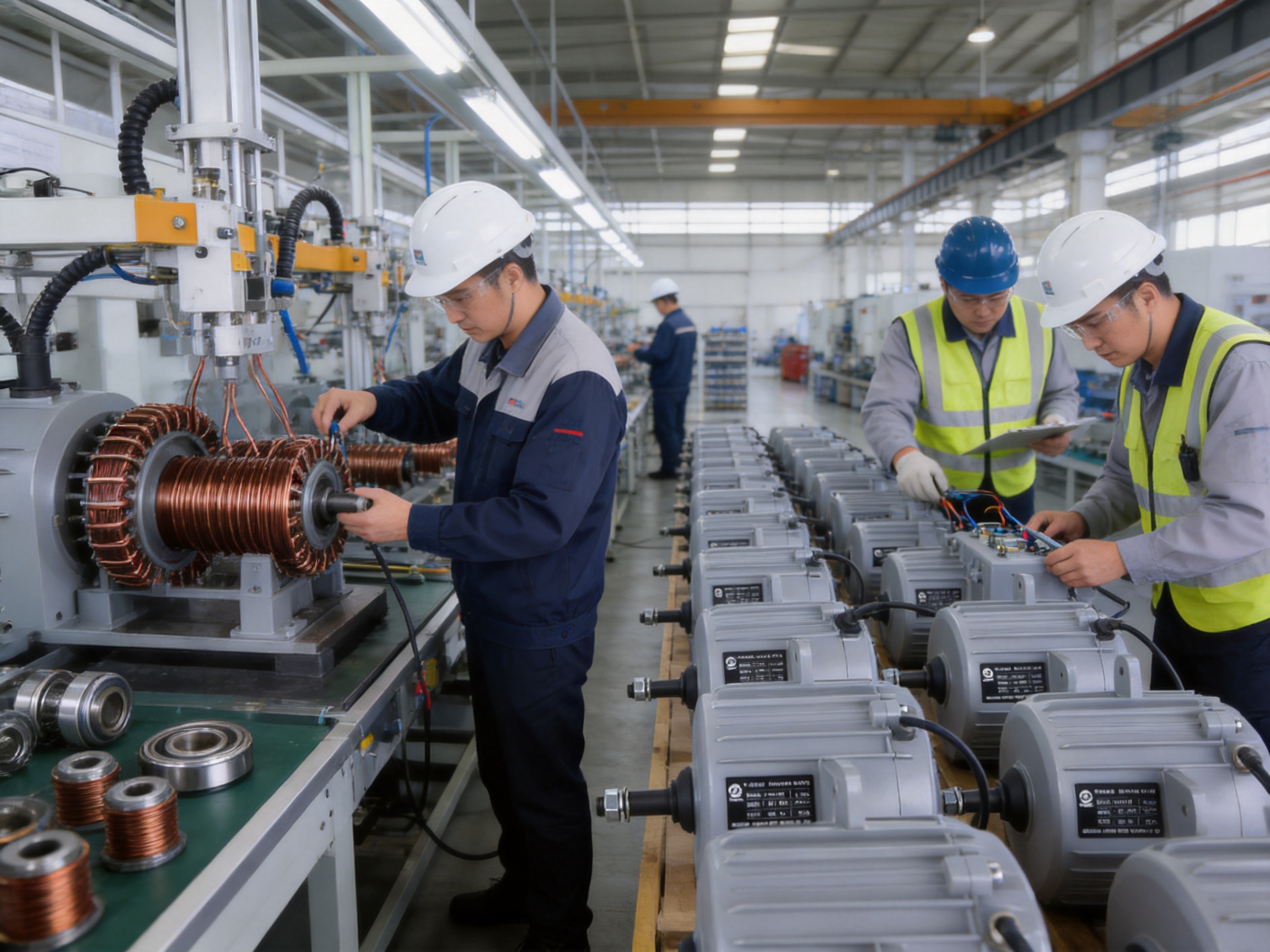
The main application of the YS100-8 is the ventilation fan installed in cattle houses. It may also be suitable for compatible ventilation systems in livestock barns and other agricultural buildings where the electrical, mechanical, and environmental requirements match the product specification.
Potential application areas include large-scale cattle farms, livestock housing, agricultural ventilation equipment, replacement fan assemblies, and equipment projects requiring a 380V three-phase 350W motor. The final application should always be evaluated according to the fan load, installation method, speed requirement, and operating environment.
The motor may be especially useful where a farm needs to replace an existing motor without changing the entire fan structure. Its standard mounting concept can support replacement planning, while its application-specific design can provide a more appropriate solution than an unrelated motor selected solely by power rating.
20. Frequently Asked Questions
Q1: What type of motor is the YS100-8?
The YS100-8 is a three-phase asynchronous motor designed for cattle house ventilation fans and compatible livestock ventilation equipment.
Q2: What are its main electrical specifications?
The motor is rated at 380V, 50Hz, and 350W. The customer should confirm that the local power supply matches these requirements before installation.
Q3: Why is this motor suitable for cattle house fans?
It is designed around the conditions and operating requirements associated with livestock ventilation, including long running periods, dusty and humid environments, low-speed operation, stable torque, and fan startup under load.
Q4: Does the motor support smooth starting?
Yes. The product is described as having excellent starting performance to support stable fan startup under load. Actual starting behavior also depends on fan inertia, mechanical condition, wiring, and the electrical supply.
Q5: Is the motor suitable for continuous operation?
It is intended for long-running cattle house ventilation service. The complete installation must still be correctly matched, protected, ventilated, and maintained to support continuous operation.
Q6: Can the motor replace an existing fan motor?
It may be suitable as a replacement when the voltage, frequency, power, speed, mounting dimensions, shaft configuration, rotation direction, and load requirements are compatible. These details should be confirmed before ordering.
Q7: What is the benefit of standard mounting dimensions?
Standard mounting dimensions can simplify installation and replacement. They may reduce the need for structural modifications and help maintenance personnel restore a ventilation system more quickly.
Q8: How do high-precision bearings benefit the motor?
High-precision bearings support smooth shaft rotation, reduce mechanical resistance, and help control noise and vibration. They can also contribute to longer service life when the motor is properly installed and maintained.
Q9: Can the motor be used in a wet cleaning area?
The installation should protect the motor from direct water and chemical spray unless the complete equipment design specifically allows such exposure. The customer should discuss the actual environmental conditions with the supplier before use.
Q10: What maintenance does the motor require?
Maintenance should include cleaning surrounding dust, checking vibration and sound, inspecting mounting fasteners, verifying electrical connections, reviewing protective devices, and checking the fan, belt, coupling, or shaft system for mechanical problems.
Q11: Can the company provide customized motors?
The company produces customized motors in addition to standard AC/DC and micro motor products. Customers should provide detailed requirements such as voltage, frequency, power, speed, shaft dimensions, mounting structure, duty cycle, and environmental conditions.
Q12: What information should be provided when requesting a quotation?
Useful information includes the required quantity, application, fan model, rated voltage, frequency, power, speed, mounting dimensions, shaft details, operating hours, delivery location, and any packaging or documentation requirements.
Q13: Is the motor suitable for every livestock fan?
No motor should be assumed to fit every fan. The YS100-8 is intended for compatible cattle house and livestock ventilation systems, but the actual fan load and mechanical connection must be checked before purchase.
Q14: Where is the manufacturer located?
Shengzhou Jiangxin Motor Technology Co., Ltd. is located in Shengzhou City, Zhejiang Province, China, within the industrially developed Yangtze River Delta region.
Q15: Does the company serve international customers?
The company exports products to more than 60 countries and regions and provides AC/DC motor and customized motor solutions for global customers.
21. Conclusion
The YS100-8 380V 50Hz 350W Cattle House Fan Motor is a practical solution for ventilation systems that require dependable low-speed operation, stable torque, smooth starting, and long-running service. Its three-phase asynchronous design, standard mounting dimensions, and high-precision bearings address several of the most important requirements in cattle house ventilation.
Its application focus gives it an advantage over motors selected only by basic electrical rating. The product is intended to support ventilation in environments where humidity, dust, vibration, and extended operating hours are part of everyday service. When correctly matched with a compatible fan and installed with suitable electrical and mechanical protection, it can contribute to stable airflow and reliable farm operation.
The manufacturing strength behind the product is equally important. Shengzhou Jiangxin Motor Technology Co., Ltd. combines research and development, automated production equipment, modern facilities, quality control, and international supply experience. Its broader AC/DC motor portfolio also supports technical understanding across cooling, heating, hydraulic, environmental, and customized equipment applications.
For cattle farm owners, ventilation equipment manufacturers, distributors, and agricultural system integrators, the YS100-8 offers a focused motor option for 380V three-phase livestock ventilation projects. Careful specification confirmation before purchase will help ensure that the motor’s electrical characteristics, mechanical dimensions, fan load, and environmental suitability meet the needs of the intended installation.
References
1. IEC 60034 Series, Rotating Electrical Machines, International Electrotechnical Commission.
2. Electrical Motor Selection and Application Principles for Industrial and Agricultural Equipment.
3. Livestock Housing Ventilation and Environmental Management Guidelines.
4. Agricultural Fan and Ventilation System Maintenance Practices.
5. Motor Bearing Installation, Alignment, and Preventive Maintenance Principles.
6. Three-Phase Asynchronous Motor Design and Operating Fundamentals.
7. Manufacturer-provided product information for the YS100-8 380V 50Hz 350W Cattle House Fan Motor.
Product: YS100-8 380V 50Hz 350W Cattle House Fan Motor
Related Products
-
 YS100-8 380V 50Hz 350W Cattle House Fan Motor
-
YS100-8 380V 50Hz 350W Cattle House Fan Motor
-
 YS100L1-8 380V 50Hz 400W Cattle House Fan Motor
-
 YS90L-4 380V 1500W 3-Phase Evaporative Air Cooler Motor
-
 YS100L-4 380V 2200W 3-Phase Evaporative Air Cooler Motor
-
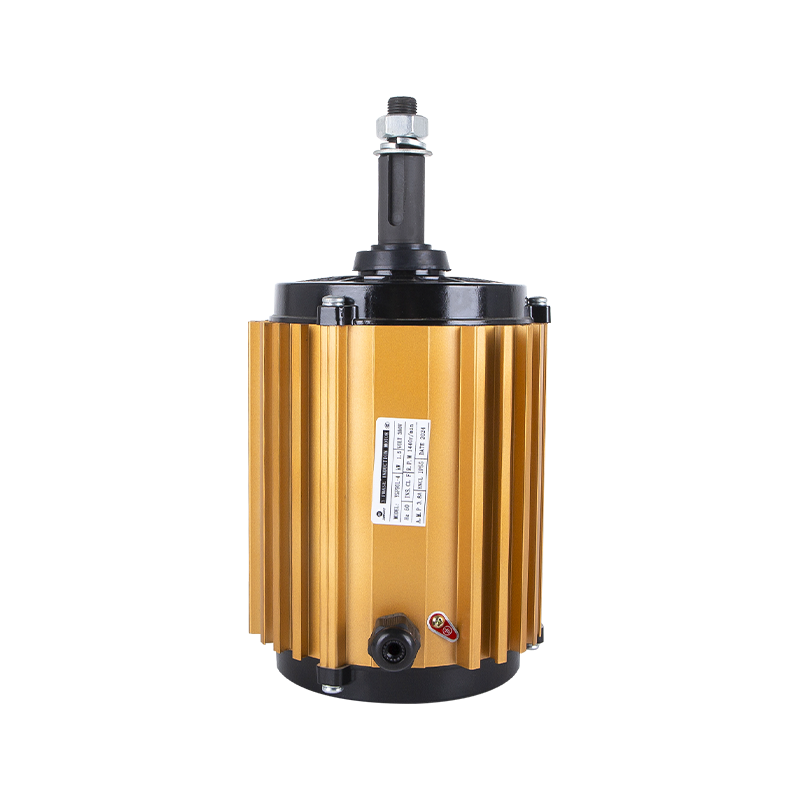 YS90L-4 380V 1500W 3-Phase Evaporative Air Cooler Motor
 Ready To Customise
 Your Motor Products?

We are professional motor manufacturers, delivering powerful, stable, and efficient power cores for all industries through precision craftsmanship and innovation.
Contact Us
-
 Mobile:+86 13575536911
-
 Tel:+86 18357538240
-
 Whatsapp:+8618357538240
-
 Email:betty@dbjxmotor.com
-
 Company Address
Copyright © by Shengzhou Jiangxin Motor Technology Co., Ltd. All Rights Reserved.
Wholesale Industrial Fan Motors Manufacturers
