

 English
 русский
 Español
 عربى
عربى
No. 8, Duxiu San Road, Ganlin Town, Shengzhou City, Shaoxing City, Zhejiang Province, China

News Category
Product Category
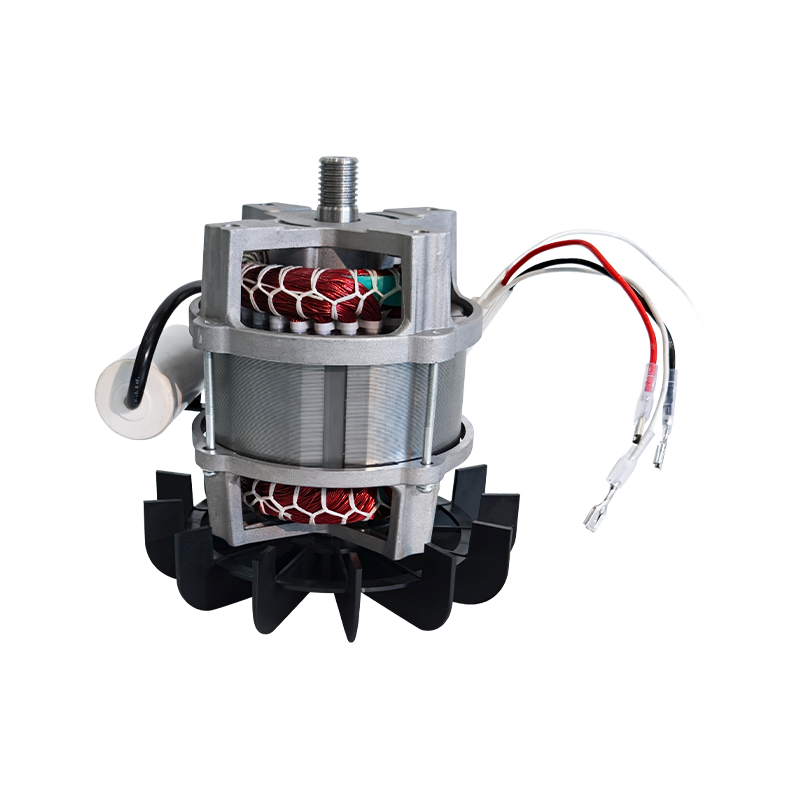
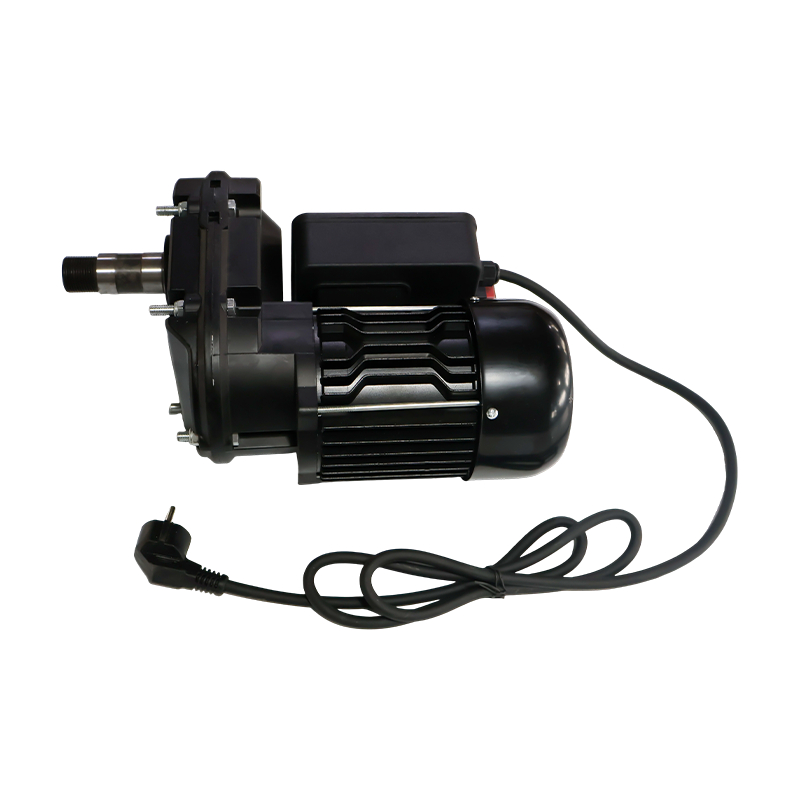
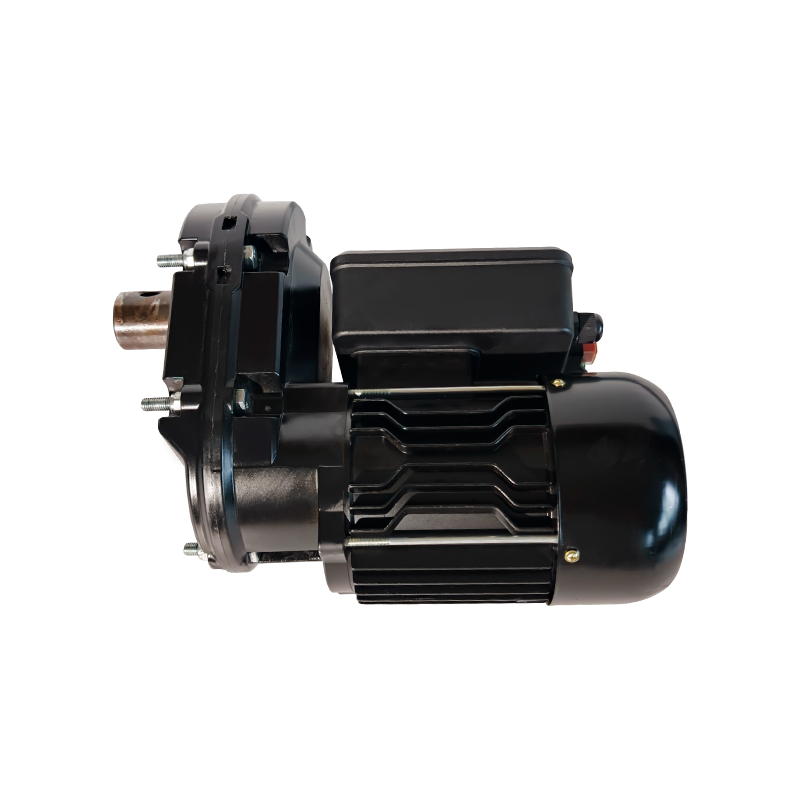
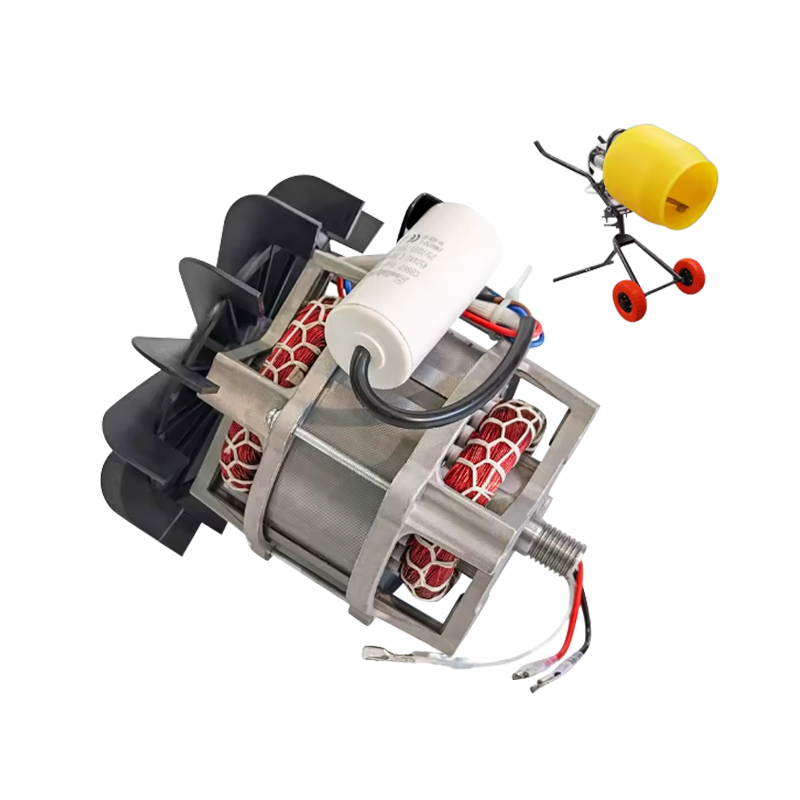
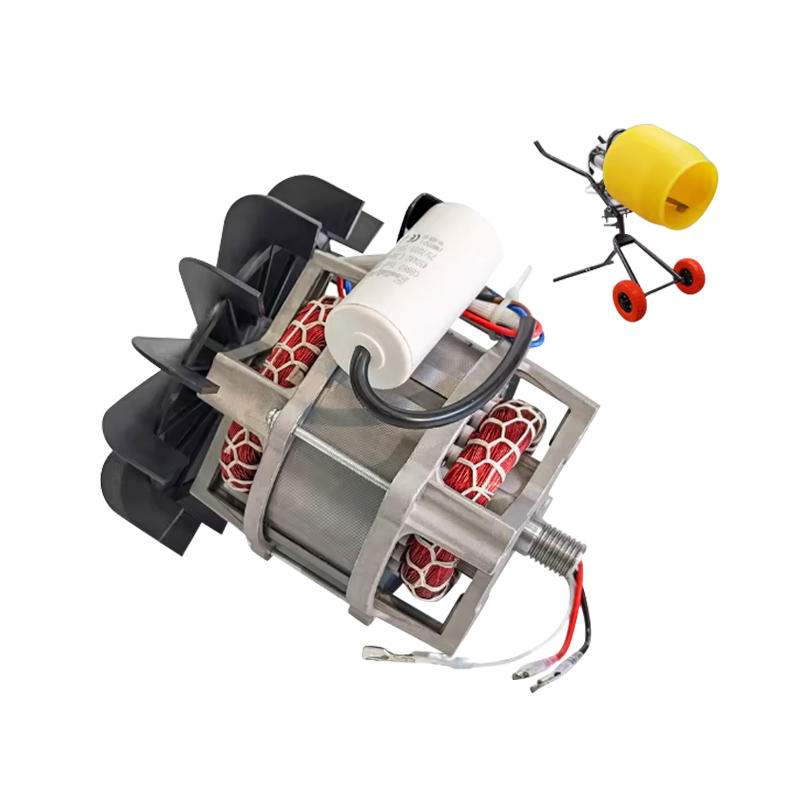
YY71-2 110V 800W Portable Concrete Mixer Motor: High-Torque Performance for Reliable Job-Site Mixing
Content
- 1 Introduction
- 2 Product Overview
- 3 Why Motor Selection Matters in Portable Concrete Mixers
- 4 Core Performance Advantages
- 5 Advantages Compared with Lower-Quality Alternatives
- 6 Manufacturing Strengths
- 7 Engineering Considerations for Mixer Integration
- 8 Installation and Commissioning Procedure
- 9 Maintenance Recommendations
- 10 Application Benefits for Different Users
- 11 Customization and Supply Support
- 12 How to Select the Correct Motor for a Mixer
- 13 Safety Considerations
- 14 Quality, Efficiency, and Total Ownership Value
- 15 Frequently Asked Questions
- 15.1 What is the rated voltage of the YY71-2 motor?
- 15.2 How much power does the motor provide?
- 15.3 What is the approximate operating speed?
- 15.4 What mixer capacity is it designed for?
- 15.5 Does the motor use copper windings?
- 15.6 Can the motor start a mixer when the drum contains material?
- 15.7 Is a transformer required?
- 15.8 Is the motor suitable for continuous operation?
- 15.9 How can overheating be prevented?
- 15.10 What should be checked before ordering a replacement?
- 15.11 Can the motor be customized?
- 15.12 Who manufactures the YY71-2 motor?
- 16 Conclusion
- 17 References
- 18 Product: YY71-2 110V 800W Portable Concrete Mixer Motor
Introduction
Portable concrete mixers are widely used in residential construction, renovation, landscaping, agricultural projects, repair work, and small commercial applications. Although a mixer may appear simple from the outside, its performance depends heavily on the motor installed inside it. The motor must deliver sufficient starting torque, maintain stable speed under load, resist overheating, and operate reliably in environments where dust, vibration, changing temperatures, and irregular power conditions are common.
The YY71-2 110V 800W Portable Concrete Mixer Motor is designed to meet these practical requirements. With an 110V operating voltage, an 800W rated output, a two-pole high-speed design, and a rated speed of approximately 2800 RPM, it provides a strong power source for portable concrete mixer applications. Its plug-and-play electrical configuration is intended for North American household and job-site power, helping users avoid the need for an external transformer when the equipment is appropriately configured for the local supply.
More than a replacement motor, this model is engineered as a dependable drive solution for portable mixers in the approximate 120–180 liter range. Its high-power output supports faster mixing, while its pure copper windings help improve electrical conductivity, heat management, and service life. Smooth starting under load, relatively low operating noise, and straightforward installation make it suitable for equipment manufacturers, distributors, maintenance companies, and end users seeking stable performance.
This article examines the motor’s construction, operating advantages, application value, manufacturing strengths, installation considerations, maintenance requirements, and selection factors. It also explains why a properly designed motor can provide measurable advantages over lower-powered or poorly matched alternatives.
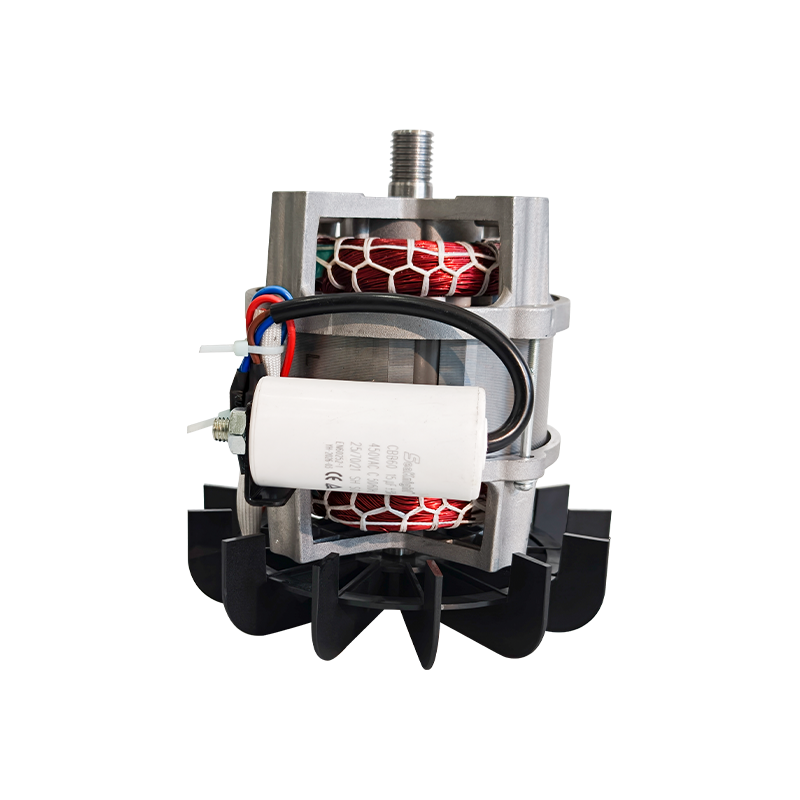
YY71-2 110V 800W Portable Concrete Mixer Motor
Product Overview
The YY71-2 is an 110V, 800W portable concrete mixer motor intended for compact and medium-duty mixing equipment. The model designation identifies a two-pole motor configuration, while the rated electrical information indicates compatibility with an 110V power system and an 800W power rating. At approximately 2800 RPM, the motor operates at a relatively high speed, allowing it to deliver the rotational energy required by the mixer’s transmission, pulley, gearbox, or reduction mechanism.
| Item | Specification or Description |
|---|---|
| Model | YY71-2 |
| Application | Portable concrete mixers |
| Rated voltage | 110V |
| Rated power | 800W |
| Motor configuration | Two-pole high-speed design |
| Approximate rated speed | 2800 RPM |
| Recommended mixer range | Approximately 120–180 liters, depending on mixer design and load conditions |
| Winding material | Pure copper |
| Primary benefits | Strong torque, smooth starting, stable operation, low heat generation, easy maintenance |
| Typical users | Equipment manufacturers, wholesalers, service providers, contractors, and maintenance personnel |
The motor is intended to work as part of a complete mixer drive system. Its actual output at the mixing drum depends on the transmission ratio, pulley dimensions, gearbox efficiency, drum design, material consistency, fill level, and operating conditions. For this reason, the motor should be matched with the mixer according to the equipment manufacturer’s design rather than selected by wattage alone.
In a properly matched system, the 800W rating provides a useful balance between compact size, practical energy consumption, and working capability. A motor that is too small may stall or overheat during starting and heavy mixing. A motor that is unnecessarily large may increase equipment cost, electrical demand, and mechanical stress. The YY71-2 is positioned for applications that require more power than light-duty hobby mixers but do not need the size, weight, or energy consumption of a large industrial drive system.
Why Motor Selection Matters in Portable Concrete Mixers
Concrete mixing creates a demanding load profile. The motor may need to start while the drum contains cement, aggregate, water, or partially mixed material. The load may change as the drum rotates, and resistance may increase when material collects along the drum wall or when the mixture becomes thicker. These conditions place greater demands on the motor than simple no-load rotation.
A mixer motor must therefore provide adequate starting capability and sufficient torque reserve. If the motor has limited torque, the drum may start slowly, fail to start, or draw excessive current. Repeated unsuccessful starts can accelerate winding deterioration, damage starting components, and reduce the service life of mechanical parts. In contrast, a motor with appropriate power and stable electrical characteristics can start more smoothly and maintain operation as the material shifts inside the drum.
Speed is also important. A motor running at approximately 2800 RPM normally requires a reduction system before it drives a concrete mixer drum. This arrangement allows the motor to operate efficiently while the gearbox, belt system, or pulley arrangement reduces the final drum speed to a safe and productive mixing rate. The motor’s high-speed design can therefore support a compact transmission structure while delivering adequate rotational energy to the mixer.
Thermal performance is another central factor. During extended operation, copper windings, bearings, electrical connections, and the motor housing all experience heat. If heat cannot be dissipated effectively, insulation may age prematurely, efficiency may decline, and operating reliability may be reduced. The use of pure copper winding material and a design aimed at low heat and low loss supports more stable continuous operation when the motor is correctly loaded and ventilated.
Finally, the motor must be practical to install and maintain. Portable equipment is often transported between locations, exposed to construction dust, and serviced by general maintenance personnel rather than specialized motor technicians. A motor that is easy to access, inspect, replace, and connect can reduce downtime and simplify ownership.
Core Performance Advantages
800W Output for Practical Mixing Loads
The 800W rating gives the YY71-2 a strong position in the portable mixer motor segment. It provides more working capacity than many low-power motors used in very small mixers, while remaining compact enough for portable equipment. The available power supports faster drum acceleration, more stable mixing, and improved resistance to moderate load changes.
Power alone does not determine mixer performance, but an adequate power rating helps prevent the motor from operating continuously at its limit. When a motor is oversized for a specific application, it may operate with a useful reserve, reducing the likelihood of overload during normal material changes. For a mixer in the approximate 120–180 liter class, this reserve can be valuable when the drum is started with material already inside.
The actual suitability of the 800W rating must still be confirmed against the mixer’s mechanical transmission and intended material capacity. A concrete mixer used with unusually dense aggregate, excessive fill levels, or continuous commercial-duty cycles may require a different motor specification. Within its intended application range, however, the YY71-2 offers a practical combination of output and portability.
Strong Starting Torque and Smooth Start Under Load
One of the most important advantages of this motor is its ability to support smooth starting under load. Concrete mixer motors must overcome initial resistance before the drum reaches its normal operating speed. A smooth start helps reduce sudden mechanical shock, belt slippage, gear impact, and unnecessary stress on the drum assembly.
Stable starting also improves user confidence. Operators do not need to repeatedly empty a drum or manually reposition material simply because the motor struggles to begin rotation. When the electrical supply, starting components, transmission, and load are correctly matched, the motor can bring the mixer into operation in a controlled manner.
Compared with a lower-powered alternative, an 800W motor can provide a more useful torque reserve for moderate load fluctuations. This does not mean that the motor should be overloaded. Rather, it means that the motor is designed to handle the normal starting and mixing demands of a compatible portable mixer without constantly operating at the edge of its capacity.
High-Speed Two-Pole Configuration
The two-pole configuration is associated with high-speed operation, and the specified speed of approximately 2800 RPM makes the YY71-2 suitable for drive systems that use pulleys, belts, or reduction gears. High-speed motors can offer a favorable power-to-size ratio, helping equipment manufacturers keep the motor package relatively compact.
A compact high-speed motor is valuable in portable equipment because the total machine must be moved, stored, and positioned by users. Reducing unnecessary motor size can help keep the mixer easier to transport without sacrificing the power needed for its intended application.
However, the motor should not be connected directly to a drum unless the complete mixer design specifically permits it. Concrete mixer drums normally require a much lower rotational speed than the motor shaft provides. A suitable reduction mechanism must be used to achieve the correct drum speed and torque. The pulley ratio and gearbox must also be selected so that the motor is neither overloaded nor operated below its intended performance range.
Pure Copper Windings
The YY71-2 uses pure copper winding material. Copper is widely used in quality motor construction because it offers excellent electrical conductivity and good thermal performance. Efficient conductivity can help reduce resistive losses in the windings, while effective heat transfer can support more stable operation.
Pure copper windings also contribute to consistent production quality when the wire diameter, winding arrangement, insulation system, and connection process are properly controlled. The winding is one of the most important internal components of a motor, and its quality has a direct influence on efficiency, temperature rise, torque production, and service life.
Compared with motors using lower-conductivity winding materials, a properly manufactured copper-wound motor may provide lower electrical loss and better operating stability under comparable conditions. This advantage is especially relevant in equipment that starts frequently or operates for extended periods.
Users should understand that winding material is only one part of motor performance. Bearing quality, lamination design, rotor balance, insulation, ventilation, assembly accuracy, and overload protection are also important. The value of the YY71-2 lies in the combination of copper windings with a high-power design and manufacturing controls intended to produce reliable operation.
Low Heat and Low Loss Operation
Heat is a major cause of motor aging. Excessive temperature can weaken insulation, reduce lubricant life, affect bearing performance, and increase the risk of winding damage. By focusing on low heat and low loss, the YY71-2 is designed to support longer and more stable operation in a properly ventilated mixer enclosure.
Lower losses can also help improve energy utilization. When less electrical energy is converted into unnecessary heat, more of the input power can be used for useful mechanical output. This may contribute to lower operating costs over the service life of the machine, although actual energy consumption depends on load, duty cycle, supply quality, transmission efficiency, and operator practices.
Good thermal behavior is particularly useful on job sites, where a mixer may be used repeatedly throughout the day. The motor still requires appropriate rest periods when specified by the equipment design, and ventilation openings should be kept clear. No motor should be expected to operate indefinitely under overload conditions.
Stable Continuous Operation
Portable mixer users need dependable performance rather than short bursts of maximum output. The YY71-2 is intended to provide stable operation during normal continuous mixing cycles. Consistent speed helps maintain more uniform mixing and reduces interruptions caused by overheating or unstable running.
Stable operation also protects the mechanical system. Large changes in motor speed can create irregular belt tension, fluctuating gearbox loads, and uneven drum movement. A motor that maintains consistent performance under normal conditions can help the entire mixer operate more smoothly.
The meaning of continuous operation must be interpreted in relation to the complete machine. Ambient temperature, material load, mixing time, ventilation, supply voltage, and start frequency all affect duty capability. Equipment manufacturers should perform application testing before defining the final duty cycle for a specific mixer model.
Low-Noise Performance
Noise is an important consideration for residential construction, indoor renovation, neighborhood projects, and professional job sites. The YY71-2 is designed for relatively low-noise operation, helping create a more comfortable working environment when installed and maintained correctly.
Motor noise can originate from electromagnetic vibration, bearings, rotor imbalance, cooling airflow, mounting resonance, belts, gears, and the mixer frame itself. A quiet motor cannot eliminate noise generated by the rest of the machine, but good rotor balance, accurate assembly, and quality bearings can reduce the motor’s contribution.
Correct mounting is essential. Loose bolts, misaligned pulleys, worn belts, or damaged bearings may create noise even when the motor itself is functioning properly. Operators should investigate any sudden increase in sound, vibration, or temperature rather than treating it as normal operation.
Easy Installation and Maintenance
Portable mixer equipment often needs fast replacement and straightforward service. The YY71-2 is designed with practical installation and maintenance in mind. Its application as a dedicated mixer motor allows equipment builders and service technicians to integrate it into compatible frame, belt, pulley, and electrical configurations without unnecessary complexity.
Installation should include secure mounting, correct shaft alignment, appropriate belt tension, protected wiring, and verification of rotation direction. Electrical work must be completed by qualified personnel and should comply with applicable local safety standards. The motor should never be connected to a supply that does not match its rating.
Routine maintenance may include cleaning ventilation areas, inspecting wiring and terminals, checking mounting fasteners, examining belts and pulleys, monitoring bearing noise, and confirming that the motor does not run unusually hot. These simple actions can identify problems before they result in an unexpected shutdown.
Advantages Compared with Lower-Quality Alternatives
Not all motors with similar wattage provide the same performance. Differences in winding material, production tolerances, rotor balance, bearing selection, insulation, assembly methods, and quality inspection can significantly affect the final product. The YY71-2 is designed to offer several advantages over basic or poorly matched alternatives.
More Reliable Electrical Performance
Pure copper windings and controlled assembly can help provide more predictable electrical characteristics. A motor with inconsistent winding quality may draw excessive current, generate unnecessary heat, or produce unstable torque. Such problems can become more serious when the mixer starts under load.
For manufacturers and distributors, consistent electrical performance simplifies product design and after-sales support. When motor specifications are stable from one production batch to another, the complete mixer can be tested more accurately and replacement parts can be managed more efficiently.
Better Load Matching
An 800W motor is a practical choice for many portable mixers that are larger than small household units but still require mobility. Selecting a motor with adequate capacity helps reduce the risk of frequent stalling and overload. In comparison, a motor selected only because it is inexpensive may not provide sufficient reserve for the actual mixer load.
Good load matching also protects energy efficiency. A motor that is too small may consume excessive current while producing inadequate output. A motor that is too large may add unnecessary cost and weight. The YY71-2 offers a balanced option for equipment designed around its voltage, output, speed, and mechanical requirements.
Improved Thermal Endurance
Low-loss design and copper windings can help manage temperature during normal operation. This is an important distinction from motors that rely on minimal material and limited thermal capacity. A motor that runs cooler may experience less insulation stress and maintain more stable performance over repeated mixing cycles.
Thermal endurance is especially valuable in warm climates or enclosed equipment frames. However, the motor must still receive adequate airflow, and the mixer should not be operated beyond its rated capacity. Proper application remains essential to achieving the expected service life.
Reduced Downtime
For contractors and rental companies, downtime can be more expensive than the initial motor price. A mixer that stops during a project may delay concrete placement, increase labor costs, and disrupt schedules. A reliable replacement motor can reduce the frequency of interruptions and make service planning easier.
The YY71-2’s straightforward installation and maintenance characteristics can also shorten repair time. When a motor can be inspected, removed, and installed without complex procedures, service personnel can return the machine to operation more quickly.
Suitable for North American 110V Applications
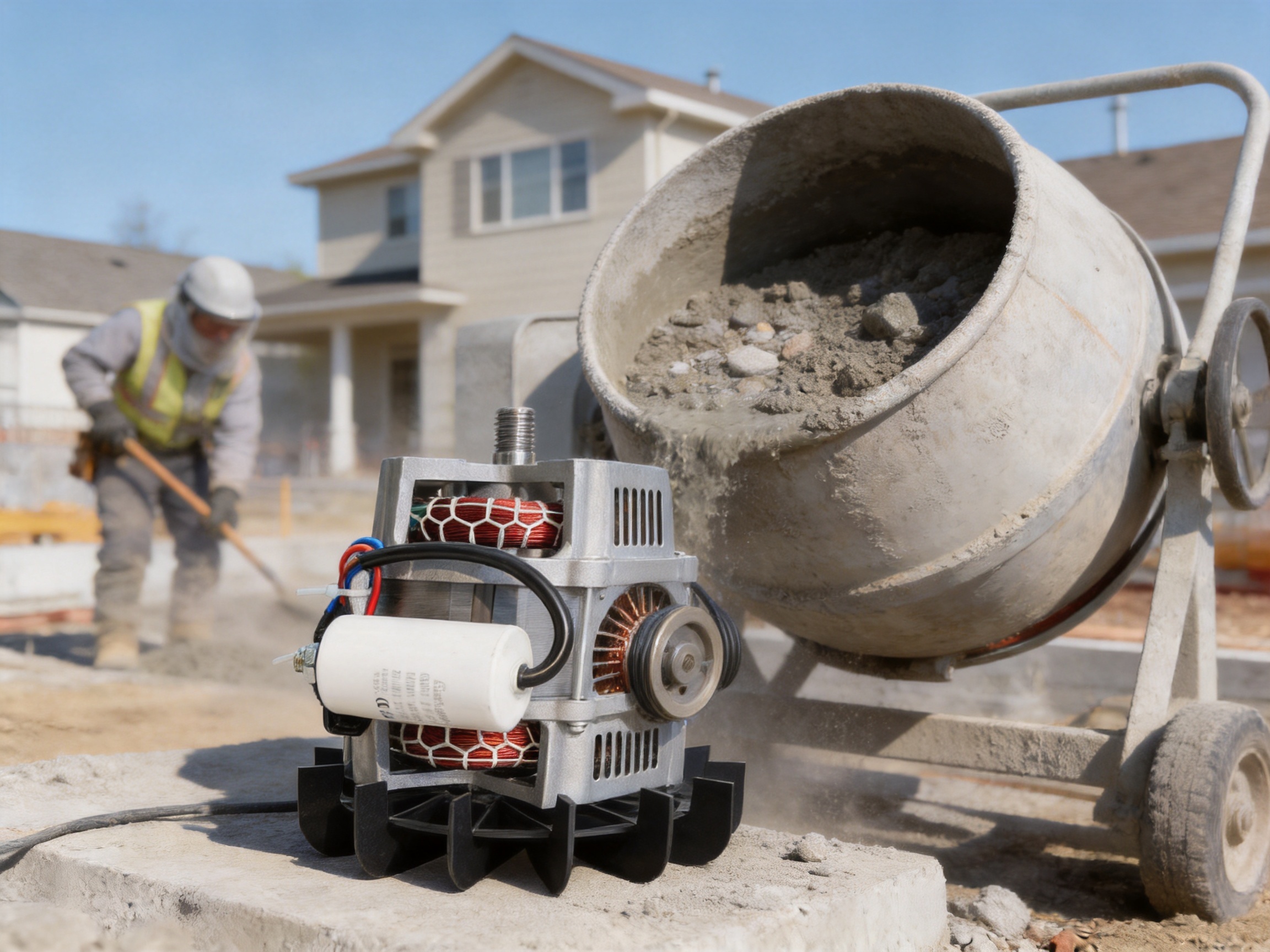
The 110V configuration is intended for North American household and job-site power systems when used with the appropriate equipment and protective devices. Its plug-and-play concept can simplify deployment by eliminating the need for a separate transformer in compatible installations.
Users must verify the actual supply voltage, frequency, plug configuration, circuit capacity, grounding arrangement, and local electrical requirements before installation. “Plug-and-play” does not remove the need for safe wiring, circuit protection, and professional inspection. The motor should only be used within the electrical conditions specified by the manufacturer and the complete mixer system.
Manufacturing Strengths
Professional Motor Development
Shengzhou Jiangxin Motor Technology Co., Ltd. was established in 2017 and specializes in the research, development, production, and sales of AC/DC motors and micro motors. Its product range includes evaporative air cooler motors, industrial heater motors, oil pump motors, customized motors, and other application-specific motor solutions.
This product experience is relevant to the YY71-2 because portable mixer motors require more than a generic electrical assembly. The motor must be designed around a specific application, including starting characteristics, heat management, mechanical mounting, speed requirements, and expected operating conditions. A manufacturer with experience across multiple motor categories can apply knowledge of electromagnetic design, materials, production control, and application engineering to specialized products.
Modern Production Facilities
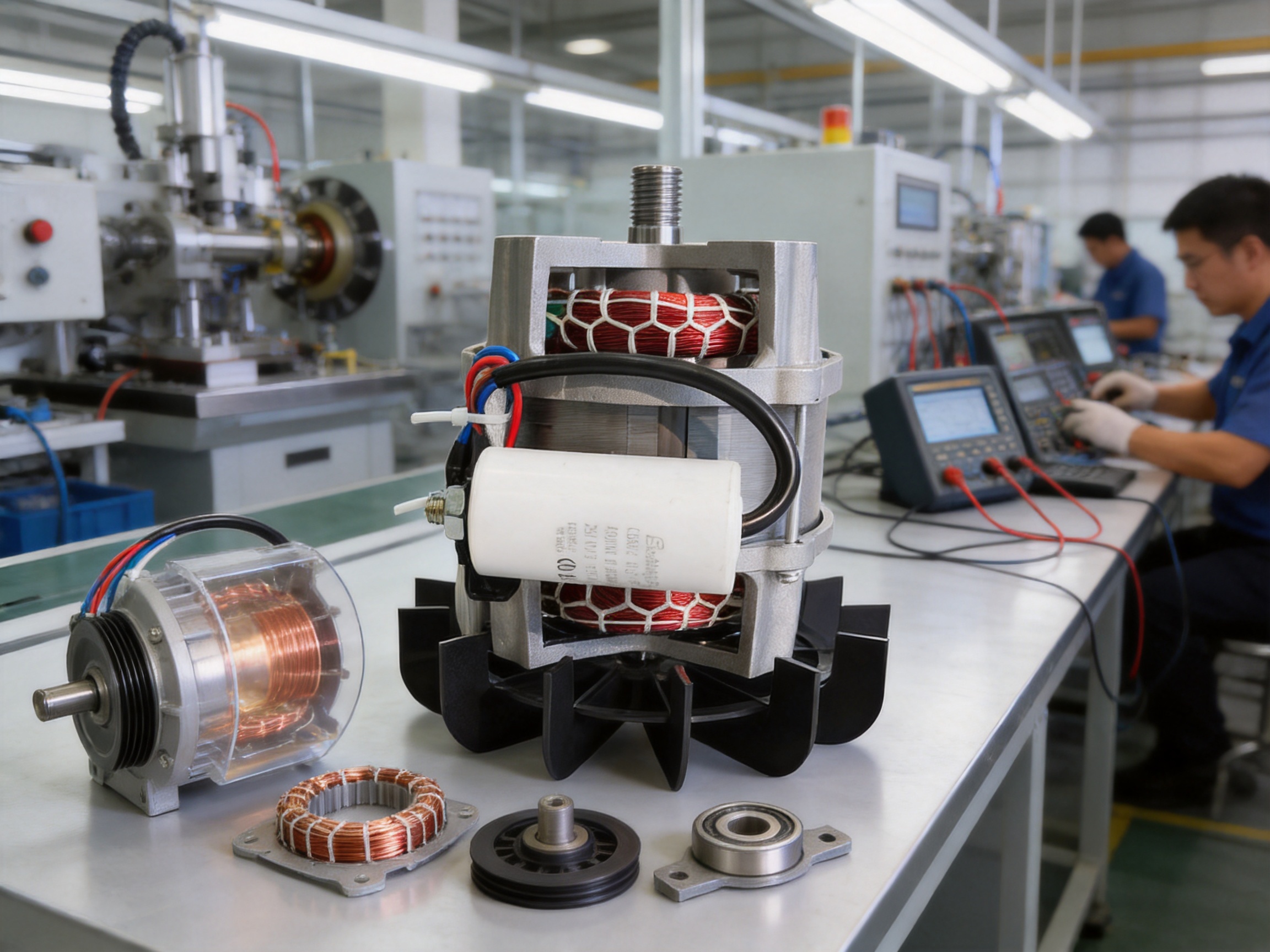
The company operates modern production facilities supported by automated equipment. Automation can improve repeatability in processes such as winding, component assembly, testing, and inspection. Consistent process control is important because small variations in winding placement, wire tension, rotor balance, or bearing installation can influence motor performance.
Automated equipment does not replace engineering judgment or quality supervision. Its greatest value comes when it is combined with clear process standards, trained personnel, equipment calibration, and documented inspection procedures. A strong manufacturing system uses automation to reduce avoidable variation while retaining professional oversight for design and quality decisions.
Professional Research and Development Capability
A professional research and development team helps a motor manufacturer respond to different equipment requirements. Customers may require variations in voltage, power, shaft dimensions, mounting structure, wiring, speed, insulation, or environmental protection. Application-specific development allows the motor to be adapted more effectively than a one-size-fits-all approach.
For portable concrete mixer applications, research and development may involve evaluating starting torque, winding configuration, rotor and stator matching, heat dissipation, noise control, and compatibility with different transmission systems. These factors must work together to produce a motor that performs reliably in actual equipment rather than only under laboratory no-load conditions.
Strict Quality Control
Quality control is essential for motors because many critical components are located inside the housing and cannot be evaluated through appearance alone. A comprehensive quality process may include incoming material inspection, winding resistance checks, insulation testing, no-load operation tests, current verification, vibration evaluation, bearing inspection, and final appearance checks.
For a product such as the YY71-2, quality control should also confirm that the motor achieves the expected voltage and power characteristics, runs at the intended speed, starts smoothly, and remains stable during appropriate load testing. Testing methods and acceptance criteria should be defined according to the motor design and the requirements of the complete application.
Consistent inspection helps reduce the risk of early failure and provides greater confidence to equipment manufacturers and distributors. It also supports traceability, allowing production issues to be identified and corrected more efficiently when necessary.
Technology Enterprise Recognition
Shengzhou Jiangxin Motor Technology Co., Ltd. has been recognized as a provincial-level technology enterprise. This recognition reflects an emphasis on technical development, production capability, and innovation. For customers evaluating a motor supplier, such recognition can be considered alongside actual product specifications, testing capability, delivery performance, quality documentation, and customer support.
International Market Experience
The company’s products are exported to more than 60 countries and regions. International market experience requires attention to different electrical standards, application environments, packaging expectations, documentation requirements, and customer service practices.
Global distribution also encourages a manufacturer to maintain consistent specifications and communication. Importers, wholesalers, and equipment builders benefit when product information is clear and when the supplier can support questions concerning installation, customization, packaging, and replacement parts.
Engineering Considerations for Mixer Integration
Mechanical Mounting
The motor must be mounted on a rigid and stable structure. A flexible or poorly supported mounting plate can amplify vibration, shift belt alignment, and increase stress on the motor bearings. Mounting fasteners should be tightened according to the equipment design, and locking methods should be used where vibration may cause loosening.
The mounting position should also protect the motor from direct impact, excessive water exposure, and accumulation of concrete dust. Portable mixers are often used in demanding environments, so the frame and motor cover should provide appropriate physical protection without blocking ventilation.
Shaft and Pulley Alignment
Correct alignment between the motor shaft and the driven pulley is essential. Misalignment can cause belt wear, pulley damage, vibration, bearing stress, and reduced transmission efficiency. Before operation, the installer should confirm that the pulley faces are parallel and that the shafts are positioned according to the mixer design.
Belt tension should be sufficient to transmit power without slipping, but excessive tension should be avoided. Over-tension can place unnecessary radial load on the motor bearings. The correct tension depends on the belt type, pulley diameter, center distance, and mixer design.
Reduction Ratio
Because the motor operates at approximately 2800 RPM, the mixer’s final drum speed must be controlled through a suitable reduction system. The correct ratio depends on the required drum speed and the torque needed at the drum. A higher reduction ratio generally increases available output torque while reducing final speed, subject to transmission efficiency.
Equipment designers should calculate the expected shaft torque, starting load, belt capacity, gearbox rating, and thermal conditions. The transmission should not be selected solely based on the motor’s nominal speed. It must also withstand repeated starts, changing material resistance, and the mechanical shock associated with portable construction equipment.
Electrical Protection
The 110V motor should be connected to a properly rated circuit with suitable protection. Depending on the complete equipment design and applicable regulations, protection may include a circuit breaker, overload device, grounding system, emergency stop, and appropriate enclosure for electrical connections.
Electrical terminals must be secured and protected from moisture, dust, and accidental contact. Cables should be routed away from moving parts, sharp edges, hot surfaces, and locations where they may be crushed during transport. Any extension cord used with the mixer must have an appropriate length and conductor size for the current demand.
Voltage drop can affect starting performance. A long or undersized extension cord may reduce the voltage reaching the motor, causing slow starting, higher current, or overheating. Users should follow the equipment manufacturer’s electrical recommendations and consult a qualified electrician when in doubt.
Ventilation and Environmental Conditions
Motor ventilation openings must remain clear during operation. Concrete dust, plastic sheeting, clothing, or other materials should not block airflow. If the motor is enclosed within a protective housing, the housing must be designed to balance protection and cooling.
The motor should be protected from direct water spray and prolonged exposure to rain unless the complete motor and equipment are specifically rated for those conditions. Moisture can damage insulation and electrical connections. After operation in damp conditions, the equipment should be inspected and dried appropriately before storage or reuse.
Installation and Commissioning Procedure
Pre-Installation Inspection
Before installing the YY71-2, inspect the motor housing, shaft, terminals, mounting points, and any supplied accessories. Confirm that the model, voltage, power, speed, and dimensions match the mixer design. Check for visible damage that may have occurred during transportation.
Review the mixer manufacturer’s technical documentation. Confirm that the drum capacity, transmission, belt system, and electrical circuit are appropriate for an 800W, 110V motor. If the motor is being used as a replacement, compare the original motor’s mounting dimensions and shaft configuration rather than assuming that similar wattage guarantees compatibility.
Mechanical Installation
Place the motor on the mounting plate and secure it without forcing the housing into an uneven position. Install the pulley or coupling according to the specified shaft fit. The pulley should be seated securely and should not wobble during rotation.
Align the motor pulley with the driven pulley. Rotate the system by hand, with the power disconnected, to identify interference or unusual resistance. Install and adjust the belt, then recheck alignment after the belt has been tensioned.
Electrical Connection
Electrical connection should be completed by qualified personnel. Verify that the supply is compatible with the motor’s 110V rating and that all protective devices are correctly selected. Confirm grounding and inspect the condition of the power cable, plug, terminals, and switch.
Do not energize the motor while covers are removed or while tools remain inside the mixer frame. Keep hands, clothing, and loose materials away from belts, pulleys, and rotating components.
Initial Test
Perform an initial no-load test if permitted by the equipment design. Observe the starting action, rotation direction, sound, vibration, and current behavior. If the motor rotates in the wrong direction, disconnect the power and correct the connection according to the applicable motor wiring instructions.
After the no-load test, conduct a controlled material test using a load appropriate to the mixer. Monitor whether the motor starts smoothly, maintains stable operation, and remains within acceptable temperature limits. Stop the equipment immediately if there is smoke, burning odor, abnormal vibration, repeated tripping, severe noise, or rapid overheating.
Maintenance Recommendations
Daily or Pre-Use Checks
Before each use, inspect the power cable and plug for damage. Check that the motor is firmly mounted and that the belt guard is in place. Examine the belt for cracks, fraying, contamination, or excessive looseness. Confirm that the drum and transmission rotate freely when the power is disconnected.
Remove accumulated dust from external ventilation areas using a method that does not force contaminants deeper into the motor. Do not use water directly on electrical components. Check that the emergency stop and other safety controls function correctly.
Periodic Inspection
At regular intervals, inspect mounting bolts, pulley fasteners, terminals, cable glands, bearings, and protective covers. The inspection frequency should increase when the mixer is used intensively, transported frequently, or exposed to abrasive dust.
Listen for changes in bearing sound. Grinding, squealing, or rhythmic noise may indicate wear or misalignment. Check for abnormal temperature rise after a normal operating cycle. A motor that becomes noticeably hotter than usual may be experiencing overload, blocked ventilation, voltage problems, bearing friction, or another mechanical issue.
Cleaning and Storage
Concrete residue should not be allowed to accumulate around the motor frame or transmission. During cleaning, protect the motor from high-pressure water and direct spray. Store the mixer in a dry, covered area when possible, with the power disconnected and the cable positioned to prevent damage.
If the equipment will be stored for an extended period, inspect the motor before restarting it. Confirm that the shaft turns freely and that no moisture or corrosion is present. After long storage, a qualified technician should verify insulation and electrical safety before energizing the motor.
Application Benefits for Different Users
Equipment Manufacturers
For mixer manufacturers, the YY71-2 provides a defined electrical and performance platform for developing portable concrete mixing equipment. The 110V configuration is suitable for products intended for North American users, while the 800W rating supports a practical range of portable mixer designs.
Manufacturers can integrate the motor with different drum assemblies, reduction systems, mounting structures, and control panels. The supplier’s ability to produce AC/DC motors and customized motor solutions may also support future product variations or private-label equipment programs.
Wholesalers and Distributors
Distributors benefit from a product that addresses a clear replacement and equipment-building need. Portable mixer motors are consumable components in rental fleets, repair markets, and construction equipment distribution. A model with defined voltage, power, speed, and application information is easier to position for customers.
Clear technical information also helps reduce unsuitable orders. Distributors should provide buyers with guidance concerning mounting dimensions, shaft specifications, rotation, belt compatibility, and electrical requirements. Supplying the correct motor is more effective than relying only on general descriptions such as “concrete mixer motor.”
Contractors and Job-Site Users
Contractors need equipment that starts reliably, operates consistently, and does not create unnecessary delays. The YY71-2 can support portable mixers used for foundations, walkways, repair work, landscaping, fence installation, masonry, and similar tasks, provided that the mixer capacity and duty cycle are appropriate.
The 110V design is convenient for job sites where compatible household or site power is available. The motor’s relatively compact format can also help preserve the portability of the mixer. Users should nevertheless ensure that the power source can support the starting current and that the circuit is protected appropriately.
Repair and Maintenance Companies
Service providers can use the motor as a replacement option when an existing mixer motor has suffered winding damage, bearing failure, overheating, or mechanical wear. Before replacement, technicians should identify the original failure cause. Installing a new motor without correcting an overloaded drum, misaligned belt, blocked ventilation path, or defective electrical system may lead to repeated failure.
A proper replacement assessment should include physical dimensions, shaft length, shaft diameter, mounting arrangement, voltage, frequency, speed, rotation, and power. When these factors match, the YY71-2 can help restore equipment operation efficiently.
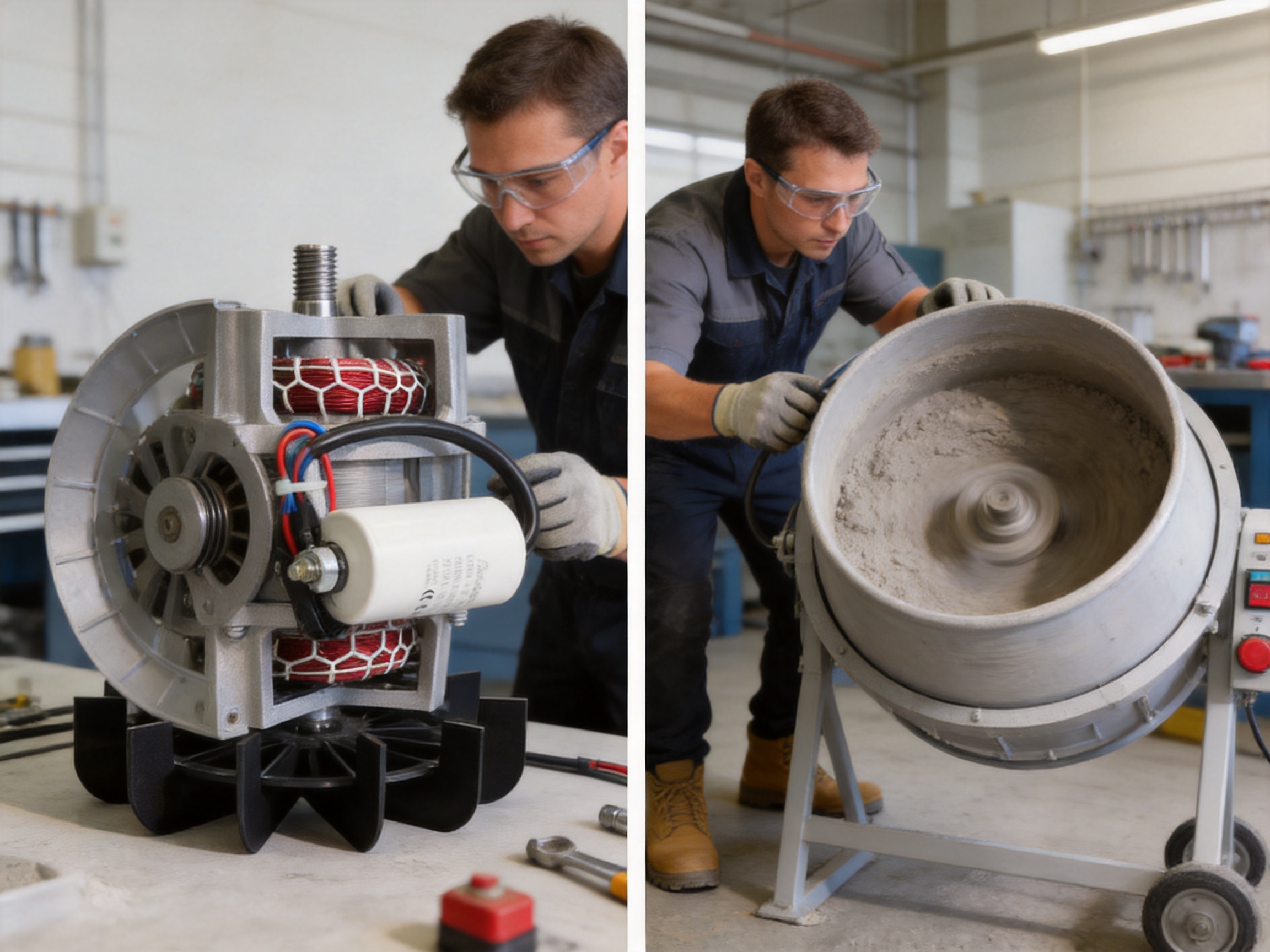
Customization and Supply Support
Different mixer manufacturers may require different motor configurations even when the rated power is similar. Possible variation areas include mounting dimensions, shaft design, cable length, terminal arrangement, pulley compatibility, protection features, packaging, and labeling.
As a professional AC/DC motor manufacturer, Shengzhou Jiangxin Motor Technology Co., Ltd. provides customized motor development in addition to standard products. Customization should be based on documented technical requirements and validated through sample testing. Customers should provide drawings, operating conditions, target duty cycle, supply information, installation constraints, and expected environmental conditions.
For large-volume projects, a structured development process can include requirement confirmation, engineering review, prototype production, performance testing, sample approval, pilot production, and mass production inspection. This approach helps ensure that changes made for a particular mixer platform do not compromise electrical safety, thermal performance, or mechanical reliability.
International customers may also require customized packaging and documentation. Clear labels should identify the model, rated voltage, power, speed, and relevant safety information. Packaging should protect the shaft, terminals, housing, and mounting surfaces during transportation. Export experience in more than 60 countries and regions provides a foundation for managing different customer and market requirements.
How to Select the Correct Motor for a Mixer
Before purchasing a YY71-2 motor, users should answer several technical questions. First, is the mixer designed for an 110V power system? Second, does the transmission system require approximately 2800 RPM at the motor shaft? Third, is the intended mixer capacity within the approximate 120–180 liter application range? Fourth, are the mounting dimensions and shaft specifications compatible?
The user should also consider duty cycle. A mixer used occasionally for small batches has different requirements from a rental machine operating for many hours each day. Ambient temperature, drum loading, aggregate size, mixture consistency, and start frequency all affect motor stress.
Another consideration is the condition of the complete mixer. If the drum bearings are worn, the gearbox is damaged, or the belt system is excessively tight, even a high-quality replacement motor may overheat. The motor should be selected as part of a complete system evaluation.
| Selection Factor | Why It Matters | Recommended Verification |
|---|---|---|
| Voltage | Incorrect voltage can cause poor performance or damage. | Confirm the supply and motor rating are both 110V. |
| Power | Insufficient power may lead to stalling and overheating. | Compare the 800W rating with drum capacity and material load. |
| Speed | Speed affects reduction ratio and final drum rotation. | Confirm that the transmission is designed for approximately 2800 RPM. |
| Mounting | Incompatible mounting can delay installation or create vibration. | Check bolt pattern, frame clearance, and motor dimensions. |
| Shaft | The pulley or coupling must fit securely. | Verify shaft diameter, length, keyway, and extension. |
| Duty cycle | Frequent or prolonged operation increases thermal stress. | Match use conditions with the motor and mixer design. |
| Environment | Dust, moisture, and heat influence service life. | Provide suitable protection and ventilation. |
| Protection | Electrical and mechanical safeguards reduce risk. | Use grounding, overload protection, guards, and emergency controls. |
Safety Considerations
Concrete mixers contain rotating drums, belts, pulleys, gears, and electrical components. The motor must be installed as part of a complete safety system. Guards should cover moving parts, and operators should never reach into the drum or transmission while the equipment is connected to power.
Disconnect and lock out the power before performing maintenance. Do not rely only on the control switch because a wiring fault or accidental reconnection may energize the motor. Wait until all rotating parts have stopped before removing guards or inspecting the transmission.
Use appropriate personal protective equipment, including eye protection, hearing protection when required, work gloves for handling components, and suitable footwear. Keep the work area clear of loose clothing, tools, cables, and materials that could become entangled.
Electrical installation should follow local regulations and the equipment manufacturer’s instructions. The 110V rating must not be interpreted as permission to connect the motor to any unverified power source. Frequency, current capacity, grounding, moisture protection, and circuit protection are all relevant to safe operation.
If an abnormal condition occurs, stop the mixer and disconnect power. Warning signs include repeated circuit tripping, burning odor, visible smoke, severe vibration, unusual noise, slow acceleration, or excessive heat. Continuing to operate under these conditions may turn a minor service issue into a major electrical or mechanical failure.
Quality, Efficiency, and Total Ownership Value
The purchase price of a motor is only one part of its total ownership cost. Installation labor, energy consumption, downtime, replacement frequency, maintenance, and damage to connected components may have a greater financial impact over time.
A motor designed for stable starting and low-loss operation can support more efficient use of electrical power. Pure copper windings and controlled manufacturing may contribute to reduced heat generation and more predictable performance. Reliable operation can also reduce service interruptions, particularly when the mixer is used on time-sensitive projects.
For equipment manufacturers, consistent motor quality can lower warranty exposure and simplify production testing. For distributors, fewer premature failures can improve customer satisfaction. For contractors, dependable operation can help keep work moving. These benefits make motor selection a strategic decision rather than a simple replacement purchase.
The YY71-2 is particularly valuable when its specifications are correctly matched to the complete mixer. A properly selected motor may deliver more practical value than a cheaper alternative that lacks sufficient starting capacity, uses lower-quality winding material, or has inconsistent production quality.
Frequently Asked Questions
What is the rated voltage of the YY71-2 motor?
The rated voltage is 110V. It is intended for compatible North American household and job-site power applications. Users must verify the complete electrical system, including frequency, circuit capacity, grounding, and protective devices, before installation.
How much power does the motor provide?
The motor has an 800W rated power. This output is intended for portable concrete mixer applications that require stronger performance than very small light-duty mixers while retaining a compact form factor.
What is the approximate operating speed?
The motor is a two-pole high-speed design with an approximate speed of 2800 RPM. A pulley, belt, gearbox, or other suitable reduction system is normally required to convert this motor speed into the slower drum speed required by a concrete mixer.
What mixer capacity is it designed for?
The stated application range is approximately 120–180 liters, depending on the mixer structure, transmission, material density, fill level, and duty cycle. Equipment manufacturers should verify the complete system through engineering calculations and load testing.
Does the motor use copper windings?
Yes. The YY71-2 uses pure copper windings. Copper provides good electrical conductivity and thermal characteristics, which can support lower loss, reduced heat generation, stable operation, and longer service life when the motor is used within its intended conditions.
Can the motor start a mixer when the drum contains material?
The motor is designed to support smooth starting under load. However, actual starting performance depends on material quantity, mixture consistency, transmission ratio, belt condition, supply voltage, and the design of the complete mixer. The drum should not be overloaded.
Is a transformer required?
The motor is designed for 110V North American power and is intended to operate without a transformer when connected to a compatible supply. Users must verify the local electrical conditions and ensure that the equipment is wired safely by qualified personnel.
Is the motor suitable for continuous operation?
The motor is designed for stable continuous operation under appropriate conditions. Continuous operation limits depend on load, ventilation, ambient temperature, supply quality, mixer design, and duty cycle. The motor should not be operated continuously under overload or with blocked ventilation.
How can overheating be prevented?
Prevent overheating by matching the motor to the mixer, avoiding excessive drum loads, keeping ventilation openings clear, using the correct voltage, maintaining proper belt tension, checking bearings and alignment, and providing appropriate rest periods when required by the equipment design.
What should be checked before ordering a replacement?
Check voltage, power, frequency, speed, mounting dimensions, shaft diameter, shaft length, keyway, pulley arrangement, rotation direction, wiring configuration, and available clearance. The original motor’s dimensions and the mixer manufacturer’s technical information should be reviewed together.
Can the motor be customized?
Customization may be available for selected requirements such as mounting structure, shaft configuration, wiring, cable length, labeling, and other application details. Customers should provide technical drawings and operating conditions so the manufacturer can evaluate feasibility.
Who manufactures the YY71-2 motor?
The motor is manufactured by Shengzhou Jiangxin Motor Technology Co., Ltd., a Zhejiang-based producer of AC/DC motors, micro motors, and application-specific motor solutions. The company has experience in research and development, automated production, quality control, and international supply.
Conclusion
The YY71-2 110V 800W Portable Concrete Mixer Motor is designed to provide a dependable drive solution for compatible 120–180 liter portable mixers. Its principal strengths include an 800W power rating, approximately 2800 RPM two-pole operation, strong starting capability, smooth performance under load, pure copper windings, low-loss operation, reduced heat generation, relatively low noise, and practical installation requirements.
These characteristics give the motor meaningful advantages over lower-powered, poorly matched, or inconsistently manufactured alternatives. The motor can help improve mixer responsiveness, maintain stable drum rotation, reduce unnecessary thermal stress, and support longer service life when correctly installed and maintained.
The product’s value is also supported by the manufacturing capabilities of Shengzhou Jiangxin Motor Technology Co., Ltd. The company combines professional motor development, modern production facilities, automated equipment, a dedicated research and development team, quality control systems, customized solutions, and international market experience. Its broader product portfolio in AC/DC motors and specialized motor applications provides a technical foundation for serving both standard and customized equipment requirements.
For manufacturers, distributors, contractors, and repair companies, the most important step is to evaluate the YY71-2 as part of a complete mixer system. Voltage, power, speed, transmission ratio, shaft dimensions, mounting structure, ventilation, duty cycle, and electrical protection must all be considered. When these factors are properly matched, the motor can provide efficient, stable, and practical performance for portable concrete mixing equipment.
References
1. Manufacturer-provided product information for the YY71-2 110V 800W Portable Concrete Mixer Motor.
2. Manufacturer-provided company profile for Shengzhou Jiangxin Motor Technology Co., Ltd.
3. General principles of AC and DC motor construction, winding materials, thermal management, and motor efficiency.
4. General engineering practices for portable concrete mixer drive systems, belt transmission, pulley alignment, and reduction mechanisms.
5. General electrical safety practices for low-voltage motor installation, grounding, overload protection, and job-site equipment.
Product: YY71-2 110V 800W Portable Concrete Mixer Motor
 Ready To Customise
 Your Motor Products?

We are professional motor manufacturers, delivering powerful, stable, and efficient power cores for all industries through precision craftsmanship and innovation.
Contact Us
-
 Mobile:+86 13575536911
-
 Tel:+86 18357538240
-
 Whatsapp:+8618357538240
-
 Email:betty@dbjxmotor.com
-
 Company Address
Copyright © by Shengzhou Jiangxin Motor Technology Co., Ltd. All Rights Reserved.
Wholesale Industrial Fan Motors Manufacturers
