

 English
 русский
 Español
 عربى

No. 8, Duxiu San Road, Ganlin Town, Shengzhou City, Shaoxing City, Zhejiang Province, China

News Category
Product Category
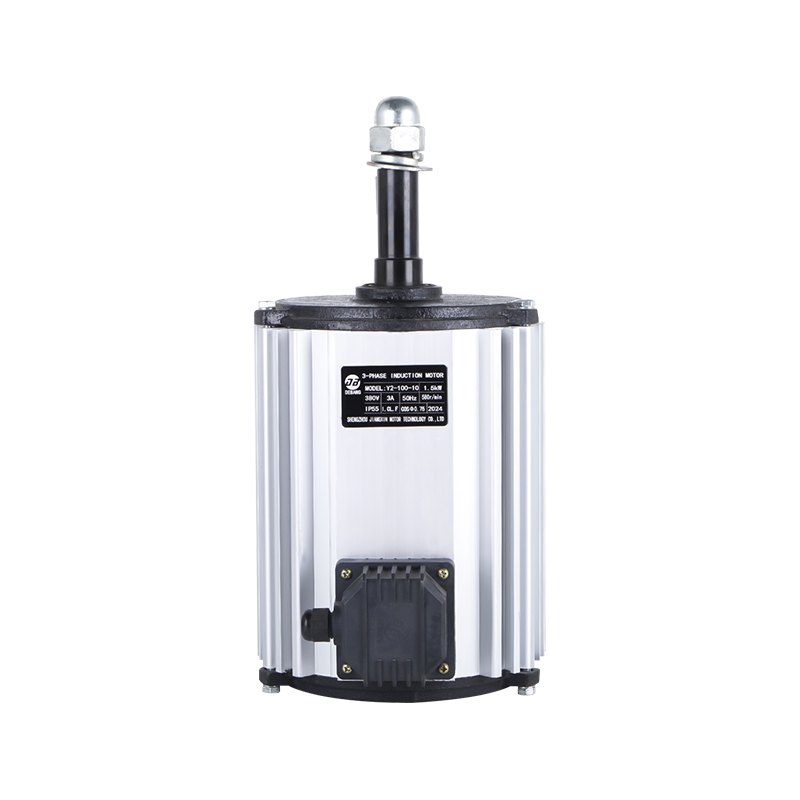
Y2-100-10 380V 1100W Fiberglass Fan Motor: Corrosion-Resistant Power for Demanding Ventilation
Content
- 1 Product Overview
- 2 Why Fiberglass Housing Matters
- 3 Electrical and Mechanical Design Value
- 4 Advantages Compared with Conventional Motor Solutions
- 5 Applications in Industrial and Agricultural Ventilation
- 6 Manufacturing Process and Quality Strengths
- 7 Testing and Quality Assurance
- 8 Installation Considerations
- 9 Maintenance and Service Recommendations
- 10 Total Value for Equipment Manufacturers
- 11 Company Capabilities and Global Supply
- 12 How to Select the Motor for a Specific Project
- 13 Frequently Asked Questions
- 13.1 What type of motor is the Y2-100-10 model?
- 13.2 Why is fiberglass used for the motor housing?
- 13.3 Where can this motor be used?
- 13.4 What does the 10-pole configuration mean?
- 13.5 Is the motor suitable for continuous operation?
- 13.6 Is fiberglass stronger than cast iron?
- 13.7 Can the motor be used in a chemical plant?
- 13.8 What electrical protection is required?
- 13.9 How does the motor compare with a standard metal motor?
- 13.10 Can the motor be customized?
- 13.11 What should be checked during installation?
- 13.12 How can service life be supported?
- 14 Conclusion
- 15 References
- 16 Product: Y2-100-10 380V 1100W Fiber Glass Fan Motor
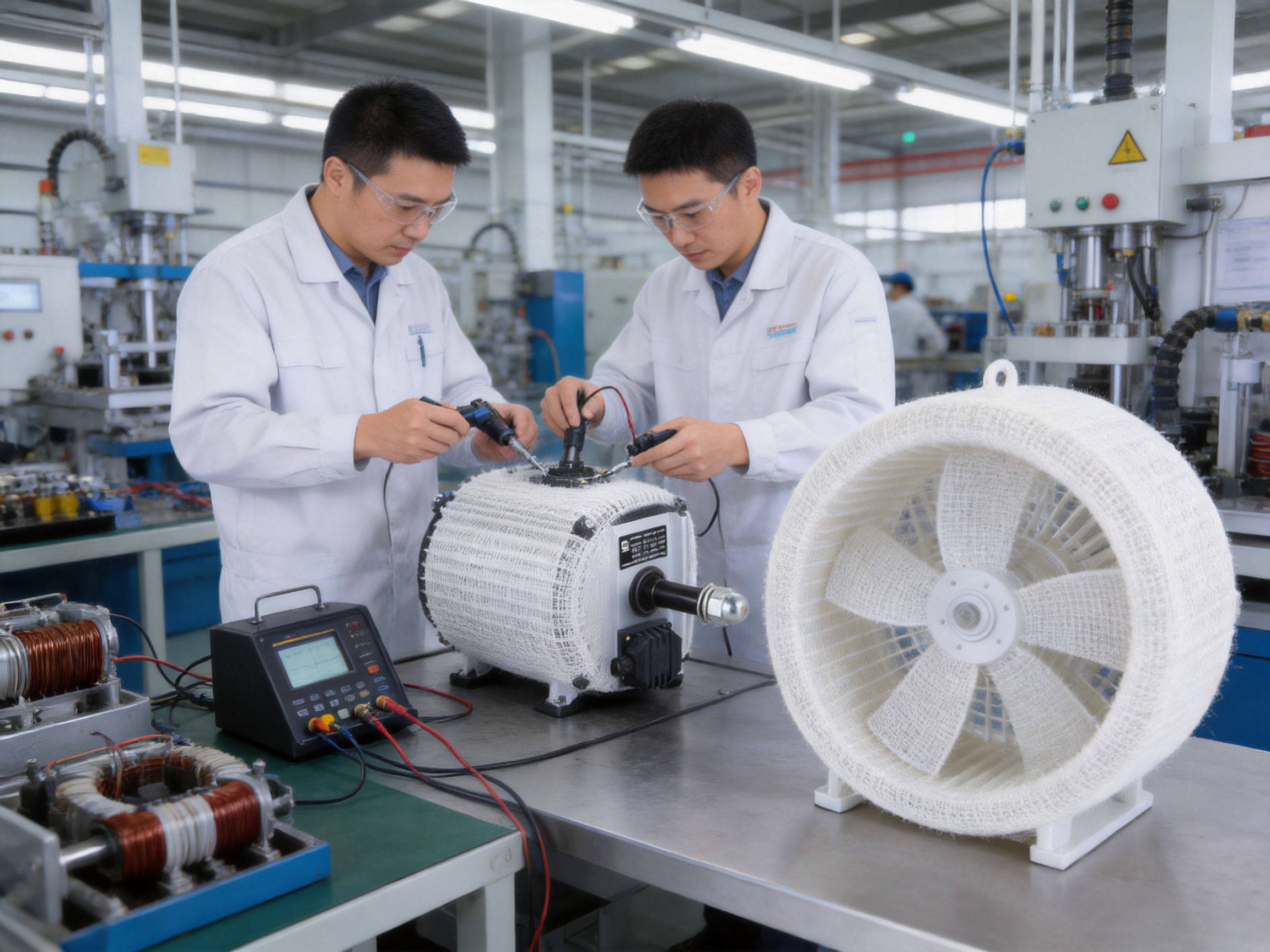
Industrial ventilation systems often operate in environments where ordinary motor housings and conventional fan drives face difficult conditions. High humidity, chemical vapors, fertilizer dust, salt-laden air, condensation, frequent cleaning and continuous operation can gradually damage exposed metal components. In these applications, selecting the correct motor is not simply a matter of choosing a suitable power rating. The motor must also provide reliable mechanical performance, environmental resistance, convenient installation and stable operation over an extended service life.
The Y2-100-10 380V 1100W Fiberglass Fan Motor is designed for this type of demanding application. It is a three-phase asynchronous motor developed specifically for fiberglass fans. With a 380V/50Hz electrical specification, 1100W rated power and 10-pole configuration, the motor is intended to provide dependable drive performance for ventilation equipment used in humid, corrosive and industrial environments.
Its most distinctive feature is the fiberglass housing. Compared with conventional cast-iron motor enclosures, fiberglass offers important benefits in applications where rust, chemical exposure and weight are major concerns. The housing is resistant to corrosion, acid and alkali exposure, aging and moisture-related deterioration. At the same time, it is lighter than cast iron, helping simplify handling, installation and maintenance.
This article examines the motor’s construction concept, performance characteristics, application value, manufacturing strengths and selection considerations. It also explains how a specialized motor manufacturer can support quality consistency through engineering, production control, testing and customer-oriented service.
Product Overview
The Y2-100-10 380V 1100W Fiberglass Fan Motor is a three-phase asynchronous motor intended for use with fiberglass fan systems. Its design combines a practical industrial power rating with a housing material selected for harsh environments. The result is a motor suitable for ventilation duties in agricultural, chemical, coastal, industrial and other moisture-sensitive locations.
The motor operates on a 380V, 50Hz three-phase power supply and provides 1100W of rated power. Its 10-pole configuration is suited to applications requiring a controlled operating speed and stable fan drive characteristics. Rather than focusing only on maximum output, the design emphasizes compatibility with fiberglass ventilation equipment and reliable operation in environments where corrosion resistance is essential.
| Product Name | Y2-100-10 380V 1100W Fiberglass Fan Motor |
| Motor Type | Three-phase asynchronous motor |
| Rated Voltage | 380V |
| Frequency | 50Hz |
| Rated Power | 1100W |
| Number of Poles | 10 poles |
| Primary Application | Fiberglass ventilation fans |
| Housing Material | Fiberglass |
| Recommended Environment | Humid, corrosive, coastal, chemical and breeding facilities |
The listed specification provides a clear starting point for equipment designers and purchasing teams. Before installation, users should still confirm the fan’s mechanical interface, mounting arrangement, shaft requirements, electrical protection, operating duty and site conditions. Correct system matching is essential for achieving reliable performance.
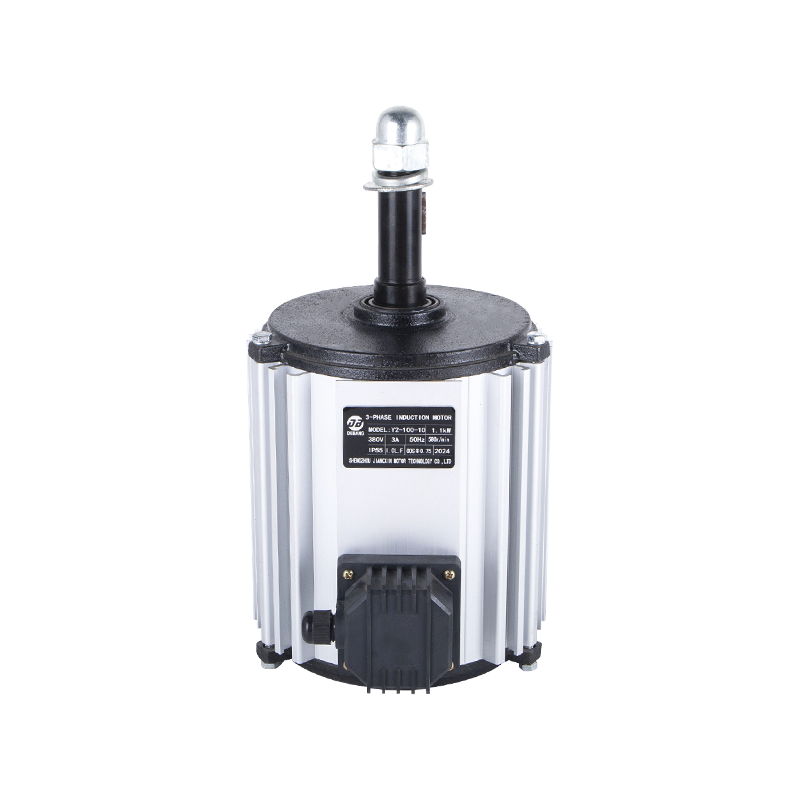
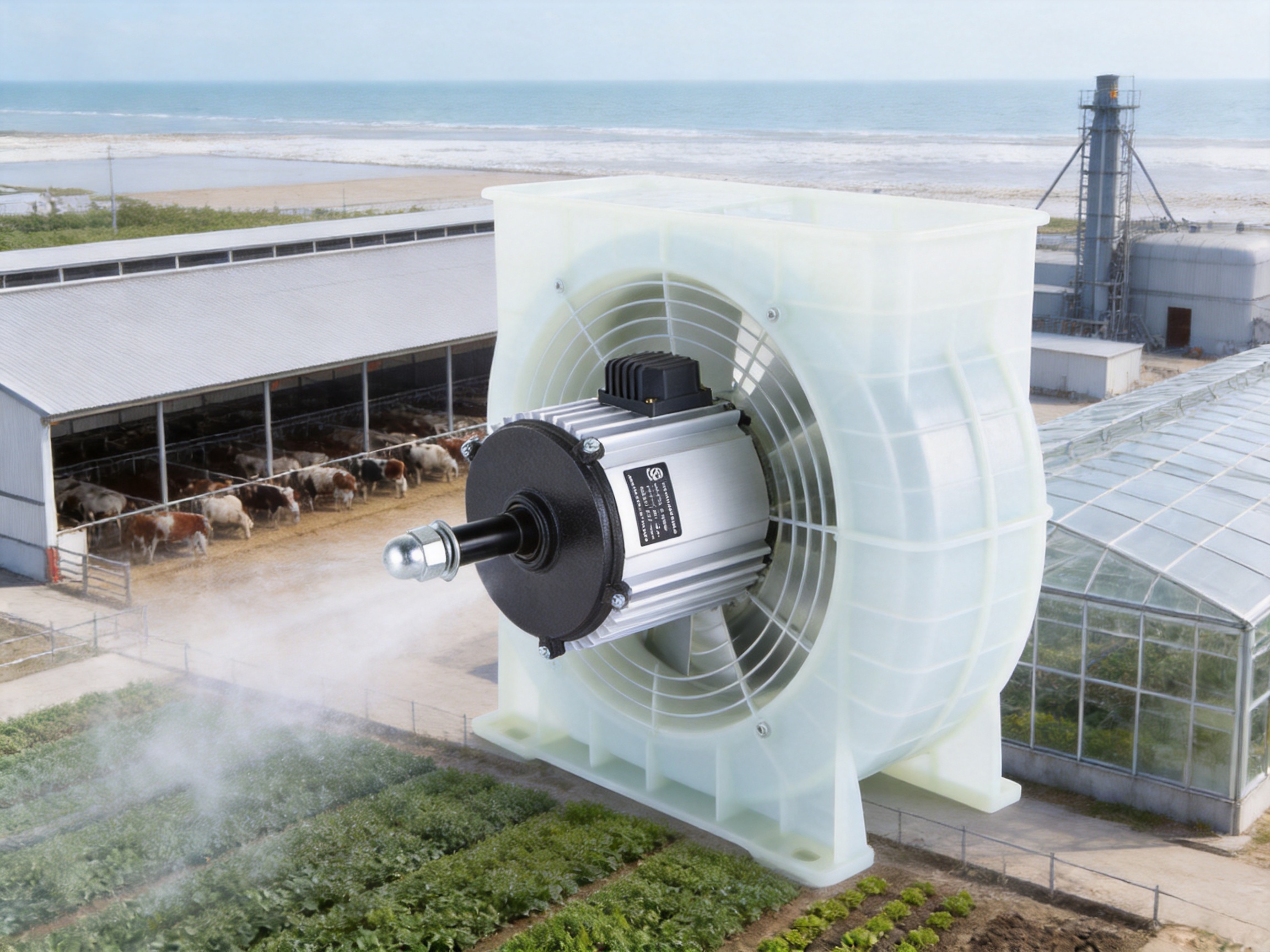
Y2-100-10 380V 1100W Fiber Glass Fan Motor
Why Fiberglass Housing Matters
Motor housing material has a direct influence on service life, maintenance requirements and equipment suitability. In a dry indoor workshop, a standard metal enclosure may provide satisfactory results. However, industrial fans used in livestock facilities, chemical processing areas, coastal sites and humid production spaces may encounter water vapor, corrosive gases, cleaning chemicals or airborne particles. Under these conditions, a conventional metal housing can become vulnerable to rust and surface degradation.
Fiberglass provides a strong alternative for applications where corrosion resistance is a priority. The housing is designed to resist rust because fiberglass does not corrode in the same way as ferrous metal. This characteristic is particularly valuable in areas where condensation is common or where the fan is exposed to humid air for long periods.
The material is also resistant to acid and alkali exposure. This does not mean that every chemical concentration or process condition is automatically suitable. Site compatibility should always be evaluated according to the actual substances, temperature, concentration and exposure duration. Nevertheless, the material’s general resistance profile makes it well suited to many environments in which painted steel or cast iron requires frequent inspection and recoating.
Another advantage is resistance to aging. Outdoor or semi-outdoor ventilation equipment may be exposed to moisture, temperature changes and environmental pollutants. A properly manufactured fiberglass housing can help maintain its functional characteristics over time, reducing the risk that the enclosure will deteriorate rapidly under ordinary industrial exposure.
Corrosion Resistance in Humid Facilities
Humidity is a common cause of motor maintenance problems. Moisture can promote oxidation on metal surfaces, weaken coatings and create a cycle of corrosion beneath damaged paint. In agricultural buildings and animal-breeding facilities, humidity may be combined with ammonia, dust and frequent washing. In coastal facilities, salt particles can accelerate corrosion on exposed metal parts. A fiberglass housing addresses one of the most visible and persistent sources of this risk.
For ventilation systems, corrosion resistance is valuable not only because it improves appearance. A deteriorated housing can affect mounting integrity, access covers, fasteners and protection of internal components. By using a corrosion-resistant enclosure, equipment designers can create a more robust system for challenging locations.
Resistance to Chemical and Coastal Conditions
Chemical plants, wastewater treatment areas, fertilizer facilities and coastal installations may expose equipment to aggressive atmospheres. While every application requires a technical assessment, fiberglass is widely selected for its ability to withstand many corrosive environmental conditions better than ordinary ferrous metal.
The Y2-100-10 motor is therefore an attractive option for users who need an industrial fan motor that can operate near corrosive air without relying solely on surface paint or periodic anti-rust treatment. This can simplify maintenance planning and reduce concerns about premature enclosure degradation.
Lower Handling Weight
Fiberglass is lighter than cast iron. This benefit becomes important when motors are installed on elevated fan assemblies, support frames or equipment that must be moved during maintenance. A lighter motor can reduce the physical effort needed during installation and may simplify positioning, alignment and replacement.
Lower weight can also be useful for equipment manufacturers designing compact fiberglass fan systems. A lighter drive assembly may reduce the load on support structures, provided that the complete system is correctly engineered. The final design must still account for vibration, dynamic loading, mounting strength and the mechanical behavior of the fan.
Electrical and Mechanical Design Value
The motor uses a three-phase asynchronous design, a widely adopted motor architecture for industrial equipment. Three-phase asynchronous motors are valued for their practical construction, operational reliability and suitability for continuous or repeated-duty applications. They are commonly integrated into fans, pumps, conveyors, mixers and other machinery.
The 380V supply specification corresponds to a common industrial three-phase voltage in many markets. For facilities already equipped with 380V three-phase distribution, the motor can be incorporated into the electrical system without requiring a special single-phase conversion arrangement. Users should confirm local voltage tolerance, frequency, wiring method and protection requirements before commissioning.
The 1100W power rating provides a useful balance for medium-duty ventilation equipment. It is powerful enough for many industrial fan applications while remaining more compact and manageable than a higher-output motor. The correct power selection depends on fan diameter, blade design, static pressure, airflow demand, duct arrangement, operating speed and system resistance.
The 10-pole configuration is another important design characteristic. Pole count influences the motor’s synchronous speed and contributes to the operating behavior of the complete fan system. A 10-pole motor can support applications that benefit from a relatively controlled speed profile. Lower operating speed may help reduce noise, mechanical stress and excessive airflow velocity in systems designed around gradual, stable ventilation.
Actual operating speed, torque and performance depend on the motor’s electrical design, load, slip, supply conditions and fan characteristics. For this reason, the motor should be selected as part of a complete fan and ventilation system rather than treated as an independent component.
Advantages Compared with Conventional Motor Solutions
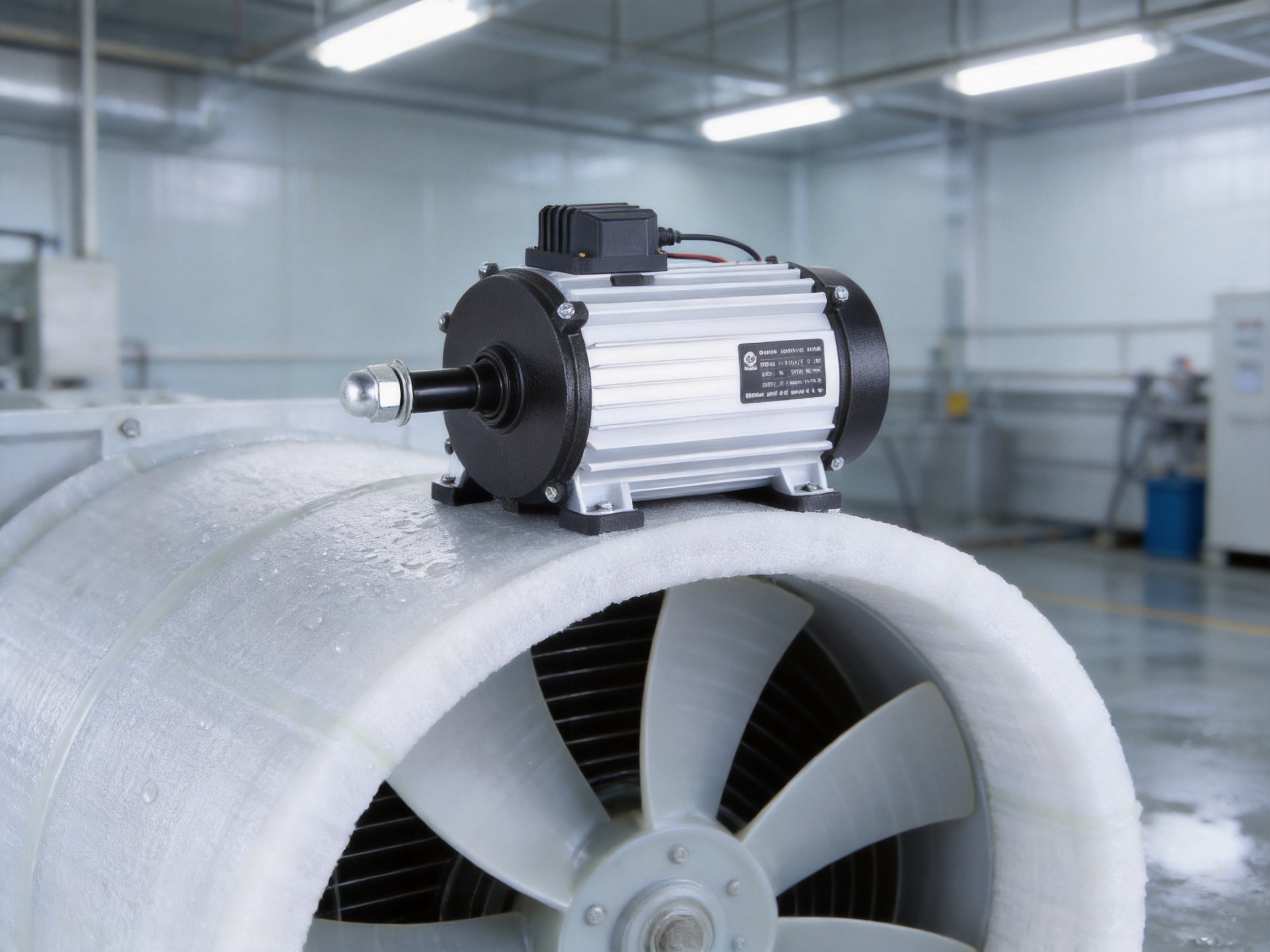
The most important advantage of the Y2-100-10 motor is the combination of industrial motor performance and fiberglass housing protection. Many conventional motors are designed primarily for general indoor service. They may perform well in clean, dry locations but require additional coating, enclosures or frequent maintenance when exposed to humidity and corrosive substances.
Compared with a standard cast-iron motor, the fiberglass model offers a lower housing weight and improved resistance to rust. This can be especially advantageous when a motor is mounted on fiberglass fans, where a corrosion-resistant motor housing creates a more consistent material solution across the fan assembly.
Compared with a standard painted-steel motor, fiberglass can offer better resistance to environments where scratches, moisture and chemical exposure may compromise surface protection. Paint remains useful, but once a coating is damaged, the underlying metal may be exposed. Fiberglass avoids dependence on a conventional anti-rust coating as the primary barrier against corrosion.
Compared with an undersized general-purpose motor, the 1100W rating provides a more appropriate industrial power level for ventilation equipment that must operate reliably under real load conditions. An incorrectly undersized motor may overheat, suffer reduced service life or fail to maintain the required airflow. Selecting a properly matched motor improves system stability.
Compared with a heavier motor assembly, the fiberglass construction can make installation more convenient. This may reduce handling time, simplify replacement work and improve accessibility when the fan is located in a difficult-to-reach area. These benefits are practical rather than purely theoretical because installation labor and maintenance access contribute significantly to the total cost of ownership.
| Evaluation Area | Fiberglass Fan Motor Advantage | Practical Benefit |
| Corrosion Resistance | Resistant to rust and suitable for many humid or corrosive atmospheres | Reduced enclosure deterioration and maintenance burden |
| Material Weight | Lighter than cast iron | Easier transport, positioning and installation |
| Environmental Suitability | Designed for fiberglass fan systems and demanding locations | Better compatibility with agricultural, chemical and coastal applications |
| Power Rating | 1100W three-phase industrial output | Suitable for appropriately sized ventilation equipment |
| Speed Concept | 10-pole configuration | Supports stable, controlled fan operation when correctly matched |
| Maintenance Planning | Reduced dependence on anti-rust surface treatment | Potentially simpler inspection and service routines |
These advantages should be understood as application benefits rather than guarantees of performance in every environment. Correct installation, electrical protection, ventilation, cleaning and routine inspection remain necessary. The motor’s value is greatest when it is integrated into a well-designed ventilation system.
Applications in Industrial and Agricultural Ventilation
Animal-Breeding Facilities
Animal-breeding buildings require stable ventilation to manage heat, humidity, odors and air quality. These facilities are often exposed to moisture, dust, ammonia and regular cleaning operations. A motor with a fiberglass housing is well suited to this environment because corrosion resistance is a major consideration.
The 1100W power rating may be used in ventilation systems where reliable fan operation is required over extended periods. The exact suitability depends on the fan’s airflow, pressure and duty cycle. When selected correctly, the motor can help maintain consistent air exchange while reducing concerns about rust on the external motor body.
Greenhouses and Agricultural Buildings
Greenhouses and agricultural buildings often have elevated humidity. Condensation can develop when warm, moist air meets cooler surfaces, and ventilation equipment may operate frequently during growing seasons. Fiberglass fan motors can provide a practical solution for reducing corrosion exposure in these conditions.
A lighter housing may also simplify installation on agricultural structures that are not designed for heavy machinery. The structural frame, fan support and mounting points must still be verified by the installer. Proper alignment is important for minimizing vibration and protecting both motor and fan bearings.
Chemical and Processing Environments
In chemical and processing facilities, ventilation systems may be exposed to vapors or airborne substances that can attack conventional metal surfaces. The fiberglass housing offers a useful level of material resistance for many such environments. A site evaluation should identify the chemicals present, concentration, operating temperature and expected exposure duration.
Ventilation is also important for protecting workers, controlling process conditions and reducing the accumulation of unwanted vapors. A dependable fan motor is therefore a critical part of the overall safety and operating system. Motor selection should be coordinated with facility engineering, electrical protection and applicable safety requirements.
Coastal and Salt-Laden Locations
Coastal air can contain salt particles that accelerate corrosion on exposed metal equipment. Fans installed near ports, marine facilities, aquaculture operations and seaside industrial buildings may benefit from a fiberglass housing. The resistance of the enclosure can help preserve the external condition of the motor and reduce the impact of salt-laden air.
Industrial Workshops and Utility Ventilation
Workshops, warehouses and utility buildings may require ventilation to remove heat, dust or stale air. Where moisture and cleaning are present, a corrosion-resistant motor can provide greater flexibility than a standard indoor motor. The motor’s 380V three-phase specification also makes it suitable for many industrial electrical systems.
Manufacturing Process and Quality Strengths
A reliable motor is the result of coordinated engineering and manufacturing control. The company behind this product, Shengzhou Jiangxin Motor Technology Co., Ltd., was established in 2017 and focuses on the research, development, production and sales of AC/DC motors and micro motors. Its product scope includes evaporative air cooler motors, industrial heater motors, oil pump motors, customized motors and industrial fan motors.
The company operates in Shengzhou, Zhejiang Province, within the Yangtze River Delta industrial region. This location provides access to an established manufacturing network, engineering resources, component suppliers and transportation infrastructure. Such industrial support can help a motor manufacturer coordinate materials, production equipment and supply-chain operations efficiently.
Product Development and Engineering
Motor development begins with understanding the application. A fan motor must be evaluated according to voltage, frequency, power, pole count, installation conditions, environmental exposure and mechanical load. For fiberglass fan applications, housing material selection is particularly important because the motor must function as part of a corrosion-resistant equipment package.
An engineering team can support the product by reviewing the relationship between motor output and fan load. This includes considering the fan’s mechanical resistance, operating speed, airflow requirement, starting condition and expected working time. Such analysis helps prevent common selection problems such as excessive motor loading, unstable operation or insufficient ventilation capacity.
Research and development also contribute to product customization. Different customers may require changes in mounting details, cable arrangements, fan compatibility, environmental protection or packaging. A manufacturer with experience in customized motors can respond more effectively to these project-specific requirements.
Automated Production Equipment
The company has modern production facilities and advanced automated equipment. Automation can improve repeatability in processes such as component handling, winding-related operations, assembly and inspection. Consistent production is particularly important for motors because small variations in electrical or mechanical assembly can influence vibration, efficiency, noise and service life.
Automated equipment does not replace engineering judgment or quality personnel. Instead, it provides a controlled production platform that can reduce manual variation and improve process consistency. When combined with appropriate operating procedures and inspection standards, automation supports stable output across repeated production batches.
Material and Component Control
Motor quality depends on the condition and compatibility of materials used throughout the assembly. The fiberglass housing must have suitable structural integrity and dimensional consistency. Electrical components, winding materials, insulation systems, bearings, fasteners and connection parts must be selected for the intended application.
Effective incoming inspection helps prevent unsuitable materials from entering production. Dimensional checks, visual inspection and supplier control can identify problems before assembly. For environmental applications, attention should also be given to sealing interfaces, mounting areas and exposed hardware.
Assembly Precision
Assembly quality affects both electrical and mechanical performance. Rotor and stator alignment, bearing installation, shaft positioning, fastening and terminal connections must be controlled carefully. Poor alignment may produce vibration or noise, while improper electrical connections may create overheating or unreliable starting.
Precision assembly is especially important when the motor is connected directly or indirectly to a fan. The motor and fan must work together as a balanced rotating system. Correct installation procedures can help reduce stress on bearings and mounting structures, improving the stability of the completed equipment.
Testing and Quality Assurance
Quality assurance should cover the motor’s appearance, dimensions, electrical characteristics and mechanical operation. Testing procedures may vary according to production requirements and customer specifications, but a professional motor manufacturer typically establishes inspection points throughout the manufacturing process rather than relying only on a final visual check.
Electrical testing can verify essential characteristics such as winding continuity, insulation condition and connection integrity. These checks help identify manufacturing defects that may otherwise become apparent only after installation. Electrical protection remains the responsibility of the complete system, so users should install suitable breakers, overload protection and grounding according to applicable standards.
Mechanical inspection can include checks of housing condition, shaft rotation, mounting dimensions and abnormal noise. A motor should rotate smoothly and be free from avoidable interference. The fiberglass housing should be examined for cracks, deformation, poor finishing or damage caused during transportation.
Operational testing provides an opportunity to observe the motor under controlled conditions. Vibration, sound, current behavior and general running stability can be reviewed. Consistent inspection data can help a manufacturer identify process trends and make improvements to tooling, assembly methods or supplier control.
Quality systems are also important for customer confidence. The company describes itself as having strict quality control systems and strong innovation capabilities. These strengths support the production of reliable, energy-conscious and long-lasting motors, while providing a foundation for continuous product improvement.
Installation Considerations
Before installation, confirm that the motor’s 380V/50Hz three-phase specification matches the available electrical supply. The rated power must also be compatible with the fan load. Connecting a motor to an unsuitable voltage or frequency can lead to abnormal current, overheating, reduced performance or premature failure.
Review the mechanical interface between the motor and the fiberglass fan. Mounting dimensions, shaft compatibility, coupling or belt arrangements and rotation direction should be verified before the motor is fixed in place. The fan assembly should be properly supported and aligned to prevent excess mechanical stress.
Although the fiberglass housing is lighter than cast iron, the motor must still be secured using suitable hardware. Fasteners should be tightened according to the equipment design, and mounting surfaces should be clean and stable. Do not use the housing as a lifting point unless the equipment documentation specifically permits it.
Electrical wiring should be completed by qualified personnel. Proper grounding, overload protection, short-circuit protection and disconnecting arrangements are essential. Cable routing should prevent abrasion, water accumulation and excessive mechanical tension at the connection point.
After installation, operate the fan under controlled conditions and check for abnormal vibration, unusual noise, overheating, unexpected rotation and unstable current. If any abnormality is detected, stop the equipment and identify the cause before continuing operation.
Maintenance and Service Recommendations
Routine maintenance helps preserve the performance of any motor, including a corrosion-resistant model. The fiberglass housing should be inspected periodically for impact damage, cracks, contamination and changes in mounting condition. Resistance to corrosion does not eliminate the need for inspection.
Keep the motor and surrounding fan assembly reasonably clean. Dust, fibers and process residue can accumulate around ventilation equipment and may affect heat dissipation or moving components. Cleaning methods should be compatible with the housing, electrical connections and site safety requirements.
Inspect electrical terminals and protective devices according to the facility’s maintenance schedule. Loose connections may create heat and unstable operation. Overload protection should be checked to ensure that it remains appropriate for the motor and fan load.
Monitor vibration and noise during operation. A change in vibration may indicate fan imbalance, bearing wear, loose mounting hardware, misalignment or foreign material. Early investigation can prevent secondary damage to the motor and connected equipment.
Maintenance records are useful for industrial operators. Recording operating hours, inspections, electrical observations and corrective actions can reveal performance trends. This information also helps determine when a motor should be inspected more deeply or replaced as part of planned maintenance.
Total Value for Equipment Manufacturers
For fan manufacturers, choosing a corrosion-resistant motor can strengthen the overall value of the finished product. A fiberglass fan paired with a conventional vulnerable motor may still have a weak point in a humid or corrosive installation. Using a fiberglass motor housing creates a more coherent solution for the complete fan assembly.
The lighter housing can simplify product handling during assembly and shipping. It may also make the final unit easier for customers to install. These advantages can be meaningful when a manufacturer supplies large quantities of agricultural or industrial fans and seeks to improve installation efficiency.
Product compatibility is another important consideration. A motor designed specifically for fiberglass fans can reduce the need for improvised adaptation. This may help equipment manufacturers standardize their designs, simplify purchasing and offer customers a clearer replacement solution.
Manufacturers also benefit from a supplier capable of supporting customization. Different fan models may require variations in mounting, connection or packaging. A professional motor producer with research and development capabilities can review these needs and help create a practical solution while maintaining production consistency.
Company Capabilities and Global Supply
Shengzhou Jiangxin Motor Technology Co., Ltd. focuses on AC/DC motors and micro motor products and has developed experience across several application areas. Its products serve environmental protection equipment, industrial heating, hydraulic systems, ventilation systems and other fields.
The company reports that its products are exported to more than 60 countries and regions. International supply experience requires attention to communication, documentation, packaging, production scheduling and customer service. It also requires an understanding that different markets may have different electrical systems, installation practices and compliance expectations.
A customer-oriented manufacturer can add value beyond the motor itself. Technical communication before ordering helps confirm specifications and application conditions. Production updates and inspection coordination can improve purchasing visibility. After-sales communication supports troubleshooting, replacement planning and long-term cooperation.
The company’s stated commitment to craftsmanship, innovation and customer-oriented service reflects the importance of combining manufacturing capability with practical support. For industrial customers, a motor supplier is not simply a source of components. The supplier can also be a technical partner in equipment development, application matching and product improvement.
How to Select the Motor for a Specific Project
Begin by identifying the fan’s required airflow and pressure. A motor should not be selected only by comparing wattage. The fan blade design, diameter, duct length, filters, louvers and operating environment all influence the actual load.
Next, confirm the electrical supply. The Y2-100-10 motor is specified for 380V and 50Hz three-phase operation. Check whether the site provides the required voltage, phase configuration and frequency. If the motor will be used in a different electrical system, consult the manufacturer before purchase.
Evaluate environmental exposure. Consider humidity, condensation, salt, chemical vapors, dust, wash-down procedures, ambient temperature and installation location. Fiberglass is advantageous for many corrosive environments, but the full application should still be reviewed carefully.
Check the mechanical arrangement. Confirm mounting dimensions, shaft details, rotation requirements and fan compatibility. The motor should be installed with appropriate alignment and structural support.
Finally, review service expectations. If the motor will operate continuously, the duty cycle and maintenance plan should be defined. If access is difficult, corrosion resistance and long-term inspection planning become even more important. A complete selection process reduces the risk of mismatch and helps the motor deliver its intended value.
Frequently Asked Questions
What type of motor is the Y2-100-10 model?
It is a three-phase asynchronous motor designed for fiberglass fan applications. Its listed electrical specification is 380V/50Hz with 1100W rated power.
Why is fiberglass used for the motor housing?
Fiberglass is used because it offers resistance to rust, acid and alkali exposure, moisture-related deterioration and aging. It is also lighter than cast iron, which can simplify handling and installation.
Where can this motor be used?
It is intended for fiberglass fan systems in humid, corrosive, agricultural, chemical, coastal and industrial environments. The actual suitability depends on the fan load, electrical supply and specific environmental conditions.
What does the 10-pole configuration mean?
The pole count is an electrical design characteristic that influences the motor’s synchronous speed and operating behavior. A 10-pole configuration can be suitable for fan systems that require controlled, stable operation. The complete motor and fan performance should be confirmed with the supplier.
Is the motor suitable for continuous operation?
The product is designed for industrial fan applications, but continuous operation must be evaluated according to the actual load, ambient conditions, cooling conditions, electrical protection and manufacturer’s operating information. Users should avoid assuming suitability without reviewing the complete application.
Is fiberglass stronger than cast iron?
Fiberglass and cast iron have different material characteristics. The principal advantage of fiberglass in this product is corrosion resistance and lower weight, not simply comparison of mechanical strength. The motor should be handled and installed according to its design requirements.
Can the motor be used in a chemical plant?
It may be appropriate for many chemical or corrosive environments because of the fiberglass housing. However, users must evaluate the specific chemicals, concentrations, temperatures and exposure conditions before installation.
What electrical protection is required?
The installation should include suitable grounding, overload protection, short-circuit protection and a proper disconnecting arrangement. These devices should be selected and installed by qualified electrical personnel according to local requirements.
How does the motor compare with a standard metal motor?
The fiberglass model offers advantages in corrosion resistance and handling weight. It can be more suitable for humid or corrosive conditions than a conventional unprotected metal motor. The correct comparison should also consider power, mounting, fan compatibility and operating conditions.
Can the motor be customized?
The manufacturer provides customized motor products and has research and development capabilities. Customers should provide technical information such as voltage, frequency, power, mounting requirements, environmental conditions and fan interface details for evaluation.
What should be checked during installation?
Verify the electrical supply, mechanical compatibility, mounting security, alignment, rotation direction, grounding and protective devices. After starting, check for abnormal noise, vibration, overheating or unstable operation.
How can service life be supported?
Use the motor within its rated application, keep the fan properly balanced, maintain electrical connections, inspect the housing and mounting, monitor vibration and prevent excessive dust or contamination from accumulating around the equipment.
Conclusion
The Y2-100-10 380V 1100W Fiberglass Fan Motor is designed for ventilation applications where corrosion resistance, manageable weight and dependable three-phase performance are important. Its fiberglass housing provides a practical advantage over conventional cast-iron or painted-metal enclosures in many humid and corrosive environments.
With a 380V/50Hz supply specification, 1100W power rating and 10-pole configuration, the motor offers a focused solution for appropriately matched fiberglass fan systems. It is especially relevant to agricultural buildings, animal-breeding facilities, chemical environments, coastal installations and industrial ventilation equipment.
The product’s value is supported by the manufacturing capabilities of Shengzhou Jiangxin Motor Technology Co., Ltd., including dedicated motor research and development, modern production facilities, automated equipment, quality control systems and experience serving international customers. These strengths help connect product design with consistent manufacturing and practical customer support.
For the best results, users should treat the motor as part of a complete ventilation system. Proper fan matching, electrical protection, mechanical alignment, environmental evaluation and routine maintenance are essential. When these factors are addressed, the fiberglass motor can provide a durable and efficient foundation for demanding industrial ventilation applications.
References
1. Product specification supplied for the Y2-100-10 380V 1100W Fiberglass Fan Motor.
2. Manufacturer-provided company profile and product application information.
3. General principles of three-phase asynchronous motor selection and industrial fan integration.
4. General engineering guidance concerning corrosion-resistant materials for humid and chemical environments.
5. General maintenance practices for industrial motors, ventilation fans and rotating equipment.
Product: Y2-100-10 380V 1100W Fiber Glass Fan Motor
 Ready To Customise
Your Motor Products?

We are professional motor manufacturers, delivering powerful, stable, and efficient power cores for all industries through precision craftsmanship and innovation.
Contact Us
-
 Mobile:+86 13575536911
-
 Tel:+86 18357538240
-
 Whatsapp:+8618357538240
-
 Email:betty@dbjxmotor.com
-
 Company Address
Copyright © by Shengzhou Jiangxin Motor Technology Co., Ltd. All Rights Reserved.
Wholesale Industrial Fan Motors Manufacturers
