

 English
 русский
 Español
 عربى

No. 8, Duxiu San Road, Ganlin Town, Shengzhou City, Shaoxing City, Zhejiang Province, China

News Category
Product Category
YY7134 150V 370W Portable Concrete Mixer Motor: A Practical Guide to Reliable Mixing Power
Content
- 1 Introduction
- 2 Product Overview
- 3 Why the Motor Matters in a Portable Mixer
- 4 High Starting Torque for Demanding Loads
- 5 Stable Output During Continuous Mixing
- 6 Pure Copper Windings and Thermal Performance
- 7 Aluminum Housing with Cooling Fins
- 8 Class F Insulation for Practical Reliability
- 9 IP44 Protection for Construction Environments
- 10 Resistance to Voltage Fluctuation
- 11 Low Noise and Reduced Vibration
- 12 Simple Single-Phase Capacitor-Run Structure
- 13 Advantages Over General-Purpose Competitor Motors
- 14 Manufacturing Strengths and Quality Approach
- 15 Integration into Portable Concrete Mixers
- 16 Electrical Safety and Protection
- 17 Maintenance Recommendations
- 18 Troubleshooting Guide
- 19 Choosing the Right Supplier
- 20 Applications Beyond Concrete Mixing
- 21 Purchasing and Project Planning Considerations
- 22 Environmental and Operating Limitations
- 23 Value of a Complete Motor Solution
- 24 Q&A
- 24.1 What is the rated power of the YY7134 motor?
- 24.2 What voltage does the motor use?
- 24.3 Can the motor operate at both 50Hz and 60Hz?
- 24.4 Why is high starting torque important for a concrete mixer?
- 24.5 Is the motor suitable for continuous operation?
- 24.6 What does IP44 protection mean?
- 24.7 What is the benefit of Class F insulation?
- 24.8 Why are pure copper windings useful?
- 24.9 Does the motor require a capacitor?
- 24.10 Can the motor be used outdoors?
- 24.11 What should be checked before installing the motor?
- 24.12 How can vibration be reduced?
- 24.13 Who manufactures the YY7134 motor?
- 24.14 Can the supplier provide customized motor solutions?
- 25 Conclusion
- 26 References
- 27 Product: YY7134 150V 370W Portable Concrete Mixer Motor
Introduction
Portable concrete mixers are widely used on construction sites, renovation projects, landscaping jobs, agricultural facilities, and small infrastructure projects. Although these machines are compact compared with large industrial mixers, they perform demanding work. A portable mixer must rotate a drum or mixing assembly under changing loads, start reliably with material inside the drum, operate for extended periods, and tolerate dust, vibration, voltage fluctuation, and frequent transportation.
The motor is the core power source that determines whether a portable mixer can deliver consistent performance. An unsuitable motor may stall when the mixture becomes heavy, overheat during prolonged operation, consume excessive power, or require frequent maintenance. The YY7134 150V 370W Portable Concrete Mixer Motor is designed specifically for small portable cement and concrete mixing equipment. It combines a 370W output, a customized 150V voltage rating, single-phase capacitor-run operation, pure copper windings, aluminum cooling construction, and practical protection features for job-site use.
This article examines the motor’s operating characteristics, construction, application advantages, installation considerations, maintenance requirements, and manufacturing background. It also explains why a purpose-designed concrete mixer motor can offer important benefits over general-purpose motors when used in portable mixing equipment.
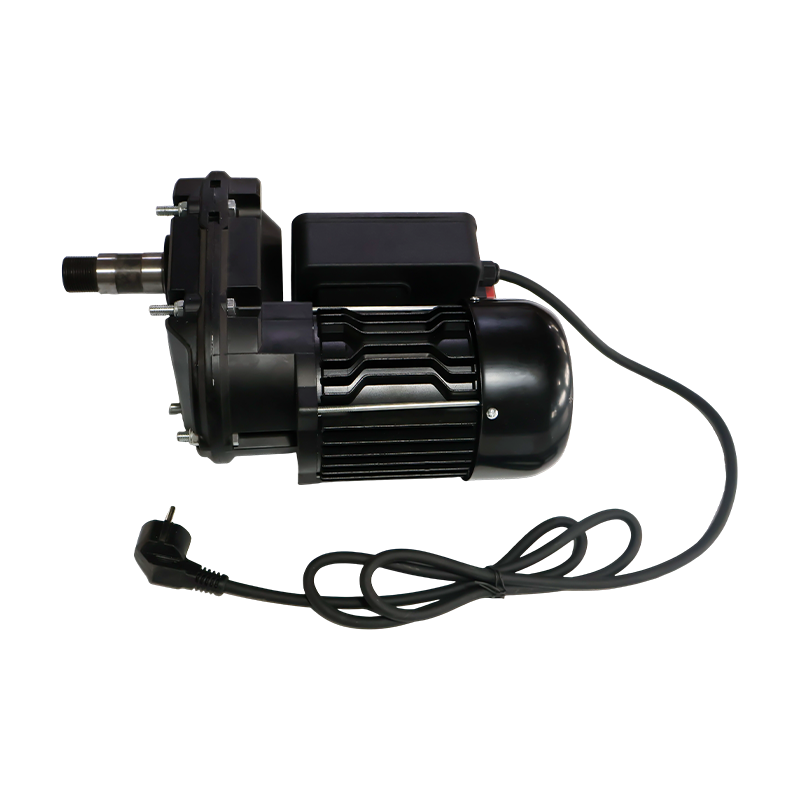
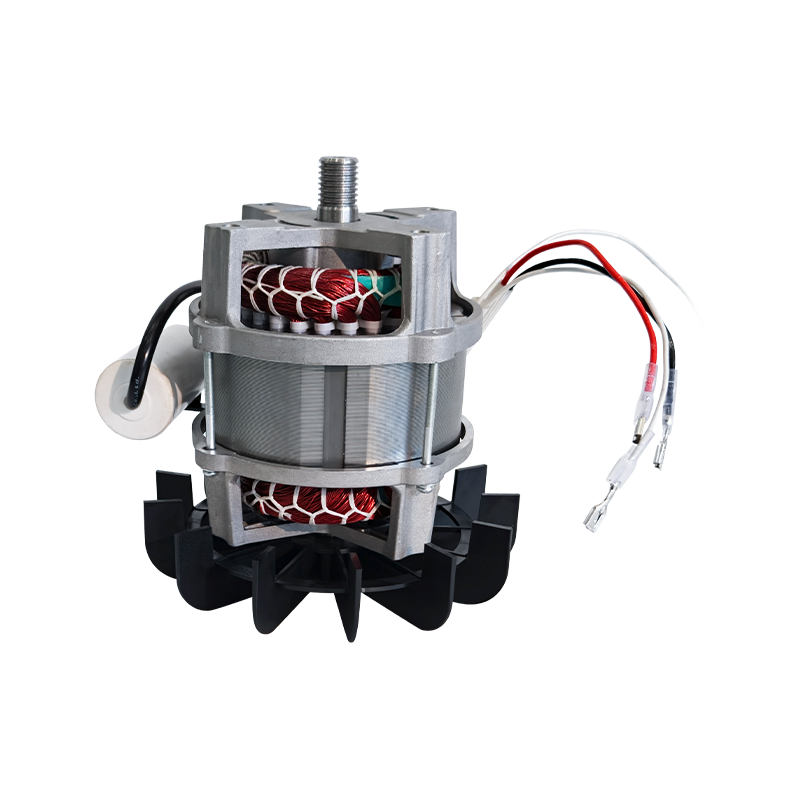
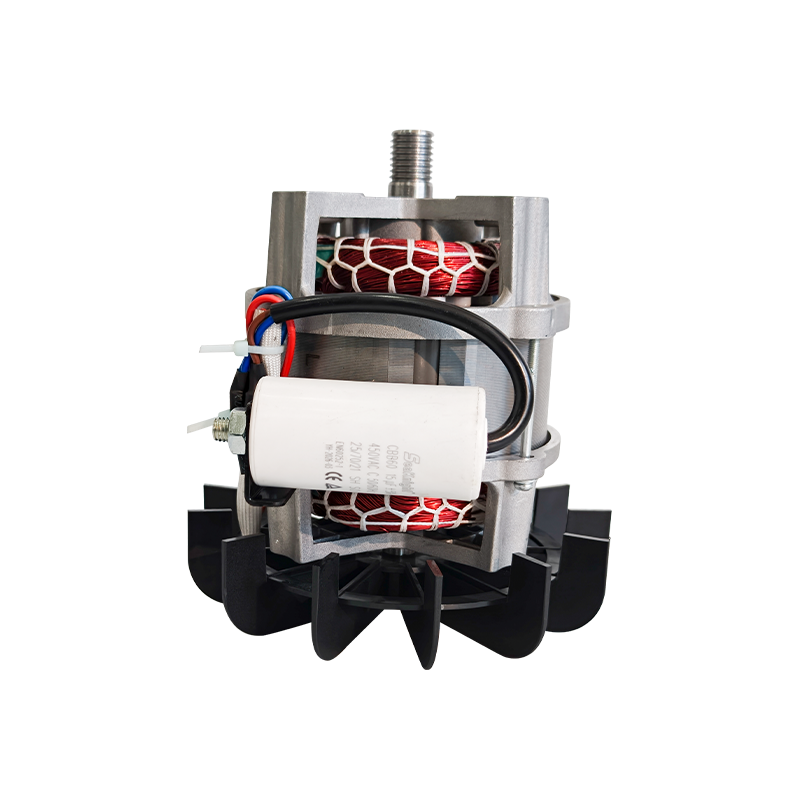
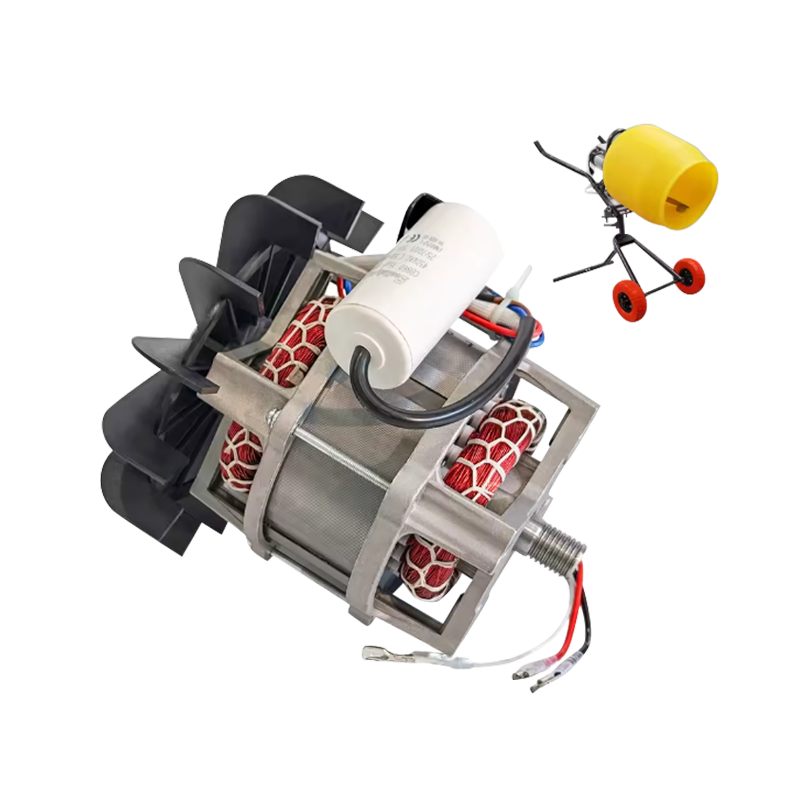
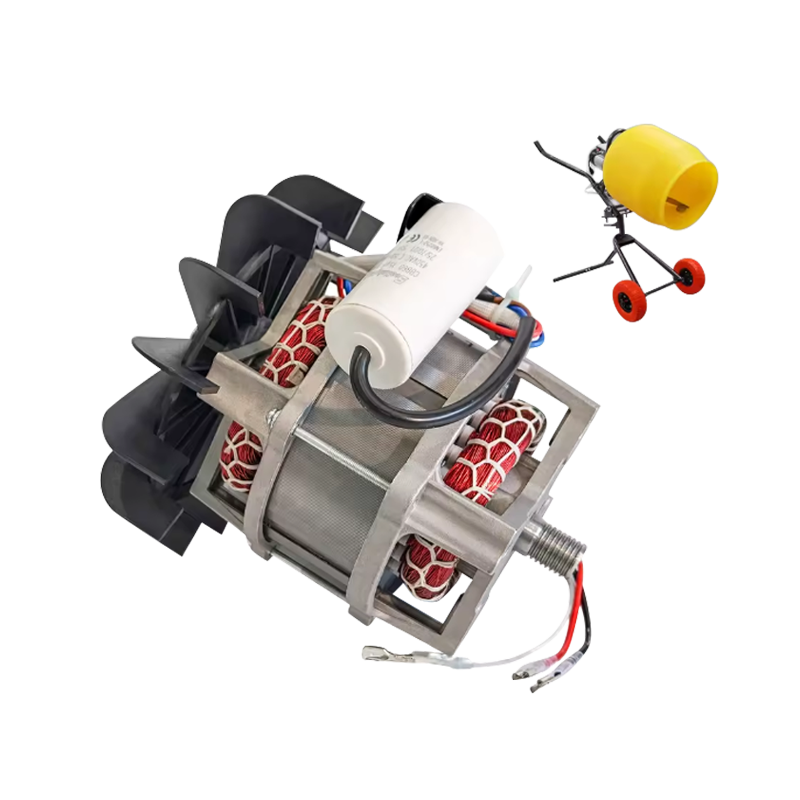
YY7134 150V 370W Portable Concrete Mixer Motor
Product Overview
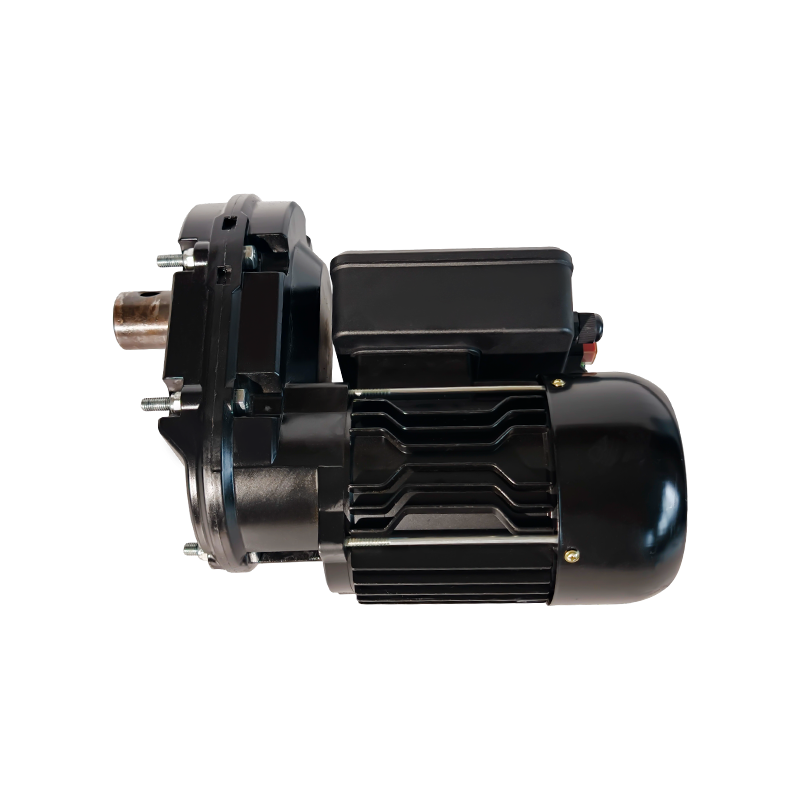
The YY7134 is a single-phase concrete mixer motor rated at 150V and 370W. It is intended for portable concrete mixers and similar compact equipment that requires a stable mechanical power source. The motor supports both 50Hz and 60Hz operating conditions, which increases its suitability for special overseas power supply requirements when the complete electrical system is correctly configured.
Its compact and lightweight structure is suitable for equipment where installation space, total machine weight, and transportation convenience are important. Portable mixers are often moved between rooms, buildings, work areas, or construction locations. A motor that is unnecessarily large or heavy can increase handling difficulty and place additional stress on the mixer frame, mounting bracket, transmission system, and wheels.
The motor is built around a simple single-phase capacitor-run design. This type of construction is widely used in practical equipment because it offers a straightforward electrical arrangement, accessible replacement components, and relatively convenient service. The design is especially appropriate for compact machines that need dependable continuous operation without a complicated control system.
| Product | Concrete Mixer Motor |
| Model | YY7134 |
| Rated voltage | 150V |
| Rated power | 370W |
| Frequency | 50/60Hz |
| Winding material | Pure copper |
| Duty characteristic | S1 continuous-duty design |
| Insulation class | Class F |
| Protection rating | IP44 |
| Cooling structure | Aluminum housing with cooling fins |
| Primary application | Portable concrete, cement, and mortar mixers |
Why the Motor Matters in a Portable Mixer
Concrete and mortar are not uniform loads. During operation, the motor may encounter an empty drum, a partially filled drum, a newly loaded drum, or a mixture that has become denser as water and aggregate distribute through the vessel. The required torque can change quickly. A motor that performs well without material may struggle when the drum is full or when the mixture sticks to the drum wall.
Starting is one of the most demanding moments. The motor must overcome the inertia of the drum, the gearbox or belt system, and the material already inside the mixer. It must also accelerate the load without prolonged stalling. Once the mixer reaches operating speed, the motor must continue delivering stable output while resisting the variable mechanical load generated by the mixture.
For this reason, a mixer motor should not be selected only by looking at its nominal wattage. Electrical construction, starting characteristics, winding quality, cooling performance, insulation, bearing condition, vibration control, and compatibility with the transmission system all affect real-world operation. The YY7134 is designed as an integrated solution for the working conditions commonly found in compact portable mixing equipment.
High Starting Torque for Demanding Loads
One of the principal advantages of the YY7134 is its high starting torque. Portable concrete mixers often need to start with cement, sand, aggregate, water, or mortar already in the drum. A motor with insufficient starting capability may hum without rotating, draw excessive current, trip protection devices, or stall repeatedly. Repeated failed starts can damage the motor windings, capacitor, transmission components, and mixer controls.
The YY7134 is intended to provide a strong starting response suitable for heavy initial loads. Its single-phase capacitor-run structure supports the phase relationship required for practical starting and running performance. When the motor is correctly matched with the mixer’s drum size, transmission ratio, and rated load, it can begin rotation more confidently and maintain stable output as the material is mixed.
High starting torque is also valuable when the mixture is not evenly distributed. Material can settle toward one side of the drum during transportation or after a pause. When operation resumes, the motor may face an uneven and temporarily increased load. A motor with suitable torque reserves is better positioned to overcome this condition than a lightly built general-purpose motor operating near its limit.
Compared with a small motor selected only for low no-load power consumption, a purpose-oriented mixer motor offers a more appropriate balance between starting capability and continuous operation. This can reduce nuisance stalling and make the complete mixer easier to use on busy construction sites.
Stable Output During Continuous Mixing
Concrete mixing is often a repetitive process. A contractor may operate the mixer for multiple batches in one day, while a workshop or small production area may require repeated cycles over a longer period. The motor must therefore do more than start once. It must maintain useful output as heat builds inside the enclosure and as the mechanical load changes throughout each batch.
The YY7134 is specified for S1 continuous-duty operation. This means the motor is designed for continuous running under appropriate rated conditions rather than only short intermittent bursts. The S1 characteristic is important for users who need a mixer that can operate for extended periods without relying on frequent cooling pauses.
Continuous-duty capability does not mean that the motor can be overloaded without limitation. Proper selection remains essential. The mixer should not exceed the recommended material capacity, and the motor should receive the correct voltage and frequency. Ventilation openings must remain clear, and the transmission must be properly aligned and lubricated. When these conditions are observed, the S1 design provides a useful foundation for reliable day-to-day service.
Stable output also helps preserve the quality of the finished mix. Irregular rotation can create inconsistent distribution of cement, aggregate, water, and additives. A motor that maintains steady operation helps the drum or mixing assembly follow its intended speed, supporting more uniform processing from batch to batch.
Pure Copper Windings and Thermal Performance
The YY7134 uses 100% pure copper winding material. Copper is valued in motor construction because it provides high electrical conductivity and supports efficient transfer of current through the windings. Efficient conductivity can help reduce resistive losses and limit unnecessary heat generation when the motor is operating within its rated conditions.
Lower winding heat is particularly important in portable mixers because construction sites may expose equipment to warm ambient temperatures, restricted airflow, and long operating cycles. Excessive heat can accelerate insulation aging, reduce bearing lubricant life, and increase the risk of electrical failure. A quality copper winding system, combined with appropriate insulation and cooling, contributes to longer operational stability.
The use of pure copper also supports consistent manufacturing. Winding resistance can be controlled more reliably when the conductor material and winding process are managed carefully. Consistent winding quality helps reduce variation between motors and allows equipment manufacturers to design their electrical systems with greater confidence.
Some low-cost competing motors may use less conductive winding materials or may reduce the amount of copper to lower initial purchase cost. Such construction can result in higher electrical losses, greater heat accumulation, and less tolerance for demanding operation. While price remains an important purchasing factor, the total cost of ownership may be higher if a motor requires premature replacement or causes repeated downtime.
Aluminum Housing with Cooling Fins
The motor uses an aluminum housing with cooling fins. Aluminum provides a practical combination of low weight, structural usefulness, and heat dissipation. These characteristics are valuable in portable equipment, where the motor must be strong enough for secure mounting without adding unnecessary mass to the machine.
Cooling fins increase the external surface area available for heat transfer. As the motor operates, heat produced by the windings, bearings, and magnetic system can move through the motor structure and dissipate into the surrounding air. The finned housing supports this process, particularly when the motor is installed in a position with reasonable airflow.
A lighter aluminum housing may also make assembly and service easier. Portable mixers are frequently transported, repositioned, and repaired in practical working environments rather than in fixed industrial plants. Reducing unnecessary motor weight can make installation more manageable and can decrease the load placed on the mixer frame.
Housing design should always be considered together with installation. Cooling fins must not be covered by insulation, packaging material, accumulated cement dust, or nearby components. A mixer manufacturer should provide sufficient clearance around the motor and should avoid placing the motor next to high-temperature surfaces. Proper airflow allows the cooling structure to perform as intended.
Class F Insulation for Practical Reliability
The YY7134 uses Class F insulation. Insulation class identifies the thermal capability of the electrical insulation system. Class F is commonly selected for motors that may operate under demanding industrial or commercial conditions, providing a useful margin for heat generated during normal use.
Insulation protects the copper windings from electrical contact with the stator core and other conductive components. If insulation deteriorates, the motor may experience leakage current, winding short circuits, reduced efficiency, or complete failure. Heat, moisture, vibration, contamination, and repeated electrical stress can all affect insulation over time.
Class F insulation is not a substitute for proper operation, but it provides a stronger thermal foundation than insulation systems intended only for lighter service. When combined with the motor’s copper winding, aluminum cooling housing, and S1 duty characteristic, it supports dependable operation in compact mixing equipment.
Users should still avoid prolonged overload, blocked ventilation, incorrect voltage, and water penetration. The insulation system works best when the entire motor installation is designed and maintained correctly.
IP44 Protection for Construction Environments
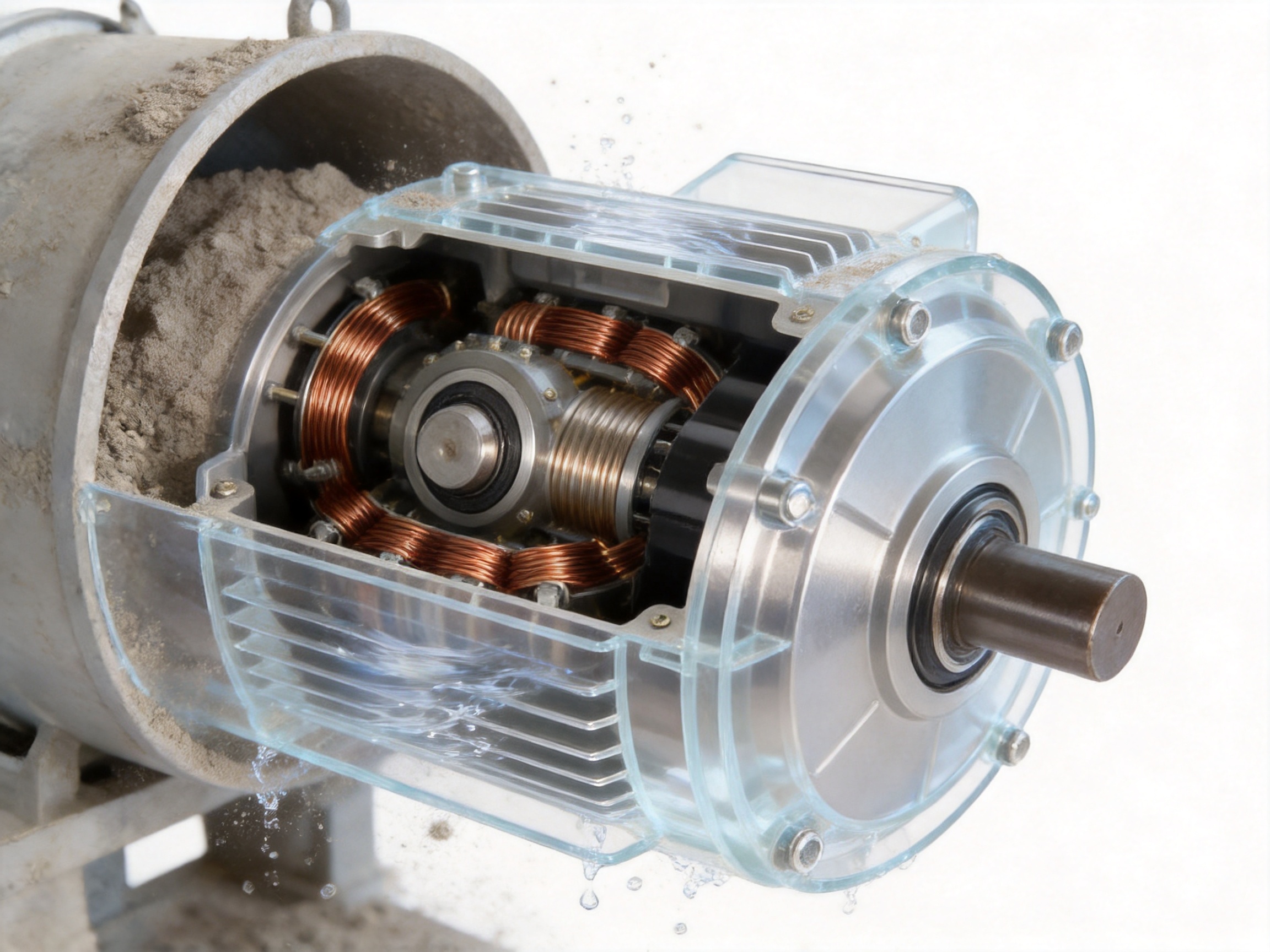
Construction locations are rarely clean or controlled. Cement dust, sand, splashes, moisture, vibration, and accidental contact can affect electrical equipment. The YY7134 has an IP44 protection rating, providing protection against solid particles larger than 1 millimeter and against water splashes from different directions.
This protection level is suitable for many ordinary indoor and sheltered outdoor operating conditions when the motor is installed correctly. It helps reduce the risk that common site contamination will immediately reach sensitive internal components. The protection is especially useful for portable mixers used in workshops, building renovations, small construction areas, and similar applications.
IP44 does not mean that the motor is waterproof or suitable for immersion, pressure washing, heavy rain exposure without additional protection, or operation in a highly corrosive atmosphere. The complete machine should be positioned so that water does not collect around the motor, cable entries, capacitor enclosure, or terminal box. If the mixer is used outdoors, a suitable shelter or equipment cover should be considered.
Compared with an unprotected general-purpose motor, an IP44 motor provides a more practical starting point for equipment used near dust and splash sources. It can reduce the maintenance burden associated with contamination, provided that the mixer is still cleaned and inspected regularly.
Resistance to Voltage Fluctuation
Power quality at a construction site may not always be stable. Long extension cables, temporary distribution boards, generators, multiple tools operating at the same time, and weak local supply networks can cause voltage variation. A motor that is highly sensitive to supply changes may lose torque, run hotter, or fail to start consistently.
The YY7134 is designed to maintain stable running under ordinary job-site voltage fluctuation when used within appropriate operating limits. Its practical electrical structure and robust winding design help support reliable operation in conditions where the supply is not perfectly constant.
Voltage fluctuation should not be ignored. Users should select cables of suitable size, minimize unnecessary cable length, inspect plugs and terminals, and use a properly rated protective device. Where a generator is used, its output capacity and voltage regulation should be compatible with the motor and the complete mixer. The 150V specification is especially important: the motor must be connected to a supply that matches its rated voltage and is suitable for the designed electrical configuration.
The customized 150V rating can be advantageous for customers whose available power systems do not match common standard motor voltages. It allows equipment manufacturers and distributors to specify a motor for special regional or machine-specific requirements rather than relying on an unsuitable standard-voltage substitute.
Low Noise and Reduced Vibration
Noise and vibration affect more than operator comfort. Excessive vibration can loosen fasteners, damage mounting brackets, accelerate bearing wear, disturb the mixer frame, and reduce the service life of belts, couplings, and gear components. Excessive noise may also indicate imbalance, misalignment, bearing deterioration, or mechanical interference.
The YY7134 is described as having low noise and low vibration after precise dynamic balancing. Dynamic balancing helps distribute rotating mass more evenly, reducing forces that would otherwise be transferred into the motor frame and mixer structure. This is particularly valuable for portable mixers, which are often built with lightweight frames that can amplify vibration.
A smoother motor can help the complete machine operate more comfortably and predictably. It may also reduce the need for frequent tightening of mounting bolts and protective covers. Lower vibration supports the service life of the motor itself and of the equipment connected to it.
Correct installation remains essential. Even a well-balanced motor can vibrate if the base is uneven, the coupling is misaligned, the belt tension is incorrect, the drum bearing is damaged, or the mixer frame has been distorted. Motor quality and machine assembly must work together.
Simple Single-Phase Capacitor-Run Structure
The motor uses a simple single-phase capacitor-run structure. This configuration is practical for many compact machines because it can operate from single-phase power and does not require a complex industrial control cabinet for ordinary use.
A capacitor supports the motor’s phase-shifting function, helping generate the rotating magnetic field needed for starting and running. The exact capacitor specification must match the motor design. Using an incorrect capacitance value can lead to weak starting, increased current, excessive heat, poor power factor, or unstable running.
One important advantage of a simple design is service accessibility. Replacement capacitors, bearings, terminal components, and other routine spare parts are generally easier to source than specialized electronic modules. Maintenance personnel can diagnose common issues using standard electrical and mechanical inspection methods.
Compared with a motor that depends on a proprietary controller or complicated electronic drive, the YY7134 can be easier to integrate into basic portable mixer designs. This may be valuable in regions where specialized service centers or electronic replacement components are not readily available.
At the same time, a single-phase capacitor-run motor should not be treated as maintenance-free. Capacitors age, especially when exposed to heat and voltage stress. The capacitor should be checked if the motor hums, starts slowly, loses torque, or trips the overload protector. Electrical work must be completed by qualified personnel with the power disconnected and the circuit safely discharged.
Advantages Over General-Purpose Competitor Motors
A general-purpose motor may appear attractive because it is available in many power ratings and may have a lower initial price. However, suitability for a concrete mixer depends on more than the nameplate power. The YY7134 offers several application-focused advantages.
Application-Specific Starting Capability
Concrete and mortar create demanding starting conditions. A motor designed with high starting torque is better suited to beginning rotation under load than a motor intended primarily for fans, light conveyors, or low-resistance machinery. This can reduce stalling and improve batch-to-batch productivity.
Better Thermal Preparation for Long Operation
The combination of pure copper windings, Class F insulation, aluminum cooling fins, and S1 continuous-duty design provides a more suitable thermal platform for repeated mixing cycles than a lightly constructed motor intended for short operation.
More Practical Site Protection
IP44 protection is useful in dusty and splash-prone locations. Although it does not eliminate the need for care, it is more appropriate for construction environments than an open or minimally protected motor.
Lower Equipment Weight
The aluminum housing supports a compact and lightweight machine design. This can improve portability and simplify installation compared with a heavier housing that provides no corresponding application benefit.
Easier Maintenance
The simple capacitor-run architecture and conventional mechanical construction can make routine diagnosis and replacement more manageable. This is an advantage for contractors, distributors, and service teams that need practical repairs rather than specialized electronic troubleshooting.
Special 150V Compatibility
The 150V rating provides an option for equipment designed around a nonstandard or special overseas power supply condition. Instead of modifying a mixer around an unsuitable standard motor, the manufacturer can specify a motor that directly matches the intended electrical system.
| Selection factor | Application requirement | YY7134 response |
| Starting performance | Start the drum with material inside | High starting torque design |
| Operating duration | Support repeated or extended mixing cycles | S1 continuous-duty characteristic |
| Heat control | Limit winding temperature during correct operation | Pure copper windings and finned aluminum housing |
| Electrical insulation | Handle normal thermal and electrical stress | Class F insulation |
| Site protection | Reduce exposure to dust and splashing water | IP44 protection |
| Noise and vibration | Protect the machine frame and improve comfort | Precise dynamic balancing |
| Maintenance | Enable practical service in different regions | Simple capacitor-run structure |
| Power compatibility | Meet a special supply requirement | 150V, 50/60Hz configuration |
Manufacturing Strengths and Quality Approach
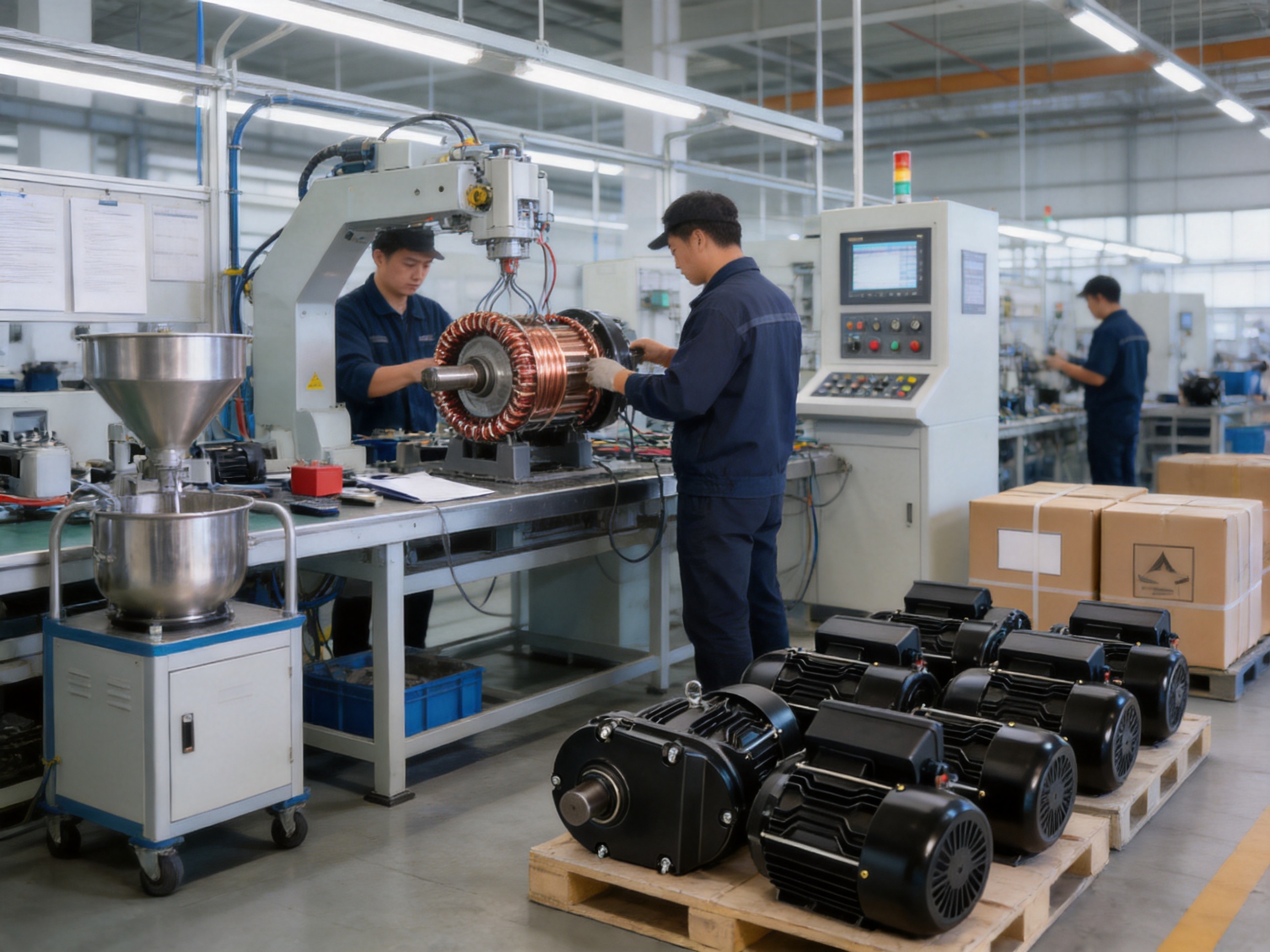
The YY7134 is manufactured by Shengzhou Jiangxin Motor Technology Co., Ltd., a Chinese motor manufacturer established in 2017. The company focuses on the research, development, production, and sales of AC motors, DC motors, micro motors, and customized motor products.
The manufacturer operates in Shengzhou, Zhejiang Province, an area supported by a strong industrial supply chain and convenient transportation connections within the Yangtze River Delta. Access to component suppliers, production services, engineering resources, and logistics infrastructure can support efficient manufacturing and product customization.
According to the supplied company information, the manufacturer owns modern production facilities, automated equipment, and a professional research and development team. It has also been recognized as a provincial-level technology enterprise. These capabilities are relevant to the production of reliable motors because consistency depends on more than final assembly. It requires controlled material sourcing, repeatable winding, accurate rotor and stator processing, dependable bearing installation, secure terminal connections, and systematic final inspection.
Research and Development Capability
Motor applications vary widely. A fan motor, oil pump motor, heater motor, and concrete mixer motor may all use electromagnetic principles, but they face different load profiles, cooling requirements, mounting restrictions, and operating environments. A manufacturer with application-focused engineering capability can adjust winding arrangements, shaft dimensions, mounting structures, protection details, and electrical specifications to match equipment requirements.
The customized 150V configuration demonstrates the value of this approach. Many equipment manufacturers need motors that do not fit the most common market voltage categories. The ability to develop and produce special-voltage models can help customers solve regional supply or machine integration challenges.
Automated Production
Automated or semi-automated production equipment can improve repeatability in processes such as winding, component insertion, rotor assembly, balancing, and testing. Automation does not replace engineering judgment or quality management, but it can reduce variation caused by inconsistent manual operations.
For a product such as the YY7134, winding consistency is especially important. The number of turns, wire placement, insulation arrangement, and connection quality influence resistance, heat generation, torque, and long-term reliability. Controlled production processes provide a stronger basis for consistent electrical performance.
Quality Control
A robust motor quality system should include incoming material inspection, process monitoring, dimensional checks, winding verification, insulation testing, no-load running tests, vibration checks, and final visual inspection. Depending on the customer’s requirements, additional load testing, temperature assessment, noise evaluation, and endurance testing may also be applied.
Quality control is particularly important for motors used in construction equipment because field replacement can be inconvenient. A motor failure may stop the mixer, delay a work crew, interrupt a batch schedule, and create additional transportation or service costs. Preventive quality management at the factory can therefore provide value beyond the purchase price.
Export Experience
The company’s products are reported to be exported to more than 60 countries and regions. International experience can support better understanding of different electrical standards, packaging expectations, documentation needs, environmental conditions, and customer communication requirements.
For distributors and original equipment manufacturers, an export-oriented supplier may also offer more practical coordination regarding special voltage, frequency, labeling, packaging, replacement parts, and batch production. These capabilities are useful when a portable mixer is sold across several markets with different power conditions.
Integration into Portable Concrete Mixers
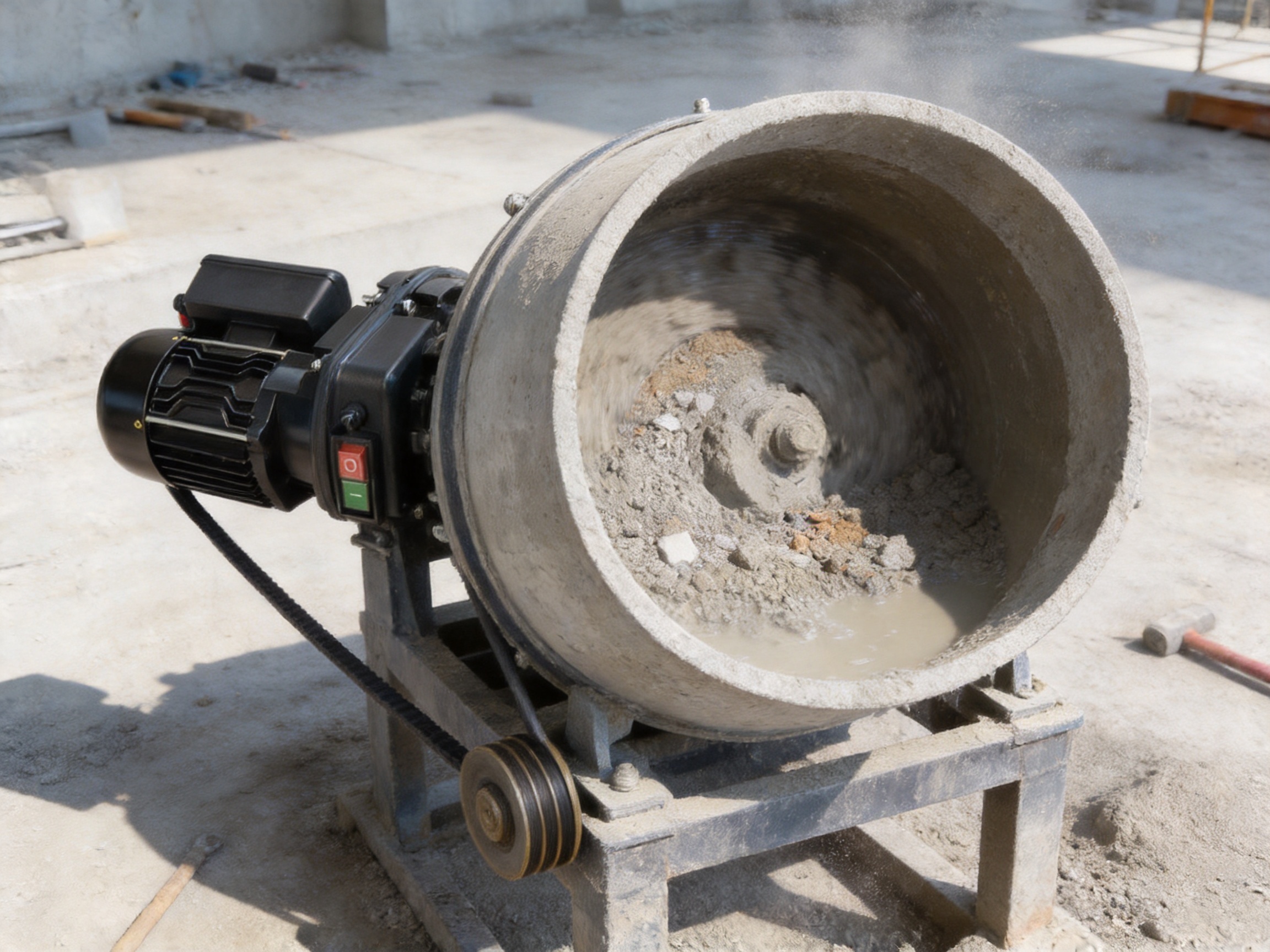
The motor should be selected as part of the complete mixer system. Its 370W output must be evaluated alongside the drum capacity, material type, transmission ratio, belt or gear arrangement, drum inclination, bearing condition, and expected batch size.
A well-designed mixer transfers motor power efficiently. The motor should be mounted on a rigid and accurately aligned base. If a belt drive is used, the pulleys must be aligned and the belt tension must be set correctly. Excessive tension places unnecessary radial load on the motor bearing, while insufficient tension causes slipping and heat. If a gearbox or chain system is used, lubrication and alignment should be checked according to the equipment manufacturer’s instructions.
The motor’s direction of rotation should be verified during commissioning. The mixer drum or paddle system must rotate in the direction required by the machine design. Incorrect rotation may reduce mixing quality or create unusual mechanical loading. Electrical connections should be made according to the approved wiring diagram, with the correct capacitor and overload protection.
Mounting fasteners should be tightened securely but should not distort the motor housing or mounting feet. Soft or uneven mounting surfaces may increase vibration. The motor should also be positioned so that cooling fins remain exposed and that cement slurry cannot collect around the shaft seal, terminal area, or lower housing.
Electrical Safety and Protection
Because the motor is rated at 150V, the supply voltage must be confirmed before installation. Connecting a 150V motor to an incompatible higher-voltage supply can cause serious damage, overheating, or a safety hazard. The frequency should also be verified because the model is intended for 50Hz or 60Hz operation within the appropriate system conditions.
The mixer should include suitable overcurrent protection and, where appropriate, overload protection. A thermal overload device can help disconnect the motor when abnormal current or temperature conditions occur. Protection should be selected according to the motor’s electrical characteristics and the complete machine design.
Grounding or protective earthing must be provided where required by local electrical regulations. The motor frame, mixer frame, control enclosure, and exposed conductive components should be incorporated into the appropriate protective system. Cables should be protected from abrasion, sharp edges, hot surfaces, moving components, and water accumulation.
Operators should never touch electrical terminals with wet hands or attempt to clear a jam while the mixer is energized. Before cleaning, inspection, belt adjustment, capacitor replacement, or mechanical repair, the equipment must be switched off, isolated from the supply, and secured against accidental restarting.
Maintenance Recommendations
Routine maintenance helps the YY7134 deliver its intended service life. The motor and mixer should be inspected at regular intervals based on operating frequency, site conditions, and manufacturer instructions.
Cleaning
Dust and cement residue should be removed from the motor housing and cooling fins. Deposits can restrict airflow and increase operating temperature. Cleaning should be performed without forcing water into the motor. High-pressure washing is not recommended unless the complete equipment design specifically permits it.
Fastener Inspection
Vibration and repeated transportation can loosen mounting bolts, terminal covers, guards, and frame fasteners. These components should be inspected periodically. Any damaged or missing fastener should be replaced before further operation.
Capacitor Inspection
A deteriorated capacitor may cause slow starting, reduced torque, humming, excessive current, or intermittent operation. If these symptoms appear, the capacitor and associated wiring should be tested by qualified personnel. Replacement capacitors must match the required rating.
Bearing and Shaft Inspection
Unusual grinding, squealing, shaft looseness, or increasing vibration may indicate bearing wear or mechanical misalignment. Continuing to operate under these conditions can damage the rotor, stator, housing, or transmission. Early inspection can prevent a minor mechanical problem from becoming a major repair.
Ventilation Inspection
The cooling fins and surrounding air passages should remain unobstructed. The motor should not be covered with tarpaulin, packaging, insulation, or accumulated construction material while operating. If the mixer is stored outdoors, it should be protected from rain and condensation while still allowing moisture to escape during storage.
Troubleshooting Guide
| Symptom | Possible causes | Recommended checks |
| Motor does not start | No power, incorrect voltage, damaged capacitor, jammed drum, disconnected winding | Check supply, wiring, capacitor, mechanical obstruction, and protection devices |
| Motor hums but does not rotate | Weak capacitor, excessive starting load, low voltage, seized bearing | Disconnect power and inspect the capacitor, drum load, voltage, and bearings |
| Motor overheats | Overload, blocked cooling fins, voltage problem, poor ventilation, bearing friction | Reduce load, clean housing, verify supply, improve airflow, and inspect bearings |
| Motor trips protection | Overcurrent, short circuit, incorrect protection setting, stalled drum | Check insulation, wiring, load, mechanical transmission, and protective settings |
| Excessive vibration | Loose mounting, imbalance, misalignment, worn bearing, damaged mixer frame | Inspect fasteners, coupling, belt alignment, bearings, and frame condition |
| Unusual noise | Bearing wear, belt problems, foreign material, rotor contact | Stop operation and inspect the motor and transmission system |
| Unstable running | Voltage fluctuation, incorrect capacitor, loose terminal, overloaded mixer | Measure supply, check capacitor and terminals, and verify the mixer load |
Choosing the Right Supplier
For equipment manufacturers and distributors, selecting a supplier involves more than comparing catalog prices. The supplier should be able to provide accurate technical data, stable production quality, communication support, and practical after-sales assistance.
Customers should confirm the voltage, frequency, power rating, mounting dimensions, shaft details, rotation requirements, capacitor specification, protection rating, insulation class, packaging, and expected operating conditions before placing an order. If the motor is intended for a new mixer design, sample testing should be completed under actual or simulated load conditions.
It is also useful to discuss production consistency and future availability. A mixer manufacturer may need replacement motors several years after the original equipment is sold. Stable model identification, documented specifications, and reliable spare-part support can simplify future service.
Shengzhou Jiangxin Motor Technology Co., Ltd. provides AC/DC motors, micro motors, and customized motor solutions. Its product range includes evaporative air cooler motors, industrial heater motors, oil pump motors, and other application-specific models. This broader experience can be useful for customers that require more than one motor type across different equipment lines.
Applications Beyond Concrete Mixing
The YY7134 is primarily intended for portable concrete, cement, and mortar mixers. Its characteristics may also make it suitable for related compact equipment when the mechanical load and electrical requirements are properly matched.
Potential applications may include small mortar mixers, plaster mixers, material blending equipment, compact agricultural mixing machines, and other low-power machinery requiring robust single-phase rotation. Each alternative application must be evaluated individually. The motor should not be used in a machine whose starting torque, continuous load, speed, protection requirement, or mounting arrangement exceeds its design conditions.
The 150V rating may also be useful for specialized equipment built for regional power systems or custom generator arrangements. Equipment designers should verify the complete electrical architecture before approving the motor for a new application.
Purchasing and Project Planning Considerations
When purchasing motors for a portable mixer project, buyers should define the intended operating environment first. Important questions include the average batch size, maximum material load, expected daily operating hours, ambient temperature, indoor or outdoor use, power source, cable length, generator use, and transportation frequency.
Motor selection should then be checked against the mixer’s torque requirement. A 370W motor may be appropriate for a compact portable mixer, but the actual suitability depends on the transmission design and operating load. Increasing drum capacity without reassessing motor power can lead to overheating and poor starting performance.
Buyers should also request clear documentation. A useful technical package may include the nameplate data, wiring diagram, capacitor information, dimensional drawing, mounting details, operating instructions, inspection records, and packaging information. Clear documentation reduces integration errors and supports service teams after delivery.
For export projects, the customer should confirm local electrical rules, labeling requirements, plug and cable configuration, packing standards, and any required conformity documentation. The supplier’s experience serving international markets can help coordinate these details, but responsibility for final market compliance should be clearly assigned between the equipment manufacturer, importer, and distributor.
Environmental and Operating Limitations
Reliable operation depends on staying within appropriate environmental conditions. The motor should be protected from immersion, direct water jets, corrosive chemicals, excessive cement slurry, and atmospheres containing unusual concentrations of conductive dust unless the complete motor specification expressly permits those conditions.
High ambient temperatures reduce the available thermal margin. If the motor is installed inside an enclosed equipment compartment, the compartment should provide sufficient ventilation or a suitable cooling arrangement. The motor should not be placed where heat from another machine accumulates around the housing.
Portable mixers should be positioned on stable ground. A sloping or unstable surface may increase frame vibration and change the load distribution inside the drum. Stable positioning protects the motor, transmission, bearings, and operator.
When the mixer is transported, the motor should be protected from impact. Repeated shocks can damage bearings, mounting feet, terminal components, or the alignment between the motor and transmission. Proper packaging and careful handling are part of the motor’s overall service strategy.
Value of a Complete Motor Solution
The value of the YY7134 is not limited to its 370W rating. Its main benefit comes from the combination of features designed around practical mixer operation: high starting torque, stable continuous output, pure copper windings, Class F insulation, IP44 protection, aluminum cooling fins, dynamic balancing, simple capacitor-run construction, and support for a special 150V supply.
These characteristics can help equipment manufacturers build a compact mixer that is easier to transport, easier to maintain, and better prepared for demanding site conditions. For operators, the benefits may appear as fewer starting problems, more consistent mixing, lower vibration, simpler service, and improved confidence during long work sessions.
Compared with choosing a generic motor based only on power and price, selecting an application-focused motor provides a more balanced approach. The motor is better aligned with the mechanical, thermal, electrical, and environmental demands of concrete mixing. This alignment can contribute to lower downtime and more predictable equipment performance.
Q&A
What is the rated power of the YY7134 motor?
The rated power is 370W. Its suitability depends on the mixer’s drum capacity, transmission system, material load, and operating conditions.
What voltage does the motor use?
The motor is rated at 150V. The supply must match the motor specification and the complete electrical system must be correctly configured before operation.
Can the motor operate at both 50Hz and 60Hz?
Yes. The supplied product information specifies support for both 50Hz and 60Hz operation. Equipment designers should still verify the complete system requirements before selecting the operating frequency.
Why is high starting torque important for a concrete mixer?
A mixer may need to start while the drum contains cement, sand, aggregate, water, or mortar. High starting torque helps the motor overcome initial inertia and load resistance, reducing the risk of stalling during startup.
Is the motor suitable for continuous operation?
The motor is specified with an S1 continuous-duty characteristic, making it suitable for continuous operation under appropriate rated conditions. It must not be overloaded, and adequate ventilation and correct voltage are required.
What does IP44 protection mean?
IP44 indicates protection against solid particles larger than 1 millimeter and against water splashes from different directions. It does not mean the motor is waterproof or suitable for immersion or pressure washing.
What is the benefit of Class F insulation?
Class F insulation provides a suitable thermal insulation system for demanding motor operation. It helps protect the windings from heat and electrical stress when the motor is correctly operated and maintained.
Why are pure copper windings useful?
Pure copper provides high electrical conductivity and can help reduce resistive losses and heat generation under rated operating conditions. It also supports consistent winding performance when controlled manufacturing processes are used.
Does the motor require a capacitor?
Yes. The motor uses a single-phase capacitor-run structure. The capacitor must match the motor design, and it should be inspected or replaced by qualified personnel if starting or running problems occur.
Can the motor be used outdoors?
It may be used in suitable outdoor applications when protected from immersion, heavy rain, direct water jets, and severe contamination. IP44 protection offers resistance to ordinary splashes, but the installation should include appropriate shelter and drainage.
What should be checked before installing the motor?
Confirm voltage, frequency, power, mounting dimensions, shaft arrangement, rotation direction, capacitor specification, transmission alignment, overload protection, grounding, cable size, and cooling clearance.
How can vibration be reduced?
Use a rigid and level mounting base, align belts or couplings correctly, maintain proper belt tension, tighten fasteners, inspect bearings, and keep the mixer frame in good condition. The motor’s dynamic balancing supports low vibration but cannot correct poor machine assembly.
Who manufactures the YY7134 motor?
The supplied information identifies Shengzhou Jiangxin Motor Technology Co., Ltd. as the manufacturer. The company produces AC/DC motors, micro motors, and customized motor solutions for various equipment applications.
Can the supplier provide customized motor solutions?
The company focuses on customized motors as well as standard products. Customers should provide the required voltage, frequency, power, mounting, shaft, protection, duty cycle, and application information for technical evaluation.
Conclusion
The YY7134 150V 370W Portable Concrete Mixer Motor is designed for the practical requirements of compact mixing equipment. Its high starting torque supports loaded startup, while its S1 continuous-duty characteristic helps it handle extended mixing cycles under appropriate conditions. Pure copper windings, Class F insulation, an aluminum finned housing, and IP44 protection provide a solid foundation for thermal management and construction-site reliability.
The motor’s low-noise and low-vibration characteristics, supported by precise dynamic balancing, can help protect the complete mixer and improve operating comfort. Its simple single-phase capacitor-run structure makes integration and maintenance more accessible than designs that depend on complex proprietary electronics. The 150V, 50/60Hz configuration also provides flexibility for special overseas power supply requirements.
Manufactured by a company with experience in AC/DC motors, micro motors, customized designs, automated production, research and development, and international supply, the YY7134 represents an application-focused alternative to generic motors. When correctly matched with the mixer, installed with proper alignment and protection, and maintained according to sound service practices, it can provide a dependable power source for portable concrete, cement, and mortar mixing equipment.
References
1. Product specification information for the YY7134 150V 370W Portable Concrete Mixer Motor.
2. Manufacturer-provided information on motor construction, applications, production capabilities, and company background.
3. General principles of single-phase capacitor-run motor operation and maintenance.
4. General guidance for motor insulation classes, continuous-duty operation, and enclosure protection ratings.
5. General engineering practices for portable concrete mixer design, motor selection, mechanical alignment, and job-site electrical safety.
Product: YY7134 150V 370W Portable Concrete Mixer Motor
 Ready To Customise
Your Motor Products?

We are professional motor manufacturers, delivering powerful, stable, and efficient power cores for all industries through precision craftsmanship and innovation.
Contact Us
-
 Mobile:+86 13575536911
-
 Tel:+86 18357538240
-
 Whatsapp:+8618357538240
-
 Email:betty@dbjxmotor.com
-
 Company Address
Copyright © by Shengzhou Jiangxin Motor Technology Co., Ltd. All Rights Reserved.
Wholesale Industrial Fan Motors Manufacturers
