

 English
 русский
 Español
 عربى

No. 8, Duxiu San Road, Ganlin Town, Shengzhou City, Shaoxing City, Zhejiang Province, China

News Category
Product Category
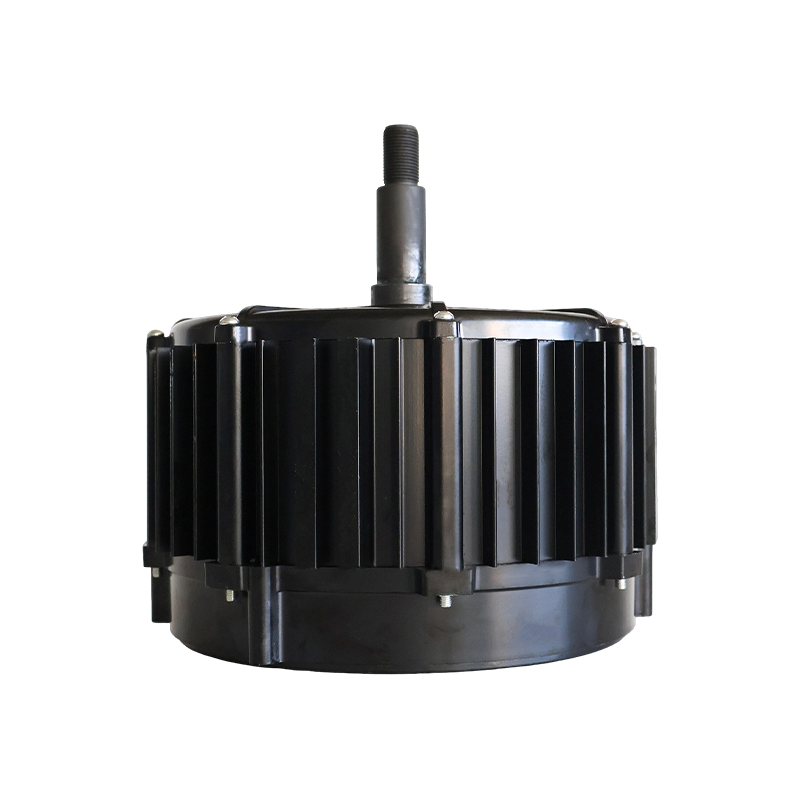
ECF-350-10 220V 350W EC Fan Motor: Efficient, Quiet, and Reliable Power for Evaporative Air Coolers
Content
- 1 Product Overview
- 2 How EC Motor Technology Improves Fan Performance
- 3 Energy Efficiency and Operating Cost Reduction
- 4 Quiet Operation and Low Vibration
- 5 Long Service Life and Reduced Maintenance
- 6 Protection, Insulation, and Electrical Reliability
- 7 Designed for Evaporative Air Cooler Applications
- 8 Advantages Compared with Conventional AC Fan Motors
- 9 Manufacturing Strengths and Production Capabilities
- 10 Quality-Oriented Production Process
- 11 Product Integration and Installation Considerations
- 12 Application Areas Beyond Evaporative Coolers
- 13 Why Work with an Experienced Motor Manufacturer?
- 14 Selection Guide for Buyers
- 15 Economic Value Over the Product Life Cycle
- 16 Q&A
- 16.1 What type of motor is the ECF-350-10?
- 16.2 What are the rated voltage and power?
- 16.3 Can the motor be used in an evaporative air cooler?
- 16.4 What efficiency can users expect?
- 16.5 How much energy can it save compared with a conventional AC motor?
- 16.6 Does the motor require brush replacement?
- 16.7 How long is the expected service life?
- 16.8 What does IP55 mean for this motor?
- 16.9 What does Class F insulation mean?
- 16.10 Is the motor suitable for 50Hz and 60Hz power systems?
- 16.11 Can the motor be customized?
- 16.12 What should be checked before installation?
- 16.13 Who manufactures the ECF-350-10?
- 17 Conclusion
- 18 References
- 19 Product: ECF-350-10 220V 350W EC Fan Motor
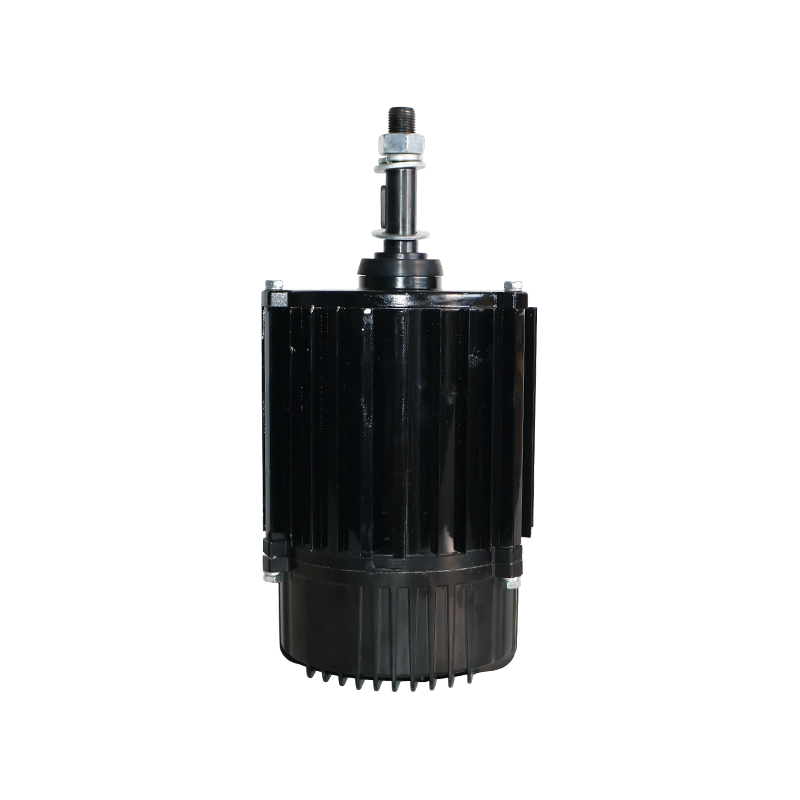
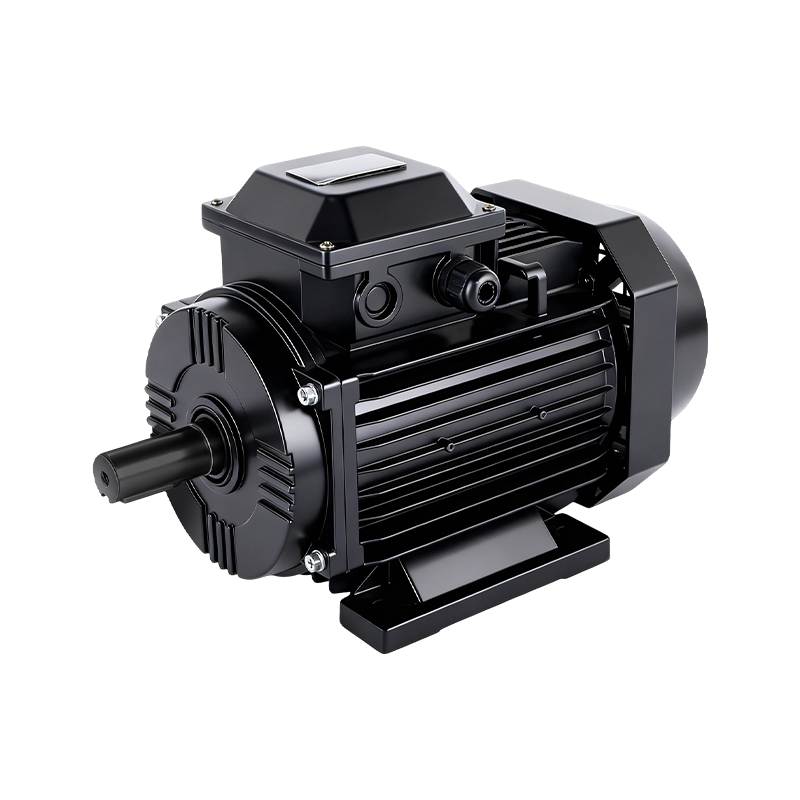
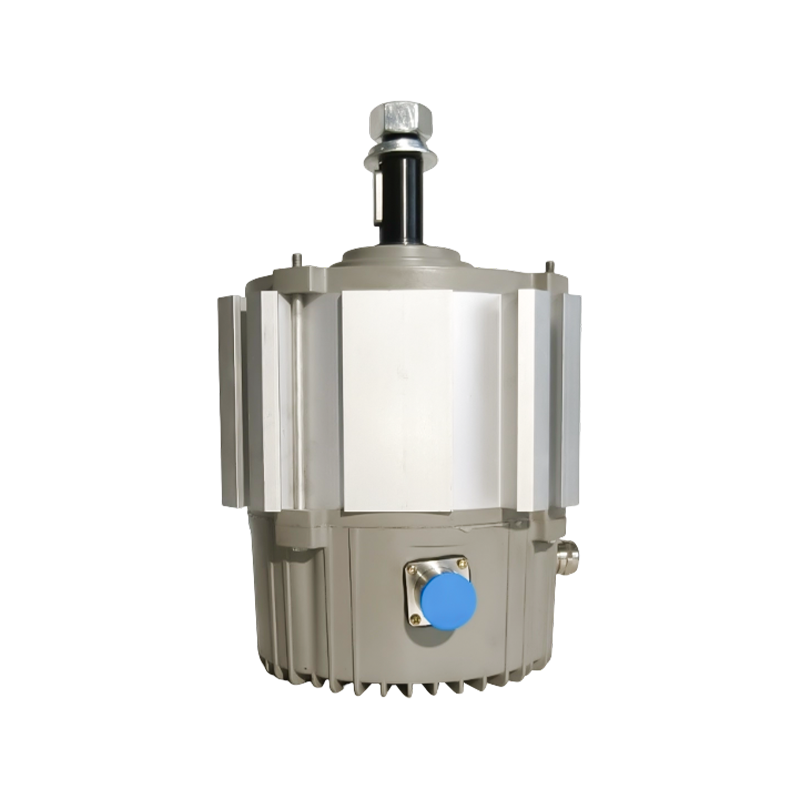
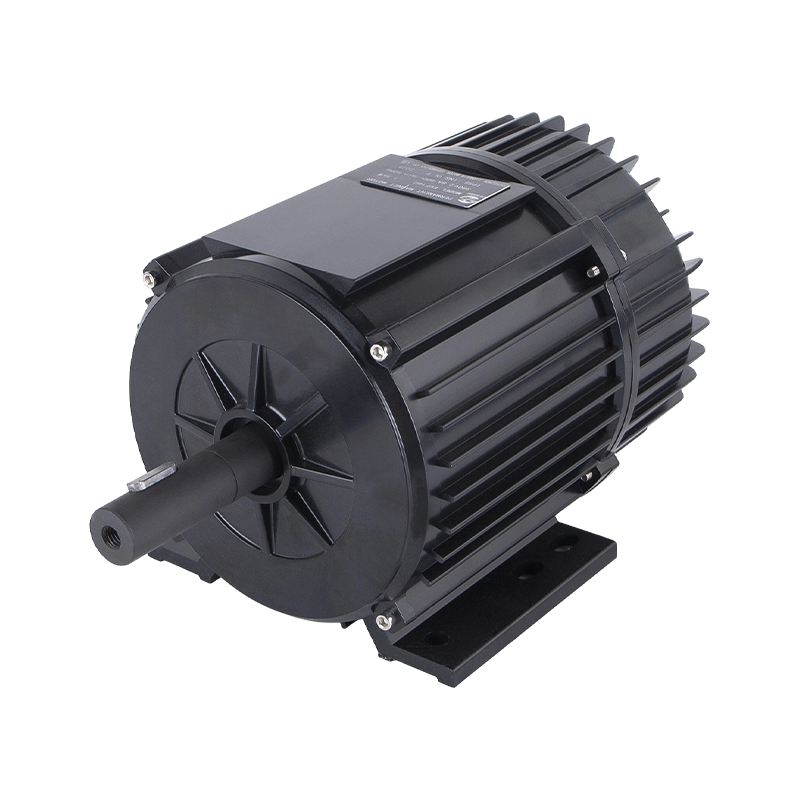
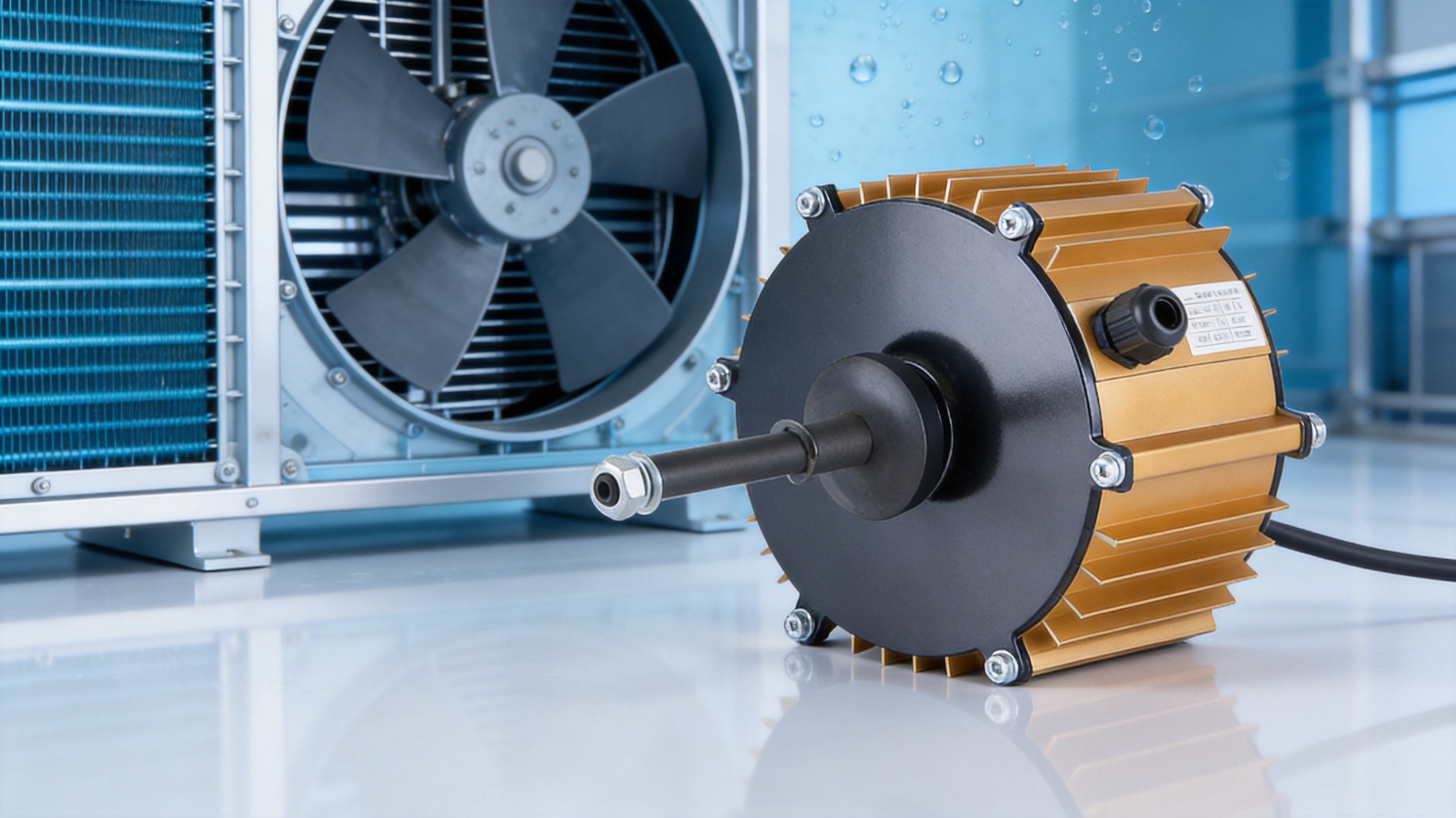
The ECF-350-10 220V 350W EC Fan Motor is an electronically commutated motor developed for evaporative air coolers and other air-moving equipment that require efficient, dependable, and low-maintenance operation. Combining brushless BLDC technology with electronic commutation, the motor delivers a practical alternative to conventional AC motors in applications where energy consumption, sound level, service life, and operating stability are important.
With a rated voltage of 220V, rated power of 350W, operating frequency of 50/60Hz, IP55 protection, and Class F insulation, the ECF-350-10 is designed to work in demanding equipment environments. Its construction is particularly suitable for evaporative air coolers, where the motor may operate for extended periods, experience changing loads, and be exposed to humid air, dust, and continuous vibration.
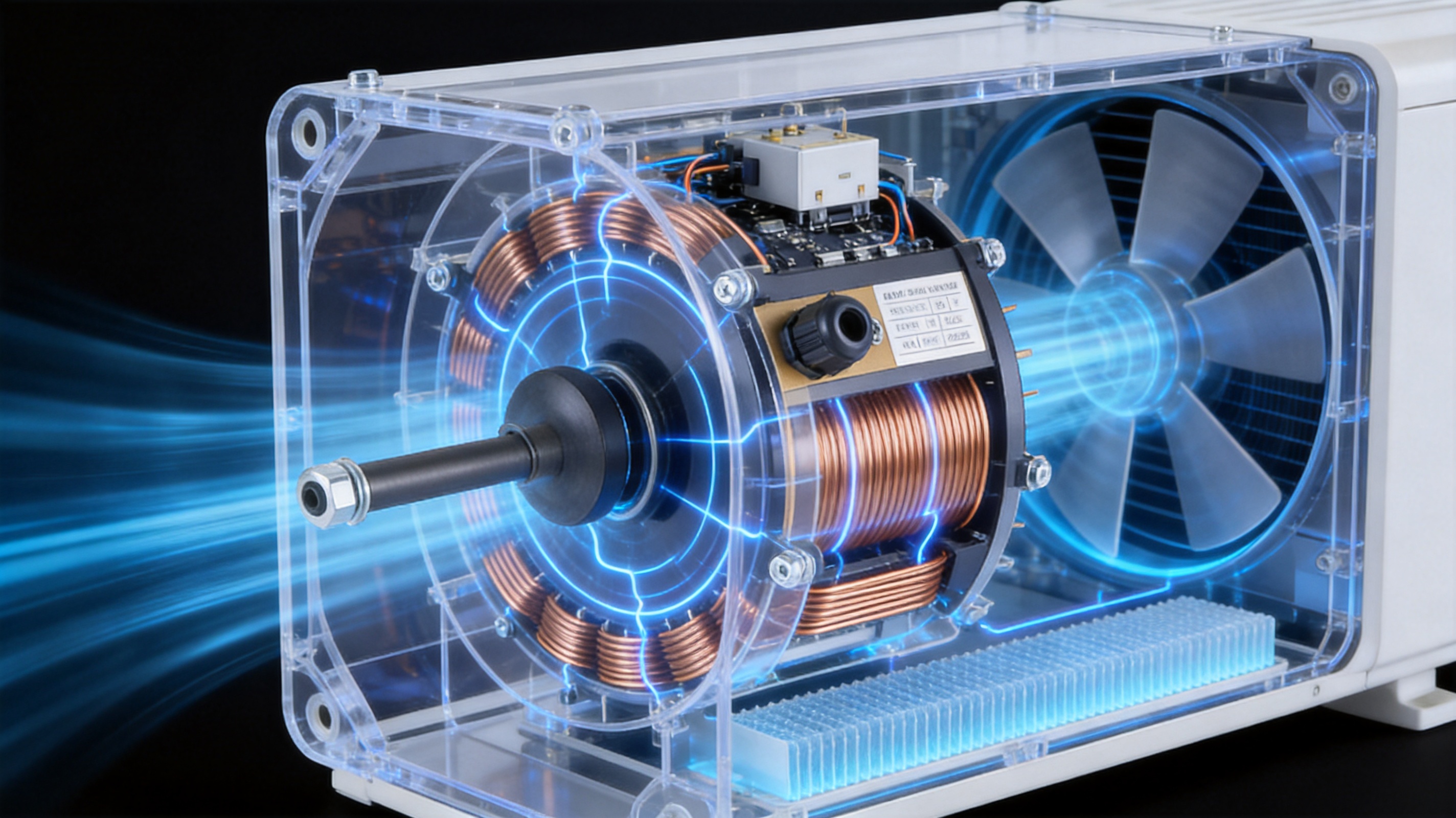
Unlike a traditional brushed motor, this EC fan motor does not depend on mechanical brushes and a commutator to transfer electrical energy to the rotating assembly. Instead, an electronic control system manages current switching, allowing the motor to operate with reduced mechanical wear and improved control. This design supports energy savings, quiet operation, and a long working life.
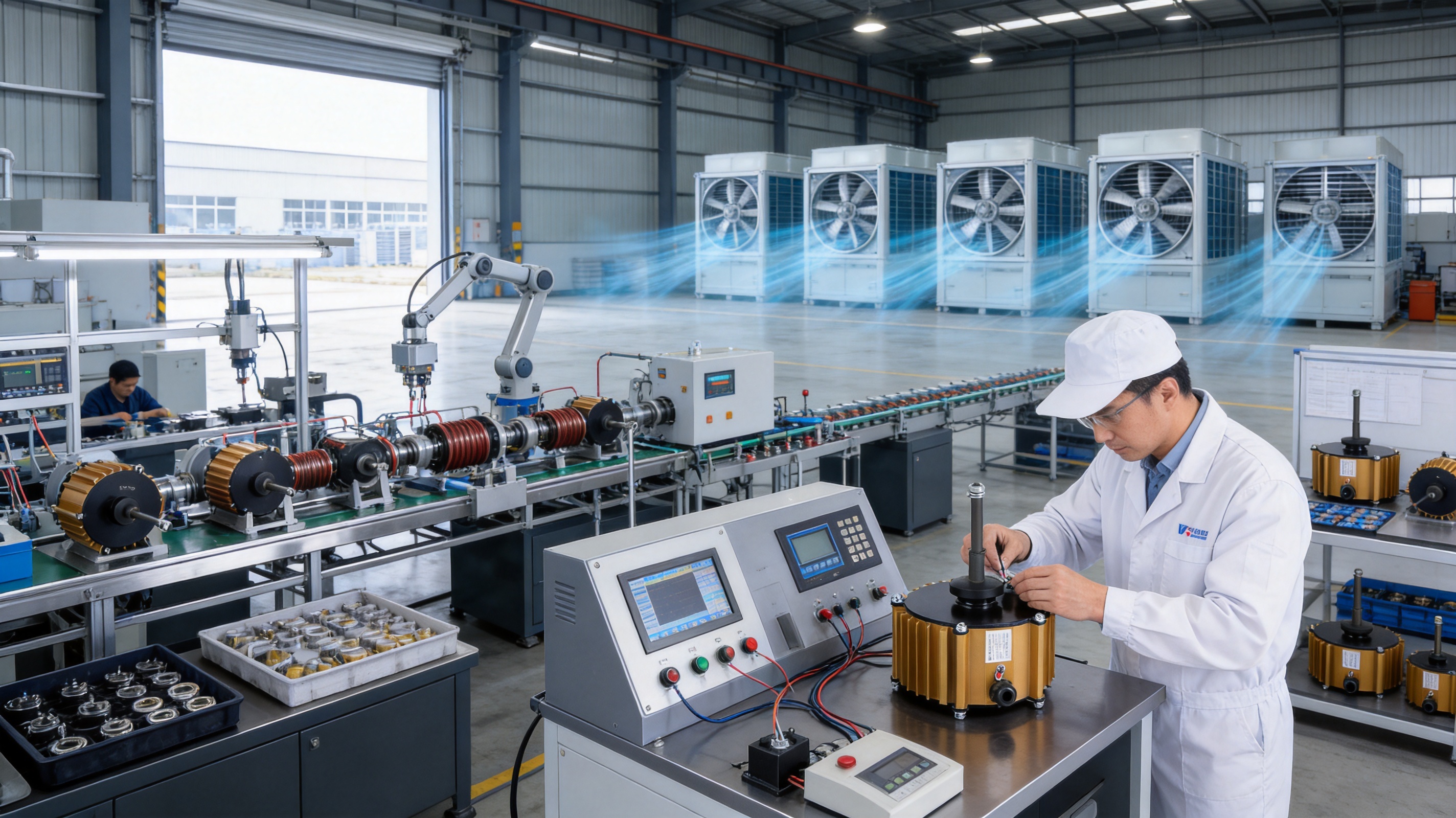
The motor is manufactured by Shengzhou Jiangxin Motor Technology Co., Ltd., a professional AC/DC motor and micro motor manufacturer established in 2017. The company combines product development, automated production equipment, quality control, and export experience to provide motors for customers in more than 60 countries and regions. Its product range includes evaporative air cooler motors, industrial heater motors, oil pump motors, EC fan motors, and customized motor solutions.
Product Overview
The ECF-350-10 belongs to the EC motor category. The term “EC” means electronically commutated. In practical terms, this means that the motor uses electronic circuitry to control the magnetic field required for rotation rather than relying on brushes for mechanical commutation.
This technology is well suited to fan applications. Fans often operate for many hours and may run at partial load for much of their service life. A motor designed only for full-load operation can consume unnecessary power when the required airflow is lower. An EC motor can maintain efficient operation across a broader working range, helping equipment designers and users reduce energy consumption without sacrificing useful airflow.
The ECF-350-10 has a rated output power of 350W. This power level makes it suitable for medium-duty air-moving systems, including evaporative air coolers and related ventilation equipment. The final performance of any fan assembly depends on the impeller, fan housing, air resistance, control settings, and installation conditions. Nevertheless, the motor provides a stable drive source for systems requiring efficient continuous or extended operation.
Its 220V voltage specification supports use in electrical systems designed around common single-phase industrial and commercial power supplies. The 50/60Hz frequency rating makes the motor adaptable to markets using either standard frequency. Before installation, the equipment manufacturer or service engineer should confirm wiring, control compatibility, grounding, and the complete operating conditions.
| Product Type | EC motor / EC fan motor |
| Model | ECF-350-10 |
| Rated Voltage | 220V |
| Rated Power | 350W |
| Rated Frequency | 50/60Hz |
| Protection Grade | IP55 |
| Insulation Class | F |
| Primary Application | Evaporative air coolers and air-moving equipment |
| Motor Technology | Electronically commutated brushless BLDC design |
| Expected Service Life | Approximately 30,000–50,000 hours under suitable operating conditions |
The specification table provides the principal information available for the ECF-350-10. Additional system details, such as fan speed, airflow, static pressure, rotation direction, control signal, mounting dimensions, shaft configuration, and electrical connection method, should be confirmed according to the intended equipment design and purchase order.
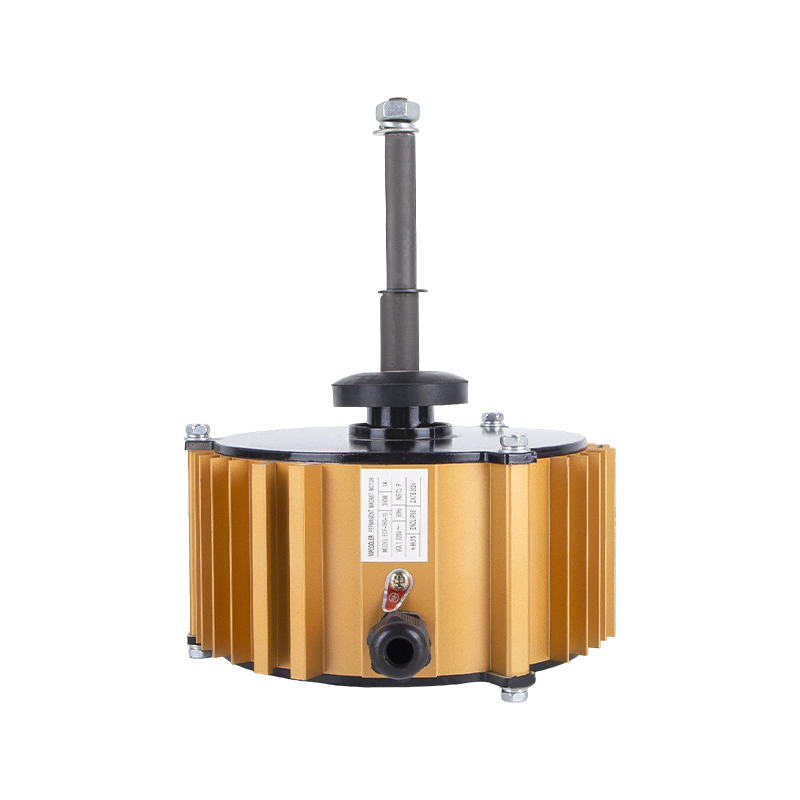
ECF-350-10 220V 350W EC Fan Motor
How EC Motor Technology Improves Fan Performance
In a conventional AC motor, the rotating magnetic field is created directly through the relationship between the stator windings and the alternating current supply. Depending on the motor type, speed regulation may require additional equipment, and efficiency can decrease when the motor operates away from its designed load point.
An EC motor combines a highly efficient permanent-magnet rotor with an electronic commutation system. The controller energizes the stator windings in a controlled sequence, producing the rotating magnetic field that drives the rotor. Since no brushes are required, the motor avoids brush friction, brush sparking, and brush replacement.
This operating principle provides several benefits for fan systems. The motor can respond more effectively to changing operating requirements, maintain efficient performance at partial load, and support more accurate speed management when the system includes a compatible control arrangement. For evaporative air coolers, this is especially useful because users may adjust airflow according to room temperature, humidity, occupancy, or time of day.
The electronic design also helps reduce the energy losses associated with mechanical commutation. Although actual efficiency depends on the working point, controller design, airflow resistance, and installation conditions, the ECF-350-10 is specified to achieve approximately 85%–95% efficiency across operating speeds. This range supports the product’s purpose as an energy-conscious alternative to traditional fan motors.
When compared with a conventional motor of similar output, an EC design may consume approximately 30%–70% less power, especially in applications that operate frequently at reduced speed or partial load. The precise saving must be evaluated through a complete system comparison. Fan blade design, air pressure, motor loading, control strategy, and operating schedule all influence the final energy result.
Energy Efficiency and Operating Cost Reduction
Energy efficiency is one of the main reasons equipment manufacturers select EC motors. A fan motor may run for hundreds or thousands of hours per year. Even a modest reduction in power consumption can produce a meaningful reduction in total operating cost over the equipment’s service life.
The ECF-350-10 is designed for efficient operation over a broad speed range rather than only at a single full-load point. This characteristic can be valuable in evaporative air coolers because cooling demand changes throughout the day. During periods of moderate temperature, the fan may not need to operate at maximum speed. An efficient partial-load motor can reduce power consumption during these periods while continuing to provide adequate airflow.
For example, a cooler used in a workshop, warehouse, shop, or agricultural building may operate from morning until evening. If the motor runs continuously at maximum output, energy use can become a significant part of the equipment’s operating cost. A suitable EC motor and compatible control system can allow the fan to operate closer to the actual airflow requirement.
Energy savings also have an environmental benefit. Lower electricity consumption generally means lower indirect emissions associated with power generation. For commercial users operating multiple coolers, the combined benefit can be substantial. The ECF-350-10 can therefore support equipment designs that prioritize both economical operation and responsible energy use.
Compared with some conventional AC motor solutions, the EC motor may also reduce the need for separate speed-control hardware. The exact arrangement depends on the motor’s control interface and the equipment design, but integrated electronic control can simplify the overall drive system. Fewer external components may reduce cabinet space, wiring complexity, and potential points of failure.
Energy efficiency should always be evaluated at the system level. An efficient motor cannot compensate for an incorrectly sized impeller, blocked air passage, poorly sealed housing, excessive bearing load, or unsuitable control settings. For the best result, the motor, fan wheel, housing, and control system should be selected as a matched assembly.
Quiet Operation and Low Vibration
Sound level is an important consideration in evaporative cooling equipment. Coolers may be installed in offices, schools, retail environments, workshops, restaurants, residences, and other locations where excessive noise can reduce comfort or productivity.
The brushless structure of the ECF-350-10 eliminates the mechanical contact associated with brushes and commutators. This helps reduce friction-related noise and avoids the electrical noise that can occur when brushes repeatedly contact a commutator surface. The motor’s rotor and winding design are also intended to support smooth rotation and reduced vibration.
Low vibration improves more than acoustic comfort. Excessive vibration can cause fastener loosening, premature bearing wear, fatigue in mounting brackets, noise transmission through the fan housing, and uneven wear in the rotating assembly. A motor that operates smoothly can help improve the durability of the entire fan system.
Actual sound and vibration performance depends on the full equipment structure. Fan blade balance, shaft alignment, mounting rigidity, airflow turbulence, bearing condition, and housing resonance all contribute to the final noise level. The ECF-350-10 provides a stable foundation for a quiet fan assembly, but correct mechanical integration remains essential.
For manufacturers, the motor’s low-noise characteristics can make it easier to develop air coolers for sound-sensitive applications. For end users, quieter operation can make it more comfortable to run the cooler for longer periods. This is especially valuable where cooling equipment is located near workers, customers, sleeping areas, or learning spaces.
Long Service Life and Reduced Maintenance
The absence of brushes is a major maintenance advantage. In a brushed motor, the brushes gradually wear as they contact the commutator. Eventually, they may require replacement, and worn brushes can cause reduced performance, unstable operation, electrical arcing, or starting problems. The ECF-350-10 avoids this routine wear mechanism through its brushless BLDC structure.
The motor is equipped with high-performance bearings and is specified for an expected service life of approximately 30,000–50,000 hours under suitable operating conditions. This does not represent an unconditional guarantee for every application. Service life is influenced by temperature, load, voltage quality, vibration, contamination, installation position, maintenance practices, and the quality of the surrounding equipment.
Even so, a long-life motor can reduce the frequency of replacement and lower the labor cost associated with service visits. In commercial and industrial environments, avoiding unexpected downtime can be particularly important. A failed cooler may affect worker comfort, product storage conditions, production processes, or customer experience.
The IP55 protection grade provides additional protection for practical equipment environments. An IP55 enclosure is generally designed to resist dust ingress that could interfere with operation and water projected by a nozzle from applicable directions. It is not intended to be submerged, and it should not be treated as protection against every form of water exposure, condensation, chemical attack, or high-pressure washing.
Proper installation is therefore necessary. The motor should be protected from direct water jets, corrosive chemicals, excessive dust accumulation, and temperatures outside the design range. Drainage, ventilation, and cable protection should be considered when the motor is installed in an evaporative cooler.
Protection, Insulation, and Electrical Reliability
The ECF-350-10 uses Class F insulation. Insulation class relates to the thermal capability of the winding insulation system. Class F is widely used in industrial motor applications and provides a higher thermal allowance than lower insulation classes. The actual permissible winding temperature depends on the complete motor design and operating environment.
Correct voltage is essential for safe and stable performance. The motor is rated for 220V operation, and the equipment should provide a compatible electrical supply. Persistent overvoltage, undervoltage, unstable frequency, incorrect wiring, or unsuitable control signals may increase heating and reduce service life.
Grounding and protective devices should be selected according to local electrical regulations and the complete equipment design. Motor protection may include appropriate fuses, circuit breakers, overload protection, surge protection, and control-system safeguards. These items should be specified by a qualified electrical professional based on the installation environment.
The IP55 rating and Class F insulation work together to support reliable operation, but neither rating eliminates the need for correct system design. A motor installed in a humid environment should have suitable cable glands, sealed connections, proper drainage, and protection against condensation. The electrical enclosure should also be positioned to avoid unnecessary exposure to water and corrosive vapor.
Before commissioning, technicians should inspect the mounting arrangement, rotate the fan manually where appropriate, verify that the fan wheel is unobstructed, confirm wiring, and check that the motor starts and runs without abnormal sound or vibration. Early inspection can identify installation problems before they become expensive failures.
Designed for Evaporative Air Cooler Applications
Evaporative air coolers use the evaporation of water to reduce air temperature. A fan draws or pushes air through wetted media and distributes the cooled air into a space. The fan motor is a central component because it determines how reliably and efficiently the air can be moved through the system.
The ECF-350-10 is suitable for this application because it combines efficient electrical operation with a brushless design and protection suitable for many air-cooling environments. Its 350W output can support medium-power fan assemblies when matched with an appropriate impeller and air path.
Evaporative coolers are often operated for long periods during warm seasons. The motor may be exposed to humid air, airborne particles, and changing thermal conditions. A durable, low-maintenance EC motor can help equipment manufacturers develop coolers that provide dependable performance without frequent motor servicing.
Speed flexibility is another practical advantage. Cooler users may need strong airflow during the hottest part of the day and quieter, lower airflow at other times. An EC motor can be incorporated into a control system that supports this type of operating adjustment. The control method must be confirmed during product selection because different motor configurations may use different control arrangements.
For portable coolers, the motor’s smooth operation may help reduce vibration transmitted to the frame and wheels. For fixed industrial coolers, stable operation can support long working cycles in workshops, warehouses, agricultural buildings, logistics areas, and production spaces.
The motor can also be considered for customized cooler designs. Manufacturers may integrate it with different fan wheels, housings, air ducts, control panels, and mounting structures. Product compatibility should be verified through technical drawings, samples, and performance testing before mass production.
Advantages Compared with Conventional AC Fan Motors
Conventional AC motors remain useful in many applications, but EC motors provide several advantages where efficiency, speed control, and maintenance are important. The ECF-350-10 is designed to offer these advantages in a compact and practical fan-motor solution.
First, the EC design can achieve higher efficiency over a wider operating range. A conventional motor may perform efficiently near its rated point but become less efficient when the load is reduced. Since air-cooling equipment frequently changes speed, the ability to maintain good efficiency during partial-load operation can provide a meaningful benefit.
Second, the brushless construction eliminates brush replacement. This is especially useful in equipment that is difficult to access or installed in large quantities. Reducing periodic maintenance can lower the total cost of ownership and decrease service interruptions.
Third, the EC design can support more flexible speed management. Depending on the control system, the motor may be adjusted to suit the required airflow rather than simply operating at a fixed speed. This can improve user comfort and reduce unnecessary power consumption.
Fourth, the motor is designed for low vibration and quiet operation. In comparison with older or poorly matched AC motor assemblies, a well-integrated EC motor can help reduce acoustic disturbance and mechanical stress.
Fifth, the combination of IP55 protection and Class F insulation offers a practical specification for many industrial and commercial fan environments. These features do not replace proper installation, but they provide useful protection characteristics for equipment designers.
Finally, the ECF-350-10 is supported by a manufacturer with experience in AC/DC motors, micro motors, and customized motor development. This can be valuable for buyers who require more than a standard catalog item and need assistance with application matching, samples, production planning, and technical communication.
Manufacturing Strengths and Production Capabilities
Shengzhou Jiangxin Motor Technology Co., Ltd. was established in 2017 and focuses on the research, development, production, and sales of AC/DC motors and micro motors. The company operates in Shengzhou, Zhejiang Province, within the Yangtze River Delta, a region known for its strong industrial base, developed supply chains, engineering resources, and convenient logistics connections.
The company owns modern production facilities and advanced automated equipment. Automation can help improve process consistency, repeatability, and production efficiency. In motor manufacturing, repeatable winding, assembly, balancing, inspection, and testing processes are important because small variations can affect noise, vibration, efficiency, temperature rise, and service life.
Automated production equipment also supports stable output when customers require regular batch deliveries. Consistent production is especially important for air-cooler manufacturers because motor dimensions, wiring, mounting features, and performance must remain compatible with the rest of the product assembly.
The company maintains a professional research and development team. This capability supports the development of motors for different applications and helps the manufacturer respond to changing market requirements. EC motor applications may involve specific airflow targets, installation limitations, environmental conditions, control requirements, and noise expectations. An experienced technical team can help evaluate these factors during product selection.
Jiangxin Motor has been recognized as a provincial-level technology enterprise. This recognition reflects the company’s focus on technical development and innovation. It also supports the company’s positioning as more than a basic motor trading company. Its business model combines engineering, manufacturing, quality management, and international supply.
The company uses strict quality control systems to support the production of reliable and energy-efficient motors. Quality control may include incoming material inspection, process monitoring, assembly checks, electrical testing, operational testing, and final inspection. The specific inspection plan may vary by product and customer requirements, but the overall objective is to ensure that each motor meets the agreed technical specification.
Manufacturing quality begins with appropriate material selection. Magnetic components, copper windings, insulation materials, bearings, housings, connectors, and electronic components all influence motor performance. Stable sourcing and controlled incoming inspection help reduce the risk of inconsistent raw-material quality.
Winding quality is also important. Uniform winding placement, correct wire routing, proper insulation, and reliable electrical connections contribute to stable motor operation. In an EC motor, the relationship between the stator windings, rotor magnets, and electronic controller must be maintained accurately to achieve smooth commutation and efficient torque production.
Rotor balance is another important production consideration. An unbalanced rotor can create vibration, noise, and bearing stress. Appropriate balancing and assembly inspection can help improve smoothness, particularly when the motor is used in a fan where rotating imbalance may be amplified by the impeller.
Electronic control components require careful handling and inspection as well. The controller must operate reliably under the specified voltage, frequency, temperature, and load conditions. Quality management should therefore address both the electromechanical motor assembly and the electronic control section.
The company’s experience exporting products to more than 60 countries and regions also contributes to its international manufacturing strength. Export customers often require clear documentation, stable packaging, consistent labeling, reliable communication, and compliance with destination-market requirements. International experience can help a manufacturer coordinate these elements more effectively.
Quality-Oriented Production Process
A high-quality EC fan motor depends on the combined performance of many manufacturing stages. The process begins with technical definition. Before production, the motor model, voltage, power, frequency, protection grade, insulation class, mounting requirements, and application conditions should be clearly identified.
Material preparation follows technical confirmation. Components are checked against purchasing and engineering requirements before being released to production. This reduces the possibility of using incorrect components or materials that do not match the intended electrical and mechanical design.
Stator production requires careful control of the core, winding, insulation, and connections. The winding process must achieve the specified electrical characteristics, while insulation materials must be positioned correctly to reduce the risk of short circuits or breakdown. Process checks help identify defects before the motor reaches final assembly.
The rotor assembly must maintain the correct relationship between the shaft, rotor body, permanent magnets, and bearings. Bearing installation should avoid damage and excessive force. Proper assembly contributes to lower friction, reduced noise, and longer operating life.
Electronic components and control sections are integrated according to the product design. The assembly must be protected against incorrect connection and inspected for workmanship quality. Where required, electrical parameters can be checked before the motor is connected to a fan load.
Final assembly includes installation of the housing, bearing supports, connectors, and protective parts. The motor is then inspected for appearance, dimensions, connection quality, and mechanical movement. Operational tests can verify starting behavior, running stability, sound, vibration, and electrical performance.
Packaging is also part of quality protection. Motors should be packed to prevent impact, moisture exposure, connector damage, and movement during transportation. Proper labeling helps customers identify model information, electrical ratings, quantity, and handling requirements.
For large or repeat orders, production planning is important. The manufacturer can coordinate material preparation, scheduling, process control, inspection, and shipment according to the customer’s purchase plan. Clear communication about forecast quantities and delivery requirements helps improve supply stability.
Product Integration and Installation Considerations
The ECF-350-10 should be installed by qualified personnel familiar with electrical equipment and fan systems. Before installation, the user should compare the motor label and technical documents with the equipment design. The rated voltage, power, frequency, mounting arrangement, rotating direction, fan load, and control interface should all be confirmed.
The fan wheel must be correctly mounted and balanced. A damaged, deformed, or unbalanced impeller can create vibration that may be incorrectly attributed to the motor. The shaft and impeller should be aligned according to the equipment design, and all fasteners should be tightened appropriately.
Airflow passages should remain clear. A blocked inlet or outlet increases system resistance and may force the motor to operate under excessive load. Dirty cooling media, obstructed grilles, or restricted ducts can reduce airflow while increasing motor stress.
The motor should be mounted on a sufficiently rigid structure. Flexible or weak mounting can amplify vibration and noise. If vibration-isolation components are used, they should be selected so that they support the motor securely without allowing excessive movement.
Electrical connections should be protected from water and humidity. Cable routing should prevent abrasion, sharp bends, and contact with hot or rotating components. Any connector or terminal used with the motor should be suitable for the electrical rating and environmental conditions.
During commissioning, technicians should listen for unusual sounds, check for abnormal vibration, and monitor temperature under normal load. If the motor repeatedly trips protective equipment, fails to start, runs roughly, or becomes excessively hot, the system should be disconnected and inspected by qualified personnel.
Routine maintenance is relatively limited because the motor is brushless, but the complete fan assembly still requires attention. Users should inspect the fan wheel, air passages, mounting hardware, electrical connections, and surrounding environment. Dust and deposits should be removed using a method suitable for the equipment and protection rating. High-pressure water should not be directed at the motor unless the complete system is specifically designed for that method.
Application Areas Beyond Evaporative Coolers
Although the primary application of the ECF-350-10 is evaporative air cooling, its EC fan-motor characteristics may also be relevant to other air-moving equipment. Potential applications include industrial ventilation units, air circulation systems, commercial cooling equipment, machinery cooling, air-handling assemblies, and specialized fan products.
In workshops and factories, efficient fan motors can help improve ventilation while limiting operating costs. In warehouses and logistics facilities, air circulation may be required for long periods, making efficiency and reliability important. In agricultural or semi-open buildings, protection and durable construction may help support operation in dusty or humid conditions when the complete installation is correctly designed.
Commercial equipment manufacturers may also use EC motor technology in products where noise and user comfort are important. A quiet motor can support applications in retail areas, dining spaces, offices, educational facilities, and public buildings.
For original equipment manufacturers, the motor can serve as a platform for customized systems. The customer may need a special mounting structure, a particular connector, a modified shaft, a different control arrangement, or a matched fan wheel. Such requirements should be discussed with the manufacturer before production so that the engineering and quality teams can evaluate feasibility.
Why Work with an Experienced Motor Manufacturer?
Selecting an EC motor is not only a matter of comparing rated power. A successful application requires compatibility between the motor, fan, controller, housing, electrical system, and working environment. An experienced manufacturer can help customers consider these relationships before the product enters mass production.
Jiangxin Motor’s product focus covers AC/DC motors and micro motors for several industrial applications. This breadth provides useful experience in different motor structures, environmental conditions, and equipment requirements. The company’s product categories include external BLDC air cooler motors, air cooler motors, concrete mixer motors, EC fan motors, and other motor products.
The company’s location in Zhejiang provides access to an established manufacturing ecosystem. Supplier availability, engineering support, component sourcing, production services, and transportation infrastructure can all contribute to efficient project coordination.
Its research and development capability supports both standard products and customized solutions. Customers can provide application information such as voltage, power, airflow, operating schedule, installation space, noise requirements, environmental conditions, and expected annual quantity. The manufacturer can then assess whether the ECF-350-10 is suitable or whether an alternative configuration should be considered.
Export experience is another advantage for international buyers. Customers may require product information, packaging coordination, shipment planning, quality documents, and consistent communication across different time zones and languages. A manufacturer accustomed to international business can help reduce misunderstandings during these stages.
Most importantly, the company emphasizes reliable, energy-efficient, and long-lasting motor products. This matches the requirements of equipment manufacturers that want to reduce warranty risk, improve user satisfaction, and develop products with lower lifetime operating cost.
Selection Guide for Buyers
Buyers should begin by defining the fan system’s actual requirements. The required airflow and static pressure should be identified, followed by the fan wheel size, expected speed range, operating schedule, and environmental conditions.
The electrical supply must be checked carefully. The ECF-350-10 is rated for 220V and 50/60Hz. Buyers should confirm that the available supply and control system are compatible. If the motor will be installed in a country or facility with special electrical requirements, the complete system should be reviewed by a qualified professional.
Environmental protection should also be considered. IP55 is appropriate for many industrial and commercial environments, but the motor should not be submerged or exposed to unsuitable cleaning methods. If the equipment will operate near salt spray, corrosive chemicals, extreme dust, or unusual temperatures, the customer should discuss these conditions with the manufacturer.
Noise requirements should be stated before selection. Although the motor is designed for quiet, low-vibration operation, the final sound level depends on the complete assembly. The customer should provide information about the installation location and acceptable acoustic performance.
Quantity and delivery expectations should be communicated early. Regular forecasts allow the manufacturer to plan materials and production capacity. For new equipment, sample testing and pilot production are recommended before a large order is released.
Buyers should request the technical information necessary for integration, including outline drawings, wiring instructions, control details, mounting specifications, and test requirements where applicable. These documents help prevent design errors and reduce commissioning time.
Economic Value Over the Product Life Cycle
The purchase price is only one part of the cost of a fan motor. Total ownership cost also includes electricity, maintenance, replacement parts, labor, downtime, and the effect of motor reliability on the equipment’s service performance.
The ECF-350-10 can help reduce operating cost through efficient electrical performance. Its potential energy savings are most valuable when the fan operates for long hours, when electricity costs are significant, or when the equipment frequently works at partial load.
The brushless design can reduce maintenance requirements because there are no brushes to replace. This can be particularly beneficial when the motor is installed inside a large cooler, at height, or in a location where service access is difficult.
The expected 30,000–50,000-hour service life can also support long-term value when the motor is correctly matched to the application and operated within suitable conditions. Longer service life may reduce the frequency of replacement and help maintain equipment availability.
For commercial equipment manufacturers, a reliable motor may reduce warranty claims and improve customer confidence. For end users, stable operation and lower energy consumption can improve the return on investment of the complete cooling system.
Q&A
What type of motor is the ECF-350-10?
The ECF-350-10 is a 220V 350W electronically commutated EC fan motor. It uses a brushless BLDC design and is intended primarily for evaporative air coolers and other air-moving equipment.
What are the rated voltage and power?
The rated voltage is 220V, and the rated power is 350W. The motor is specified for 50/60Hz operation.
Can the motor be used in an evaporative air cooler?
Yes. The motor is specifically designed for evaporative air-cooler applications. The fan wheel, mounting arrangement, controller, and air resistance must still be matched to the motor before installation.
What efficiency can users expect?
The product information specifies approximately 85%–95% efficiency across operating speeds. Actual efficiency depends on the operating point, fan load, controller, airflow resistance, and complete equipment design.
How much energy can it save compared with a conventional AC motor?
The product information indicates potential power savings of approximately 30%–70% compared with conventional AC motors. Actual savings vary according to operating hours, speed, load, control method, and the performance of the compared motor.
Does the motor require brush replacement?
No. The motor uses a brushless BLDC structure, so it does not require routine replacement of mechanical brushes.
How long is the expected service life?
The expected service life is approximately 30,000–50,000 hours under suitable operating conditions. Proper voltage, loading, ventilation, environmental protection, bearing condition, and installation are important to achieve dependable service life.
What does IP55 mean for this motor?
IP55 indicates protection against harmful dust ingress and water projected by a nozzle under applicable test conditions. It does not mean that the motor can be submerged or exposed to high-pressure washing, continuous water jets, or all forms of corrosive moisture.
What does Class F insulation mean?
Class F is a thermal insulation classification used for motor winding insulation systems. It provides a higher thermal capability than lower insulation classes, but the motor must still be operated within the limits of its complete design and application.
Is the motor suitable for 50Hz and 60Hz power systems?
Yes. The product specification lists a frequency of 50/60Hz. The electrical supply, controller, and installation should be checked to ensure complete system compatibility.
Can the motor be customized?
Customization may be possible depending on the requirement. Customers should provide information about mounting dimensions, shaft configuration, connector type, control method, operating environment, quantity, and performance targets so the manufacturer can evaluate the project.
What should be checked before installation?
Users should check voltage, frequency, wiring, grounding, mounting, fan-wheel balance, airflow resistance, control compatibility, cable protection, and environmental conditions. Installation and electrical work should be performed by qualified personnel.
Who manufactures the ECF-350-10?
The motor is manufactured by Shengzhou Jiangxin Motor Technology Co., Ltd., a Zhejiang-based producer of AC/DC motors and micro motors with experience in research, development, production, quality control, and international supply.
Conclusion
The ECF-350-10 220V 350W EC Fan Motor is designed for equipment manufacturers and users seeking efficient, quiet, durable, and low-maintenance fan operation. Its electronically commutated brushless structure provides a practical advantage over conventional motor designs by reducing mechanical wear and supporting efficient operation across changing speeds.
With 220V operation, 350W rated power, 50/60Hz frequency compatibility, IP55 protection, and Class F insulation, the motor offers a useful specification for evaporative air coolers and related ventilation systems. Its stated efficiency range, potential energy savings, low-vibration characteristics, and expected 30,000–50,000-hour service life make it suitable for applications where lifetime operating cost and reliability matter.
The product is supported by Shengzhou Jiangxin Motor Technology Co., Ltd., a manufacturer with modern production facilities, automated equipment, a professional R&D team, quality control systems, and export experience in more than 60 countries and regions. These capabilities support both standard motor supply and customized application development.
For the best result, the ECF-350-10 should be selected as part of a complete fan system. Correct matching of the motor, impeller, housing, controller, wiring, and environment is essential. When properly integrated and operated, this EC motor can help equipment manufacturers deliver cooling products with lower energy consumption, reduced maintenance, improved acoustic comfort, and dependable long-term performance.
References
1. Product technical information for ECF-350-10 220V 350W EC Fan Motor, including voltage, power, frequency, protection grade, insulation class, efficiency, and service-life specifications.
2. General engineering principles for electronically commutated motors and brushless DC motor operation.
3. General guidance on motor insulation classes and thermal performance.
4. General guidance on enclosure protection ratings for electrical equipment.
5. Manufacturer information concerning AC/DC motor production, automated manufacturing equipment, research and development, quality control, and international supply capabilities.
6. General application principles for evaporative air coolers, fan systems, airflow management, and motor selection.
Product: ECF-350-10 220V 350W EC Fan Motor
 Ready To Customise
Your Motor Products?

We are professional motor manufacturers, delivering powerful, stable, and efficient power cores for all industries through precision craftsmanship and innovation.
Contact Us
-
 Mobile:+86 13575536911
-
 Tel:+86 18357538240
-
 Whatsapp:+8618357538240
-
 Email:betty@dbjxmotor.com
-
 Company Address
Copyright © by Shengzhou Jiangxin Motor Technology Co., Ltd. All Rights Reserved.
Wholesale Industrial Fan Motors Manufacturers
