

 English
 русский
 Español
 عربى
عربى
No. 8, Duxiu San Road, Ganlin Town, Shengzhou City, Shaoxing City, Zhejiang Province, China

News Category
Product Category
YY71-2 230V 650W Portable Concrete Mixer Motor: Performance, Efficiency, and Manufacturing Excellence
Content
- 1 Product Overview
- 2 Why the Motor Is Critical in a Portable Concrete Mixer
- 3 Key Advantages of the YY71-2 Motor
- 4 Comparison with Generic and Lower-Specification Alternatives
- 5 Manufacturing Strengths Behind the Product
- 6 Material and Electrical Design Considerations
- 7 Application in Portable Concrete Mixers
- 8 Installation and Maintenance Recommendations
- 9 Quality Assurance and Customer Value
- 10 OEM, Replacement, and Wholesale Considerations
- 11 Responsible Product Selection
- 12 How This Motor Supports More Efficient Equipment Design
- 13 Technical Support and Long-Term Cooperation
- 14 Frequently Asked Questions
- 14.1 What is the rated power of the YY71-2 motor?
- 14.2 What voltage does the motor use?
- 14.3 Is the YY71-2 a single-phase motor?
- 14.4 What is the rated speed?
- 14.5 What type of winding does the motor have?
- 14.6 What equipment is the motor designed for?
- 14.7 Can this motor be used as a replacement for any 230V mixer motor?
- 14.8 Why is full copper winding important?
- 14.9 Does high-temperature resistance mean the motor cannot overheat?
- 14.10 What should be checked before installation?
- 14.11 How can operators extend motor service life?
- 14.12 Is the motor suitable for export markets?
- 14.13 Can customized motor requirements be discussed?
- 15 Conclusion
- 16 References
- 17 Product: YY71-2 230V 650W Portable Concrete Mixer Motor
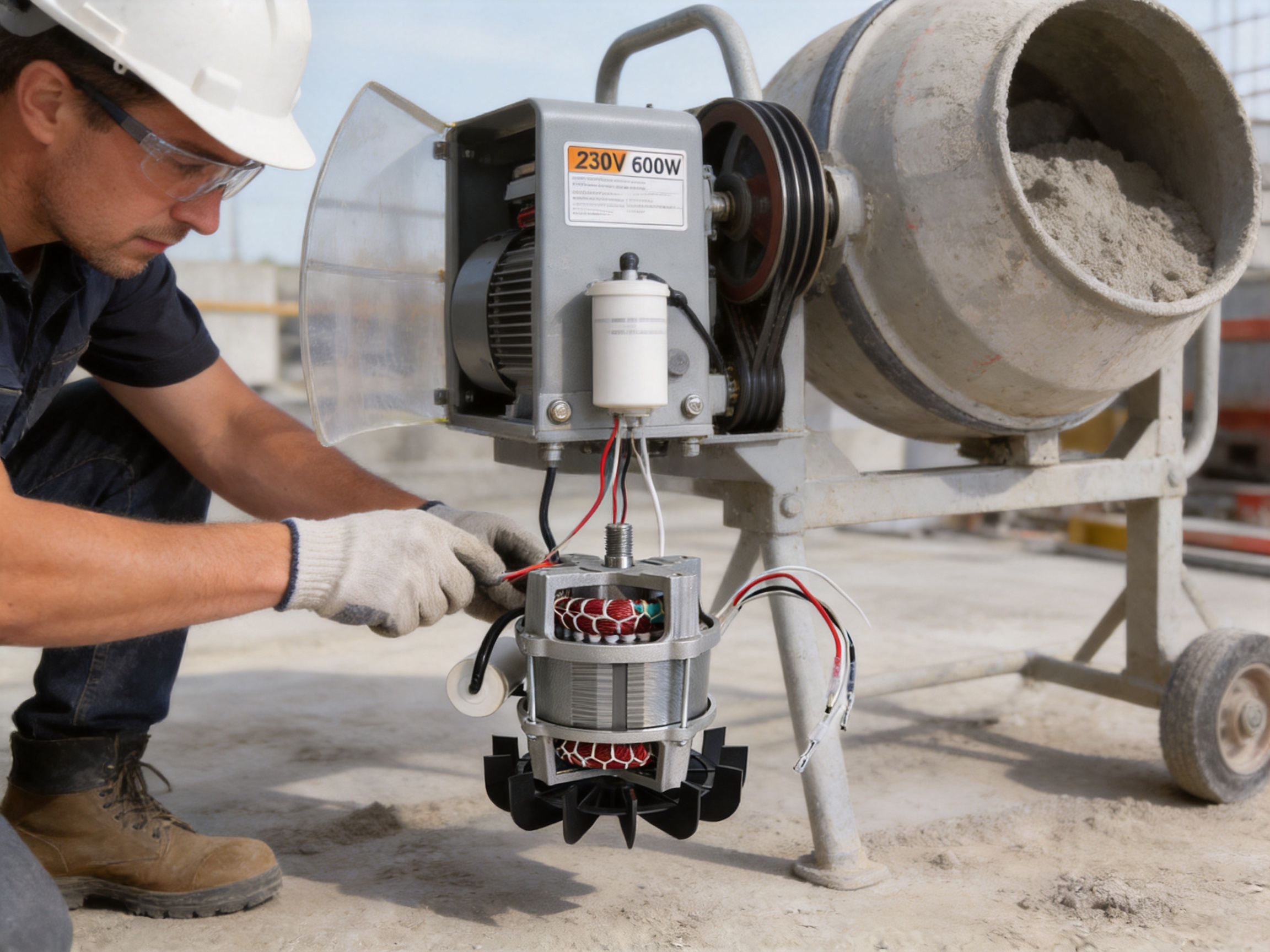
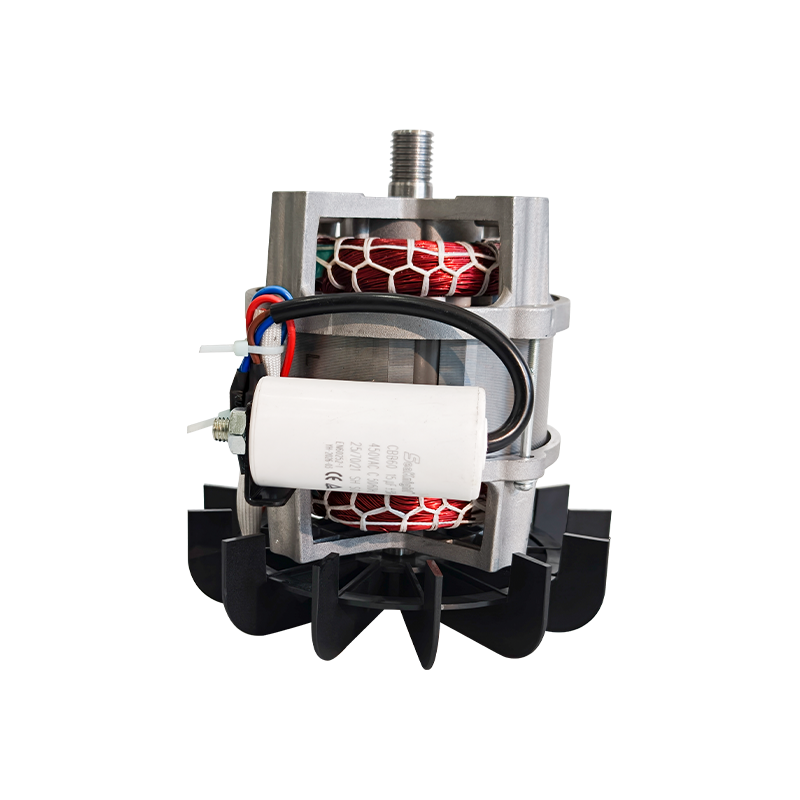
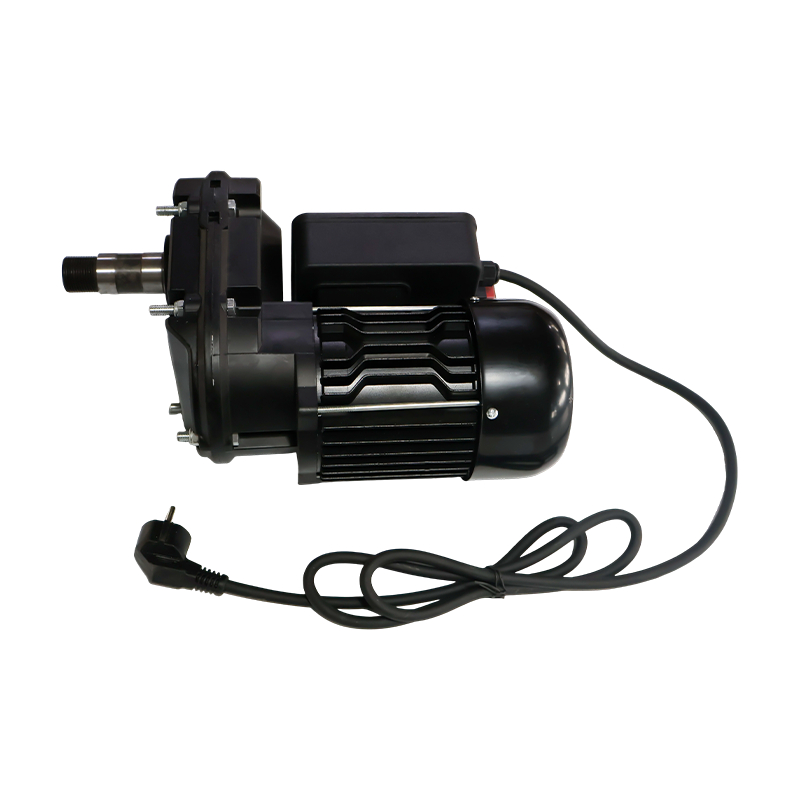
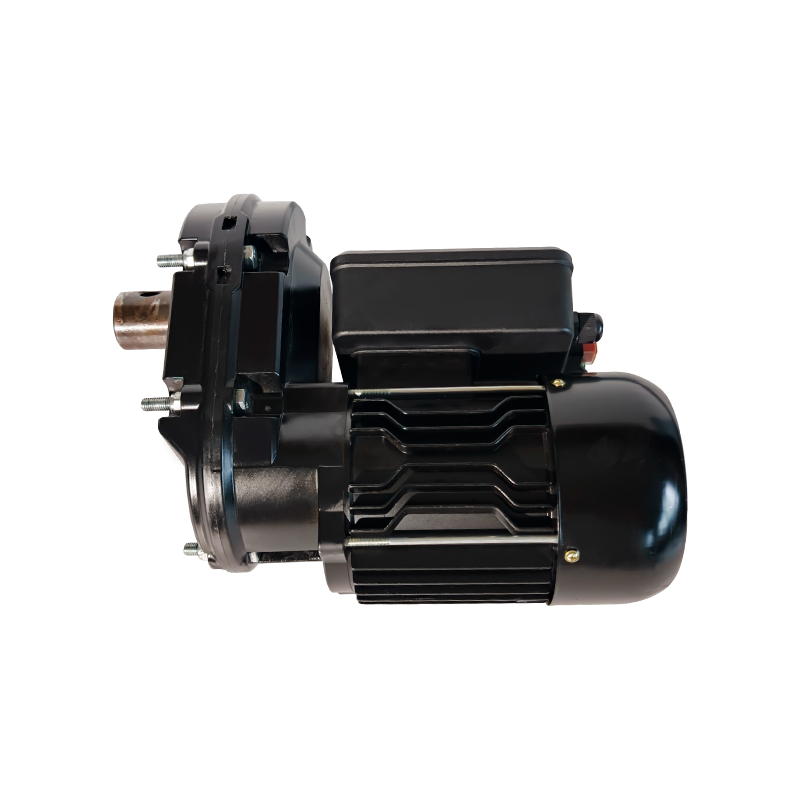
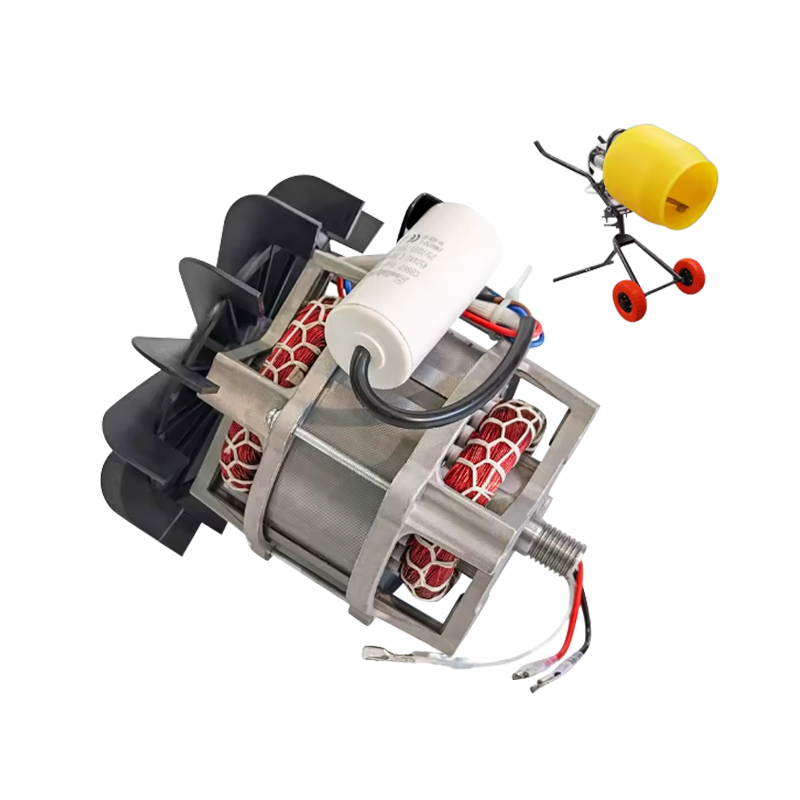
Portable concrete mixers require a dependable power source capable of handling demanding starting conditions, repeated loading, vibration, dust, and long working periods. The motor is the heart of the mixer, and its performance directly affects mixing consistency, operating efficiency, maintenance frequency, and total equipment service life. The YY71-2 230V 650W Portable Concrete Mixer Motor is designed specifically for small portable concrete mixers, cement mixers, and related construction machinery.
With a rated voltage of 230V, rated power of 650W, and rated speed of 2800 RPM, this single-phase motor with capacitor provides a practical combination of starting capability, operating stability, compact construction, and energy-conscious performance. Its full copper winding, high-temperature resistance, and low power consumption make it suitable for equipment manufacturers, distributors, repair specialists, and end users who need a reliable motor for portable mixing applications.
Unlike a general-purpose motor that may be adapted to a mixer without considering the machine’s working conditions, the YY71-2 is specially designed for small portable concrete mixers. This application-focused design helps it meet the functional requirements of equipment that must remain compact, easy to transport, simple to install, and capable of delivering consistent torque during material mixing.
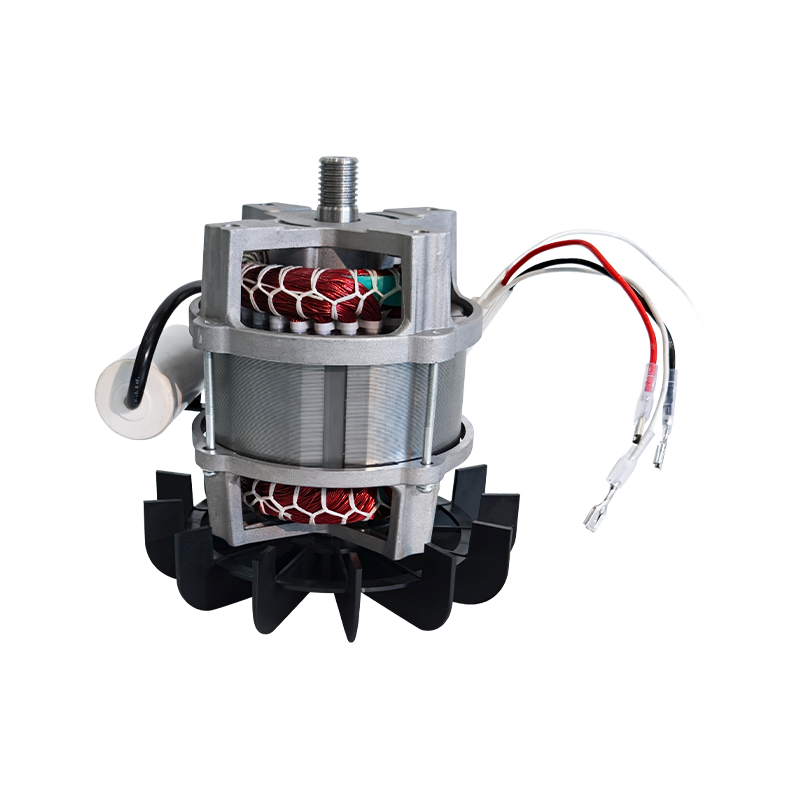
YY71-2 230V 650W Portable Concrete Mixer Motor
Product Overview
The YY71-2 is a 230V, 650W single-phase concrete mixer motor equipped with a capacitor. It operates at a rated speed of 2800 RPM and uses full copper winding construction. The motor is intended for portable concrete mixers and related compact construction equipment where reliable power transmission and straightforward maintenance are important.
Small concrete mixers are often used on construction sites, in renovation projects, landscaping operations, farm building work, and small-scale civil engineering applications. These machines may be transported frequently, operated in changing environments, and connected to electrical supplies commonly available at work sites. A motor for this type of equipment must therefore balance power, starting performance, efficiency, compactness, and durability.
The YY71-2 addresses these needs through a purpose-oriented configuration. Its 650W output is suitable for small portable mixing equipment, while its 230V single-phase design makes it compatible with widely available electrical systems in many markets. The capacitor-assisted configuration supports the operating requirements of single-phase applications and helps the motor function effectively when installed in the appropriate mixer system.
| Item | Specification | Application Significance |
|---|---|---|
| Model | YY71-2 | Identifies the motor configuration for ordering and equipment matching |
| Rated voltage | 230V | Suitable for compatible single-phase electrical systems |
| Rated power | 650W | Provides practical power for small portable concrete mixers |
| Rated speed | 2800 RPM | Supports efficient operation of an appropriately designed mixer drive system |
| Motor type | Single-phase motor with capacitor | Designed for applications using a single-phase power supply |
| Winding material | Full copper winding | Supports conductivity, thermal performance, and operating reliability |
| Primary application | Portable concrete mixers and cement mixers | Optimized for compact construction machinery |
Because every mixer has its own drum size, transmission arrangement, load profile, mounting design, and control system, buyers should confirm mechanical and electrical compatibility before installation. The information above defines the principal motor configuration, while detailed installation requirements should be checked against the complete equipment design.
Why the Motor Is Critical in a Portable Concrete Mixer
A concrete mixer must rotate its drum or mixing vessel at a controlled and consistent rate while handling materials such as cement, sand, aggregate, and water. These materials create changing resistance as they enter the drum, combine, and move through the mixing cycle. The motor must provide stable power despite variable loading and repeated starting and stopping.
If a motor is undersized, the mixer may struggle during startup or slow excessively under load. This can lead to poor mixing results, increased electrical stress, overheating, premature winding damage, and interruptions on the job site. If the motor is unnecessarily oversized, the equipment may become more expensive, heavier, less compact, and less efficient for its intended application.
The 650W rating of the YY71-2 is intended for small portable mixer designs. Its application-specific power level helps equipment designers create a balanced machine rather than relying on a motor selected without regard to the mixer’s size and operating conditions. When properly matched with the drum, transmission, belt or gear arrangement, and rated material capacity, the motor can deliver dependable power without imposing unnecessary size or energy costs.
The rated speed of 2800 RPM is another important design factor. In a mixer, the motor’s rotational speed is normally transferred through a mechanical transmission system that produces the required drum speed and torque. A relatively high motor speed can support a compact drive arrangement, while the final mixer speed depends on pulley sizes, gears, reduction mechanisms, and other transmission elements. The motor should therefore be evaluated as part of the complete drive system rather than as an isolated component.
Key Advantages of the YY71-2 Motor
Purpose-Built for Portable Mixing Equipment
The most important advantage of the YY71-2 is its application focus. It is not presented as a universal motor for every industrial machine. It is specially designed for small portable concrete mixers, cement mixers, and related construction machinery. This focus allows the product to address the practical conditions of compact mixing equipment, including limited installation space, frequent relocation, accessible electrical supply, and the need for simple maintenance.
Application-specific motors can offer a better overall solution than generic alternatives when the equipment manufacturer has clearly defined operating requirements. The motor’s power, speed, electrical configuration, and physical design can be integrated into the mixer from the beginning. This reduces the need for improvised adaptations and helps simplify equipment development, purchasing, and after-sales support.
Full Copper Winding
The YY71-2 uses full copper winding. Copper has high electrical conductivity and is widely used in quality motor windings because it can carry current efficiently while helping control resistive losses. The winding is one of the most important active components in an electric motor, and its material quality has a direct effect on electrical performance, heat generation, reliability, and service life.
Compared with motors that use less conductive winding materials, a full copper winding design can offer meaningful advantages in applications where the motor is repeatedly started, operates under changing loads, or must maintain stable performance in a compact housing. Reduced electrical resistance can help limit unnecessary heat generation when the motor is correctly selected, installed, and operated within its rated conditions.
The use of copper also supports consistent production and reliable electrical connections. For equipment manufacturers, this can contribute to predictable motor behavior across production batches. For users, it provides confidence that the motor is built with a conductive winding material appropriate for demanding electromechanical equipment.
High-Temperature Resistance
Portable concrete mixers may operate in warm outdoor environments, enclosed work areas, or locations where airflow is restricted by the machine structure. Mixing loads can also cause the motor to work continuously or repeatedly during a project. Under these conditions, thermal management is essential.
The YY71-2 is described as having high-temperature resistance. This characteristic supports reliable operation when the motor experiences normal heat generated by electrical losses, mechanical load, and ambient conditions. A motor with appropriate thermal resistance is better prepared for the temperature fluctuations that may occur during practical construction work.
High-temperature resistance does not mean that the motor can be operated beyond its rated limits without protection. Correct mixer loading, proper ventilation, suitable electrical connections, and appropriate duty-cycle management remain necessary. Nevertheless, the thermal design provides an important level of protection and contributes to the motor’s long-term operating stability.
Low Power Consumption
Energy consumption is increasingly important for construction equipment owners and manufacturers. Even a small motor may operate for many hours over the life of a mixer, so efficient electrical performance can reduce operating costs and help limit unnecessary energy use.
The YY71-2 is designed for low power consumption within its intended application. Its 650W rated power provides a practical output level for compatible small mixers without requiring a larger motor than necessary. The full copper winding also supports efficient current conduction, helping the motor use electrical energy effectively when operated under suitable conditions.
Lower energy consumption may provide several benefits. Equipment owners may experience more economical operation, especially where mixers are used frequently. Portable systems connected to limited electrical supplies may also benefit from a motor that does not demand excessive power. For manufacturers, an energy-conscious motor can support the development of compact products with a more attractive operating profile.
Compact Structure
Portability is a defining feature of small concrete mixers. The machine may need to be moved between rooms, construction areas, farms, workshops, or different sections of a job site. A compact motor helps preserve the overall portability of the mixer and allows designers to use space efficiently.
The YY71-2 has a compact structure intended for integration into portable equipment. A compact form can simplify layout design, help maintain a balanced machine footprint, and leave space for transmission components, protective covers, controls, and ventilation paths. It may also make replacement easier when the motor is installed with an accessible mounting arrangement.
Compactness should always be considered alongside thermal performance. The mixer design must provide sufficient clearance and airflow around the motor, and the motor must be mounted securely to prevent excessive vibration. When these conditions are met, the compact structure can support a practical and serviceable machine design.
Stable Performance
Stable motor operation is essential for achieving consistent mixing results. If the motor speed changes significantly under normal load, the mixing action may become irregular. If it stops unexpectedly, the operator may need to remove material manually or interrupt the construction process.
The YY71-2 is designed to provide stable performance in small portable mixer applications. Its single-phase capacitor configuration, rated speed, copper winding, and thermal characteristics work together as part of a complete motor system. Stability depends not only on the motor itself but also on proper voltage, correct wiring, suitable mechanical loading, and the condition of the mixer’s transmission components.
For original equipment manufacturers, stable motor performance can help improve the repeatability of the final mixer. For replacement buyers, it can restore the operating characteristics of equipment that has experienced motor wear or failure. In both cases, matching the motor to the intended mixer remains essential.
Easy Installation and Maintenance
Small construction machines are often maintained by equipment dealers, contractors, technicians, or operators rather than by large centralized maintenance departments. A motor that is straightforward to install and maintain can reduce downtime and simplify service work.
The YY71-2 is designed with installation and maintenance practicality in mind. Its compact construction supports integration into compatible portable mixers, while its application-specific configuration helps reduce uncertainty during replacement. Maintenance personnel can focus on verifying electrical connections, mounting security, ventilation, transmission alignment, and operating conditions rather than adapting an unsuitable motor.
Routine maintenance should include inspection of the power cable, capacitor, terminals, mounting hardware, ventilation openings, belt or gear alignment, and protective covers. Concrete dust and material residue should not be allowed to build up around the motor. A clean and secure installation helps protect the motor and supports consistent operation.
Comparison with Generic and Lower-Specification Alternatives
Many motors may appear suitable for a portable concrete mixer because they have similar voltage or power ratings. However, a correct selection involves more than comparing a single number on a nameplate. Electrical configuration, winding material, speed, physical dimensions, mounting details, thermal behavior, starting characteristics, and application suitability all influence performance.
A generic motor may require additional adaptation. The installer may need to modify mounting brackets, change the transmission arrangement, alter wiring, select a different capacitor, or accept a mismatch between motor speed and mixer requirements. Such modifications can increase installation time and may create reliability risks if they are not engineered carefully.
The YY71-2 offers an advantage by combining a defined 230V electrical configuration, 650W rated power, 2800 RPM rated speed, capacitor-assisted single-phase operation, and a design specifically associated with small portable concrete mixers. This integrated specification makes it easier for buyers to identify a suitable product for a defined application.
| Evaluation Area | YY71-2 Motor | Potential Issue with an Unmatched Generic Motor |
|---|---|---|
| Application focus | Designed for small portable concrete mixers and related equipment | May not be optimized for mixer loading, space, or duty requirements |
| Winding | Full copper winding | Material and conductivity may vary between suppliers |
| Electrical supply | 230V single-phase configuration with capacitor | Voltage, phase, or capacitor requirements may not match the equipment |
| Rated power | 650W | An undersized motor may overload; an oversized motor may increase cost and energy use |
| Rated speed | 2800 RPM | A different speed can affect transmission ratio and mixer operation |
| Thermal capability | High-temperature resistance is part of the stated design | Thermal performance may be uncertain without reliable technical data |
| Installation | Compact structure and application-oriented design | May require custom brackets or mechanical modifications |
| Maintenance | Designed for practical installation and servicing | Unfamiliar construction may complicate replacement and troubleshooting |
This comparison does not mean that every generic motor is unsuitable. Some general-purpose motors can perform well when correctly engineered for a mixer. The advantage of the YY71-2 is that its stated characteristics provide a clearer starting point for a compatible portable mixer design and reduce the risk of selecting a motor solely by appearance or nominal voltage.
Manufacturing Strengths Behind the Product
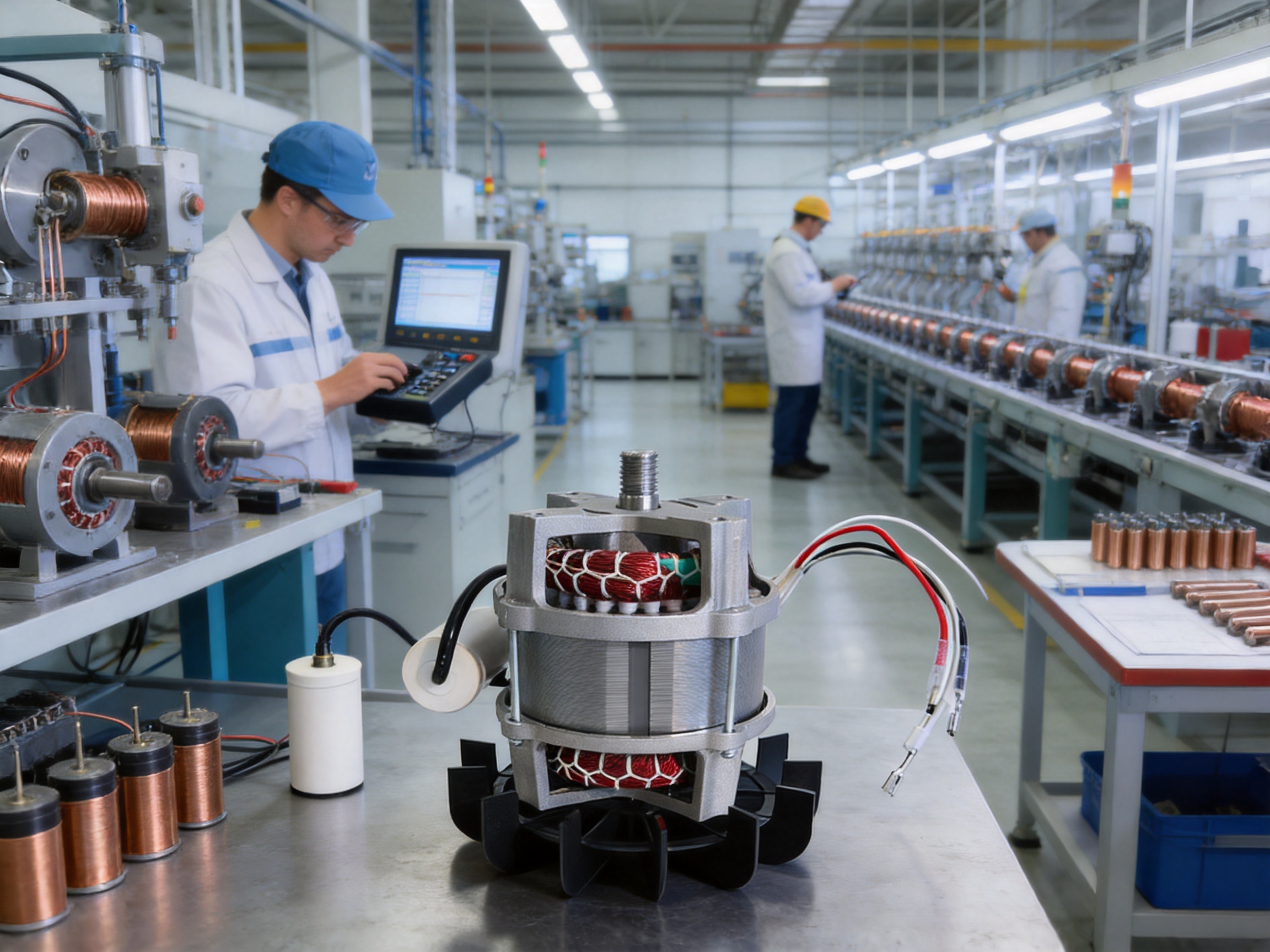
The performance of a motor depends on more than its published specifications. Manufacturing consistency, process control, component selection, testing, and technical management all influence the final product. The manufacturer of the YY71-2 is a professional producer of AC/DC motors and micro motors, with operations focused on research and development, production, and sales.
The company was established in 2017 and operates in Shengzhou, Zhejiang Province, an area supported by the manufacturing resources of the Yangtze River Delta. This location provides access to industrial supply chains, engineering services, skilled personnel, and transportation infrastructure. Such an industrial environment can support efficient procurement, production coordination, and product delivery for international customers.
Research and Development Capability
Motor applications vary considerably. A motor for an evaporative air cooler has different requirements from a motor for an oil pump, industrial heater, or concrete mixer. Research and development capability allows a manufacturer to understand these differences and create products for specific working conditions.
The company maintains a professional research and development team and focuses on reliable, energy-efficient, and long-lasting motor solutions. For the YY71-2, this application-oriented approach is reflected in the selection of a 650W output, 230V single-phase configuration, capacitor-assisted operation, compact construction, and high-temperature performance for small mixing equipment.
Research and development also supports product improvement. Feedback from equipment manufacturers and users can be used to refine winding arrangements, mechanical structures, thermal behavior, installation features, and production methods. This ongoing improvement is particularly important in export markets, where equipment may be used under different environmental and operating conditions.
Modern Production Facilities
Modern production facilities help manufacturers manage repeatability and efficiency. Motor production requires multiple coordinated operations, including component preparation, winding, insulation treatment, assembly, electrical connection, inspection, and final testing. A well-organized facility can reduce variation between units and support stable delivery schedules.
The company owns modern production facilities and advanced automated equipment. Automation can improve process consistency in repetitive operations and reduce the risk of human variation. At the same time, trained technical personnel remain important for process supervision, equipment adjustment, quality verification, and handling application-specific requirements.
For buyers, manufacturing capability is especially important when motors are supplied for original equipment production. A mixer manufacturer needs dependable product quality across repeated orders, not just a single satisfactory sample. Stable facilities and controlled processes provide a stronger basis for long-term cooperation.
Strict Quality Control
Quality control in motor manufacturing begins with incoming materials and continues through each production stage. Copper wire, insulation materials, capacitors, bearings, housings, terminals, and other components must be managed carefully. The winding process must be controlled to achieve the intended electrical characteristics, while assembly must ensure proper alignment and secure connections.
Quality control can include visual inspection, dimensional verification, winding checks, insulation checks, electrical performance tests, no-load operation tests, vibration observation, and final appearance inspection. The exact inspection program may vary according to the product configuration and customer requirements, but the fundamental objective remains the same: identify defects before shipment and maintain consistent product performance.
The manufacturer emphasizes strict quality control systems. This is a significant strength for the YY71-2 because portable concrete mixer motors are often expected to operate reliably in practical environments where service interruptions can be costly. A controlled quality process helps reduce the likelihood of premature failure caused by manufacturing variation.
Automated Equipment and Process Consistency
Winding quality is central to motor performance. Inconsistent winding tension, incorrect turns, damaged insulation, or poor connections can result in abnormal heating, reduced efficiency, or unstable operation. Advanced production equipment can help improve winding repeatability and support more consistent electrical characteristics.
Automated or semi-automated assembly equipment can also help control component positioning and fastening. Consistent assembly is important for reducing vibration, maintaining clearances, and ensuring that the motor performs as intended after installation into the mixer.
Automation should not be viewed as a replacement for engineering expertise. Its greatest value is achieved when supported by documented procedures, trained operators, preventive equipment maintenance, and systematic inspection. The combination of advanced equipment and professional technical management provides a stronger manufacturing foundation than either factor alone.
Technical Enterprise Recognition
The company has been recognized as a provincial-level technology enterprise. This recognition reflects its emphasis on technical development and innovation within the motor manufacturing field. For customers, such recognition can indicate that the supplier is investing in more than basic assembly and is building long-term capabilities in product engineering and process improvement.
Recognition alone cannot replace product verification, but it adds context to the manufacturer’s development profile. Buyers can evaluate this strength together with production capability, quality systems, engineering support, export experience, and the suitability of the YY71-2 for their specific mixer platform.
Material and Electrical Design Considerations
Importance of Copper Conductivity
Electrical current flowing through a motor winding creates magnetic fields that produce rotation. The resistance of the winding affects energy loss and heat generation. Full copper winding helps provide a conductive path with characteristics appropriate for motor operation, supporting efficient electromagnetic performance.
In a portable mixer, the motor may experience repeated starts as batches are prepared. Starting can place significant stress on the winding and capacitor system. A properly manufactured copper winding helps the motor manage its electrical operating conditions when the mixer is correctly loaded and connected to the specified supply.
Buyers should still consider the quality of the complete winding system, not just the material name. Insulation quality, winding arrangement, impregnation or protective treatment, connection security, and production testing all contribute to final reliability. The YY71-2’s full copper winding is therefore an important advantage within a broader controlled manufacturing process.
Role of the Capacitor
A single-phase motor uses a capacitor as part of its electrical operating system. The capacitor contributes to the phase relationship needed for motor starting and running. Its suitability must correspond to the motor design and electrical requirements.
When replacing a motor, the capacitor should not be selected solely by physical appearance. The correct capacitance, voltage rating, connection method, and component quality should be confirmed according to the motor documentation or equipment design. An unsuitable capacitor may cause weak starting, excessive current, overheating, noise, or unstable operation.
Because the YY71-2 is supplied as a defined single-phase motor with capacitor, it provides a more straightforward basis for compatible equipment integration. Nevertheless, installers should follow the product’s wiring instructions and verify that the complete electrical system is correctly protected.
Voltage Compatibility
The YY71-2 is rated for 230V operation. Before installation, users should confirm the available supply voltage, frequency, wiring arrangement, switchgear, and protective devices. The supply must be compatible with the motor and the regulations applicable in the installation location.
Voltage that is too low can reduce starting performance and increase current draw under load. Excessive voltage can increase electrical stress and temperature. Loose terminals, undersized cables, damaged switches, and poor-quality extension cords can also create voltage drop or heating. Proper electrical installation is therefore essential to obtain the expected performance from the motor.
Application in Portable Concrete Mixers
The YY71-2 is intended for small portable concrete mixers. These mixers are commonly used when a large stationary batching plant is unnecessary or impractical. Their advantages include mobility, relatively simple operation, lower equipment cost, and suitability for small construction tasks.
Typical applications may include residential foundations, repair work, paving projects, masonry, garden structures, farm improvements, renovation work, and small contractor operations. In these situations, users value equipment that can be transported easily and operated from a suitable local power supply.
The motor can also be used in compatible cement mixers and related construction machinery. The final suitability depends on the equipment’s drum volume, transmission ratio, material capacity, operating cycle, and mechanical design. The motor should not be used beyond the application limits defined by the mixer manufacturer.
Starting and Loading Conditions
Concrete mixer loading is not always uniform. A drum may be empty at startup, partially loaded during material addition, or heavily loaded when wet material moves through the mixing cycle. The motor and transmission must be selected to handle these changing conditions.
Operators can support motor life by avoiding overloading the drum, adding materials according to the mixer’s recommended sequence, and preventing hardened concrete from accumulating inside the mixing vessel. Excessive material buildup increases mechanical resistance and can cause the motor to operate under abnormal stress.
If the mixer repeatedly stalls, trips protection devices, emits unusual noise, or becomes excessively hot, operation should be stopped and the cause investigated. Continuing to run an overloaded motor may damage the winding, capacitor, transmission system, or electrical controls.
Mechanical Integration
The motor must be securely mounted to a rigid and properly aligned base. Loose mounting bolts can cause vibration, noise, belt misalignment, and mechanical fatigue. If a belt drive is used, belt tension should be set according to the mixer manufacturer’s instructions. Excessive tension can place unnecessary load on bearings, while insufficient tension can cause slipping and heat.
Where gears or other transmission components are used, alignment and lubrication should be maintained according to the equipment design. The motor’s 2800 RPM rated speed must be considered when determining the reduction ratio and final drum speed. The mixer should rotate at the speed specified by its design, not simply at the motor’s shaft speed.
Installation and Maintenance Recommendations
Pre-Installation Checks
Before installing the YY71-2, compare the replacement motor with the original or specified motor. Check the voltage, power, speed, motor type, capacitor arrangement, shaft configuration, mounting structure, and available installation space.
Inspect the mixer for underlying problems that may have caused the previous motor to fail. A damaged bearing, seized drum, obstructed transmission, excessive belt tension, or faulty electrical control may damage a new motor if the original problem is not corrected.
Confirm that the installation area is clean, dry as appropriate for the equipment design, and protected from direct contact with wet concrete, excessive dust, and impact. The motor should have adequate ventilation and should not be enclosed in a way that prevents heat dissipation.
Electrical Connection
Electrical work should be performed by a qualified person. The power supply must be disconnected before installation, inspection, or maintenance. Wiring should follow the applicable electrical standards and the motor’s connection instructions.
Connections should be tight and properly insulated. Protective devices should be selected to suit the motor and equipment. The use of an appropriate switch, overload protection, grounding arrangement, and cable size can help reduce electrical hazards and protect the motor from abnormal conditions.
Extension cords should be suitable for the motor’s current and the distance from the power source. Long or undersized cables can cause voltage drop and heating. Outdoor or construction-site use may also require additional protection against moisture, abrasion, and mechanical damage.
Ventilation and Cleanliness
Airflow around the motor should remain unobstructed. Dust, cement residue, and debris can accumulate around ventilation openings and reduce cooling performance. The motor exterior should be cleaned periodically using a method suitable for the equipment and without forcing contaminants into the housing.
Water should not be sprayed directly onto the motor unless the equipment is specifically designed and rated for that cleaning method. Concrete slurry and moisture can damage electrical insulation, terminals, bearings, and other components. The mixer should be positioned and operated in a way that minimizes direct exposure to water and wet material.
Routine Inspection
Routine inspection can identify developing problems before they become major failures. Operators should listen for unusual humming, grinding, rattling, or clicking sounds. They should also observe abnormal vibration, burning odor, slow acceleration, repeated circuit trips, or unusual temperature rise.
Mounting bolts, belt tension, transmission alignment, cable condition, capacitor connections, and protective covers should be checked at suitable intervals. The inspection frequency should reflect the mixer’s use, environmental conditions, and maintenance program.
If the motor has been stored for an extended period, it should be inspected before being returned to service. Check for moisture, corrosion, damaged insulation, blocked ventilation, and deterioration of cables or electrical components.
Quality Assurance and Customer Value
For buyers, motor value is determined by more than purchase price. The total cost includes installation time, energy use, maintenance, replacement frequency, downtime, inventory requirements, and technical support. A reliable application-specific motor can provide better value even when the initial price is not the lowest available.
The YY71-2 supports customer value through its defined specifications and practical design. Full copper winding supports electrical performance, high-temperature resistance supports durability, low power consumption supports operating economy, and compact construction supports portable equipment integration.
The manufacturer’s focus on AC/DC motors and micro motors provides product specialization. Its facilities, automated equipment, research and development team, and quality control systems support consistent manufacturing. The company also exports products to more than 60 countries and regions, demonstrating experience in serving international customers and adapting to different market requirements.
International customers may have different expectations concerning packaging, documentation, electrical standards, labeling, inspection, and delivery arrangements. A manufacturer with export experience is better positioned to communicate about these requirements and coordinate orders efficiently.
OEM, Replacement, and Wholesale Considerations
Original Equipment Manufacturing
Equipment manufacturers can integrate the YY71-2 into a portable mixer platform during the design stage. This allows the motor, transmission, frame, drum, controls, and protective structure to be developed as a complete system.
During product development, the manufacturer should verify the motor’s operating point under the expected mixer load. Testing should include startup behavior, loaded operation, temperature rise, vibration, noise, and repeated cycles. The mixer’s maximum material capacity and duty pattern should be defined clearly so that the motor is not applied beyond its intended conditions.
A consistent motor specification can also simplify production planning. Once compatibility is confirmed, the equipment manufacturer can standardize mounting, wiring, capacitor arrangements, spare parts, and service instructions.
Replacement Applications
For replacement use, the buyer should identify the original motor’s essential parameters and compare them with the YY71-2. The replacement must fit mechanically and electrically. Similar voltage alone is not sufficient to confirm compatibility.
When a motor fails, technicians should investigate the cause. Common possibilities include overloading, poor ventilation, voltage problems, moisture, dust contamination, worn bearings, transmission resistance, capacitor failure, or frequent operation beyond the intended duty cycle. Correcting these conditions can help protect the replacement motor.
Wholesale and Distribution
Distributors and wholesalers may benefit from stocking a motor with a clear application profile. Portable concrete mixers are used by contractors, rental companies, repair shops, and equipment dealers, creating demand for dependable replacement components.
A distributor can improve customer satisfaction by supplying the motor together with accurate technical information, compatibility guidance, wiring instructions, and maintenance recommendations. Clear product identification is particularly important when several motors have similar appearances but different voltage, speed, power, or mounting requirements.
Responsible Product Selection
Responsible selection begins with understanding the complete operating environment. Buyers should consider the mixer size, expected load, operating frequency, ambient temperature, ventilation, electrical supply, transmission system, and service conditions.
The YY71-2 is an appropriate candidate for compatible small portable concrete mixers, but it should not be treated as a substitute for a complete engineering review. The motor’s rating should correspond to the actual load. If the mixer is larger, heavily loaded, operated continuously, or exposed to unusually severe conditions, a different motor configuration may be required.
Purchasers should request confirmation of any details not included in the basic product information, such as dimensions, shaft details, mounting pattern, frequency, capacitor data, insulation class, protection level, duty rating, rotation direction, cable arrangement, and test documentation. These details can be matched to the equipment before an order is finalized.
How This Motor Supports More Efficient Equipment Design
A portable mixer is successful when its components work together efficiently. The motor, transmission, drum, frame, controls, and safety features must be balanced. The YY71-2 contributes to this balance by offering a compact, 650W power source designed for a defined class of equipment.
Its low power consumption can help manufacturers design equipment that is economical to operate. Its compact structure can support a smaller machine footprint. Its rated speed can be incorporated into a planned reduction system. Its full copper winding and high-temperature resistance can support durability in repeated-use conditions.
These characteristics may also help reduce the environmental impact associated with premature component replacement. A motor that provides dependable service and can be maintained appropriately may reduce material waste and the need for frequent transportation of replacement equipment. Energy-conscious operation can further support more responsible equipment use.
Efficiency should always be measured at the system level. A highly efficient motor cannot compensate for a seized bearing, incorrect belt tension, poor transmission alignment, excessive drum loading, or inadequate electrical supply. The best results come from combining a suitable motor with a well-designed mixer and disciplined operating practices.
Technical Support and Long-Term Cooperation
Motor purchasing is often the beginning of a longer technical relationship. Equipment manufacturers and distributors may need assistance with product selection, sample evaluation, installation, replacement matching, production planning, packaging, or customized requirements.
The manufacturer’s specialization in AC/DC motors and micro motors provides a foundation for application discussions. Its research and development capability may also support customer projects that require adjustments to a standard motor or the development of a customized solution.
Effective cooperation depends on accurate communication. Customers should provide information about the mixer type, drum capacity, working cycle, power supply, environmental conditions, installation method, and expected order quantity. The more complete the application information, the more effectively the supplier can confirm suitability and identify potential risks.
For long-term supply, customers may also establish agreed inspection procedures, packaging standards, delivery schedules, technical documents, and warranty arrangements. These measures help create consistent expectations between the motor manufacturer and the equipment buyer.
Frequently Asked Questions
What is the rated power of the YY71-2 motor?
The rated power is 650W. This power level is intended for compatible small portable concrete mixers, cement mixers, and related compact construction machinery.
What voltage does the motor use?
The motor is rated for 230V operation. Users should confirm that the available power supply and complete electrical system are compatible before installation.
Is the YY71-2 a single-phase motor?
Yes. It is a single-phase motor with capacitor. The capacitor arrangement supports the motor’s operation in a compatible single-phase electrical system.
What is the rated speed?
The rated speed is 2800 RPM. The final speed of the concrete mixer drum will depend on the transmission ratio and mechanical design of the mixer.
What type of winding does the motor have?
The motor uses full copper winding. Copper winding supports electrical conductivity and contributes to reliable thermal and operating performance when the motor is used within its rated conditions.
What equipment is the motor designed for?
The YY71-2 is specially designed for small portable concrete mixers. It may also be used in compatible cement mixers and related construction machinery after electrical and mechanical compatibility has been confirmed.
Can this motor be used as a replacement for any 230V mixer motor?
No. Voltage alone does not confirm compatibility. Buyers should compare power, speed, mounting dimensions, shaft configuration, capacitor requirements, wiring, transmission design, and operating duty before selecting the motor as a replacement.
Why is full copper winding important?
Full copper winding provides a conductive winding material that can support efficient electrical operation and thermal performance. It is especially valuable when the motor experiences repeated starting and changing loads, provided that the equipment is correctly designed and operated.
Does high-temperature resistance mean the motor cannot overheat?
No. High-temperature resistance improves the motor’s ability to operate under normal thermal conditions, but it does not eliminate the effects of overload, blocked ventilation, incorrect voltage, excessive ambient temperature, or mechanical faults. Proper installation and maintenance remain necessary.
What should be checked before installation?
Check the voltage, power, speed, motor type, capacitor arrangement, mounting structure, shaft dimensions, transmission compatibility, wiring, ventilation, and protective devices. Also inspect the mixer for mechanical problems that may have caused the previous motor to fail.
How can operators extend motor service life?
Operators should avoid overloading the mixer, maintain clear ventilation openings, keep concrete residue away from the motor, inspect belts and transmission components, maintain secure electrical connections, and stop operation when abnormal noise, vibration, odor, or overheating occurs.
Is the motor suitable for export markets?
The manufacturer exports products to more than 60 countries and regions. However, each buyer should confirm the electrical, documentation, packaging, labeling, and compliance requirements applicable to the destination market.
Can customized motor requirements be discussed?
Customers with specific mechanical, electrical, or application requirements should provide detailed equipment information to the manufacturer. The company focuses on AC/DC motors, micro motors, and customized motor solutions, so application review may be available depending on the project.
Conclusion
The YY71-2 230V 650W Portable Concrete Mixer Motor is a practical solution for small portable concrete mixers, cement mixers, and related construction machinery. Its principal strengths include a 230V single-phase capacitor configuration, 650W rated power, 2800 RPM rated speed, full copper winding, high-temperature resistance, low power consumption, compact structure, stable performance, and easy installation and maintenance.
These characteristics give the motor clear advantages over poorly matched generic alternatives. Rather than selecting a motor only by voltage or physical appearance, equipment manufacturers and buyers can begin with a defined configuration created for portable mixing applications. The result can be a more balanced mixer design, more predictable operation, simpler replacement planning, and better long-term value.
The product is also supported by the manufacturing strengths of Shengzhou Jiangxin Motor Technology Co., Ltd. The company combines research and development capability, modern production facilities, advanced automated equipment, professional technical personnel, strict quality control, and international export experience. Its focus on reliable, energy-efficient, and durable AC/DC motor products provides a suitable foundation for serving construction equipment manufacturers, distributors, and replacement markets.
Correct application remains essential. The YY71-2 should be matched with the mixer’s mechanical and electrical design, installed by qualified personnel, operated within its rated conditions, and maintained regularly. When these requirements are followed, the motor can provide dependable power for compact mixing equipment and contribute to efficient, stable, and productive construction work.
References
1. IEC, Rotating Electrical Machines: General Performance Principles and Motor Rating Considerations.
2. Electrical Equipment Manufacturers’ Association, Guidance on Single-Phase Motor Operation and Protection.
3. Engineering Texts on Electric Motor Windings, Copper Conductivity, and Thermal Management.
4. Construction Equipment Maintenance Manuals, Portable Concrete Mixer Operation and Service Practices.
5. Manufacturer’s Product Information for the YY71-2 230V 650W Portable Concrete Mixer Motor.
6. Manufacturer’s Corporate Information on AC/DC Motor Research, Production, Quality Control, and Export Services.
Product: YY71-2 230V 650W Portable Concrete Mixer Motor
 Ready To Customise
 Your Motor Products?

We are professional motor manufacturers, delivering powerful, stable, and efficient power cores for all industries through precision craftsmanship and innovation.
Contact Us
-
 Mobile:+86 13575536911
-
 Tel:+86 18357538240
-
 Whatsapp:+8618357538240
-
 Email:betty@dbjxmotor.com
-
 Company Address
Copyright © by Shengzhou Jiangxin Motor Technology Co., Ltd. All Rights Reserved.
Wholesale Industrial Fan Motors Manufacturers
