

 English
 русский
 Español
 عربى

No. 8, Duxiu San Road, Ganlin Town, Shengzhou City, Shaoxing City, Zhejiang Province, China

News Category
Product Category
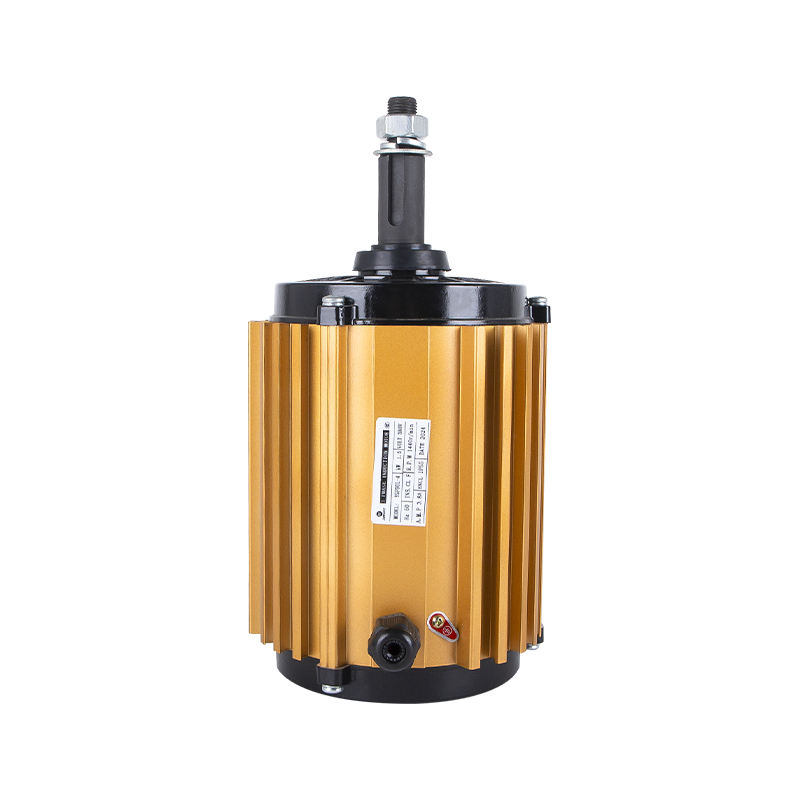
YS90L-4 380V 1500W Three-Phase Evaporative Air Cooler Motor
Content
- 1 Product Overview
- 2 Why a Three-Phase Motor Is Suitable for Evaporative Cooling
- 3 Stable 1500 W Power for Large Cooling Areas
- 4 Pure Copper Winding and Thermal Performance
- 5 Enclosed Construction for Humid Working Environments
- 6 Low Noise, Low Vibration, and Smooth Running
- 7 Continuous S1 Duty for Extended Operation
- 8 Manufacturing Strengths and Quality Approach
- 9 Advantages in Comparison with General-Purpose Alternatives
- 10 Applications Across Multiple Industries
- 11 Installation and Commissioning Considerations
- 12 Maintenance for Long-Term Reliability
- 13 Energy Efficiency and Operating Cost
- 14 Ordering, Customization, and Technical Confirmation
- 15 Frequently Asked Questions
- 15.1 What is the rated power of the motor?
- 15.2 Is the motor single-phase or three-phase?
- 15.3 What is the motor speed?
- 15.4 Can the motor run continuously?
- 15.5 What insulation class does it use?
- 15.6 Is the motor waterproof?
- 15.7 Why is pure copper winding important?
- 15.8 Can it replace another 1500 W motor?
- 15.9 Where can this motor be used?
- 15.10 Can the manufacturer provide customized versions?
- 15.11 What should be checked before commissioning?
- 16 Conclusion
- 17 References
- 18 Product: YS90L-4 380V 1500W 3-Phase Evaporative Air Cooler Motor
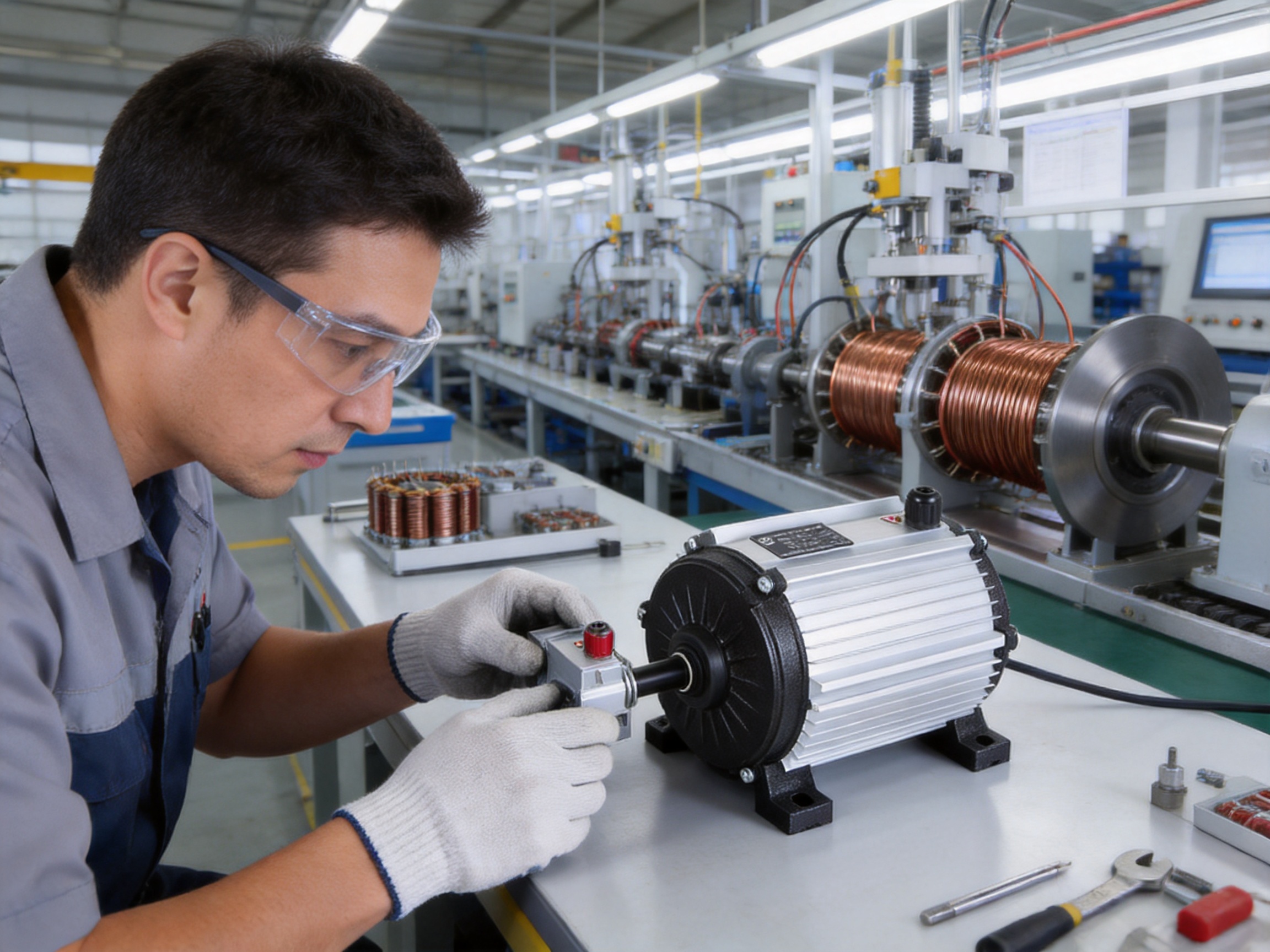
Evaporative cooling systems depend on dependable motor performance. When a motor drives an air cooler fan for many hours in a warm, humid, dusty, or commercially demanding environment, its value is determined by more than its rated wattage. Stable torque, appropriate speed, effective heat dissipation, insulation quality, moisture resistance, low vibration, service life, and installation compatibility all influence the reliability of the complete cooling system. The YS90L-4 380V 1500W three-phase evaporative air cooler motor is designed to address these practical requirements with a robust industrial motor configuration.
This motor combines a 1500 W rated output, a 380 V three-phase power supply, a four-pole design, and a nominal speed of approximately 1440 revolutions per minute. The configuration is suitable for evaporative air coolers and other fan-driven equipment requiring consistent airflow and dependable continuous operation. Its pure copper winding, F-class insulation, enclosed construction, aluminum housing, balanced rotor, and quality bearing arrangement support long operating periods while helping control energy consumption, vibration, and temperature rise.
Manufactured by Shengzhou Jiangxin Motor Technology Co., Ltd., the motor is positioned for industrial, commercial, agricultural, and large-area cooling applications. The manufacturer develops and produces AC motors, DC motors, micro motors, evaporative air cooler motors, industrial heater motors, oil pump motors, and customized motor solutions. Its production capabilities, automated equipment, research and development resources, and quality management approach provide a foundation for consistent motor manufacturing and application support.
Product Overview
The YS90L-4 is a three-phase AC motor intended for applications in which a fan or air-moving assembly must operate steadily for extended periods. With a rated power of 1500 W and a nominal voltage of 380 V, it is suitable for many industrial and commercial electrical systems using three-phase distribution. The four-pole rotor and stator arrangement provides a practical operating speed for evaporative cooling fans, delivering a balance between airflow, torque, noise, and mechanical durability.
The stated speed is approximately 1440 rpm. Actual operating speed may vary according to load, frequency, voltage conditions, motor tolerances, and the characteristics of the connected fan. At 50 Hz, a four-pole induction motor has a synchronous speed near 1500 rpm, while the working speed is lower because of normal slip. The listed 1440 rpm value is therefore consistent with a loaded four-pole motor operating under normal conditions.
The motor is intended to provide stable power rather than short-duration peak output. Its S1 continuous-duty design supports uninterrupted operation when the motor is correctly installed, ventilated, loaded, and supplied with power within the rated conditions. This characteristic is important for evaporative coolers that may run throughout the working day in factories, warehouses, farms, workshops, commercial spaces, or other areas where cooling demand is sustained.
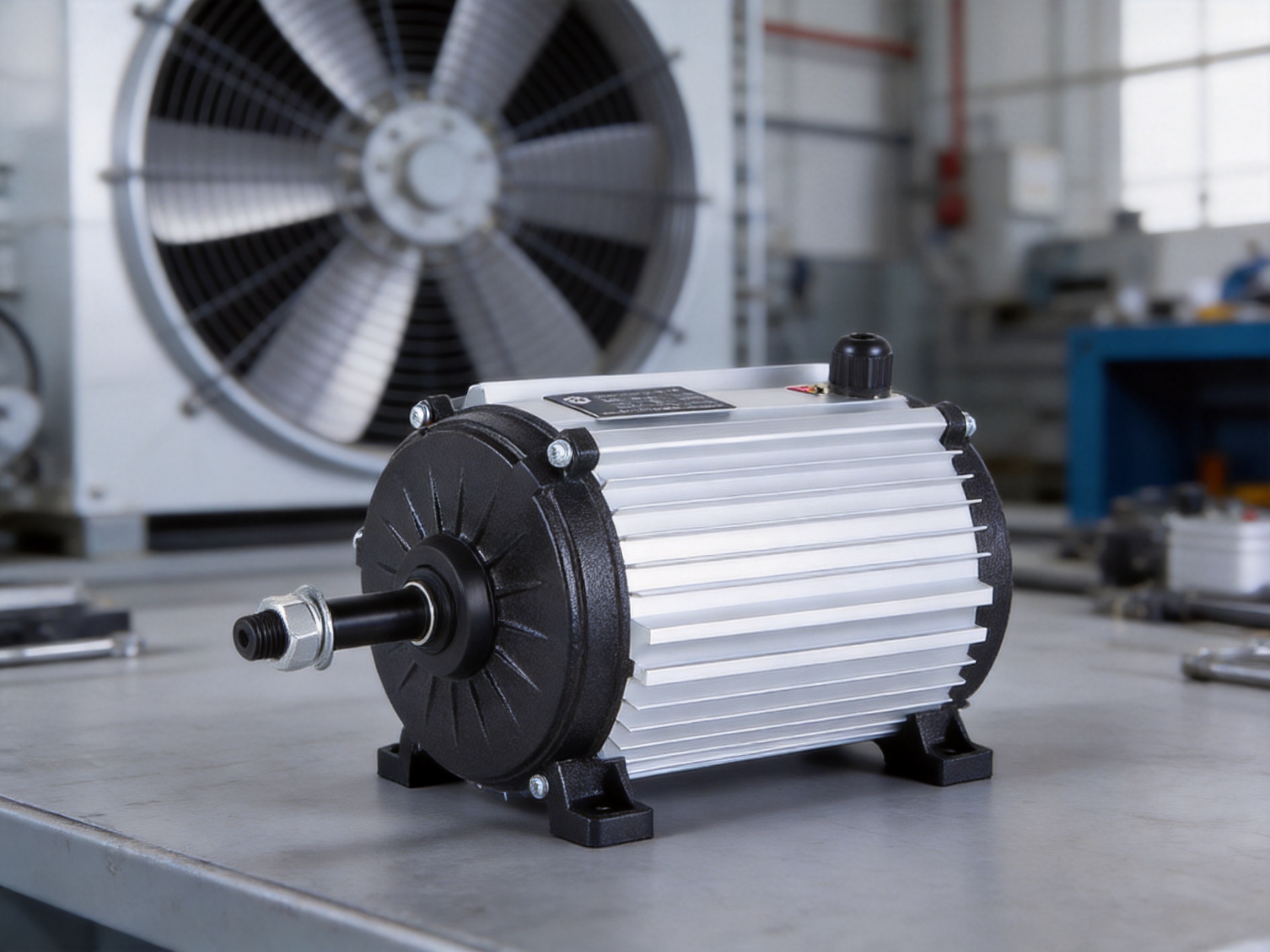
The motor’s aluminum shell contributes to lower overall weight, efficient heat transfer, and convenient handling during installation. A fully enclosed structure helps reduce the entry of external contaminants compared with more open motor constructions. In humid cooling environments, this type of housing can provide an additional practical barrier against moisture and airborne particles, although the motor should still be installed in accordance with the specified protection level and local electrical safety requirements.
| Item | Specification | Application Significance |
| Product type | Evaporative air cooler motor | Designed for fan-driven cooling equipment |
| Model designation | YS90L-4 | Four-pole motor configuration in the YS series format |
| Rated voltage | 380 V | Suitable for compatible three-phase industrial power systems |
| Rated power | 1500 W | Provides substantial drive power for large cooling applications |
| Phase | Three-phase | Supports smooth torque and stable industrial operation |
| Frequency | 50/60 Hz | Adaptable to common regional electrical frequencies, subject to confirmation |
| Nominal speed | Approximately 1440 rpm | Balances airflow capability with practical mechanical operation |
| Insulation class | F | Provides a higher thermal insulation margin than lower-rated classes |
| Protection rating | IP55 listed in the technical information | Improves resistance to dust and water jets when correctly installed |
| Duty type | S1 continuous duty | Suitable for extended operation under rated conditions |
| Housing | Aluminum shell | Supports heat dissipation and reduces handling weight |
The supplied product material also includes references to IP44 and IP54 in the descriptive text, while the technical information table lists IP55. This difference should be resolved with the manufacturer before purchase or installation. The exact protection grade may depend on the specific production configuration, end cover, cable entry, sealing arrangement, or customer order. For equipment exposed to moisture, the nameplate and technical datasheet for the delivered motor should always take priority.
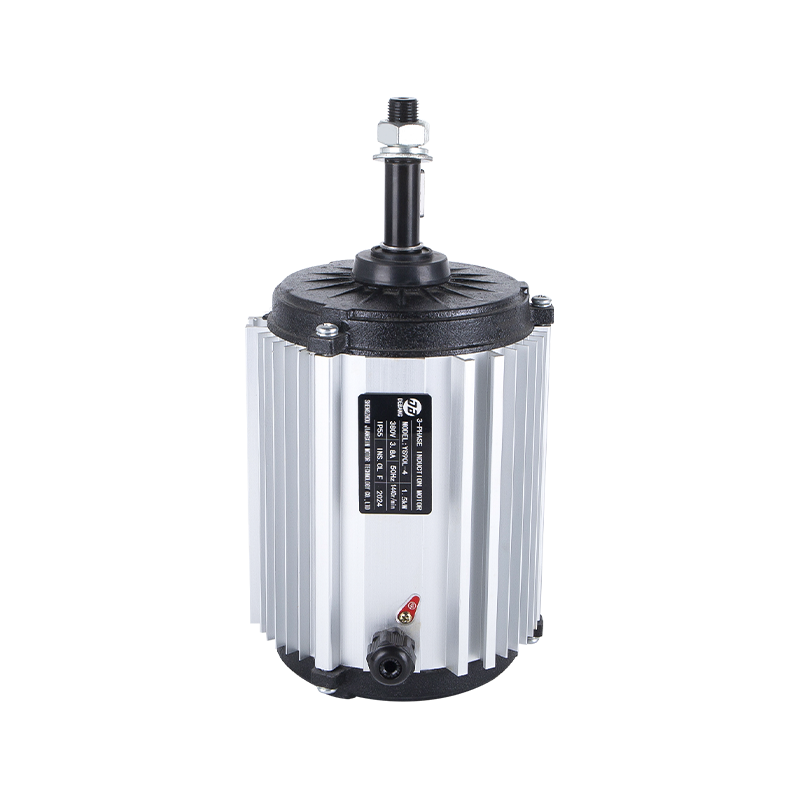
YS90L-4 380V 1500W 3-Phase Evaporative Air Cooler Motor
Why a Three-Phase Motor Is Suitable for Evaporative Cooling
Evaporative coolers use fans to move a large volume of air through wetted cooling media. The fan load can vary according to blade design, air resistance, filter condition, duct arrangement, water saturation, and operating speed. A three-phase motor is well suited to this work because the rotating magnetic field produced by the three-phase supply supports smooth and consistent torque.
Compared with many single-phase arrangements, a properly selected three-phase motor can provide more balanced operation in industrial environments. It can reduce torque pulsation, support efficient conversion of electrical power into mechanical output, and operate effectively with larger fan assemblies. The result is a stable drive source for systems that require continuous air movement rather than intermittent or light-duty ventilation.
The 380 V rating corresponds to a common industrial three-phase voltage designation. Before connecting the motor, users must compare the motor nameplate with the available supply, wiring method, connection configuration, frequency, overload protection, and local electrical standards. A motor should not be connected solely on the basis of physical compatibility. Correct electrical commissioning is essential for motor efficiency, safety, and service life.
The four-pole design is another important part of the application balance. Very high-speed motors may generate greater noise, mechanical stress, and fan-tip speed, while very low-speed motors may require additional transmission components or a larger frame. An approximately 1440 rpm four-pole motor offers a practical direct-drive or appropriately coupled speed for many evaporative air cooler systems. The final suitability depends on the fan diameter, impeller design, required airflow, static pressure, and control method.
Stable 1500 W Power for Large Cooling Areas
A rated output of 1500 W gives the motor a useful power reserve for industrial and commercial cooling equipment. It is appropriate for applications larger than those served by small residential fan motors, including workshops, warehouses, agricultural facilities, manufacturing areas, and high-occupancy commercial spaces. The motor can help maintain strong airflow when the cooler encounters normal system resistance from cooling pads, protective grilles, ductwork, and air distribution components.
Rated power should not be interpreted as a guarantee that every fan assembly will deliver the same airflow. Air volume depends on the complete aerodynamic system. A fan with a different blade pitch, diameter, or housing may require more or less torque at the same speed. Correct system matching protects the motor from overload and helps ensure that the available power is used efficiently.
Stable output is especially important during long operating periods. If a motor repeatedly loses speed under load, the cooling system may deliver inconsistent airflow and the motor may experience additional heating. The YS90L-4 configuration is intended to maintain dependable operation when the fan and electrical supply are correctly matched. The four-pole arrangement, copper winding, and continuous-duty design work together to support steady mechanical performance.
For equipment designers, the motor provides a practical foundation for building a complete evaporative cooling unit. Engineers can select the fan, shaft coupling, pulley, guard, cooling pad area, water circulation system, and control panel around the motor’s output and speed. For replacement applications, installers should compare mounting dimensions, shaft dimensions, rotation direction, terminal arrangement, frame size, and electrical data before substituting the motor for an existing unit.
Pure Copper Winding and Thermal Performance
The motor uses pure copper windings. Copper offers excellent electrical conductivity, which allows the winding to carry current with comparatively low resistive loss when appropriately designed. Lower winding loss can support improved efficiency and reduced heat generation. In a motor running for many hours each day, thermal behavior has a direct relationship with insulation life, bearing conditions, energy use, and maintenance intervals.
Winding quality is influenced not only by the choice of copper but also by conductor dimensions, winding layout, slot filling, insulation treatment, connection quality, and production consistency. A carefully manufactured winding helps produce a balanced electromagnetic field and stable torque. It also reduces the likelihood of localized hot spots caused by poor connections or uneven winding distribution.
The motor is specified with F-class insulation. Thermal insulation class F is commonly associated with a higher permissible insulation temperature than classes A or B, providing additional thermal margin when the motor operates in demanding conditions. This does not mean that the motor should be intentionally run above its rated temperature. Instead, the insulation class provides a reserve that can help withstand normal temperature variation, ambient heat, starting events, and continuous service when the motor is correctly applied.
Cooling remains important even with F-class insulation. The motor should have sufficient clearance around its housing, and ventilation openings or external surfaces should not be blocked by dust, packaging, walls, or nearby equipment. In an evaporative cooler installation, water spray should be controlled so that the motor is not exposed to unnecessary direct water impact, condensation, or standing moisture.
Enclosed Construction for Humid Working Environments
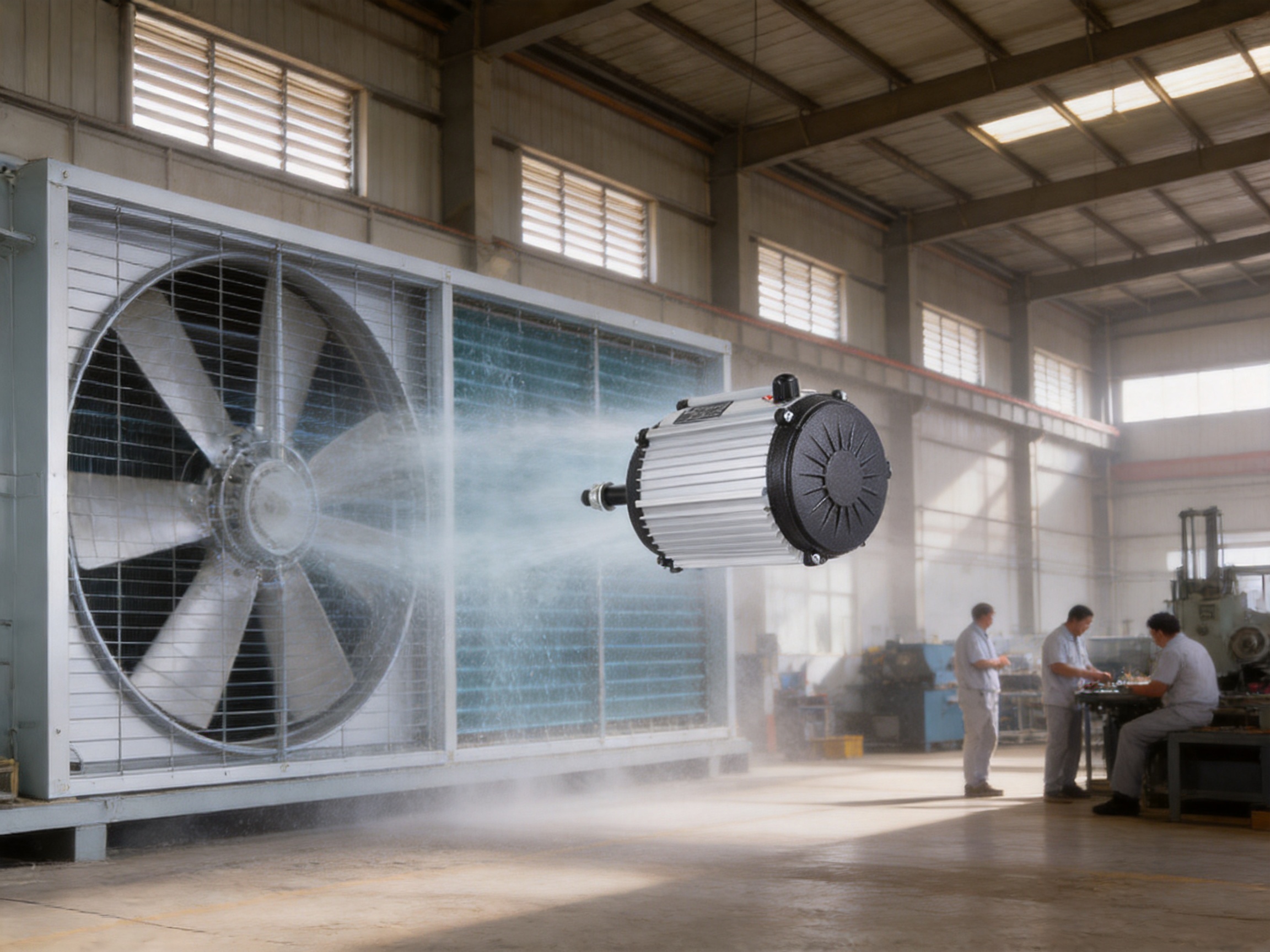
Evaporative air coolers naturally operate around water, wet pads, pumps, and humid air. This environment places greater demands on electrical equipment than a dry indoor installation. The fully enclosed motor structure helps limit exposure of internal components to external dust and moisture. The aluminum shell also provides a durable external surface and can help transfer heat away from the internal motor assembly.
The listed IP55 specification indicates protection against dust ingress at a level that prevents harmful deposits and protection against water jets from multiple directions under the applicable test conditions. The practical protection provided in the field depends on the complete motor construction, cable glands, terminal box, mounting orientation, seals, and installation quality. Even a high-rated motor can be damaged by incorrect cable entry, submerged installation, persistent condensation, or direct high-pressure washing.
For customers ordering the motor for a specific cooler design, the protection grade should be confirmed in writing. The product description refers to IP44/IP54, while the specification table states IP55. This may reflect different versions or a general description combined with a particular technical configuration. Clarifying the exact grade prevents misunderstandings when the motor is used in outdoor, agricultural, coastal, or highly humid locations.
Moisture resistance should be considered together with storage and transportation. Motors should be stored in a clean, dry area, protected from sudden temperature changes and condensation. If a motor has been stored for a long period in a humid environment, insulation resistance should be checked by qualified personnel before energization. Proper storage is part of product protection and should not be overlooked.
Low Noise, Low Vibration, and Smooth Running
Noise and vibration affect both the comfort of occupants and the mechanical life of the cooling system. Excessive vibration can loosen mounting hardware, fatigue brackets, damage bearings, misalign fan components, and transfer unwanted noise through building structures. The YS90L-4 is designed with high-precision dynamic balancing and quality bearings to support smooth rotation.
Dynamic balancing is particularly important in fan motor applications. The motor rotor and the connected fan must rotate around a controlled center of mass. If the rotor or fan is unbalanced, centrifugal forces increase with speed and can create noticeable vibration. A balanced motor helps reduce the vibration generated by the drive source, but the final system also depends on fan balance, shaft alignment, mounting rigidity, and the condition of the cooling equipment.
Quality bearings contribute to low-friction operation and stable shaft support. Bearing selection, lubrication, sealing, alignment, and operating temperature all influence bearing life. The motor should not be overloaded by excessive belt tension, shaft misalignment, fan obstruction, or an improperly supported external load. Routine inspection can identify unusual noise, rising temperature, or vibration before a failure becomes serious.
Lower vibration can also improve perceived product quality. In commercial and workplace environments, users expect cooling equipment to provide airflow without creating an intrusive mechanical disturbance. In agricultural and industrial settings, smooth running helps reduce stress on the surrounding frame and other components. The result is a more stable complete machine rather than merely a quieter motor in isolation.
Continuous S1 Duty for Extended Operation
The motor is described as suitable for S1 continuous working duty. In practical terms, S1 duty refers to operation at a constant load long enough for the motor to reach a stable thermal condition. This is a suitable duty classification for cooling equipment that may run for many consecutive hours during hot weather or throughout a production shift.
Continuous-duty capability depends on correct application. The motor must be operated within its rated voltage and frequency range, connected to an appropriate load, protected against overload, and installed where heat can dissipate. A motor that is mechanically overloaded or poorly ventilated may overheat even if its nameplate power is appropriate for the nominal fan rating.
Protection devices should be selected according to the motor’s full-load current and the applicable electrical code. A suitable motor protection circuit may include a short-circuit protective device, overload relay, contactor, phase-loss protection, and, where appropriate, temperature monitoring. These components should be selected and installed by qualified electrical professionals.
Continuous operation is also affected by the evaporative cooler itself. Blocked air passages, saturated or damaged cooling media, clogged filters, excessive belt tension, bearing problems, and foreign objects in the fan can increase the load. Regular cleaning and inspection help the motor operate closer to its intended conditions and reduce unnecessary energy consumption.
Manufacturing Strengths and Quality Approach
Shengzhou Jiangxin Motor Technology Co., Ltd. was established in 2017 and focuses on the research, development, production, and sales of AC motors, DC motors, and micro motors. The company operates in Shengzhou, Zhejiang Province, within the broader Yangtze River Delta industrial region. This location provides access to manufacturing resources, component suppliers, engineering talent, logistics networks, and supporting industrial services.
The company reports modern production facilities, advanced automated equipment, and a professional research and development team. These capabilities are important for motor manufacturing because product consistency depends on repeatable processes. Automated or controlled operations can improve winding uniformity, component positioning, assembly repeatability, and inspection efficiency. Automation does not replace engineering judgment, but it can reduce variation when integrated with proper process controls.
Motor production typically involves several linked stages. These may include electrical steel preparation, stator core assembly, winding, insulation treatment, rotor preparation, bearing installation, housing assembly, terminal connection, balancing, performance testing, and final inspection. Each stage can influence the finished motor. A small error in alignment, winding connection, bearing seating, or sealing may later appear as noise, heat, vibration, or reduced efficiency.
A strong manufacturing process therefore combines suitable materials, trained personnel, documented procedures, equipment maintenance, and testing. For a three-phase air cooler motor, important checks may include winding continuity, phase balance, insulation resistance, no-load current, operating speed, vibration, noise, temperature rise, rotation direction, and load performance. The exact test plan can vary according to the product specification and customer requirements.
The company’s stated provincial-level technology enterprise recognition reflects its emphasis on technical development and innovation. Its product range includes evaporative air cooler motors, industrial heater motors, oil pump motors, and customized motor solutions. This range suggests experience in adapting motor designs to different environmental, mechanical, and electrical requirements rather than relying on a single general-purpose configuration.
Export experience is another practical strength. The company states that its products are supplied to more than 60 countries and regions. International customers often require attention to voltage systems, frequency, documentation, packaging, labeling, safety expectations, and communication across different technical standards. Experience with overseas markets can support more efficient coordination during product selection and order fulfillment.
Advantages in Comparison with General-Purpose Alternatives
The YS90L-4 offers several application advantages when compared with a basic motor that has not been selected specifically for evaporative cooling. First, its 1500 W output and four-pole speed are aligned with the requirements of large air-moving equipment. A smaller motor may struggle with the fan load, while a higher-speed motor may require additional speed reduction or create greater noise and mechanical stress.
Second, the three-phase configuration is appropriate for industrial electrical systems and can provide smooth torque for continuous fan operation. In a suitable installation, this can be more practical than adapting a small single-phase motor to a high-capacity cooling application. The motor’s 380 V rating also corresponds to a widely used industrial supply class, allowing it to integrate into many factory and commercial power systems.
Third, the pure copper winding and F-class insulation provide a combination of electrical conductivity and thermal reserve. A lower-quality motor may use less conductive winding material, inconsistent insulation, or an undersized thermal design. Such limitations can lead to higher temperature rise, lower efficiency, and shorter service life under continuous loading.
Fourth, the enclosed aluminum construction and stated IP55 technical specification are valuable for humid environments. A motor designed only for dry indoor service may be less suitable around cooling pads, water circulation, and high humidity. The exact protection level must be confirmed for each order, but the product’s configuration clearly addresses the environmental demands associated with evaporative cooling.
Fifth, balanced rotation and quality bearings contribute to smooth operation. These features support system reliability beyond the electrical rating alone. A motor that produces the required power but generates excessive vibration may still cause premature failure in the fan assembly, frame, coupling, and surrounding equipment.
Finally, the manufacturer’s ability to produce customized motors can be useful when a standard motor needs adaptation. Customers may need a particular mounting arrangement, shaft design, terminal configuration, protection level, winding specification, or regional electrical option. Any customization should be confirmed through engineering drawings and approved technical documentation before production.
Applications Across Multiple Industries
Industrial workshops are a primary application for this motor. Manufacturing areas can become hot because of machinery, lighting, production processes, and limited natural ventilation. Evaporative air coolers driven by a 1500 W motor can help move substantial volumes of air through the workspace, improving general ventilation and perceived comfort where the climate is suitable for evaporative cooling.
Warehouses and logistics facilities may also benefit from large-area air movement. These buildings often have high ceilings and wide floor plans, making localized residential fans unsuitable. A properly designed cooler can distribute air over a broad area, while the three-phase motor provides the continuous mechanical drive needed during loading, storage, and shipping operations.
Agricultural buildings are another potential application. Farms, livestock areas, greenhouses, and processing spaces may experience high humidity, dust, and long operating hours. The motor’s enclosed structure and moisture-oriented design are advantageous, but agricultural installations require careful attention to corrosive substances, cleaning procedures, manure gases, water exposure, and electrical safety.
Commercial buildings, event spaces, workshops, and service facilities can use the motor where a large evaporative cooler is preferred. The lower energy demand of evaporative cooling compared with some refrigeration-based systems can be attractive in appropriate climates. However, evaporative cooling adds moisture to the air, so the application should be assessed for local humidity, ventilation, building materials, and occupant requirements.
The motor may also serve as a replacement for compatible air cooler equipment. Replacement selection should be based on complete technical comparison rather than wattage alone. Frame size, mounting feet, shaft diameter, shaft length, keyway, rotation, terminal box position, voltage, frequency, full-load current, and protection level all need to match the existing system or be adapted by qualified technicians.
Installation and Commissioning Considerations
Before installation, inspect the motor for shipping damage, moisture, loose hardware, and visible contamination. Confirm the nameplate data against the power supply and equipment design. Verify that the mounting base is rigid, level, and capable of supporting the motor and the dynamic forces produced by the fan. Flexible or unstable mounting can increase vibration even when the motor itself is properly balanced.
Electrical connections must be completed according to the motor’s terminal diagram and the applicable wiring standard. Three-phase phase sequence may affect the direction of rotation. If the fan must rotate in a specified direction, rotation should be checked briefly after connection and before full operation. The motor should be disconnected and isolated before any wiring changes are made.
Mechanical alignment is essential for coupled or belt-driven systems. Shaft misalignment can impose additional radial or axial loads on the bearings. If belts are used, the tension should be sufficient to transmit the required power without slipping but not so high that the motor shaft and bearings are overloaded. If a direct-drive fan is used, the impeller should be centered and securely fastened.
Provide adequate clearance around the motor for heat dissipation, inspection, and maintenance. Do not place the motor where water can collect around the housing or enter through the cable entry. Cable glands and terminal covers should be correctly sealed. In outdoor applications, a protective canopy may be useful, but it should not restrict cooling airflow or trap hot air around the motor.
During commissioning, check no-load and loaded behavior. Listen for abnormal bearing noise, scraping, electrical hum, or intermittent sounds. Observe vibration, current balance, operating temperature, fan speed, and airflow. If the motor trips an overload device, becomes unusually hot, or shows unstable current, operation should stop until the cause has been identified.
Maintenance for Long-Term Reliability
Routine maintenance begins with visual inspection. Operators should check the housing, mounting bolts, terminal box, cable entry, fan guard, and surrounding structure. Dust and debris should be removed in a manner that does not force contaminants or water into the motor. Cleaning intervals should reflect the environment; dusty factories and agricultural buildings may require more frequent inspection than clean commercial spaces.
Monitor changes in sound and vibration. A gradual increase may indicate bearing wear, fan imbalance, loose hardware, belt problems, or misalignment. A sudden increase may signal a foreign object, damaged component, or electrical fault. Early investigation is generally less costly than continued operation until the motor or fan assembly fails.
Inspect the evaporative cooler as a complete system. Cooling pads, filters, water pumps, drain paths, and spray arrangements affect the fan load and the motor environment. Blocked pads can restrict airflow and alter system resistance. Water leaks can increase humidity around the motor and create electrical hazards. The motor should not be used as a substitute for maintenance of the cooler’s water and air systems.
Qualified maintenance personnel may periodically test insulation resistance, winding balance, operating current, and temperature rise. Test results should be recorded so that gradual changes can be identified. Any insulation testing procedure must follow appropriate safety practices and equipment instructions, including disconnection of sensitive electronic controls where necessary.
Bearings should be maintained according to their construction and the manufacturer’s instructions. Some bearings are sealed for life and should not be regreased, while others may require scheduled lubrication. Incorrect lubricant, excessive grease, or incompatible maintenance procedures can be harmful. Always confirm the bearing and maintenance configuration for the specific delivered motor.
Energy Efficiency and Operating Cost
Motor energy efficiency is influenced by winding resistance, magnetic circuit design, load percentage, power factor, voltage balance, frequency, mechanical friction, and system control. The pure copper winding and stable electromagnetic design support efficient operation, but the complete cooling system must also be correctly designed. An oversized fan, blocked air path, slipping belt, or unnecessary high operating speed can increase energy use.
Operating the motor close to its intended load generally makes better use of the installed capacity than running an oversized motor at a very light load. At the same time, a motor should not be continuously overloaded to achieve additional airflow. Proper fan selection and air distribution design are the most effective ways to balance airflow performance and electrical consumption.
Where the system design allows, a suitable motor controller or variable-frequency drive may be considered. Such equipment must be compatible with the motor, voltage, frequency range, cooling method, and application. Lowering speed can reduce airflow and power consumption, but it may also change cooling performance and motor ventilation. Any variable-speed application should be reviewed by a qualified engineer and confirmed with the manufacturer.
Energy savings should be evaluated over the motor’s complete operating life rather than by purchase price alone. A reliable motor that maintains stable performance, avoids unplanned downtime, and operates efficiently can reduce service costs and production interruptions. The YS90L-4 is intended to provide this type of long-term value in continuous air-moving applications.
Ordering, Customization, and Technical Confirmation
Customers should provide the intended application when requesting a quotation. Useful information includes the cooler model, fan diameter, required airflow, static pressure, operating hours, ambient temperature, installation location, supply voltage, frequency, starting method, mounting arrangement, shaft details, and environmental exposure. These details allow the manufacturer to confirm whether the standard YS90L-4 configuration is appropriate.
Customers should also distinguish between a standard replacement order and a customized production order. A standard order may use the listed 380 V, 1500 W, three-phase configuration with the stated frame and mounting format. A customized order may require changes to the winding, shaft, terminal box, cable, protection grade, mounting structure, or nameplate information. Drawings and written specifications should be approved before manufacture.
The product materials identify the model as YS90L-4 in the title and description, while the technical table lists YSF90L-4. This designation difference should be clarified during procurement. Model names can identify related product variants, frame formats, or internal catalog references. Confirming the exact model on the quotation, nameplate, drawing, and packing documentation helps avoid mistakes during replacement or mass installation.
The protection information should also be confirmed because the descriptive material references IP44/IP54 and the technical information lists IP55. The customer should request the applicable test or product specification for the exact motor being supplied. This is particularly important for outdoor installations, high-pressure cleaning areas, farms, and equipment exposed to water spray.
Frequently Asked Questions
What is the rated power of the motor?
The rated power is 1500 W, or 1.5 kW. This output is intended for fan-driven evaporative cooling equipment and other compatible air-moving systems. The correct fan load must still be verified because airflow and torque requirements vary according to impeller size, blade design, duct resistance, and operating conditions.
Is the motor single-phase or three-phase?
It is a three-phase motor designed for a nominal 380 V supply. It should be connected only to a compatible three-phase electrical system using suitable protection and wiring selected by qualified personnel.
What is the motor speed?
The listed operating speed is approximately 1440 rpm. Actual speed can vary slightly with frequency, load, voltage, slip, and motor tolerance. The four-pole design provides a practical speed range for many evaporative air cooler fans.
Can the motor run continuously?
Yes. The motor is described as an S1 continuous-duty motor, making it suitable for extended operation when it is correctly installed, ventilated, electrically protected, and operated within its rated load and environmental conditions.
What insulation class does it use?
The listed insulation class is F. This provides a useful thermal margin for industrial operation, but it does not eliminate the need for proper ventilation, overload protection, and temperature control.
Is the motor waterproof?
The technical information lists IP55, while the descriptive material also mentions IP44/IP54. These ratings are not identical, so the exact protection grade should be confirmed for the specific order. Even an IP-rated motor should not be submerged, exposed to improper high-pressure washing, or installed with unsealed cable entries.
Why is pure copper winding important?
Pure copper has high electrical conductivity and can help reduce winding resistance and heat generation when the winding is properly designed. It supports stable electrical performance, efficiency, and thermal behavior during long operating periods.
Can it replace another 1500 W motor?
Not automatically. Replacement compatibility requires comparison of voltage, frequency, phase, speed, full-load current, frame, mounting holes, shaft size, shaft length, rotation, terminal arrangement, protection grade, and fan load. The manufacturer or a qualified technician should confirm compatibility before installation.
Where can this motor be used?
Potential applications include evaporative air coolers in industrial workshops, warehouses, farms, agricultural buildings, commercial facilities, and other large cooling areas. The suitability of evaporative cooling also depends on climate, indoor humidity, ventilation, and the design of the complete cooling system.
Can the manufacturer provide customized versions?
The company develops customized motor solutions in addition to standard AC and DC motor products. Customers should submit technical drawings and application requirements so that the manufacturer can evaluate changes to voltage, winding, shaft, mounting, protection, terminal configuration, or other features.
What should be checked before commissioning?
Confirm the nameplate data, supply voltage, phase sequence, grounding, overload protection, mounting security, shaft alignment, fan balance, cable sealing, rotation direction, vibration, current, and operating temperature. Abnormal noise, excessive vibration, overheating, or repeated electrical tripping should be investigated before continued operation.
Conclusion
The YS90L-4 380 V 1500 W three-phase evaporative air cooler motor is designed as a dependable drive solution for demanding fan and cooling applications. Its four-pole, approximately 1440 rpm configuration provides a practical balance of speed and torque. Pure copper windings, F-class insulation, an aluminum enclosed housing, quality bearings, dynamic balancing, and S1 continuous-duty capability support stable long-term service.
Compared with a general-purpose motor that is not selected for humid, continuous air-moving work, this configuration offers a stronger combination of industrial power, environmental consideration, thermal margin, smooth operation, and application flexibility. Its suitability is particularly clear in workshops, warehouses, farms, commercial spaces, and large evaporative cooling systems.
The manufacturer strengthens the product offering through AC and DC motor expertise, automated production resources, research and development capability, quality control, international market experience, and customized engineering support. For the best result, customers should confirm the exact model designation, protection grade, mounting dimensions, electrical data, and fan requirements before ordering. With proper matching, installation, maintenance, and protection, the motor can provide reliable airflow and long service life in commercial and industrial cooling equipment.
References
1. Product technical information supplied for the YS90L-4 380 V 1500 W three-phase evaporative air cooler motor.
2. Product description and application notes supplied for the YS90L-4 air cooler motor.
3. Manufacturer company profile and corporate information supplied for Shengzhou Jiangxin Motor Technology Co., Ltd.
4. General principles of three-phase induction motor construction, four-pole operating speed, motor protection, and continuous-duty operation.
5. General principles of motor insulation classes, enclosure protection ratings, bearing maintenance, alignment, and industrial electrical safety.
Product: YS90L-4 380V 1500W 3-Phase Evaporative Air Cooler Motor
Related Products
-
YS90L-4 380V 1500W 3-Phase Evaporative Air Cooler Motor
-
 YS90L-4 380V 1500W 3-Phase Evaporative Air Cooler Motor
-
 YS100L-4 380V 2200W 3-Phase Evaporative Air Cooler Motor
-
 YS100L1-8 380V 50Hz 400W Cattle House Fan Motor
-
 DC149 220V/700W External BLDC Air Cooler Motor
-
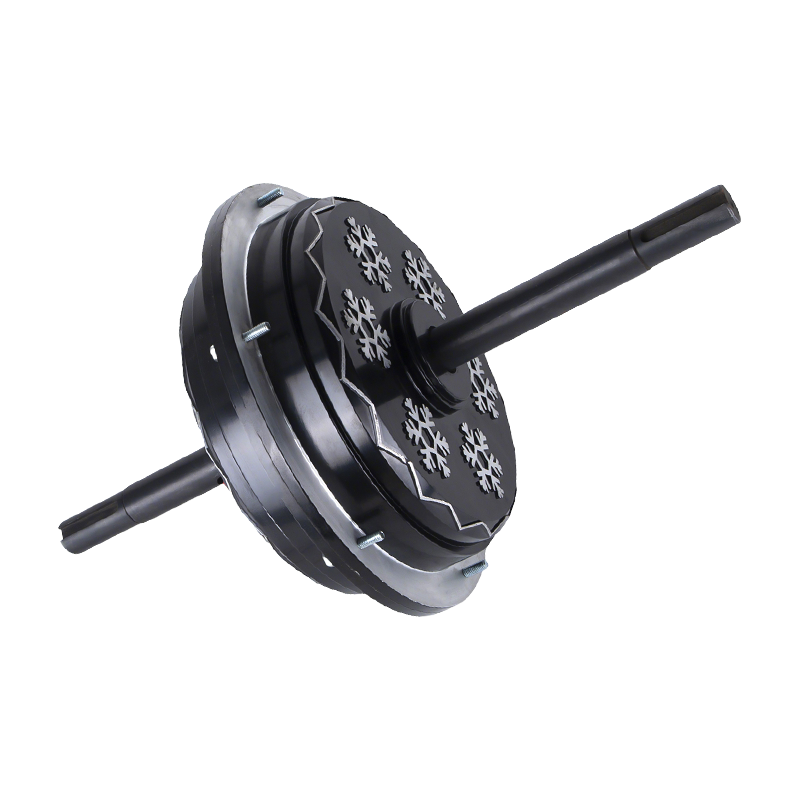 DC198 220V 1500W External BLDC Air Cooler Motor
 Ready To Customise
Your Motor Products?

We are professional motor manufacturers, delivering powerful, stable, and efficient power cores for all industries through precision craftsmanship and innovation.
Contact Us
-
 Mobile:+86 13575536911
-
 Tel:+86 18357538240
-
 Whatsapp:+8618357538240
-
 Email:betty@dbjxmotor.com
-
 Company Address
Copyright © by Shengzhou Jiangxin Motor Technology Co., Ltd. All Rights Reserved.
Wholesale Industrial Fan Motors Manufacturers
