

 English
 русский
 Español
 عربى

No. 8, Duxiu San Road, Ganlin Town, Shengzhou City, Shaoxing City, Zhejiang Province, China

News Category
Product Category
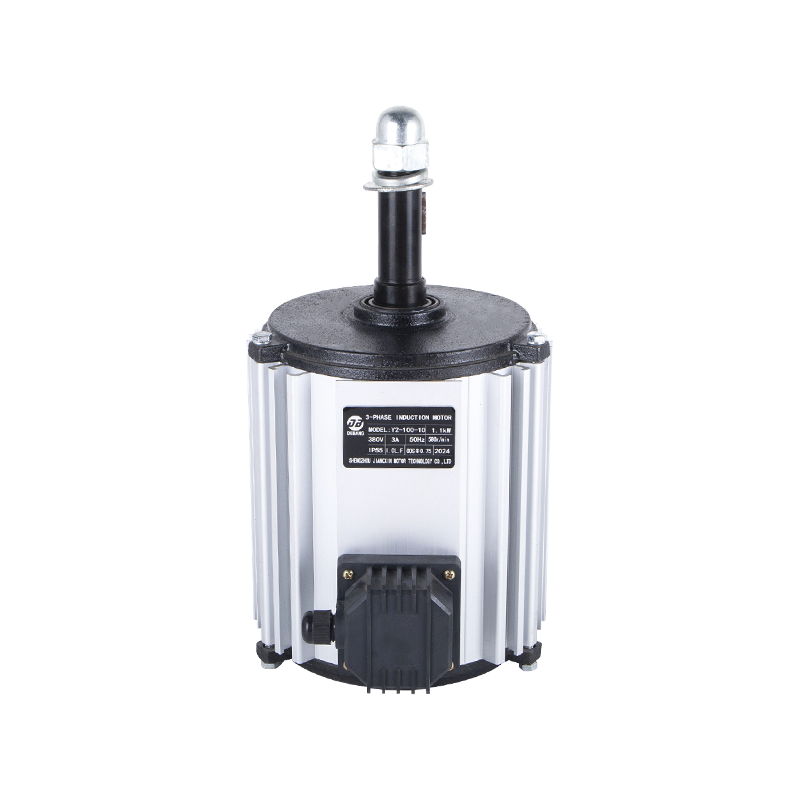
Y2-100-10 380V 1500W Fiberglass Fan Motor: Low-Speed Torque for Demanding Ventilation
Content
- 1 1. Product Overview
- 2 2. Why Low Speed and High Torque Matter
- 3 3. Corrosion-Resistant Construction for Harsh Environments
- 4 4. IP55 Protection and Class F Insulation
- 5 5. Fully Enclosed Design and Operational Reliability
- 6 6. Competitive Advantages Compared with Conventional Alternatives
- 7 7. Manufacturing Strengths and Production Capability
- 8 8. Manufacturing Process Considerations
- 9 9. Application Areas
- 10 10. Installation and System Integration
- 11 11. Maintenance Recommendations
- 12 12. Selection Guidance for Buyers and Equipment Designers
- 13 13. Value of Customized Motor Support
- 14 14. Product Positioning and Long-Term Benefits
- 15 15. Frequently Asked Questions
- 15.1 Q1: What is the rated power of the motor?
- 15.2 Q2: Why does the motor use a 10-pole design?
- 15.3 Q3: What type of fan is recommended for this motor?
- 15.4 Q4: Can the motor operate in humid environments?
- 15.5 Q5: Is the motor suitable for acidic or alkaline environments?
- 15.6 Q6: Does IP55 mean that the motor is waterproof?
- 15.7 Q7: Does the fully enclosed structure eliminate all maintenance?
- 15.8 Q8: Can the motor be used with a gearbox?
- 15.9 Q9: Is the motor appropriate for continuous operation?
- 15.10 Q10: What should be checked before placing an order?
- 15.11 Q11: What manufacturing strengths support this product?
- 15.12 Q12: Can the manufacturer provide customized motors?
- 16 16. Conclusion
- 17 References
- 18 Product: Y2-100-10 380V 1500W Fiber Glass Fan Motor
Modern ventilation systems increasingly operate in environments where ordinary motors are exposed to moisture, corrosive chemicals, salt spray, dust, vibration, and continuous duty. Agricultural buildings, livestock houses, chemical facilities, wastewater treatment areas, coastal installations, and industrial workshops all require dependable air movement, but a standard motor may not provide the required combination of corrosion resistance, torque, protection, and operating stability.
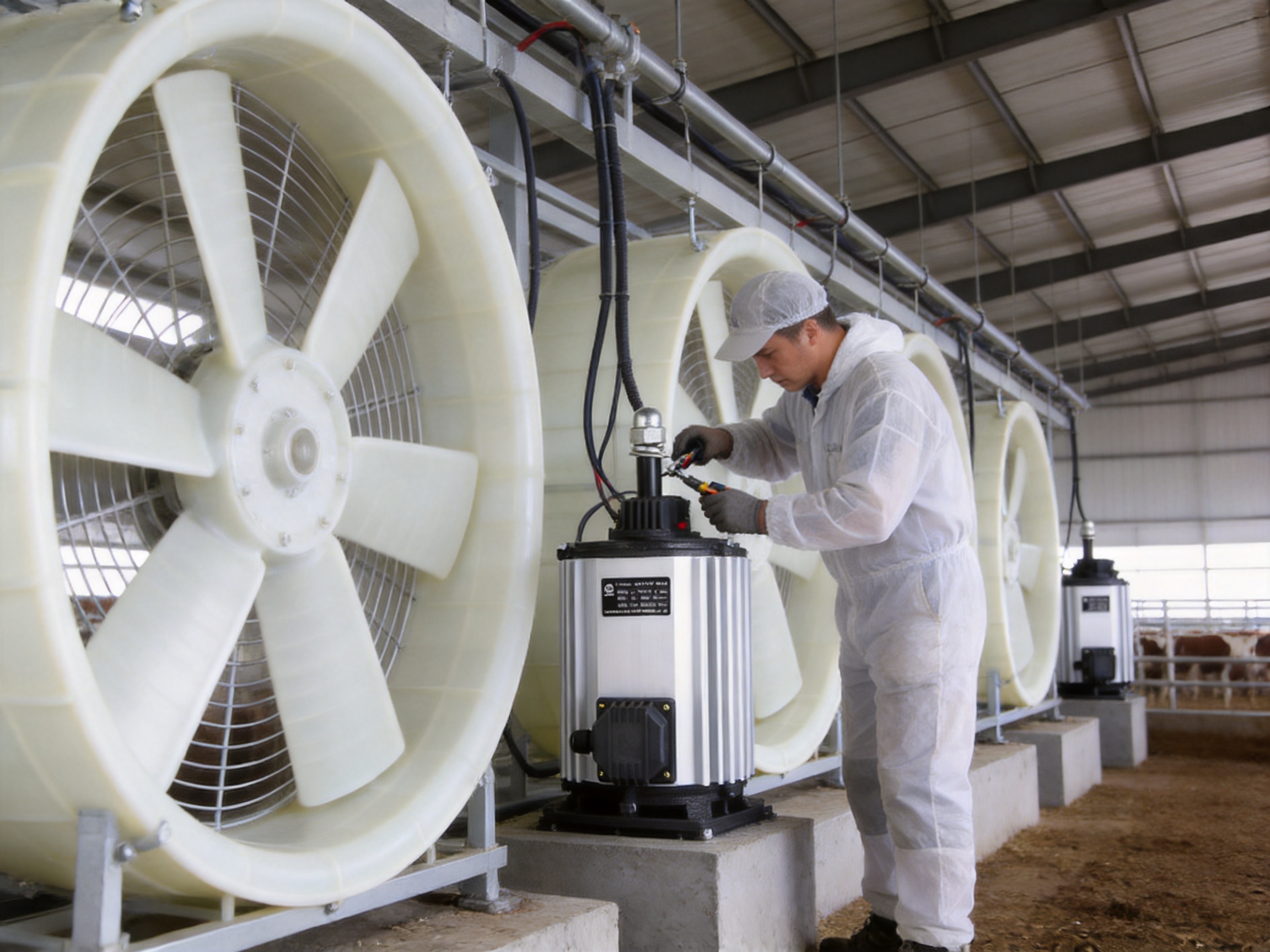
The Y2-100-10 380V 1500W Fiberglass Fan Motor is designed for this type of demanding application. It is a three-phase motor solution intended for anti-corrosion fans and large-diameter fiberglass fan blades. Its 10-pole configuration produces a relatively low rotational speed while maintaining strong starting and driving torque. This makes it suitable for direct-drive ventilation equipment where the motor must move substantial air volumes without relying on a complicated transmission system.
Beyond its electrical rating, the motor is defined by its environmental design. The frame and casing receive an anti-corrosion finish, while Class F insulation and IP55 protection help the motor operate in humid, acidic, alkaline, and salt-spray conditions. Its fully enclosed structure, low-vibration operation, and maintenance-friendly construction further support reliable service in industrial and agricultural ventilation systems.
This article examines the motor’s design, performance advantages, manufacturing strengths, application value, installation considerations, and selection criteria. It also explains why a low-speed, high-torque motor can outperform a faster conventional motor in large-fan applications.
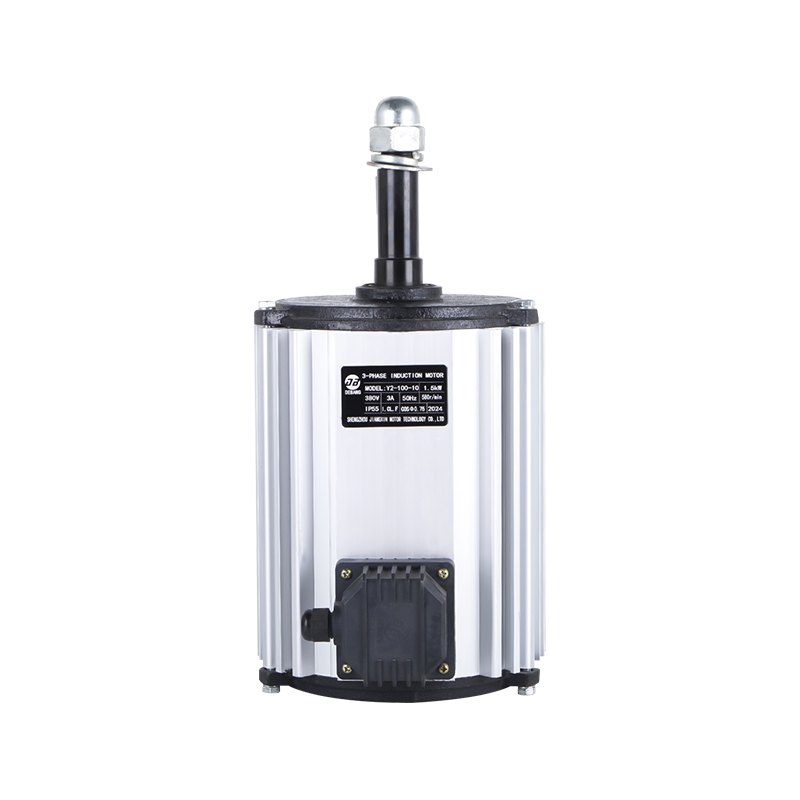
Y2-100-10 380V 1500W Fiber Glass Fan Motor
1. Product Overview
The Y2-100-10 380V 1500W Fiberglass Fan Motor belongs to a class of industrial fan motors engineered for direct-drive ventilation. It is particularly suited to anti-corrosion fans equipped with fiberglass-reinforced plastic, commonly called FRP, fan blades. FRP fan assemblies are frequently used where metal components may corrode quickly because of humidity, chemical fumes, salt, or aggressive airborne particles.
The motor has a rated voltage of 380 V and a rated power of 1500 W. Its 10-pole design is the central feature that distinguishes it from many general-purpose fan motors. At a standard 50 Hz supply frequency, a 10-pole induction motor has a synchronous speed of approximately 600 revolutions per minute. The actual operating speed is somewhat lower because of motor slip. This low-speed characteristic is valuable for large fan blades, which require controlled rotation, high torque, and stable operation.
In comparison, a two-pole or four-pole motor normally rotates considerably faster. A high-speed motor may require a gearbox, belt drive, pulley arrangement, or electronic speed-control system to reduce fan speed. Each additional transmission element can introduce mechanical losses, noise, vibration, maintenance requirements, and possible alignment problems. The 10-pole arrangement allows the motor to drive a suitable large-diameter fan more directly and efficiently from a mechanical standpoint.
| Item | Specification or Description |
|---|---|
| Product model | Y2-100-10 |
| Rated voltage | 380 V |
| Rated power | 1500 W |
| Motor type | Industrial fan motor |
| Pole configuration | 10 poles |
| Speed characteristic | Low-speed operation with high driving torque |
| Protection rating | IP55 |
| Insulation class | Class F |
| Recommended fan type | Anti-corrosion fan with fiberglass or FRP blades |
| Enclosure design | Fully enclosed structure |
| Environmental suitability | Humid, acidic, alkaline, and salt-spray environments |
The stated specifications should always be evaluated together with the fan load, supply frequency, starting method, installation position, ambient temperature, and local electrical requirements. Final selection should be confirmed against the complete fan assembly and the operating conditions of the project.
2. Why Low Speed and High Torque Matter
Large industrial fans do not always benefit from high rotational speed. A large-diameter blade creates significant aerodynamic resistance, especially during startup. When the fan is stationary, the motor must accelerate the blade assembly from rest. If the blade is heavy, wide, or installed in a system with considerable air resistance, the motor needs sufficient torque to start smoothly and continue operating without overheating.
The 10-pole design addresses this challenge by producing a low-speed operating characteristic with strong torque. The motor is better matched to the natural speed range of large ventilation blades. This helps reduce the risk of overspeeding the fan, excessive blade stress, and unnecessary aerodynamic noise.
Low speed also supports stable airflow. In ventilation systems, the objective is often to remove heat, humidity, fumes, or contaminated air continuously rather than to generate the highest possible blade speed. A stable low-speed fan can provide consistent air exchange while reducing mechanical shock and operating noise.
High torque is especially beneficial during starting. A motor with insufficient starting torque may hesitate, draw excessive current, trip a protective device, or fail to accelerate the fan under real operating conditions. The Y2-100-10 is designed around the requirements of large direct-drive fans, helping the fan reach operating speed with a controlled and reliable acceleration profile when correctly matched and installed.
Another advantage is the possibility of reducing the number of mechanical transmission components. A direct-drive arrangement can eliminate belts, pulleys, chains, and gearboxes. This simplifies the fan assembly and may lower routine maintenance requirements. It can also improve alignment stability because the motor shaft is connected more directly to the fan structure.
However, low-speed motor selection must be based on actual system requirements. A motor should not be chosen solely because it has a high pole count. The fan diameter, blade pitch, air pressure, airflow, starting load, duty cycle, and supply frequency must all be reviewed. Correct matching ensures that the motor operates within its thermal and mechanical limits.
3. Corrosion-Resistant Construction for Harsh Environments
Corrosion is one of the most common causes of premature failure in industrial ventilation equipment. Moisture can attack exposed metal surfaces, while acids, alkalis, fertilizers, cleaning chemicals, and salt-laden air can accelerate deterioration. Once corrosion affects the housing, fasteners, cooling surfaces, or electrical entry points, the motor may lose structural strength and environmental protection.
The Y2-100-10 is designed for anti-corrosion fan systems. Its frame and casing are treated with an anti-corrosion finish to provide an additional barrier between the motor body and the surrounding environment. This treatment is particularly important when the motor is installed near FRP fan blades in a corrosive ventilation system.
The protective finish supports longer service life by helping resist surface degradation. It also contributes to easier cleaning and inspection because the motor exterior is better suited to demanding industrial surroundings. Nevertheless, surface treatment is only one part of corrosion control. Proper drainage, suitable cable glands, regular inspection, and correct storage are also necessary.
The motor’s environmental suitability makes it relevant to several industries. In livestock buildings, airborne moisture, ammonia, and cleaning chemicals can attack equipment. In greenhouse and agricultural facilities, condensation and fertilizer residue may create corrosive conditions. In coastal areas, salt spray can damage unprotected metal. In chemical or wastewater facilities, acidic or alkaline fumes may be present around the ventilation equipment.
Using a standard indoor motor in these locations may lead to frequent repainting, bearing contamination, insulation deterioration, and unplanned replacement. A motor designed around anti-corrosion fan applications provides a more appropriate starting point for the overall equipment design.
4. IP55 Protection and Class F Insulation
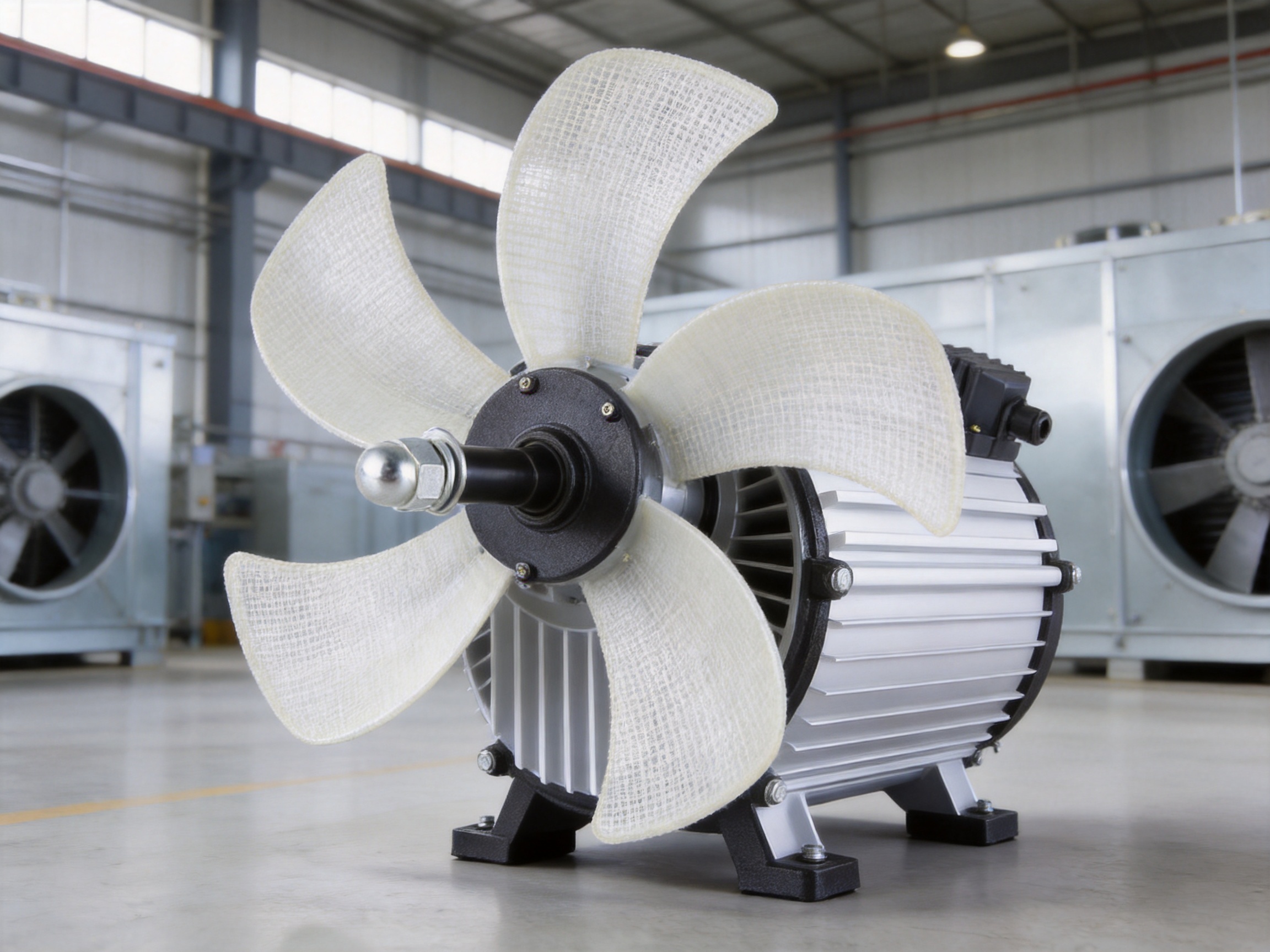
The Y2-100-10 uses an IP55 protection rating. The first number, 5, indicates protection against dust that could interfere with satisfactory operation. The enclosure is not described as completely dust-tight, but the level of protection is intended to prevent harmful dust ingress under defined test conditions. The second number, also 5, indicates protection against water jets from different directions.
IP55 protection is useful for industrial fan environments because ventilation equipment may be exposed to airborne particles, moisture, cleaning operations, and splashing water. It is important to understand that IP55 does not mean the motor can be submerged or exposed to unlimited high-pressure washing. Installation must still prevent water from entering through cable connections, junction boxes, shaft seals, or damaged gaskets.
Class F insulation provides a higher thermal insulation capability than lower insulation classes. This helps the winding system tolerate elevated operating temperatures when the motor is correctly loaded and adequately ventilated. It provides a useful thermal margin for industrial applications, particularly when ambient conditions are more demanding than those found in a clean indoor room.
Insulation performance depends on more than the class designation. Correct voltage, balanced phases, appropriate overload protection, suitable cable sizing, clean terminals, and proper cooling are all essential. Excessive overload, frequent starts, phase loss, and blocked ventilation can still damage the windings even when the motor has Class F insulation.
For corrosive or humid installations, users should inspect cable glands, terminal covers, and enclosure joints at regular intervals. Condensation can form inside a motor when there are large temperature differences between the motor and surrounding air. If the motor is stored before installation, it should be kept dry and protected from condensation. Installation teams should also follow the motor’s specific wiring and grounding instructions.
5. Fully Enclosed Design and Operational Reliability
The fully enclosed structure helps isolate the internal electrical components from dust, moisture, and other contaminants. In an industrial fan application, this is valuable because the surrounding atmosphere may contain particles, aerosols, chemical vapors, or biological contaminants. A more protected enclosure can reduce the likelihood that these substances will reach the windings and internal electrical parts.
Enclosure design also supports simpler maintenance. The motor does not require the same level of frequent internal cleaning as an open-frame motor operating in a contaminated environment. This does not mean that the motor is completely maintenance-free under every condition. Bearings, mounting points, external surfaces, cable connections, and the fan assembly should still be inspected according to the operating schedule.
Reliability is the result of several design elements working together. The motor combines a low-speed winding configuration, corrosion-resistant external treatment, Class F insulation, IP55 protection, and a fully enclosed body. Each feature addresses a different source of risk: mechanical stress, environmental attack, heat, contamination, or maintenance difficulty.
For equipment operators, this integrated design can improve operating continuity. A fan that runs steadily with fewer interruptions is important in livestock ventilation, greenhouse climate control, industrial exhaust, and other applications where inadequate airflow may affect production, worker comfort, product quality, or environmental compliance.
The motor’s low-vibration and low-noise characteristics are also valuable. Vibration can loosen fasteners, increase bearing loads, damage fan blades, and transmit noise through building structures. Stable operation helps protect the entire fan assembly, not only the motor itself. Correct balancing of the fan blade, accurate shaft alignment, secure mounting, and appropriate foundation design remain essential to achieving the best result.
6. Competitive Advantages Compared with Conventional Alternatives
The main competitive advantage of the Y2-100-10 is that its design is focused on the actual operating needs of large anti-corrosion fans rather than on general-purpose motor use alone. This application-specific approach can provide practical benefits over a standard high-speed motor selected without considering the fan’s size and environment.
6.1 Direct-drive suitability
A 10-pole motor operates in a speed range that can suit large fan blades. This may reduce the need for speed-reduction equipment. Fewer transmission components can mean fewer wear points, fewer alignment tasks, and fewer parts requiring replacement.
6.2 Strong starting performance
Large fan blades need torque to overcome inertia and aerodynamic resistance. The low-speed, high-torque design supports smoother starting when the motor is correctly matched to the fan load. This can help reduce starting failure and mechanical shock.
6.3 Better environmental compatibility
The anti-corrosion treatment, IP55 enclosure, and Class F insulation make the motor more suitable for environments that are unsuitable for many ordinary indoor motors. These features are relevant to humidity, chemical exposure, salt spray, dust, and wash-down conditions within the limits of the specified protection rating.
6.4 Reduced operating disturbance
Low-speed rotation can help reduce aerodynamic noise and mechanical vibration. This is useful in farms, workshops, public facilities, and industrial areas where excessive noise may affect personnel or neighboring operations.
6.5 Simplified service planning
The fully enclosed design helps limit contamination of internal components. When combined with direct drive and stable operation, it can support a simpler maintenance program. Routine inspection remains necessary, but the equipment may not require the same frequency of belt replacement or transmission adjustment as a belt-driven fan.
6.6 Compatibility with fiberglass fan assemblies
FRP fans are selected for their corrosion resistance and light weight. Pairing them with a motor that is also prepared for corrosive environments creates a more coherent fan system. The motor and fan can be evaluated as complementary components rather than as unrelated products.
7. Manufacturing Strengths and Production Capability
The product is manufactured by Shengzhou Jiangxin Motor Technology Co., Ltd., a motor producer established in 2017 and based in Zhejiang, China. The company specializes in the research, development, production, and sales of AC and DC motors, micro motors, and customized motor solutions.
The company operates modern production facilities and uses advanced automated equipment. Automation is valuable in motor manufacturing because repeatable winding, assembly, testing, and inspection processes help control variation between units. Consistency is particularly important for fan motors, where imbalance, uneven assembly, or inconsistent electrical characteristics may lead to vibration and reduced service life.
A professional research and development team supports product improvement and application customization. For industrial ventilation, this capability can help address differences in voltage, speed, mounting requirements, shaft configuration, enclosure design, or environmental protection. A manufacturer with both production and development capabilities is better positioned to adapt a motor to a complete equipment system.
Quality control is another central manufacturing strength. Motor quality depends on the selection and processing of electrical steel, copper wire, insulation materials, bearings, housings, shafts, fasteners, protective coatings, and terminal components. Each stage affects final performance. A controlled production system should verify winding quality, insulation performance, assembly accuracy, operating current, temperature behavior, vibration, noise, and overall appearance.
For a corrosion-resistant fan motor, coating and enclosure quality deserve particular attention. The protective finish should be applied consistently to the relevant external surfaces. Sealing interfaces should be properly assembled. Cable entry points should support the intended environmental protection. The company’s focus on AC/DC motor production and industrial applications provides a foundation for managing these requirements.
Jiangxin Motor has been recognized as a provincial-level technology enterprise and exports products to more than 60 countries and regions. International supply experience can support communication on technical specifications, packaging, documentation, export requirements, and customer service. It also indicates that the company has experience serving different operating environments and market expectations.
The company’s product range includes evaporative air cooler motors, industrial heater motors, oil pump motors, micro motors, and customized motors. This breadth is relevant because it demonstrates experience across multiple application fields, including environmental protection equipment, industrial heating, hydraulic systems, and ventilation. Such cross-application experience can be useful when customers require more than a standard catalog motor.
8. Manufacturing Process Considerations
A dependable industrial motor begins with controlled material preparation. Electrical steel laminations form the magnetic core, while copper or another suitable conductor is used for the stator winding. Insulation materials separate conductive components and protect the winding from thermal and electrical stress. The housing, shaft, bearings, terminal box, and protective coating must then be integrated with appropriate dimensional control.
8.1 Core and stator preparation
The magnetic core must be assembled accurately so that the air gap is controlled and the magnetic circuit performs consistently. Poor lamination alignment or damage to the core can increase losses, heating, noise, and vibration. A controlled production line helps maintain repeatability in core stacking and stator assembly.
8.2 Winding and insulation
The winding process is central to motor performance. Wire placement, coil formation, slot filling, insulation insertion, and connection quality all influence current distribution and thermal behavior. Class F insulation requires appropriate material selection and proper processing. Winding tests can help identify short circuits, open circuits, incorrect connections, or insufficient insulation resistance before final assembly.
8.3 Rotor and shaft assembly
The rotor must be assembled with accurate dimensions and appropriate balance. In a low-speed fan motor, mechanical balance remains important even though the rotational speed is lower than that of a high-speed motor. An inaccurate shaft or unbalanced rotor can create vibration, accelerate bearing wear, and affect fan performance.
8.4 Housing and protective treatment
The frame and casing are prepared with an anti-corrosion finish suitable for the intended application. Surface preparation, coating uniformity, curing, and final inspection affect the durability of the protection. The enclosure must also be assembled so that joints, covers, and cable entries support the target IP55 rating.
8.5 Assembly and inspection
Final assembly includes fitting the rotor, bearings, end shields, terminal components, seals, fasteners, and external protective parts. Inspection should confirm that the shaft rotates smoothly, the enclosure is properly closed, terminals are secure, and the motor has no visible defects. Electrical and operational tests provide additional confirmation before shipment.
8.6 Functional testing
Typical motor testing may include winding resistance, insulation resistance, no-load current, operating sound, vibration, rotation direction, and temperature-related checks. The exact testing program depends on the product specification, customer requirements, applicable standards, and production controls. Testing is especially important for motors intended for continuous fan operation because small defects can become significant after long periods of service.
9. Application Areas
9.1 Agricultural and livestock ventilation
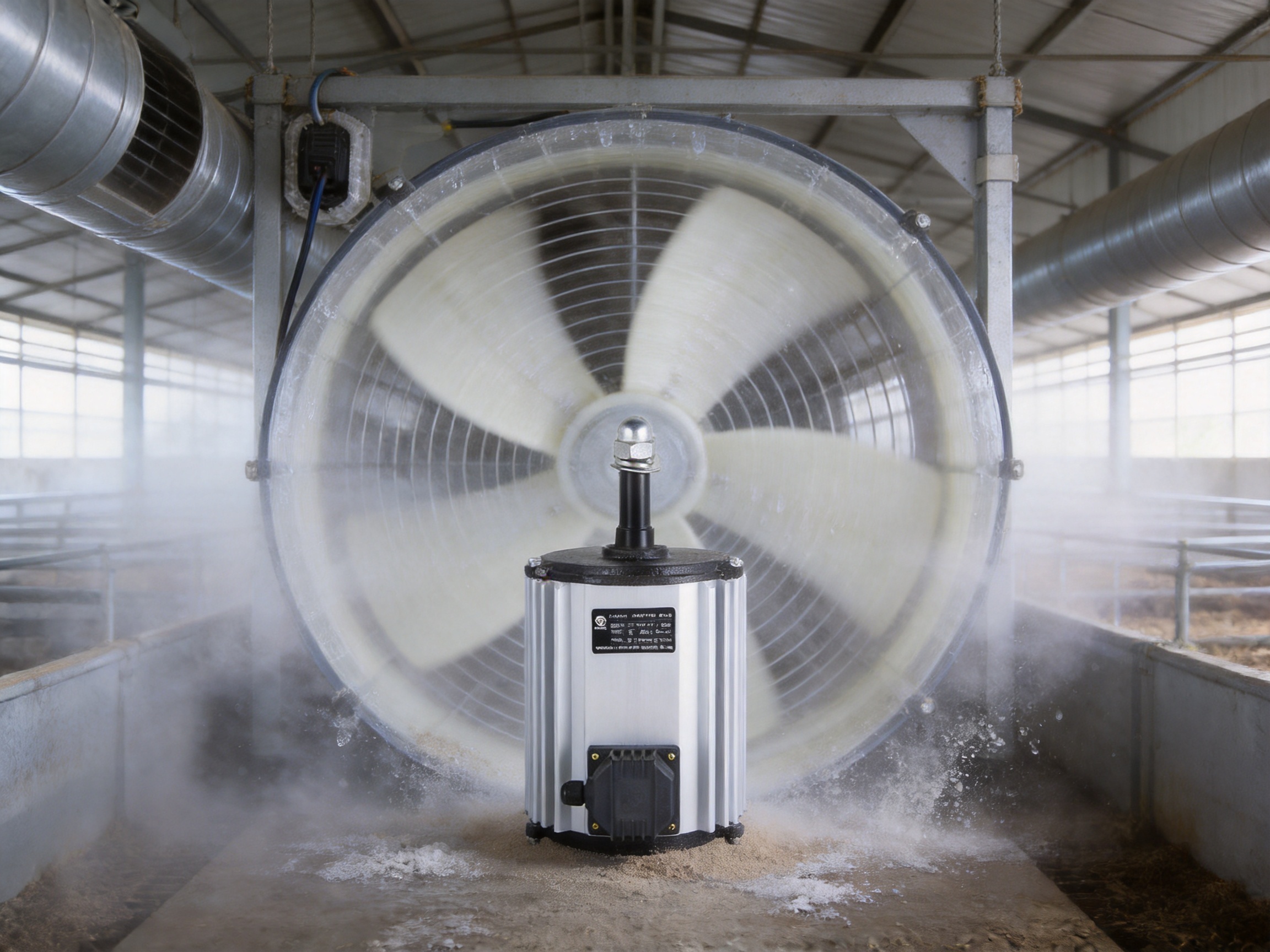
Livestock buildings require continuous air exchange to control temperature, humidity, odors, and airborne contaminants. The atmosphere may contain moisture, ammonia, dust, and cleaning chemicals. A corrosion-resistant, low-speed motor is well suited to large exhaust fans used in these buildings.
Stable airflow is important because sudden changes in ventilation can affect animal comfort and environmental conditions. The motor’s low-noise and low-vibration characteristics can also help create a more suitable working environment for farm personnel and reduce structural disturbance.
9.2 Greenhouses and agricultural processing
Greenhouses often operate with high humidity and condensation. Ventilation fans are used to manage heat, humidity, and air circulation. Agricultural processing areas may additionally contain dust, organic particles, or cleaning agents. The motor’s enclosure and corrosion-resistant finish provide useful protection for these conditions when installation is properly completed.
9.3 Chemical and wastewater facilities
Wastewater treatment, chemical handling, and environmental-control facilities may contain acidic or alkaline vapors. Exhaust fans in these areas require equipment with suitable corrosion resistance. The Y2-100-10 can be considered for compatible fan systems where the motor’s voltage, power, speed, protection, and materials meet the project requirements.
9.4 Coastal and salt-laden environments
Salt spray is highly aggressive toward unprotected metal. Coastal workshops, marine-related facilities, and buildings near the sea may benefit from anti-corrosion motor construction. IP55 protection and surface treatment can help, although additional site-specific protection may be needed where direct marine exposure is severe.
9.5 Industrial workshops and exhaust systems
Industrial workshops use ventilation to remove heat, fumes, dust, and contaminated air. Large-diameter anti-corrosion fans can be installed as roof exhaust units, wall exhaust units, or process ventilation equipment. The motor’s low-speed operating profile is appropriate where the fan is designed for high airflow at controlled rotational speed.
10. Installation and System Integration
Correct installation is essential to obtain the expected service life from any motor. Before installation, users should confirm the rated voltage, power, frequency, wiring arrangement, mounting dimensions, shaft configuration, rotation direction, and fan load. The motor should be matched with a fan designed for its speed and torque characteristics.
The foundation or mounting frame must be rigid and level. Soft, unstable, or uneven mounting surfaces may amplify vibration. All bolts should be tightened to the appropriate torque, and the fan assembly should be balanced before operation. If the motor is connected directly to the fan, shaft alignment must be accurate to prevent excessive radial or axial loads.
Electrical installation should be completed by qualified personnel. The supply must match the motor rating, and the motor should be protected by suitable circuit protection and overload devices. Phase imbalance, phase loss, incorrect connections, and inadequate grounding can cause overheating or unsafe operation.
Cable glands and terminal enclosures should be selected to maintain the intended environmental protection. A high-quality IP55 motor can lose effective protection if the cable entry is poorly sealed or if the terminal cover is incorrectly fitted. Cables should be supported so that their weight does not pull on the terminals or create a leak path.
After installation, the fan should be checked without load where appropriate, followed by a controlled operating test. Operators should listen for unusual noise, observe vibration, verify rotation direction, and monitor current. The motor should not be allowed to continue operating if it becomes excessively hot, vibrates abnormally, or produces a burning smell.
11. Maintenance Recommendations
The fully enclosed structure supports simple maintenance, but routine inspection remains important. Maintenance frequency should reflect operating hours, environmental severity, starting frequency, dust concentration, and the consequences of ventilation failure.
External surfaces should be inspected for corrosion, coating damage, accumulated dust, or chemical residue. Damaged protective coatings should be evaluated and repaired using a compatible method. Water should not be directed into the motor enclosure during cleaning, and high-pressure washing should be avoided unless the complete installation has been designed for it.
Bearings and shaft areas should be checked for abnormal noise, excessive temperature, or play. Bearing maintenance should follow the manufacturer’s instructions because lubrication requirements vary by bearing type and design. Over-lubrication can be as harmful as insufficient lubrication.
Electrical terminals should be checked for looseness, discoloration, or overheating. Insulation resistance testing may be useful after extended storage, long shutdowns, or exposure to condensation. Any testing should be performed safely and by trained personnel.
The fan blades and support structure should be inspected together with the motor. Dirt buildup, cracked FRP blades, loose fasteners, or blade imbalance can create vibration that appears to be a motor problem. Maintaining the complete fan system is more effective than inspecting the motor in isolation.
Operators should record current, operating temperature, vibration, noise, and maintenance events where practical. A simple trend record can reveal gradual changes before they become serious failures. Early detection helps reduce unplanned downtime and allows parts to be replaced during scheduled maintenance.
12. Selection Guidance for Buyers and Equipment Designers
Before ordering the Y2-100-10, buyers should define the complete operating requirement. The motor’s 380 V, 1500 W rating is only one part of the selection process. The fan manufacturer or system designer should confirm that the motor’s torque and speed characteristics correspond to the selected blade assembly.
Important questions include the following:
What is the required airflow and static pressure?
What is the diameter, weight, and pitch of the fan blade?
Will the fan start with the blades exposed to full system resistance?
What is the local supply frequency and voltage tolerance?
Will the motor operate continuously or intermittently?
What are the ambient temperature, humidity, chemical exposure, and salt-spray conditions?
Is IP55 sufficient for the installation, or is additional protection required?
What mounting, shaft, terminal, and rotation requirements apply?
What electrical protection and starting method will be used?
What inspection, spare-parts, and service arrangements are needed?
Answering these questions before purchase helps prevent mismatches. A motor that is electrically compatible may still be unsuitable if the fan load is too high, the starting torque is insufficient, or the environmental exposure exceeds the enclosure and coating design.
13. Value of Customized Motor Support
Industrial customers often require more than a standard product. A ventilation system may have unusual mounting dimensions, a special shaft extension, a different terminal position, a particular cable-entry arrangement, or a customized coating requirement. Application support can help determine whether a standard Y2-100-10 configuration is suitable or whether a modified design is needed.
A manufacturer with research and development capability can review the operating conditions and propose a more appropriate solution. Customization should be based on technical evaluation rather than appearance alone. Changes to speed, power, shaft dimensions, enclosure construction, or winding parameters can affect torque, temperature, efficiency, and protection.
Jiangxin Motor’s experience with AC/DC motors, micro motors, air cooler motors, heater motors, oil pump motors, and other customized products provides a broad technical base for customer discussions. This product range also allows the company to understand different motor applications, production volumes, and equipment integration requirements.
14. Product Positioning and Long-Term Benefits
The Y2-100-10 is best positioned as a specialized industrial fan motor for low-speed, high-torque, corrosion-sensitive applications. It is not simply a general motor with a different nameplate. Its value comes from the combination of electrical design, protective construction, and intended use with large anti-corrosion fan blades.
For equipment owners, the long-term benefit may include more stable ventilation, fewer transmission components, improved environmental compatibility, and easier routine service. These advantages can be especially meaningful where fan access is difficult, downtime is costly, or the surrounding atmosphere quickly damages ordinary equipment.
For original equipment manufacturers, the motor provides a foundation for developing FRP fan assemblies and other industrial ventilation products. The manufacturer’s production facilities, automated equipment, quality-control approach, and R&D support can assist customers seeking repeatable supply and application-specific solutions.
For international buyers, export experience and a broad product portfolio can simplify communication during product selection and order execution. Technical documentation, packaging, inspection requirements, and customization discussions should still be confirmed for every project.
15. Frequently Asked Questions
Q1: What is the rated power of the motor?
The rated power is 1500 W. The motor is designed for a 380 V supply and should be matched with a fan load that remains within its electrical and mechanical capabilities.
Q2: Why does the motor use a 10-pole design?
The 10-pole design provides a lower rotational speed than many conventional two-pole or four-pole motors. It is intended to produce a useful combination of low speed and high torque for large-diameter fan blades and direct-drive ventilation equipment.
Q3: What type of fan is recommended for this motor?
The motor is suitable for anti-corrosion fans, especially fan assemblies using fiberglass-reinforced plastic blades. The final combination must be checked to ensure that the fan’s speed, torque, power, and mounting requirements are compatible.
Q4: Can the motor operate in humid environments?
It is designed for demanding environments and has IP55 protection, Class F insulation, and an anti-corrosion finish. These features support operation in humid conditions, but the motor should not be submerged or exposed to conditions beyond the stated protection level.
Q5: Is the motor suitable for acidic or alkaline environments?
The motor is described as suitable for environments involving humidity, acid, alkali, and salt spray. The actual suitability depends on the concentration, temperature, exposure duration, and chemical composition. Severe chemical exposure may require additional protective measures and technical confirmation.
Q6: Does IP55 mean that the motor is waterproof?
IP55 indicates protection against harmful dust ingress and water jets from different directions under defined testing conditions. It does not mean that the motor is suitable for immersion or unrestricted high-pressure washing.
Q7: Does the fully enclosed structure eliminate all maintenance?
No. The enclosed structure helps reduce contamination and simplify service, but the motor, bearings, terminals, mounting bolts, fan blades, and protective coating should still be inspected regularly.
Q8: Can the motor be used with a gearbox?
The motor is intended to support low-speed fan operation and may be suitable for direct-drive systems. Whether a gearbox is required depends on the fan design and system requirements. A gearbox should not be added without confirming speed, torque, efficiency, and mechanical compatibility.
Q9: Is the motor appropriate for continuous operation?
It is designed for industrial fan applications and reliable operation, but the permissible duty cycle must be confirmed from the complete technical specification. Continuous operation also requires correct load selection, ventilation, electrical protection, and installation.
Q10: What should be checked before placing an order?
Buyers should confirm voltage, frequency, power, fan speed, torque requirements, mounting dimensions, shaft configuration, rotation direction, environmental conditions, starting method, protection requirements, and delivery documentation.
Q11: What manufacturing strengths support this product?
The manufacturer has modern production facilities, automated equipment, a professional R&D team, quality-control systems, and experience producing AC/DC motors and customized motor solutions. It has also developed products for environmental protection equipment, industrial heating, hydraulic systems, and ventilation-related applications.
Q12: Can the manufacturer provide customized motors?
The company produces customized motors in addition to standard product categories. Any customization should be evaluated against the required power, speed, voltage, dimensions, environmental protection, materials, and production quantity.
16. Conclusion
The Y2-100-10 380V 1500W Fiberglass Fan Motor is designed for ventilation systems that demand more than basic motor operation. Its 10-pole configuration provides low-speed, high-torque performance suitable for large-diameter fan blades. Its anti-corrosion finish, IP55 protection, Class F insulation, and fully enclosed structure address the environmental challenges found in humid, chemical, dusty, and salt-laden locations.
Compared with a conventional high-speed motor and transmission arrangement, this motor may offer a simpler direct-drive solution with fewer mechanical components, reduced maintenance demands, and stable operating behavior. Its low-noise and low-vibration characteristics further support industrial, agricultural, and environmental ventilation applications.
The product is supported by a manufacturer with experience in AC/DC motors, micro motors, customized solutions, automated production, research and development, and international supply. These capabilities are important for customers who need consistent quality, application guidance, and dependable long-term cooperation.
Proper fan matching, professional installation, suitable electrical protection, and regular inspection remain essential. When these requirements are addressed, the Y2-100-10 can provide a practical motor solution for anti-corrosion fiberglass fan systems and demanding industrial air-movement applications.
References
1. IEC 60034 Series, Rotating Electrical Machines, International Electrotechnical Commission.
2. IEC 60529, Degrees of Protection Provided by Enclosures, International Electrotechnical Commission.
3. NEMA MG 1, Motors and Generators, National Electrical Manufacturers Association.
4. General principles of industrial fan selection, direct-drive systems, and motor-load matching.
5. General guidance for electric motor insulation classes, enclosure protection, grounding, and maintenance.
6. Manufacturer-provided product information for the Y2-100-10 380V 1500W Fiberglass Fan Motor.
7. Manufacturer-provided company information regarding AC/DC motor research, production, quality control, customization, and international supply.
Product: Y2-100-10 380V 1500W Fiber Glass Fan Motor
 Ready To Customise
Your Motor Products?

We are professional motor manufacturers, delivering powerful, stable, and efficient power cores for all industries through precision craftsmanship and innovation.
Contact Us
-
 Mobile:+86 13575536911
-
 Tel:+86 18357538240
-
 Whatsapp:+8618357538240
-
 Email:betty@dbjxmotor.com
-
 Company Address
Copyright © by Shengzhou Jiangxin Motor Technology Co., Ltd. All Rights Reserved.
Wholesale Industrial Fan Motors Manufacturers
