

 English
 русский
 Español
 عربى

No. 8, Duxiu San Road, Ganlin Town, Shengzhou City, Shaoxing City, Zhejiang Province, China

News Category
Product Category
YY7134 150V 370W Portable Concrete Mixer Motor: Reliable Power for Demanding Job Sites
Content
- 1 Product Overview
- 2 High-Torque Performance for Concrete Mixing
- 3 Pure Copper Winding and Thermal Efficiency
- 4 150V Operation for Specialized Power Applications
- 5 Aluminum Alloy Housing and Heat Dissipation
- 6 Class-F Insulation for Reliable Motor Protection
- 7 IP44 Protection for Outdoor Job-Site Conditions
- 8 Dynamic Balancing for Lower Vibration and Noise
- 9 Single-Phase Capacitor-Run Design
- 10 Advantages for Portable Concrete Mixer Manufacturers
- 11 Advantages Compared with Basic Alternative Motors
- 12 Manufacturing Strengths and Technical Capabilities
- 13 Recommended Application and Selection Process
- 14 Installation and Operating Guidance
- 15 Maintenance Practices for Long Service Life
- 16 Use in Different Construction Environments
- 17 Why Supplier Support Matters
- 18 Frequently Asked Questions
- 18.1 What is the rated power of the YY7134 motor?
- 18.2 What voltage does the motor require?
- 18.3 Can the motor operate at both 50Hz and 60Hz?
- 18.4 Is this motor suitable for continuous operation?
- 18.5 What type of motor is the YY7134?
- 18.6 What materials can the motor help mix?
- 18.7 What does IP44 protection mean for this product?
- 18.8 Why is the aluminum alloy housing useful?
- 18.9 What is the benefit of Class-F insulation?
- 18.10 Why is dynamic balancing important?
- 18.11 Can the motor replace any 370W motor?
- 18.12 What should be checked before ordering?
- 18.13 What company manufactures this motor?
- 19 Conclusion
- 20 References
- 21 Product: YY7134 150V 370W Portable Concrete Mixer Motor
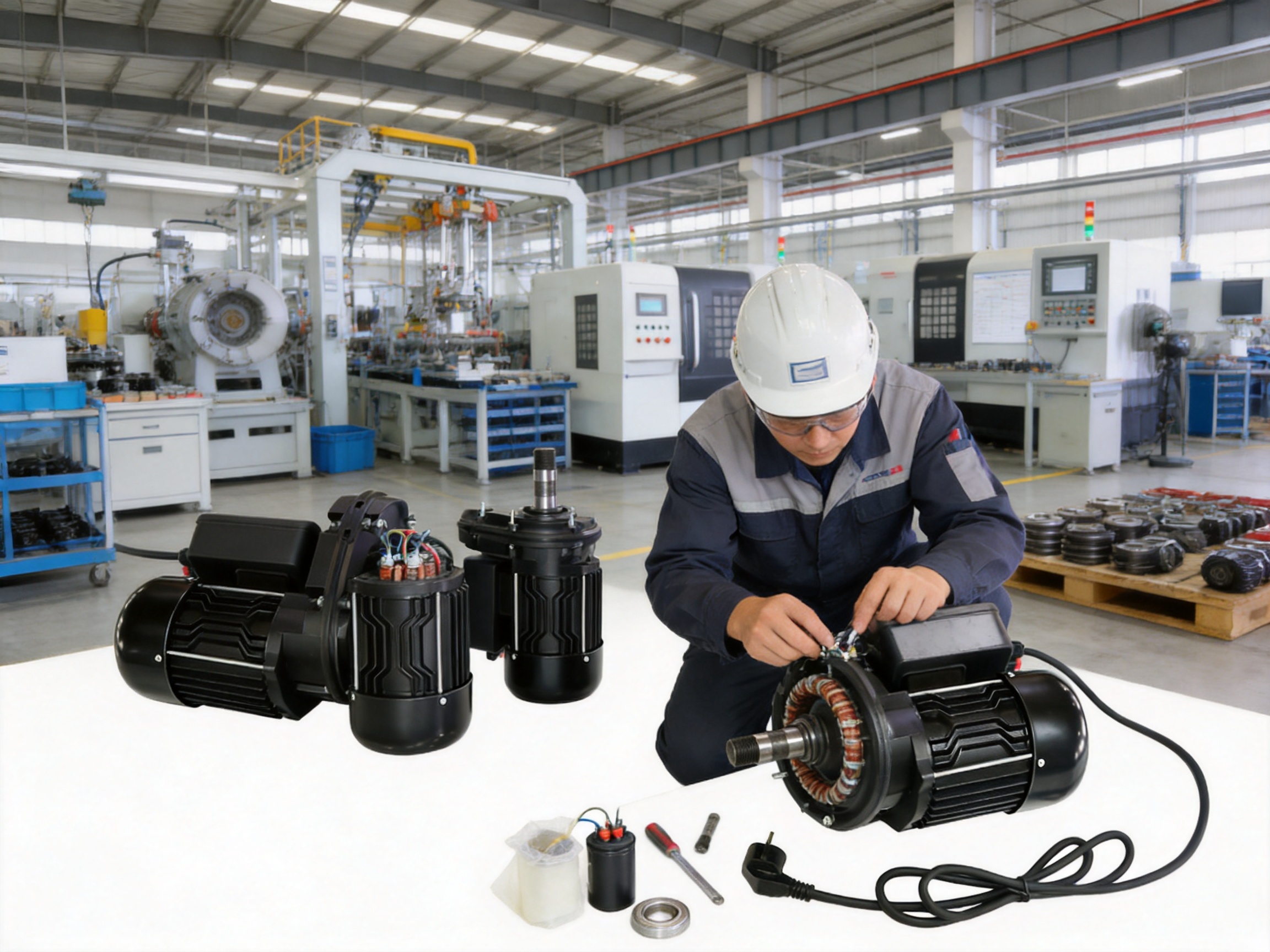
Portable concrete mixers require a motor that can deliver dependable starting performance, stable operation, and sufficient torque under changing loads. Unlike many light-duty applications, concrete and mortar mixing can place sudden and repeated demands on a drive system. The material inside the drum may become heavier as water and aggregate combine, resistance can vary during operation, and construction-site power supplies are not always perfectly stable. A motor selected for this environment must therefore balance power, durability, thermal performance, maintainability, and installation convenience.
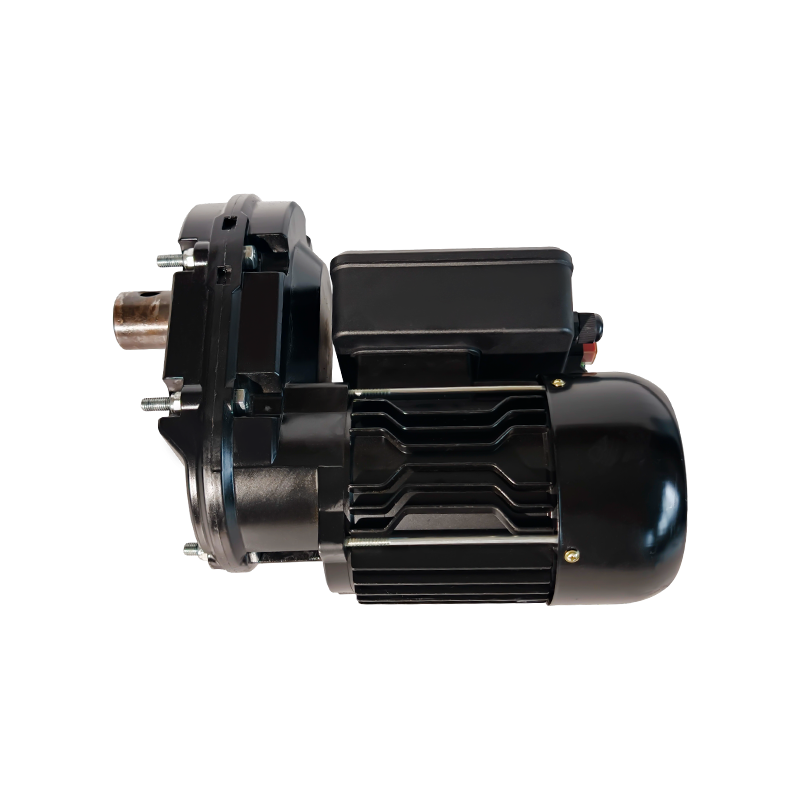
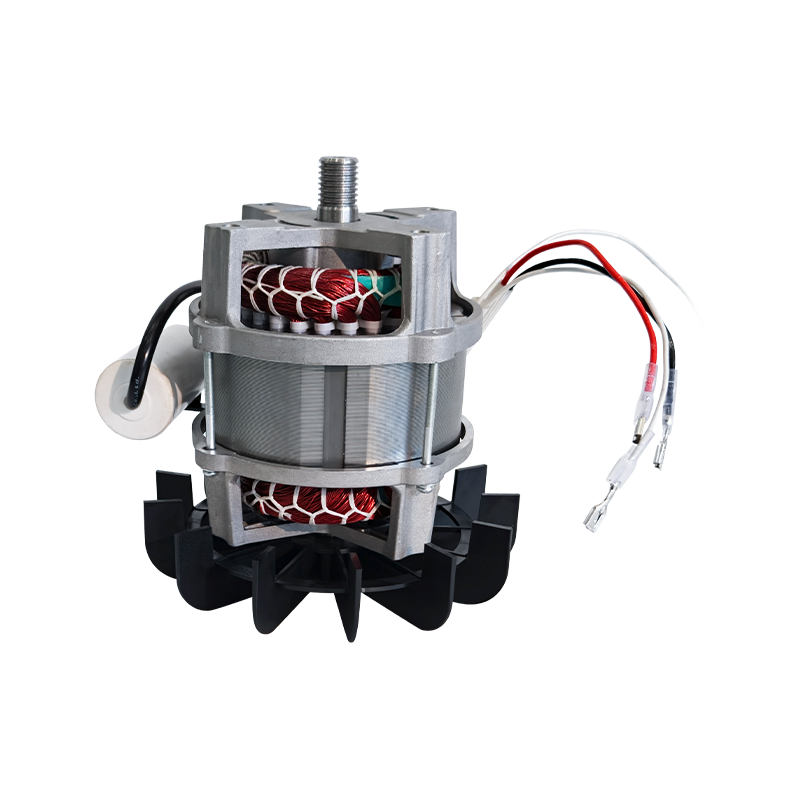
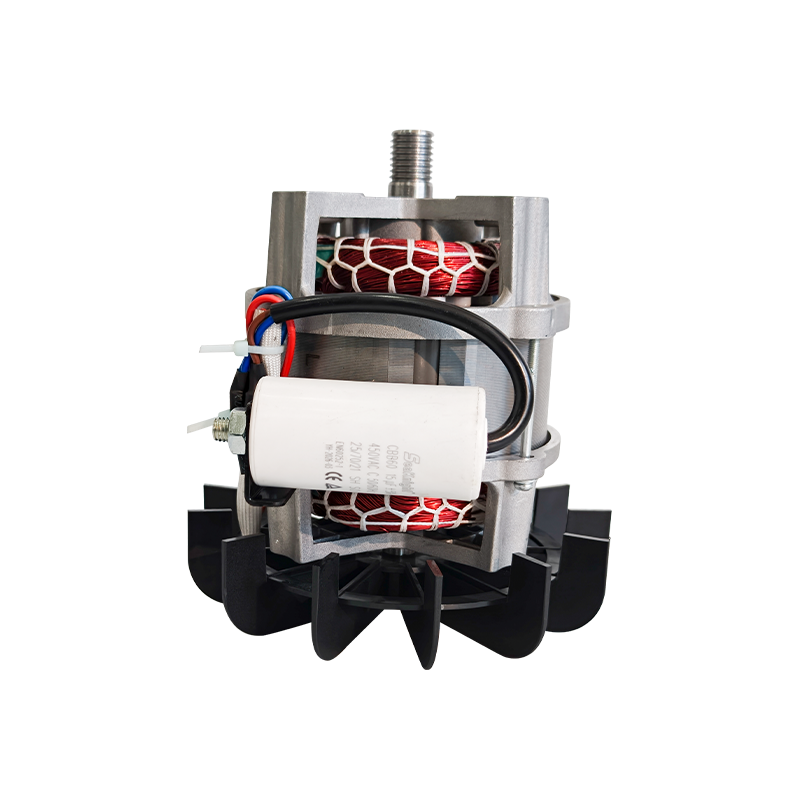
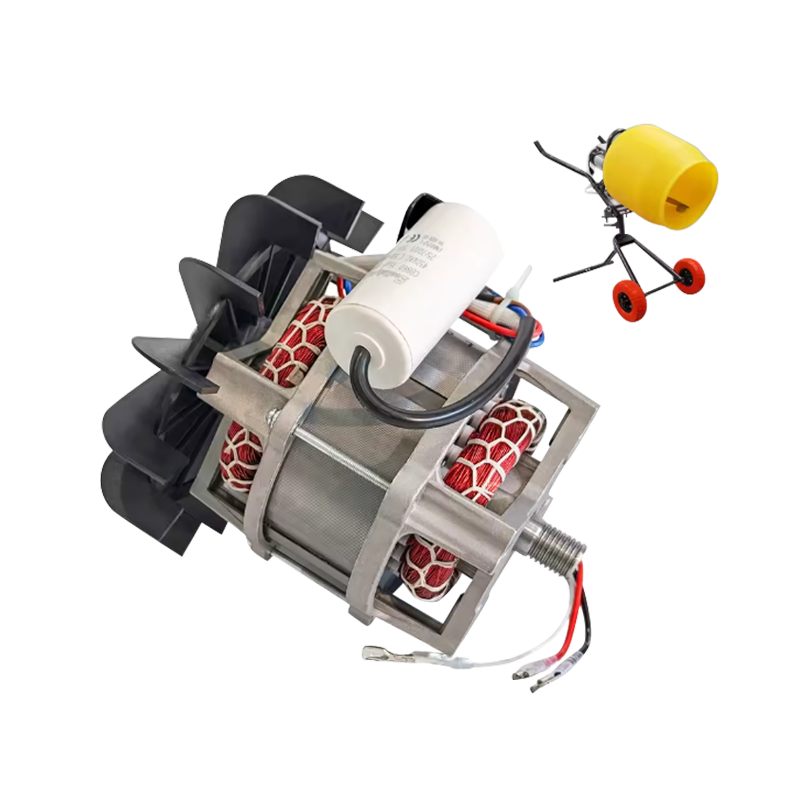
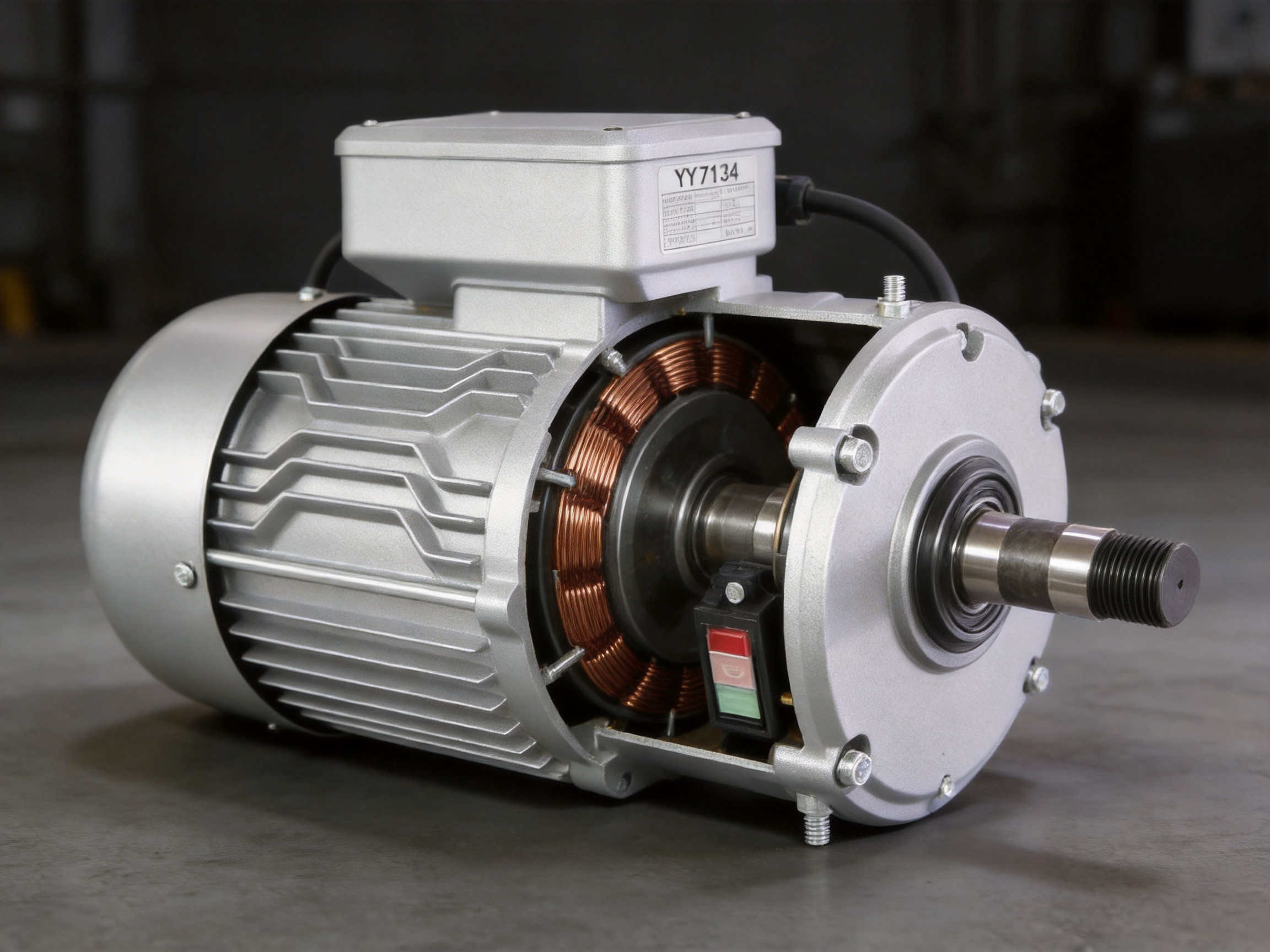
The YY7134 150V 370W Portable Concrete Mixer Motor is designed for this type of application. It is a single-phase capacitor-run motor developed for small portable concrete mixers and related mixing equipment. With a rated voltage of 150V, power output of 370W, and compatibility with 50Hz and 60Hz electrical systems, it provides a practical solution for specialized equipment and overseas power applications. Its high-torque operating characteristics support the mixing of concrete, mortar, and cement while helping reduce the risk of stalling during demanding work cycles.
The motor combines a pure copper winding, aluminum alloy housing, cooling fins, Class-F insulation, IP44 protection, and dynamic balancing treatment. These features are intended to support long service life, efficient heat dissipation, reduced vibration, and easier maintenance. In addition, the motor is designed for S1 continuous operation, making it suitable for applications that require extended running periods rather than only short intermittent use.
Behind the product is a manufacturer with experience in AC/DC motors, micro motors, and customized motor solutions. Shengzhou Jiangxin Motor Technology Co., Ltd. operates modern production facilities, automated equipment, and a professional research and development team. Its quality-control approach and export experience provide a manufacturing foundation for supplying motors to customers in different markets and application environments.
Product Overview
The YY7134 is a compact 370W concrete mixer motor intended for portable equipment. Its electrical configuration is based on a single-phase capacitor-run design, which is widely used where three-phase power is unavailable or where the machine must be connected to a common single-phase supply. This makes the motor especially suitable for small contractors, renovation teams, equipment rental companies, and users working in locations with limited electrical infrastructure.
The motor operates at 150V and supports both 50Hz and 60Hz frequencies. This combination is useful for specialized applications in regions where the required operating voltage differs from more common standard supply levels. It can also simplify product planning for equipment manufacturers that serve multiple markets, provided that the complete electrical system is designed and configured for the motor’s rated conditions.
With a power rating of 370W, the motor is positioned for small portable concrete mixers rather than large industrial batching systems. Its compact construction helps equipment designers keep the overall mixer manageable for transport and handling. At the same time, the motor is engineered to provide the high starting and running characteristics needed to turn a mixing drum or paddling mechanism through changing material resistance.
| Product | Concrete Mixer Motor |
| Model | YY7134 |
| Rated Voltage | 150V |
| Rated Power | 370W |
| Frequency | 50/60Hz |
| Motor Type | Single-phase capacitor-run motor |
| Insulation Class | Class F |
| Protection Grade | IP44 |
| Duty Type | S1 continuous working cycle |
| Primary Application | Small portable concrete mixers |
| Housing Material | Aluminum alloy |
The listed specifications provide the basic framework for selection. Before installation, users should also confirm mounting dimensions, shaft configuration, rotation direction, capacitor requirements, wiring arrangement, operating current, and compatibility with the mixer transmission system. These details depend on the equipment design and should be verified with the motor supplier or the original equipment manufacturer.
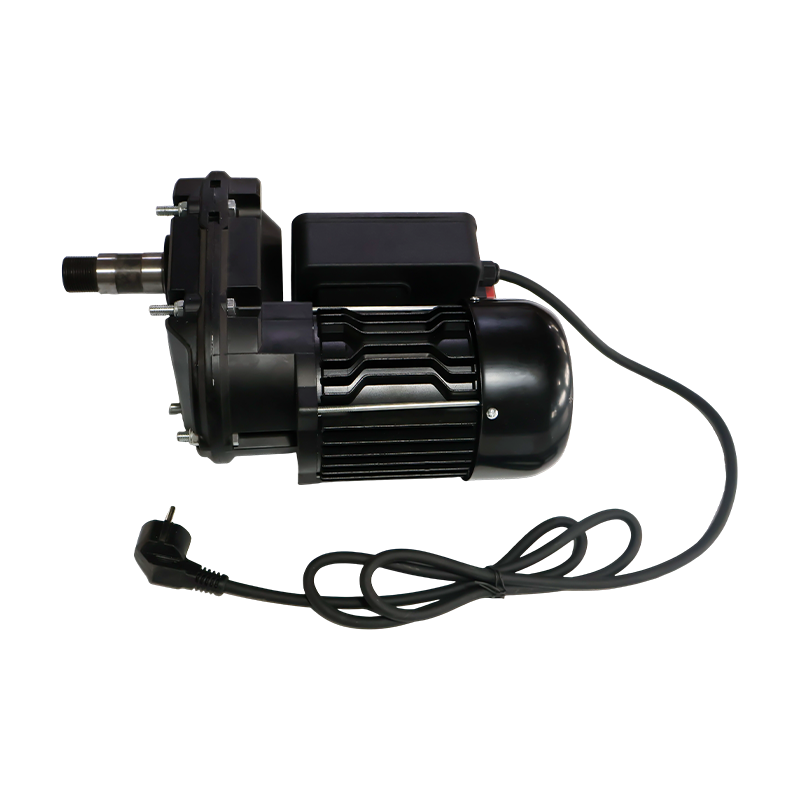
YY7134 150V 370W Portable Concrete Mixer Motor
High-Torque Performance for Concrete Mixing
Concrete mixing is a demanding mechanical process because the resistance applied to the motor does not remain constant. A drum may rotate with relatively low resistance when empty, but the load increases after aggregate, cement, water, or mortar has been introduced. Material can also collect unevenly inside the drum, creating temporary changes in torque demand. If a motor lacks sufficient starting and overload tolerance, it may stall, overheat, or require repeated manual intervention.
The YY7134 is designed around the need for strong torque performance in portable mixing equipment. Its high-torque characteristics help the mixer begin rotation under load and continue operating when the material becomes more resistant. This is particularly valuable for small construction sites where the mixer is expected to perform reliably without the support of a large industrial electrical system.
A motor that resists stalling can improve more than operating convenience. Repeated stalls place stress on windings, capacitors, switches, belts, gears, and mechanical couplings. They can also interrupt the mixing process and reduce productivity. By supporting steadier rotation, the YY7134 helps create a more predictable working cycle and can reduce unnecessary strain on associated components.
Compared with a motor selected only according to nominal wattage, a high-torque design is better suited to applications where the load changes significantly. Power rating remains important, but practical mixer performance also depends on starting behavior, load tolerance, cooling, mechanical transmission, and correct matching between the motor and the drum capacity. The YY7134 addresses these requirements as a purpose-oriented concrete mixer motor rather than as a general-purpose low-load drive.
Support for Concrete, Mortar, and Cement Applications
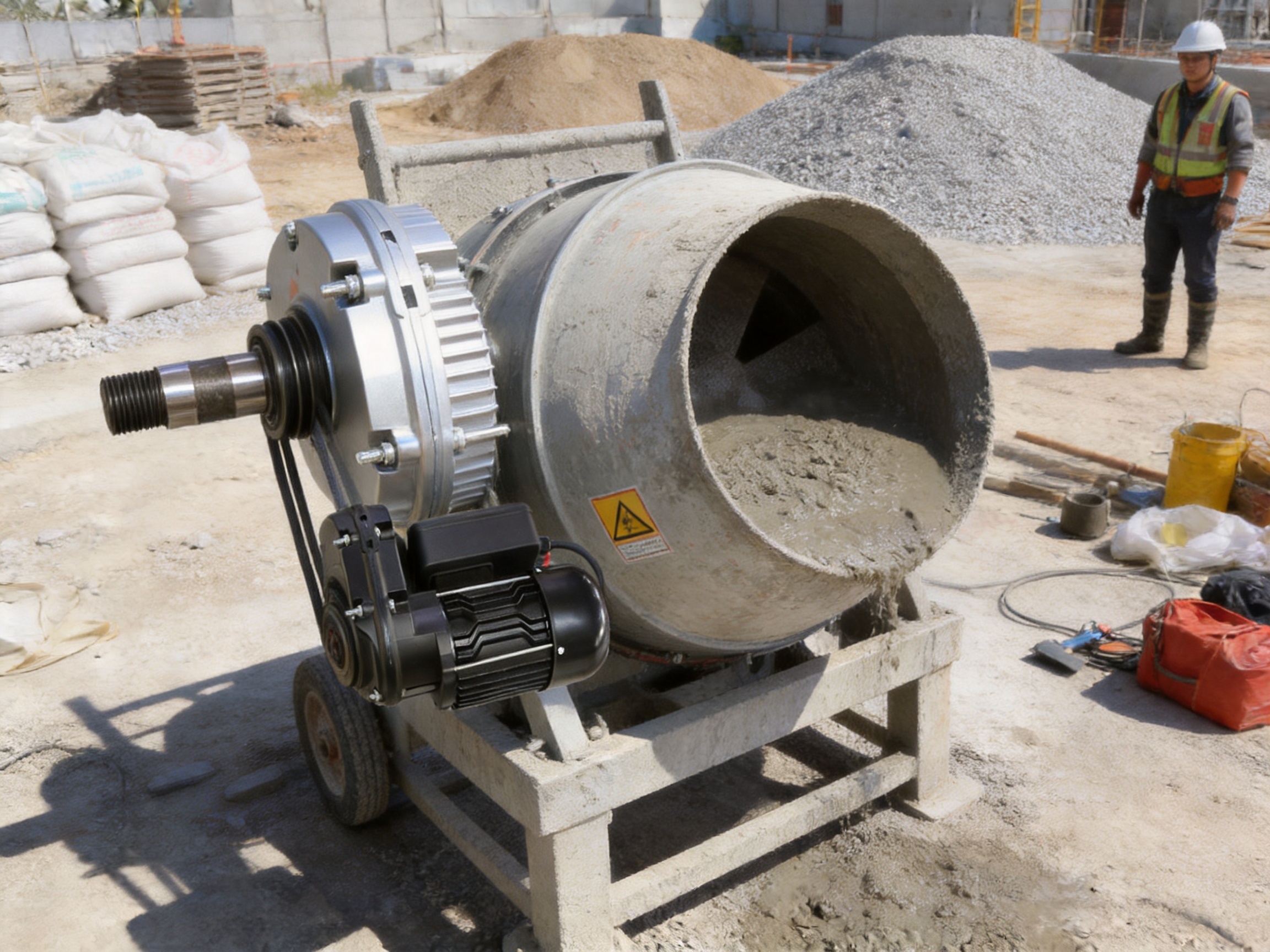
The motor is suitable for equipment used to mix concrete, mortar, cement, and similar construction materials. Small portable mixers are commonly used for foundations, repair work, landscaping, masonry, paving, agricultural construction, and renovation projects. In these applications, users often need a motor that can be transported easily and operated for extended periods at changing work locations.
The motor’s compact format supports portable machine design, while its 370W output provides an appropriate drive solution for small mixer platforms. The actual material capacity and mixing performance will depend on the drum design, transmission ratio, gear or belt arrangement, blade configuration, and operating procedure. Nevertheless, the motor’s torque-focused characteristics make it a practical central component for equipment intended to handle routine construction mixing tasks.
Pure Copper Winding and Thermal Efficiency
The YY7134 uses 100% pure copper winding. Copper is valued in motor manufacturing for its electrical conductivity and ability to carry current efficiently when the winding is properly designed. A high-quality copper winding can help reduce electrical loss and limit unnecessary heat generation compared with lower-conductivity winding materials or poorly controlled winding construction.
Lower heat buildup is important in a portable mixer because the motor may be used for long periods in warm outdoor environments. When a motor operates at an excessive temperature, insulation aging can accelerate and the service life of internal components may be reduced. Efficient winding performance, combined with effective housing ventilation and correct loading, helps the motor maintain more stable thermal conditions.
The pure copper winding also supports the product’s focus on energy efficiency. Lower winding loss means that a greater portion of the electrical input can be converted into useful mechanical output. Energy performance will still depend on the complete system, including the capacitor, transmission, mixer load, supply quality, and maintenance condition. However, the winding material provides a strong foundation for dependable operation.
S1 Continuous Working Cycle
The YY7134 is designed to support an S1 continuous working cycle. S1 duty indicates that the motor is intended to operate continuously at a constant load long enough to reach a stable thermal condition. This is different from a motor intended only for brief intermittent operation, where extended use may cause excessive temperature rise.
Continuous-duty capability is valuable on construction sites where a mixer may need to operate through several batches without long cooling pauses. It can help users organize their work more efficiently and reduce downtime caused by unnecessary motor cooling intervals. The motor must still be used within its rated conditions. Overloading the drum, blocking the mechanism, operating with insufficient ventilation, or using an incorrect voltage can compromise continuous-duty performance.
For equipment manufacturers, S1 capability offers flexibility when developing operating instructions and production schedules. For end users, it provides additional confidence that the motor is designed for sustained work rather than occasional short-term use only. Proper selection of mixer size remains essential, because continuous operation does not mean unlimited overload capacity.
150V Operation for Specialized Power Applications
The 150V working voltage is one of the defining characteristics of the YY7134. Many motors are produced for more common voltage levels, but specialized construction equipment may require a different electrical configuration because of regional power systems, transformer arrangements, generator outputs, or original machine specifications. A dedicated 150V motor can help equipment designers meet those requirements without relying on an unsuitable standard-voltage replacement.
Compatibility with both 50Hz and 60Hz systems provides additional application flexibility. Frequency differences can affect motor speed, current behavior, heating, and performance. Therefore, frequency compatibility should always be evaluated together with the voltage, load, capacitor, and complete mixer design. The stated 50/60Hz capability makes the motor suitable for use in markets with either common supply frequency, subject to correct installation and system matching.
The voltage tolerance feature is also beneficial in areas where construction-site electricity may fluctuate. Portable sites can use long extension cables, temporary distribution boards, generators, or shared power equipment. These conditions may cause voltage variation. The YY7134 is designed to maintain stable operation under a degree of supply fluctuation, although users should still provide appropriate electrical protection and avoid operating the motor outside acceptable limits.
Electrical Installation Considerations
Because the YY7134 is a 150V single-phase motor, the machine builder must ensure that the supply system, switching devices, protective equipment, capacitor, and wiring are correctly rated. A motor should never be connected directly to an incompatible supply. Voltage conversion equipment may be required in some installations, and any transformer or converter must be selected according to the motor’s starting and running requirements.
Installation should be performed by qualified personnel who can confirm the wiring diagram, grounding arrangement, overload protection, and rotation direction. Connections should be protected against moisture, abrasion, accidental contact, and mechanical movement. Cable size should be appropriate for the operating current and installation length, especially where long extension leads are used.
Correct electrical installation is also important for safety. The IP44 motor protection grade does not make the entire mixer waterproof, and it does not eliminate the need for proper electrical enclosures. Operators should keep plugs, switches, connectors, and control devices protected from direct water exposure and should disconnect the power before cleaning, inspecting, or servicing the equipment.
Aluminum Alloy Housing and Heat Dissipation
The motor uses a durable aluminum alloy housing equipped with cooling fins. Aluminum alloy is commonly selected for motor housings because it combines useful structural strength with relatively low weight and good thermal conductivity. For portable concrete mixers, lower equipment weight can improve transportation and repositioning, while the housing still needs to withstand routine vibration and job-site handling.
Cooling fins increase the external surface area of the housing. As the motor operates, heat generated in the winding and internal components can transfer through the housing and dissipate into the surrounding air. Effective heat removal helps control temperature rise and supports the continuous-duty design of the motor.
Cooling performance depends on more than the housing alone. The fins must remain free from heavy dust, cement residue, mud, and other deposits that may restrict airflow. The motor should also be installed with sufficient clearance around the cooling surfaces. Covering the housing, mounting it in a confined enclosure, or placing it next to a high-temperature component can reduce thermal performance.
The aluminum alloy housing provides a practical balance between portability and durability. Compared with a heavier construction, a lightweight housing can make the mixer easier to move around a work area. This is especially useful for small contractors and maintenance teams that frequently transport equipment between locations.
Class-F Insulation for Reliable Motor Protection
The YY7134 is specified with Class-F insulation. Insulation classification indicates the thermal capability of the insulating system used around the motor winding. Class F is widely applied in motors that require a higher insulation temperature capability than basic lower-class systems. This supports reliable operation under normal thermal stresses and provides additional protection against accelerated insulation aging when the motor is properly applied.
Insulation performance is influenced by winding quality, material selection, manufacturing consistency, temperature rise, moisture exposure, contamination, and operating load. A Class-F designation should therefore be understood as one part of a complete motor reliability system. It works together with the pure copper winding, aluminum housing, cooling fins, balanced rotor, and correct electrical protection.
Construction sites can expose equipment to dust, moisture, vibration, and frequent transport. The insulation system helps protect the motor’s electrical integrity, but it does not replace good operating practices. Users should avoid operating the mixer in standing water, prevent cement slurry from entering the motor, and inspect cables and connections regularly.
IP44 Protection for Outdoor Job-Site Conditions
The motor has an IP44 protection grade. This rating indicates protection against solid objects above a specified size and resistance to water splashes from different directions. It is appropriate for many general outdoor and workshop conditions where the motor may encounter dust particles, incidental splashing, or light moisture.
IP44 protection is especially relevant for portable concrete mixers, which may be used outdoors or in unfinished buildings. The rating provides a useful level of protection for normal job-site exposure, but it should not be interpreted as full dust-tight or waterproof protection. High-pressure washing, immersion, heavy rain, and direct water jets may exceed the intended protection level.
To preserve the effectiveness of the protection system, users should keep covers and cable entry points properly secured. Damaged seals, cracked housings, loose terminal covers, or missing fasteners should be repaired before operation. After work in damp or dusty conditions, the motor and mixer should be inspected and cleaned using a method suitable for the equipment’s protection level.
Protection Through Correct Maintenance
Routine maintenance can substantially extend the practical service life of a motor. Operators should keep the cooling fins clean, check for unusual noise, inspect the power cable, and verify that mounting bolts remain secure. The mixer’s belt, gearbox, coupling, and drum should also be checked because mechanical problems can place excessive load on the motor.
Any change in starting behavior, burning smell, abnormal vibration, repeated tripping, or unusual temperature should be treated as a warning. Continuing to run a motor under these conditions may cause more extensive damage. Prompt inspection can identify whether the problem is related to the motor, capacitor, power supply, mechanical transmission, or mixer load.
Dynamic Balancing for Lower Vibration and Noise
The YY7134 receives fine dynamic balance treatment. Rotating components that are not properly balanced can generate vibration, noise, and additional mechanical stress. Over time, excessive vibration may affect bearings, mounting structures, couplings, belts, gears, and the mixer frame.
Dynamic balancing helps the rotating assembly operate more smoothly. Lower vibration can improve the working environment for operators and may contribute to longer service life for both the motor and the equipment connected to it. Reduced operating noise is also valuable on construction sites where multiple machines may be working in close proximity.
Balance quality must be supported by correct installation. A motor mounted on an uneven or unstable base may still vibrate even when the rotor is properly balanced. Misalignment between the motor shaft and the mixer transmission can also generate noise and stress. Therefore, the motor base, coupling, belt tension, and shaft alignment should be checked during assembly and after extended use.
Compared with a basic motor that focuses only on electrical output, a motor receiving attention to dynamic balance offers a more complete approach to equipment reliability. Smooth rotation helps protect the complete drive system and can make the mixer feel more stable during operation.
Single-Phase Capacitor-Run Design
The single-phase capacitor-run configuration allows the motor to operate from a single-phase electrical supply. This is convenient for portable construction equipment because many small job sites do not have access to three-phase power. It also supports simpler machine wiring and can reduce the infrastructure required to operate the mixer.
The capacitor plays an important role in the motor’s operating characteristics. It contributes to the phase relationship needed for motor operation and helps support starting and running performance. The capacitor must be matched to the motor and replaced with a component having compatible specifications. Using an incorrect capacitor can cause poor starting, overheating, reduced torque, or unstable operation.
A single-phase motor can be an advantage over a three-phase motor in small portable equipment, particularly when the available electrical supply is limited. However, the motor still requires suitable protection, correct grounding, and a properly rated switch or controller. The machine manufacturer should provide clear wiring and maintenance instructions for operators and service personnel.
Maintenance and Spare-Part Accessibility
The motor is designed with readily available spare parts and a service-friendly structure. This is important for construction equipment because downtime can interrupt a project and create additional labor costs. A motor that can be inspected, repaired, or fitted with replacement parts efficiently offers a practical advantage over equipment that requires complicated servicing or long procurement cycles.
Common service considerations may include the capacitor, wiring terminals, mounting hardware, bearings, cooling surfaces, and external protective components. Actual replacement intervals depend on operating conditions and should be determined through inspection and the manufacturer’s service guidance. Unauthorized modifications should be avoided because they may compromise electrical safety or motor performance.
For distributors and equipment rental companies, spare-part availability can simplify after-sales support. For contractors, it can reduce the time required to return a mixer to service. A consistent supply of replacement components also supports the long-term value of the equipment and improves confidence when purchasing motors for multiple machines.
Advantages for Portable Concrete Mixer Manufacturers
Equipment manufacturers need a motor that can be integrated efficiently into a complete machine. The YY7134 offers several features that support this objective: a compact form, 370W output, single-phase operation, 150V voltage compatibility, S1 continuous duty, aluminum alloy housing, and cooling fins.
The compact and lightweight design can help manufacturers develop mixers that are easier to transport and position. A portable machine must balance structural strength with manageable weight. Excessively heavy equipment may be difficult for one or two workers to move, while insufficiently robust equipment may not withstand construction-site use. The motor’s aluminum housing supports this balance.
The motor’s specialized 150V specification can also help manufacturers serve customers with unusual power requirements. Instead of redesigning an entire machine around an unsuitable standard motor, the manufacturer can select a motor that matches the intended electrical system. The stated 50/60Hz compatibility further supports international equipment planning.
The S1 duty rating gives product designers a basis for developing machines intended for repeated or extended operation. Meanwhile, the high-torque characteristics support mixer performance when material resistance changes. These features can help an equipment brand build a more reliable product offering, provided that the motor is correctly matched to the drum, transmission, and intended workload.
Advantages Compared with Basic Alternative Motors
Motor selection should be based on application requirements rather than price alone. A low-cost general-purpose motor may appear suitable when comparing only its wattage, but it may not provide the same combination of torque behavior, continuous-duty capability, cooling design, insulation, protection, and serviceability required by a concrete mixer.
The YY7134 has been developed specifically for portable concrete mixer applications. This application focus is an advantage because the motor’s features address common mixer challenges: heavy starting loads, changing resistance, long operating periods, outdoor exposure, vibration, and limited electrical infrastructure.
Its pure copper winding can support lower electrical loss and improved thermal behavior. Its high-torque characteristics help reduce the risk of stalling. Its S1 duty design is more appropriate for extended operation than a motor intended only for short cycles. Its aluminum alloy housing and cooling fins support heat dissipation while maintaining portability. Class-F insulation and IP44 protection provide additional resistance for normal job-site conditions.
The dynamic balancing treatment provides another point of differentiation. Vibration affects both comfort and durability, so attention to rotating balance can be more valuable than simply increasing nominal power. The single-phase capacitor-run design and spare-part availability also support installation and maintenance in locations where simple servicing is important.
These advantages should not be interpreted as permission to exceed the motor’s rated conditions. A motor with strong features can still be damaged by an overloaded drum, blocked mixer, incorrect voltage, poor ventilation, water intrusion, or improper wiring. The best performance comes from correct system design and responsible operation.
Manufacturing Strengths and Technical Capabilities
The manufacturer, Shengzhou Jiangxin Motor Technology Co., Ltd., was established in 2017 and specializes in the research, development, production, and sales of AC/DC motors and micro motors. Its product scope includes evaporative air cooler motors, industrial heater motors, oil pump motors, customized motors, and other motor solutions for different equipment categories.
The company operates modern production facilities and uses advanced automated equipment. Automation can support repeatable manufacturing, consistent process control, and efficient production management. In motor manufacturing, consistency is important because winding quality, assembly accuracy, rotor balance, insulation treatment, bearing installation, and electrical testing all influence final performance.
A professional research and development team provides additional technical support. Motor applications often require more than a standard catalog selection. Voltage, power, frequency, mounting structure, shaft arrangement, duty cycle, cooling method, and environmental conditions can vary from one machine to another. Engineering capabilities allow a manufacturer to evaluate these factors and provide a more suitable motor solution.
The company has also been recognized as a provincial-level technology enterprise. This recognition reflects its emphasis on technical development and manufacturing capability. While certifications and recognition should always be considered together with product-specific documentation, they provide useful background when evaluating a supplier for long-term cooperation.
Quality-Control Approach
Reliable motor production requires quality control at multiple stages rather than only a final visual inspection. Incoming materials should be evaluated for suitability, winding processes should be controlled, assembly should follow defined procedures, and finished motors should undergo appropriate electrical and operational checks.
For a product such as the YY7134, important quality considerations include copper winding integrity, insulation performance, capacitor compatibility, housing assembly, rotor balance, bearing condition, terminal security, and protection of the electrical enclosure. Process control helps reduce variation between production units and supports dependable performance in the field.
Automated equipment can contribute to consistent production, while experienced technical personnel are needed to establish process parameters, interpret test results, and improve designs. The combination of equipment, personnel, and documented procedures helps a manufacturer deliver motors that are more predictable for equipment builders and distributors.
Export and International Supply Experience
The company’s products are exported to more than 60 countries and regions. International supply experience requires attention to different operating frequencies, voltage systems, application environments, packaging requirements, documentation expectations, and customer service needs.
The YY7134’s 150V and 50/60Hz specification is particularly relevant to international applications. Customers may need a motor for a special regional power arrangement or for a machine designed for a specific overseas market. A supplier with international experience is better positioned to discuss application requirements, production coordination, and export support.
International customers should still provide complete technical information before placing an order. Details such as mixer capacity, expected material type, working hours, installation space, transmission method, environmental exposure, and local power conditions help the manufacturer confirm whether the motor is suitable.
Recommended Application and Selection Process
The first step in selecting the YY7134 is to confirm that the mixer falls within the intended small portable equipment category. The motor’s 370W rating is suitable for specific machine designs, but it should not be selected solely because the existing motor has a similar nominal wattage. Starting load, drum resistance, gear ratio, and operating duty can significantly affect the required motor characteristics.
The second step is to verify the electrical supply. The required voltage is 150V, with 50Hz and 60Hz frequency compatibility. The complete supply system must be able to deliver stable power during startup and continuous operation. If a transformer, converter, or generator is used, its capacity and output characteristics should be confirmed.
The third step is to review mechanical compatibility. Mounting holes, shaft dimensions, shaft extension, rotation direction, pulley or coupling design, belt tension, and available clearance should be checked before installation. A motor that is electrically suitable may still be mechanically incompatible if these details are ignored.
The fourth step is to evaluate operating conditions. Outdoor use, dust, moisture, temperature, extension-cable length, transport frequency, and expected daily runtime should be considered. The IP44 and Class-F specifications support many ordinary job-site conditions, but equipment should still be protected from excessive water, heavy contamination, and abnormal temperatures.
Finally, users should establish a maintenance plan. Regular cleaning, inspection, lubrication where applicable, electrical checks, and transmission adjustment can help maintain performance. Operators should receive basic training so they understand load limits, safe startup procedures, emergency shutdown, and the signs of motor trouble.
Installation and Operating Guidance
Before installation, inspect the motor for transport damage. Check the housing, terminal area, shaft, mounting points, and cooling fins. Confirm that the product label corresponds to the intended 150V supply and that the motor has not been exposed to conditions that could compromise insulation or electrical components.
Install the motor on a rigid, level mounting structure. The base should support the motor without distortion, and the mounting fasteners should be tightened evenly. If the motor drives the mixer through a belt or coupling, align the components carefully. Excessive belt tension can overload bearings, while insufficient tension can cause slippage and heat buildup.
Connect the motor according to the approved wiring diagram. Use suitable protective devices and provide a reliable grounding connection. Make sure the capacitor is the correct type and rating for the motor. Cable entries should be secured so that vibration does not loosen the connections or damage the insulation.
Perform a brief no-load or controlled test before full operation, where appropriate for the machine design. Confirm the rotation direction, listen for abnormal noise, and check for excessive vibration. If the mixer rotates in the wrong direction or the motor behaves unexpectedly, disconnect the power and investigate before adding material.
During operation, avoid overfilling the drum or introducing material in a way that creates an abrupt mechanical shock. Follow the mixer manufacturer’s recommended loading sequence. If the motor stalls, switch off the power and identify the cause instead of repeatedly restarting it under blocked conditions.
Maintenance Practices for Long Service Life
Maintenance begins with cleanliness. Concrete dust, cement powder, and hardened material should not be allowed to accumulate around the cooling fins, terminal cover, or ventilation areas. Cleaning should be performed with the power disconnected and with a method that does not force water into the motor housing.
Inspect the motor regularly for unusual vibration, abnormal sound, overheating, loose fasteners, damaged cables, or changes in starting performance. These symptoms can indicate a developing problem in the motor or in the connected mixer mechanism. Early attention may prevent a minor issue from becoming a major failure.
Check the mixer transmission as part of the motor maintenance routine. A worn bearing, misaligned shaft, damaged gear, or excessively tight belt can increase the motor load. If a motor that previously operated normally begins to heat more quickly, the cause may be mechanical resistance rather than an internal electrical defect.
Keep spare capacitors and other approved replacement components available where rapid repair is important. Replacement work should be performed by qualified personnel. Before returning the mixer to operation, verify that covers are fitted, wiring is secure, and the motor is properly grounded.
Use in Different Construction Environments
On residential construction sites, the YY7134 can support portable mixers used for small foundations, walkways, repairs, and masonry work. The compact format is useful where equipment must be moved through narrow access areas or stored in limited space.
For renovation projects, a single-phase motor can be convenient because the available power supply may be limited. The 150V requirement must be addressed correctly, but once the appropriate supply arrangement is provided, the motor can support a compact mixing system without requiring industrial three-phase infrastructure.
In landscaping and agricultural construction, equipment may be transported frequently between locations. The aluminum alloy housing and portable mixer orientation help support easier movement. Operators should protect the motor from mud, standing water, and excessive dust, especially when the mixer is used on undeveloped ground.
For rental equipment companies, durability and serviceability are especially important. Machines may be used by different operators with varying levels of experience. Clear instructions, visible safety labels, routine inspection, and access to compatible spare parts can help maintain the motor and reduce avoidable damage.
Why Supplier Support Matters
A motor is only one part of a concrete mixer system, so supplier communication is important before purchase. The customer should provide the intended application, mixer capacity, mechanical arrangement, electrical supply, expected working cycle, and environmental conditions. This allows the supplier to confirm compatibility and identify any additional requirements.
Technical support can also assist with installation questions, wiring, capacitor selection, maintenance procedures, and replacement parts. For international customers, communication regarding packaging, production schedules, documentation, and after-sales service can improve the overall purchasing experience.
A supplier with both standard products and customization capabilities can be valuable when a customer needs a particular voltage, mounting arrangement, output configuration, or application adaptation. Jiangxin Motor’s focus on AC/DC motors, micro motors, and customized motor solutions provides a foundation for discussing specialized requirements.
Frequently Asked Questions
What is the rated power of the YY7134 motor?
The rated power is 370W. It is intended for small portable concrete mixers and similar equipment, subject to correct mechanical and electrical matching.
What voltage does the motor require?
The motor is designed for a 150V working voltage. The complete power supply, wiring, protection devices, and any transformer or converter must be compatible with this voltage.
Can the motor operate at both 50Hz and 60Hz?
Yes. The stated frequency compatibility is 50/60Hz. Users should still confirm that the voltage, load, capacitor, and complete mixer system are suitable for the selected frequency.
Is this motor suitable for continuous operation?
Yes. The motor is designed for an S1 continuous working cycle. Continuous operation must remain within the rated load and acceptable environmental conditions, and the motor must have adequate ventilation.
What type of motor is the YY7134?
It is a single-phase capacitor-run motor. This design is suitable for equipment operating from a single-phase supply, provided that the capacitor and wiring are correctly configured.
What materials can the motor help mix?
The motor is intended for portable mixers used with concrete, mortar, cement, and similar construction materials. Actual material capacity depends on the complete mixer design and should not exceed the equipment manufacturer’s recommendations.
What does IP44 protection mean for this product?
IP44 provides protection against certain solid objects and water splashes from different directions. It is suitable for many ordinary outdoor conditions, but it does not mean that the motor is waterproof, submersible, or suitable for high-pressure washing.
Why is the aluminum alloy housing useful?
The aluminum alloy housing helps reduce weight while supporting structural durability and heat transfer. Cooling fins increase the external surface area and assist heat dissipation during operation.
What is the benefit of Class-F insulation?
Class-F insulation provides a higher thermal capability for the winding insulation system than lower insulation classes. It contributes to reliable operation when the motor is correctly loaded, ventilated, and protected from moisture and contamination.
Why is dynamic balancing important?
Dynamic balancing helps reduce vibration and operating noise from rotating components. Lower vibration can support smoother operation and reduce stress on bearings, couplings, belts, gears, and the mixer frame.
Can the motor replace any 370W motor?
No. A replacement must match voltage, frequency, mounting dimensions, shaft configuration, rotation requirements, capacitor specifications, duty cycle, and mechanical load. A motor with the same wattage may still be unsuitable if these other parameters differ.
What should be checked before ordering?
Customers should confirm the electrical supply, mixer size, expected load, working hours, mounting arrangement, shaft dimensions, rotation direction, environmental conditions, and available installation space. Providing this information helps the supplier verify product suitability.
What company manufactures this motor?
The motor is manufactured by Shengzhou Jiangxin Motor Technology Co., Ltd., a Zhejiang-based company specializing in AC/DC motors, micro motors, and customized motor solutions.
Conclusion
The YY7134 150V 370W Portable Concrete Mixer Motor is designed to provide dependable drive performance for small portable mixers used in concrete, mortar, cement, and related construction applications. Its high-torque characteristics help support operation under changing mixing loads, while the pure copper winding contributes to efficient electrical performance and reduced heat buildup.
The motor’s S1 continuous-duty capability supports extended working cycles. Its 150V rating and 50/60Hz compatibility address specialized power requirements, and its single-phase capacitor-run design is suitable for locations without three-phase infrastructure. The aluminum alloy housing and cooling fins support portability and heat dissipation, while Class-F insulation and IP44 protection provide useful resistance for ordinary outdoor job-site conditions.
Fine dynamic balancing contributes to lower vibration and noise, and the service-friendly design with available spare parts can simplify maintenance. These features give the motor advantages over basic alternatives that may not be designed specifically for the combined demands of portable mixing, variable loads, continuous operation, and outdoor use.
Manufacturing capability is another important part of the product value. Jiangxin Motor combines modern production facilities, automated equipment, technical research and development, quality-control practices, and international supply experience. This foundation supports consistent production and provides customers with access to both standard motor products and application-oriented solutions.
For best results, the YY7134 should be selected as part of a complete mixer system. Correct voltage, capacitor selection, mechanical alignment, load management, ventilation, protection, and maintenance are essential. When properly matched and installed, this motor can provide a practical, durable, and efficient power solution for portable concrete mixing equipment.
References
1. Product specification information for the YY7134 150V 370W Portable Concrete Mixer Motor.
2. Manufacturer-provided information regarding AC/DC motor production, customized motor development, and application support.
3. General principles of single-phase capacitor-run motor operation and maintenance.
4. General guidance on motor duty classifications, including S1 continuous operation.
5. General guidance on insulation classes and thermal protection for electric motors.
6. General interpretation of IP protection ratings for electrical enclosures.
7. General practices for concrete mixer motor installation, alignment, ventilation, and job-site maintenance.
Product: YY7134 150V 370W Portable Concrete Mixer Motor
 Ready To Customise
Your Motor Products?

We are professional motor manufacturers, delivering powerful, stable, and efficient power cores for all industries through precision craftsmanship and innovation.
Contact Us
-
 Mobile:+86 13575536911
-
 Tel:+86 18357538240
-
 Whatsapp:+8618357538240
-
 Email:betty@dbjxmotor.com
-
 Company Address
Copyright © by Shengzhou Jiangxin Motor Technology Co., Ltd. All Rights Reserved.
Wholesale Industrial Fan Motors Manufacturers
